
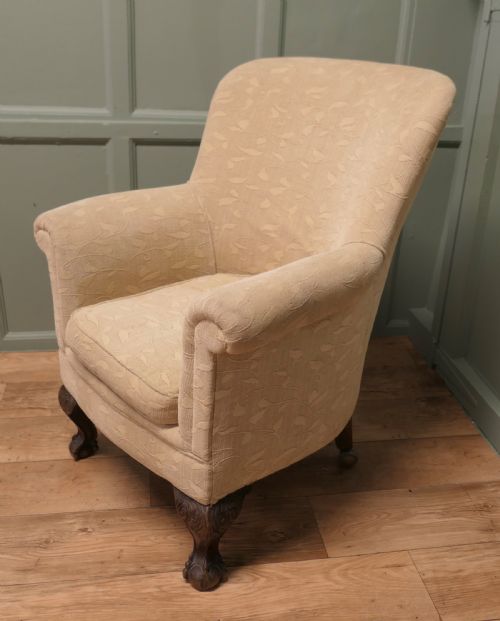
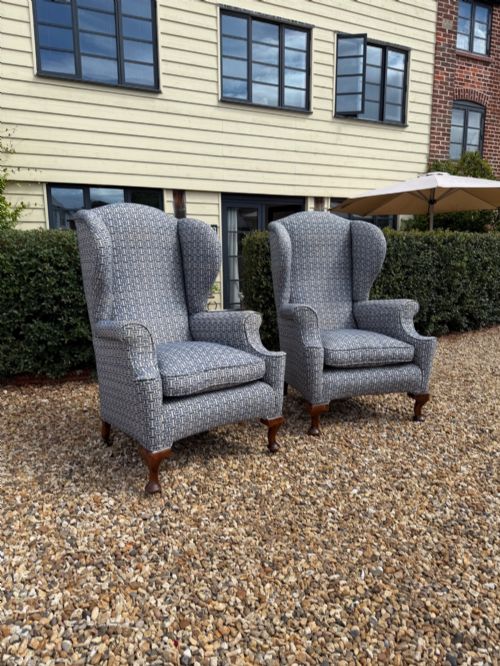
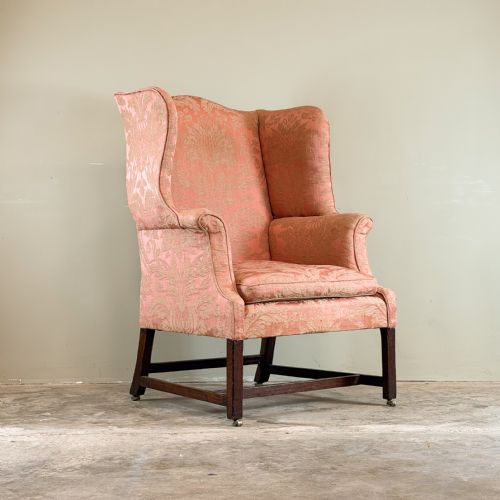
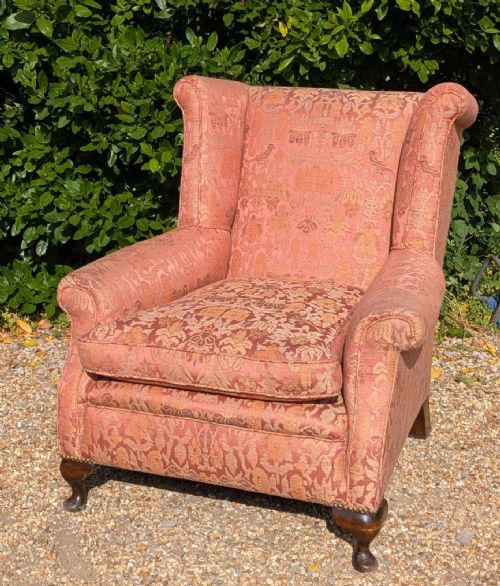


Traditional Wingback Lounge Chair
A traditional wingback lounge chair offers deep comfort and historic character, bringing formal elegance and draught-excluding wings to any room.
Traditional Wingback Lounge Chair
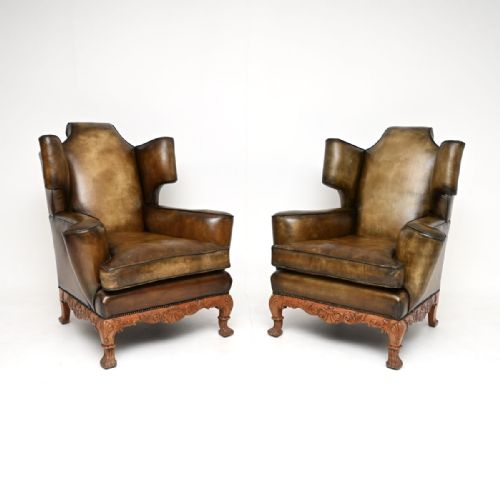
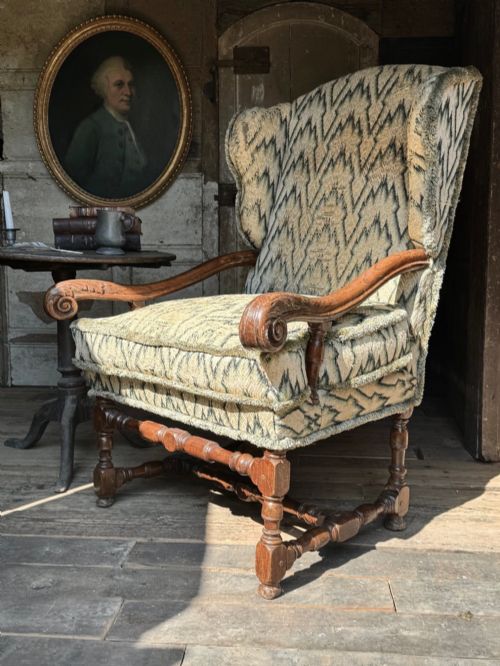
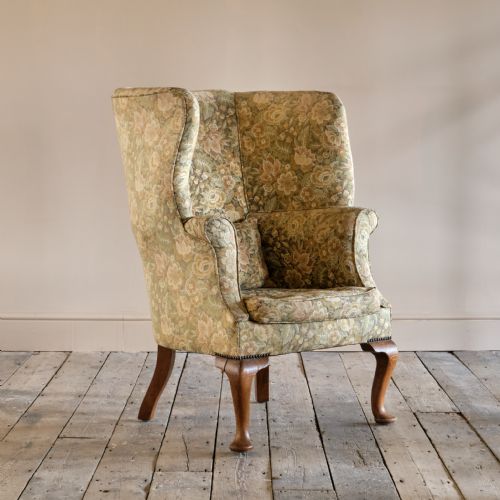
When you search for a traditional wingback lounge chair, you are looking at substantial seating designed to protect the sitter from draughts while retaining heat from an open fire. The pieces found here span multiple periods, ranging from the eighteenth century through the Victorian and Edwardian eras up to the nineteen-thirties.
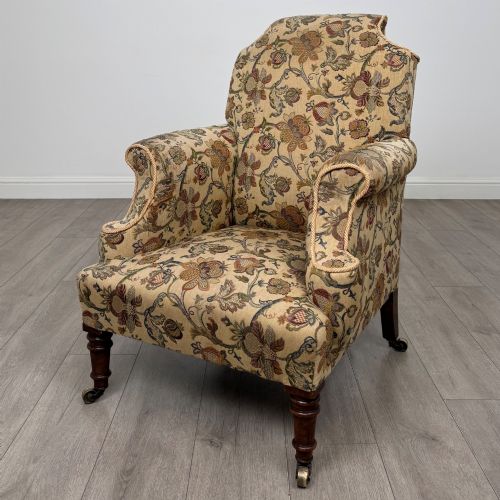
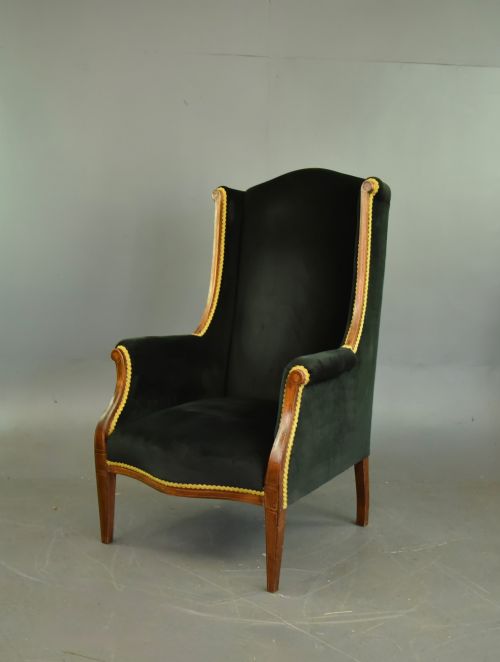
Origin details in the evidence point towards English country house aesthetics alongside specific regional pieces. Buyers are most likely to meet mahogany or walnut framed examples upholstered in leather, velvet, or woven fabric.
Materials and construction methods
Makers utilised solid timbers such as mahogany, walnut, oak, and general hardwood for the exposed frames and legs. Brass hardware frequently appears on castors or decorative detailing, while inlay work distinguishes Edwardian variations.
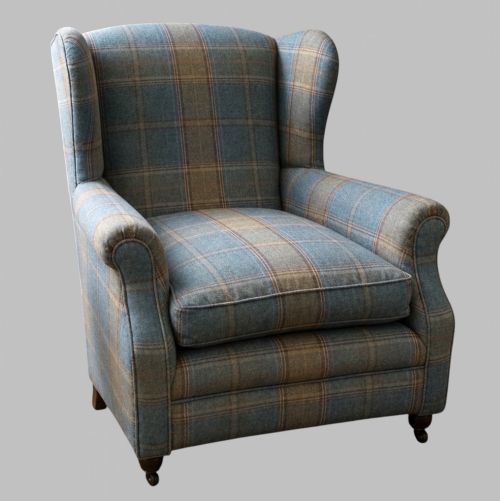
Upholstery forms a primary component of these seats, employing traditional fillings like feathers alongside durable coverings of leather, velvet, plaid, and standard fabric. Frames often incorporate structural elements like exposed mahogany or walnut show-wood.
Listings incorporate timber frames of mahogany, walnut, and oak alongside upholstery in leather, velvet, and Shetland plaid.
Distinctions in quality and execution
The standard of a traditional wingback lounge chair rests upon the integrity of its timber frame and the precision of its joinery. Heavier hardwood frames with sophisticated carving or subtle inlay represent the upper tier of execution.
Material choice significantly elevates a piece, with hand-dyed leather or heavy woven wool outperforming standard contemporary fabric. The sophistication of the silhouette, from restrained Georgian proportions to generous Victorian dimensions, dictates the visual authority of the chair.
Howard and Sons·Whytock and Reid·Sopwith
The Traditional Wingback Lounge Chair Glossary
- Wingback
- An armchair featuring protective side panels attached to the arms and framing the back to block draughts. This form originated to keep sitters warm near open hearths.
- Barrel back
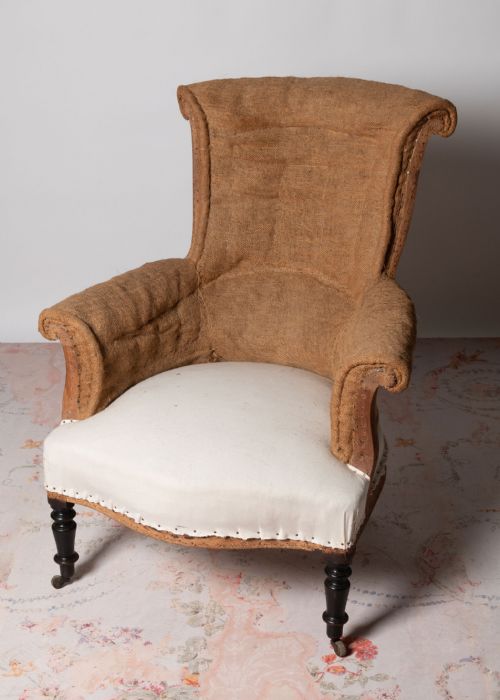
- A seating form where the back and arms form a continuous semicircular curve. This design encloses the occupant more completely than a standard flat-backed chair.
- Show-wood
- The exposed wooden portions of a chair frame that remain visible beneath or around the upholstery. Walnut and mahogany are frequently utilised for this purpose.
- Inlay
- Decorative wood or brass inserted into recesses flush with the surrounding surface. Edwardian makers applied this technique to mahogany frames.
- Castor
- A small wheel mounted on a swivel attached to the foot of a chair leg. These facilitate movement across heavy carpets and flooring.
Traditional Wingback Lounge Chair: Frequently Asked Questions
How do I identify a Victorian wing chair?
Victorian examples typically display heavier proportions, deeper buttoning, and darker timber frames such as mahogany. They often utilise robust leather or rich velvet upholstery.
These pieces reflect the nineteenth-century preference for substantial, imposing furniture designed for formal sitting rooms and studies.
What is the difference between Georgian and Edwardian styles?
Georgian style pieces focus on classic proportions, subtle cabriole legs, and understated lines derived from eighteenth-century design principles. Edwardian interpretations frequently incorporate lighter mahogany frames with delicate inlay work.
Edwardian versions also lean towards brighter textiles and slightly more relaxed proportions compared to their strictly formal predecessors.
Are leather or fabric wing chairs more authentic?
Both materials hold strong historical precedent depending on the specific period and intended room use. Leather was common in libraries and smoking rooms for durability.
Fabric and velvet upholstery appeared frequently in drawing rooms, allowing for decorative patterns like plaid or rich solid colours.
How do I place a wing chair in a room?
Traditional wing chairs work effectively beside fireplaces or as reading seats in corners where their high backs create a private enclosure. Pairing two identical chairs opposite a sofa creates a balanced conversation area.
Ensure adequate clearance around the piece so the wings and rear profile remain fully visible.