
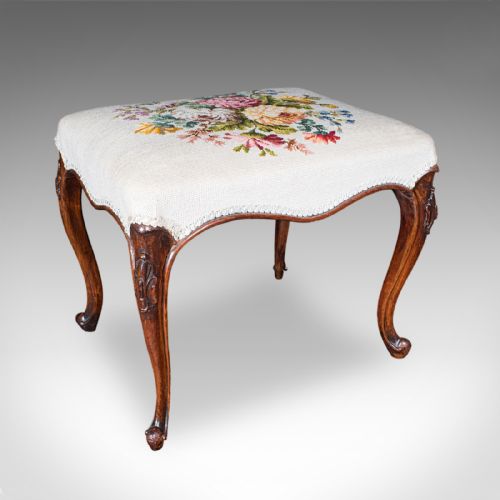
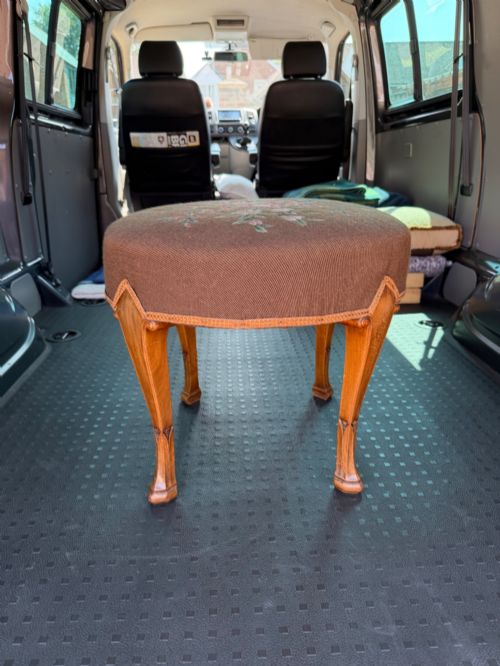


Traditional Walnut Stool
These traditional walnut stool examples combine sturdy timber frames with period textile upholstery, offering versatile seating and foot support.
Traditional Walnut Stool
When you search for traditional walnut stool, you encounter low seating and foot supports fashioned from walnut timber. These pieces range from compact footstools to longer hall benches and dressing stools.
The selections here span the Victorian era, the nineteenth century, and early twentieth century production. Many adopt earlier design vocabularies like Queen Anne, Chippendale, and eighteenth century styles.
Forms include oval, rectangular, and X-frame configurations supported by cabriole or fluted legs. Buyers most frequently meet Queen Anne style dressing stools and Victorian fireside footstools on this page.
How traditional walnut stool items were made
Maker workshops utilised solid walnut for structural frames, frequently applying hand carving to legs and rails. Timber elements were shaped into cabriole profiles or straight fluted supports.
Upholstery techniques combined internal stuffing with surface coverings of textile, fabric, wool, tapestry, or needlepoint. Brass details occasionally appeared as structural or decorative accents on specific forms.
Listings span periods from the mid-nineteenth century through the nineteen-thirties, showcasing walnut timber paired with tapestry, needlepoint, and linen upholstery.
What varies in quality across traditional walnut stool examples
The standard of carving on the walnut frame dictates much of the visual distinction between pieces. Crisp, deep hand-carved details on legs and rails separate standard production from superior examples.
The integrity of the timber and the choice of upholstery materials also determine the grade. Selection ranges from simple recovered surfaces to intricate period needlework and tapestry.
The Traditional Walnut Stool Glossary
- Cabriole leg
- A furniture leg that curves outward at the knee and tapers inward toward the foot. This form draws inspiration from animal limbs and frequently terminates in pad or claw-and-ball feet.
- Needlepoint
- A type of canvas work embroidery utilised for historic upholstery. It provides durable decorative surfaces for stool tops and fireside footstools.
- X-frame
- A structural base configuration formed by intersecting curved or straight members. This design provides robust support for ceremonial and domestic seating.
- Queen Anne style
- A furniture aesthetic characterised by curved lines, cabriole legs, and restrained ornamentation. walnut surfaces featured prominently during this design phase.
Traditional Walnut Stool: Frequently Asked Questions
Where do people place a traditional walnut stool?
These pieces function well beside firesides, beside dressing tables, or within hallways as short benches. Their compact footprints allow them to fit easily into smaller domestic spaces.
They also serve as movable foot supports in living rooms or studies. Collectors often position them where their timber frames and textile tops complement existing period furniture.
How do I care for the walnut frame?
Keep the timber surfaces clean by dusting them regularly with a soft, dry cloth. Avoid placing them near direct heat sources or in strong sunlight to protect the wood.
Occasional application of appropriate furniture wax helps nourish the walnut. Avoid silicone polishes, which can build up and dull the finish over time.
How are the upholstery fabrics maintained?
Vacuum textile, wool, and tapestry surfaces gently using a low suction brush attachment. This removes dust particles that settle into the weave.
Professional cleaning is recommended for antique needlework and delicate fabrics. Protect the textile tops from sharp objects and persistent direct light.
How do I identify a Queen Anne style stool?
Look for characteristic cabriole legs that curve outward at the knee and inward toward the foot. The overall silhouette remains graceful and unburdened by heavy carving.
Footstools and dressing stools in this style often feature pad feet and shaped aprons. The walnut timber displays warm grain patterns beneath traditional finishes.