


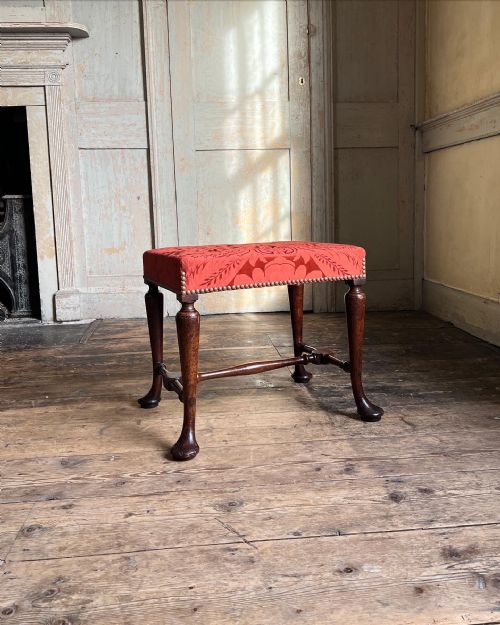


Georgian Walnut Footstool
These georgian walnut footstool examples bring warmth and classical proportion to a room, offering both decorative presence and traditional low seating.
Georgian Walnut Footstool
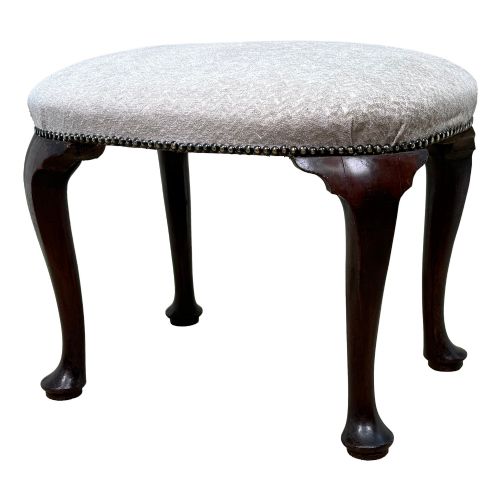
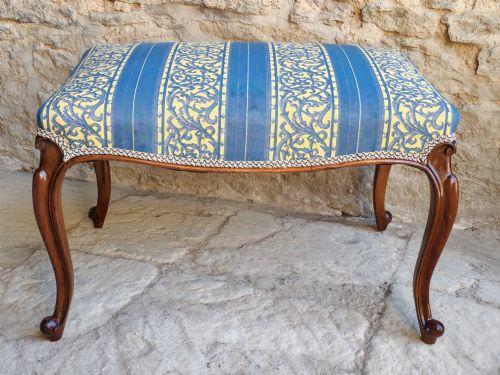
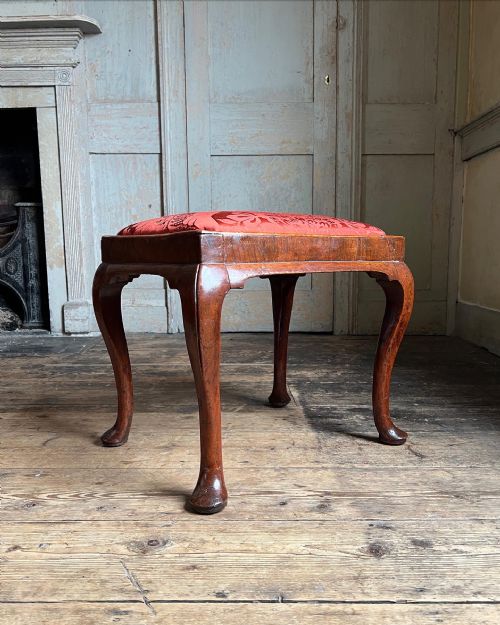
A georgian walnut footstool embodies the timber and decorative forms of eighteenth-century seating, though many pieces on this page emerge from later revival periods such as the nineteenth and early twentieth centuries. These low forms serve as window seats, footstools, or small benches, carrying the rich figuring of walnut timber.
The selections span genuine eighteenth-century origins through to later revival interpretations executed in the Queen Anne and George styles. Buyers meet distinct regional English pieces alongside revival items, all sharing walnut as the primary structural wood.
How they were made
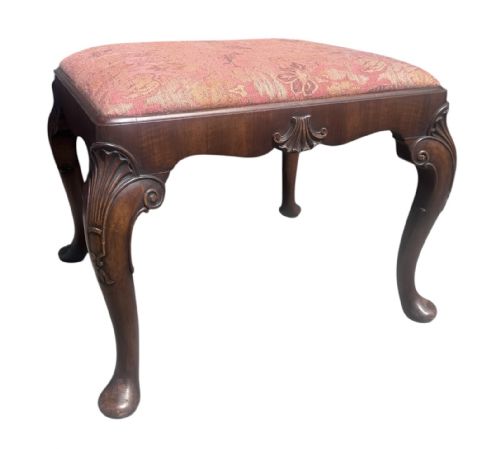
Makers shaped the structural frames from solid walnut, utilising the natural grain and deep brown tones of the wood. Cabriole legs, occasionally terminating in claw and ball feet, provide the characteristic stance for these low forms.
Upholstery forms a major component of the construction, integrating materials such as fabric, velvet, wool, and textile braid. Needlework and needlepoint covers are frequently employed on the seating surfaces, secured with traditional methods.
Periods represented on the page stretch from the eighteenth century through nineteenth-century revivals into the early twentieth century.
What varies in quality
The quality of a georgian walnut footstool depends on the crispness of the carved details upon the cabriole legs and the selection of figured walnut veneers or solid timber. Superior examples exhibit harmonious proportions and careful joinery that respects eighteenth-century design principles.
The integrity and execution of the upholstery cover also influence the piece, particularly where hand-worked needlepoint or period-appropriate textiles are utilised. Better examples maintain balance between the wooden frame and the textile top without appearing overly heavy.
The Georgian Walnut Footstool Glossary
- Cabriole leg
- A furniture leg that curves out and then in, mimicking an animal's curving leg. This form appears frequently on walnut seating from the eighteenth century and its later revivals.
- Walnut
- A dense, dark hardwood prized for its rich grain patterns and warm colour. It served as the primary timber for fashionable British furniture during the early eighteenth century.
- Needlepoint
- A type of canvas work embroidery used for upholstery. It provides a textured, decorative surface frequently seen on traditional footstools.
- Claw and ball foot
- A furniture foot carved to represent an animal's claw gripping a ball. This detail often terminates the cabriole legs of finer pieces.
- Window seat
- A long, narrow form of stool designed to sit beneath a window. These pieces share construction traits with standard footstools and benches.
Georgian Walnut Footstool: Frequently Asked Questions
Are all these stools from the eighteenth century?
The selection includes genuine eighteenth-century pieces alongside revival items made during the nineteenth and early twentieth centuries. Makers across different eras reproduced these classic forms.
Examining the construction methods and timber helps determine whether a piece dates to the original period or belongs to a later revival.
What textiles cover these footstools?
Upholstery materials range from plain fabrics and velvet to heavy wool and decorative textile braid. Needlework and needlepoint covers frequently appear on the seating surfaces.
Many covers reflect later revival aesthetics even when the wooden frame follows earlier design traditions.
How do I identify a revival piece?
Revival pieces often date from the nineteenth or early twentieth centuries, mimicking the earlier styles of the eighteenth century. They utilise walnut timber and traditional forms but show different secondary woods or machine-cut joinery.
Comparing the sharpness of the carved cabriole legs against known period examples clarifies the age of the piece.
How were these low seats used?
These pieces served as footstools, low benches, and window seats within traditional domestic interiors. Their compact size allowed them to be moved easily near hearths or seating areas.
Today, they function similarly in modern spaces, offering decorative utility alongside traditional seating.