




Traditional Walnut Centre Table
A traditional walnut centre table brings rich timber tones and classic form to a room, offering both practical surface area and historic character.
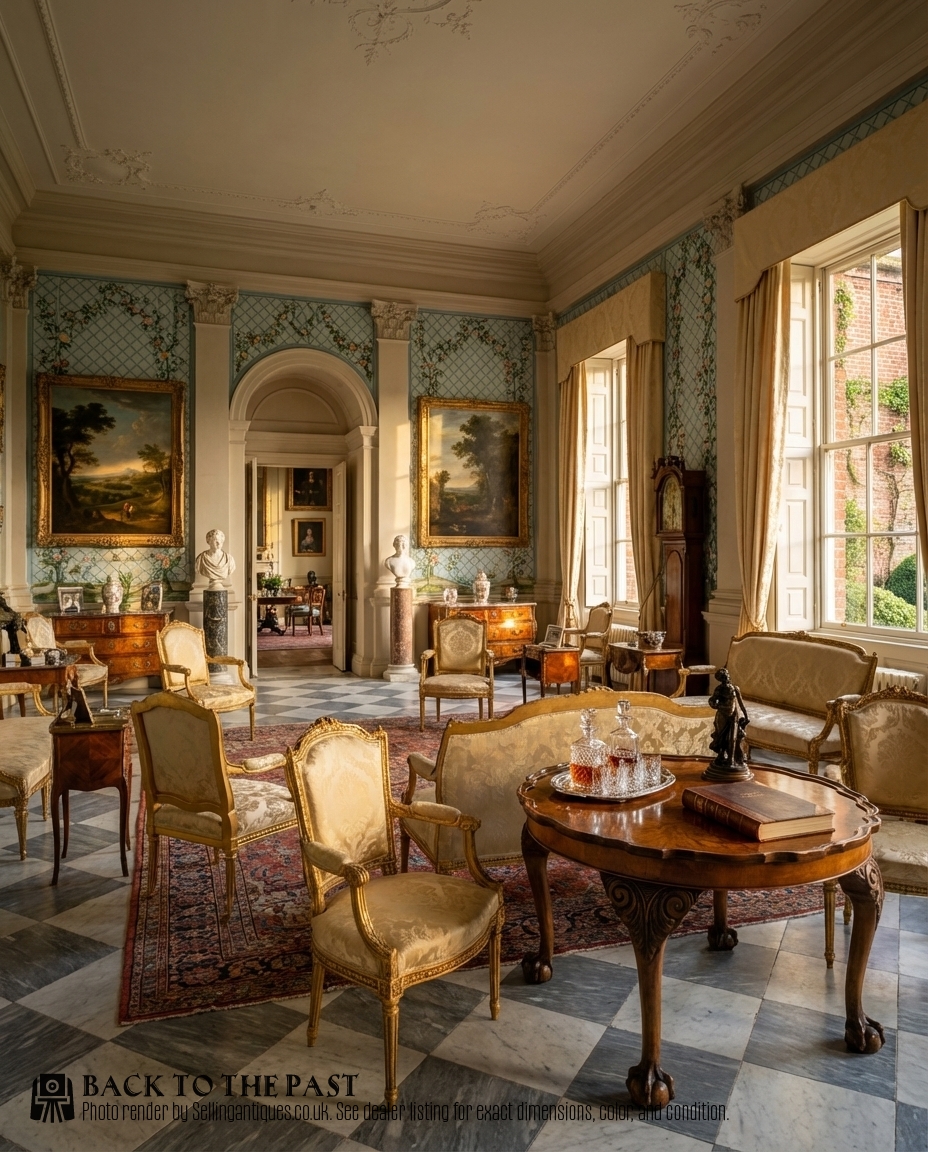
Traditional Walnut Centre Table
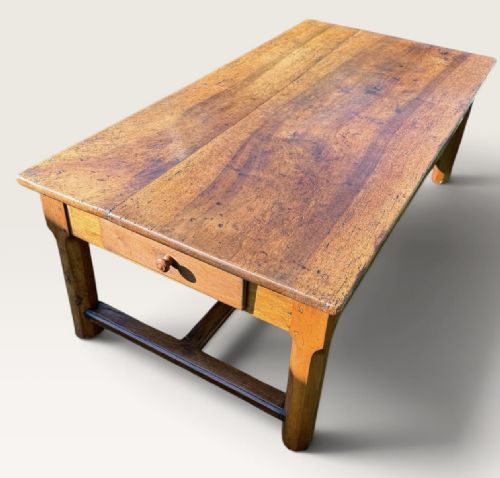
A traditional walnut centre table is a freestanding piece designed to sit in the middle of a room, drawing the eye with warm wood figures and classic proportions. These tables appear across several distinct eras, spanning the Victorian period through to the 1920s and 1930s.
The selections on this page lean heavily towards coffee tables and larger centre tables adapted for modern living. Buyers frequently encounter low formats alongside circular pedestal designs and grander dining-scale pieces.
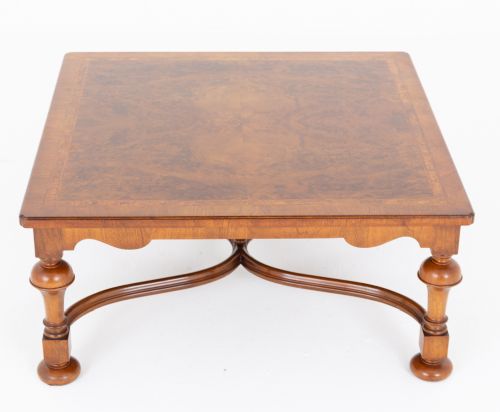
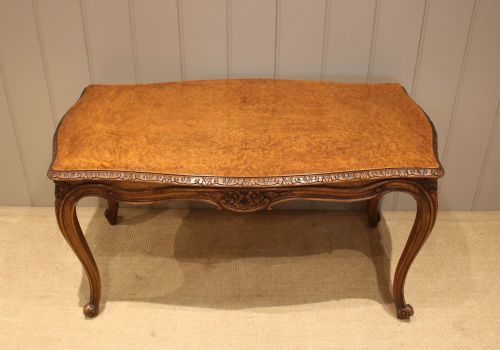
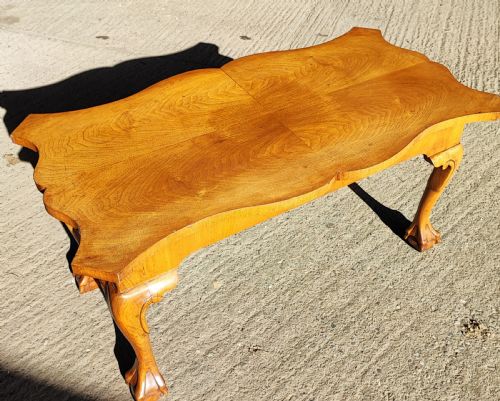
Stylistic influences range widely, drawing on Victorian tradition, Queen Anne revival lines, Carolean motifs, and French rococo revival flourishes. Timber choices dominate the visual appeal, moving from plain walnut to highly figured burr variants.
How they were made
Cabinet makers utilised solid walnut and decorative burr walnut veneers applied over sturdy timber foundations to create striking surface patterns. Many examples incorporate intricate fruitwood inlay, marquetry, and parcel-gilt wood details to highlight the carved structure.
Listings feature walnut, burr walnut veneer, fruitwood inlay, and brass, spanning the Victorian era through the 1930s.
What varies in quality
Quality rests primarily on the depth of figure in the walnut veneer and the crispness of the hand-carved details on the base. Tables featuring complex marquetry inlay or parcel-gilt enrichment demonstrate a higher level of workshop ambition.
Proportion and structural integrity also dictate the standing of a piece, separating standard utility furniture from finer examples intended for formal reception rooms.
Gillows of Lancaster
The Traditional Walnut Centre Table Glossary
- Burr Walnut
- A figured wood grain obtained from the wart-like growths on walnut trees, prized for its swirling patterns. It is typically sliced into veneers for tabletops.
- Marquetry Inlay
- Decorative patterns formed by fitting small pieces of contrasting wood veneer into a prepared surface. This technique creates elaborate floral or geometric designs.
- Pie Crust Edge
- A raised, scalloped carved rim running along the circumference of a circular tabletop. It is associated with finer decorative tables from the nineteenth and early twentieth centuries.
- Pedestal Centre Table
- A table supported by a central column resting on a spreading base rather than standard four legs. This design allows unobstructed seating and movement around the perimeter.
- Parcel-Gilt Wood
- Wooden items partially decorated with gold leaf or gold paint to accentuate carved details. This finish highlights specific motifs against the dark walnut background.
Traditional Walnut Centre Table: Frequently Asked Questions
What is a traditional walnut centre table used for?
These pieces serve as focal points in a living room or reception space, functioning as coffee tables or display surfaces for books and decorative objects. Larger variants historically accommodated dining or central room assembly.
Their sturdy timber construction ensures they handle daily use while adding historic presence to an interior.
How do I date a walnut centre table?
Dating relies on examining the construction methods, stylistic revival cues, and overall proportions of the piece. Victorian examples often display heavier pedestals and rich burr veneers.
Pieces from the 1920s and 1930s frequently adapt earlier styles like Queen Anne or Carolean motifs into lower coffee table formats.
Are these tables solid walnut?
Most examples combine solid timber internal structures with decorative burr walnut veneers applied to the visible surfaces. This technique allowed cabinet makers to display striking grain patterns without warping the core wood.
Secondary timbers provide underlying strength beneath the decorative outer layers.
How do I care for walnut furniture?
Keep the wood away from direct sunlight and strong heat sources to prevent the walnut veneer from drying out or cracking. Regular dusting with a soft, dry cloth preserves the polished finish.
Avoid silicone-based sprays and apply natural wax sparingly when the timber appears dry.