


Traditional Uzbek Wall Hanging
A traditional uzbek wall hanging brings vibrant Central Asian needlework into a room, offering rich botanical motifs and historic silk embroidery.
Traditional Uzbek Wall Hanging
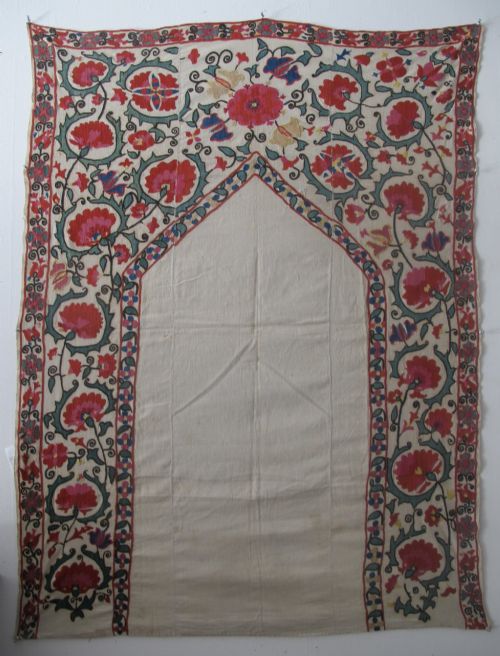
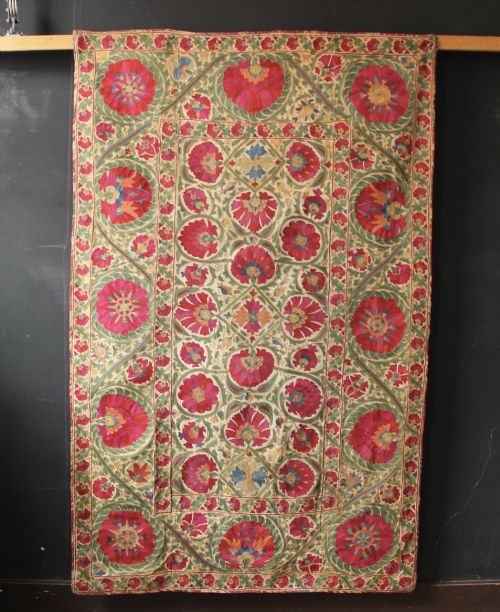
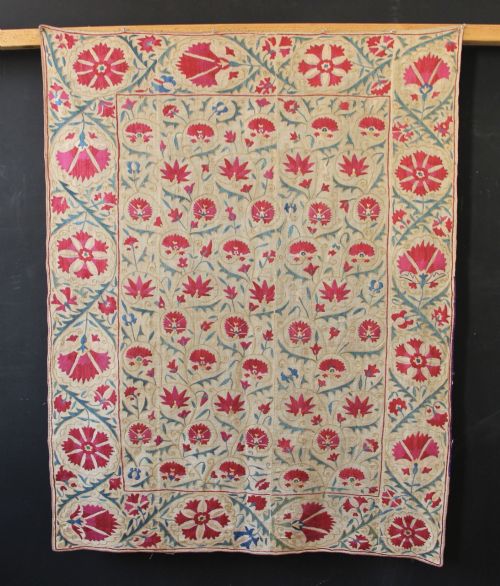
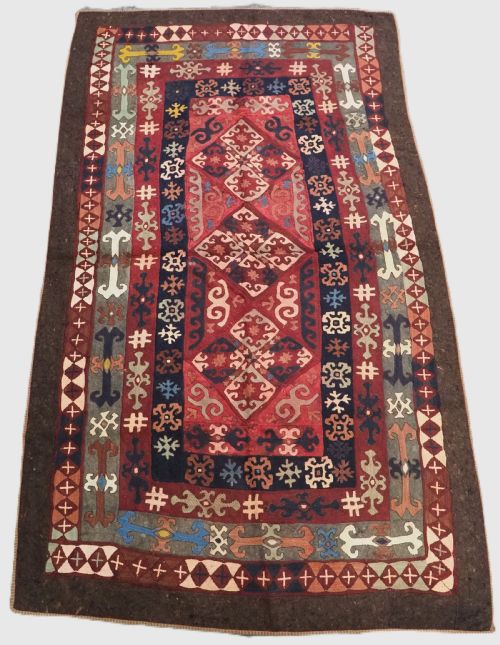
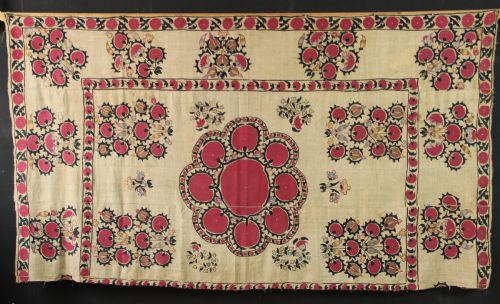
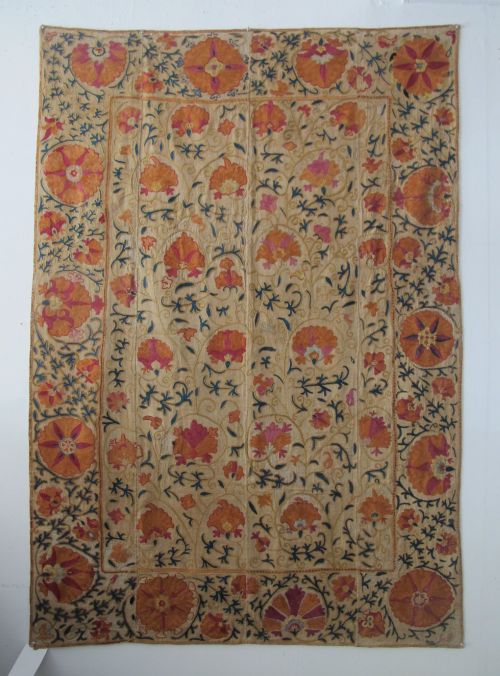
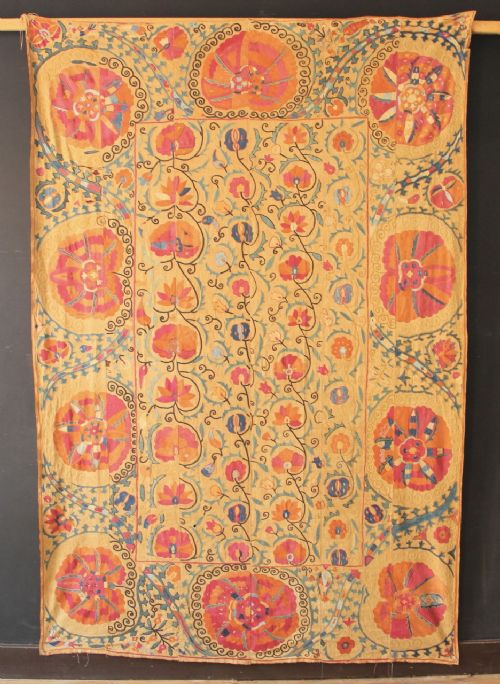
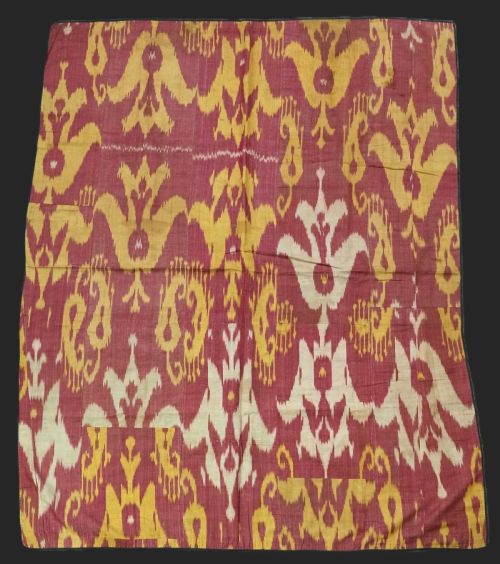
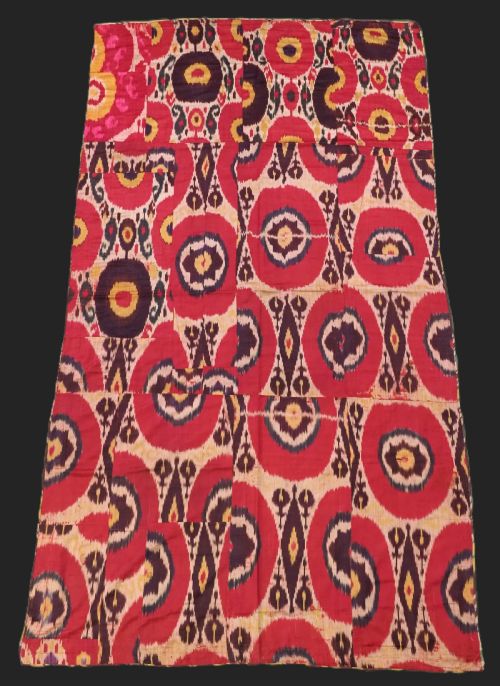
A traditional uzbek wall hanging typically comprises large embroidered panels known as suzanis, along with woven ikat fabric panels and tribal rugs created across historic centres like Bukhara, Samarkand and Tashkent.
The pieces on this page span the nineteenth and early twentieth centuries, featuring distinct regional formats such as the smaller nim suzani, full work palak embroideries and prayer designs.
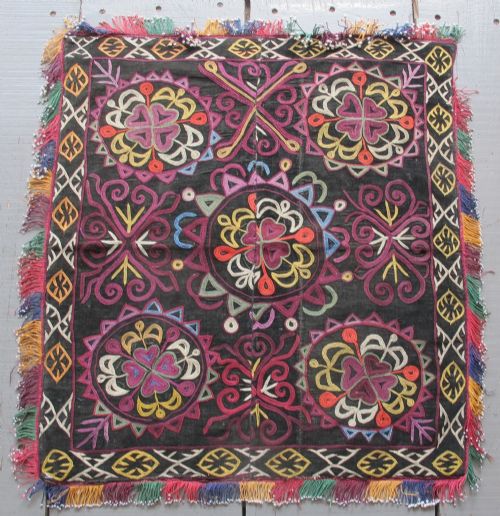
Makers utilised various traditional formats, including bed covers, mirror covers and horse gear hangings, alongside ceremonial garments like chapan and khalat coats.
Materials and construction
Needleworkers applied fine silk thread embroidery onto foundation grounds of cotton, linen, wool or adras, which is a mixed silk and cotton fabric.
Ikat panels achieved their characteristic blurred patterns through resist-dyeing the warp threads before weaving on traditional looms.
Tribal makers also incorporated felted wool and glass beads within specific regional groups such as the Lakai.
Some nineteenth-century makers stitched protective amulets directly into the embroidery to ward off evil spirits.
Evaluating quality
The density of the embroidery work dictates the distinction between standard panels and fully worked masterworks, where the foundation ground disappears beneath the stitching.
Dye saturation and the complexity of regional botanical or architectural compositions separate routine decorative items from pieces displaying superior artistic execution.
The Traditional Uzbek Wall Hanging Glossary
- Suzani
- An embroidered textile panel originating from Central Asia, traditionally worked by brides as part of their dowry. These pieces display elaborate floral and geometric motifs.
- Ikat
- A dyeing and weaving technique where threads are tie-dyed prior to weaving, producing characteristic feathered edges along the pattern outlines.
- Adras
- A traditional fabric woven with a silk warp and a cotton weft, combining the lustrous sheen of silk with the durability of cotton.
- Nim suzani
- A half-size suzani panel, smaller than the grand bridal bed covers but featuring the same intricate embroidery and regional design vocabulary.
- Khalat
- A long, loose-fitting gentleman's coat, frequently fashioned from richly patterned silk ikat textiles and sometimes quilted for winter warmth.
Traditional Uzbek Wall Hanging: Frequently Asked Questions
How were traditional suzanis used originally?
Historically, these textiles served multiple domestic functions within Central Asian households, acting primarily as ceremonial wall hangings, wedding bed covers and decorative drapery.
Families also utilised them to wrap household goods or fashioned them into festive garments for daily wear and special occasions.
How do I identify a Tashkent suzani?
Tashkent pieces often present distinctive full work embroidery where the background fabric remains largely hidden beneath dense floral medallion layouts.
These panels frequently display bold, expansive compositions that cover the entire surface with intricate needlework.
What is the difference between a suzani and an ikat?
A suzani is fundamentally an embroidered textile where artisans stitch decorative motifs directly onto a woven foundation fabric using silk or cotton threads.
An ikat, conversely, achieves its pattern through a complex resist-dyeing process applied to the threads before the cloth is woven on the loom.
How do I care for an antique textile?
Display these delicate pieces away from direct sunlight to protect natural dyes from fading over time, and support the weight evenly if hung on a wall.
Avoid moisture and professional wet cleaning unless handled by a specialist familiar with historic silk embroidery and natural textile conservation.