
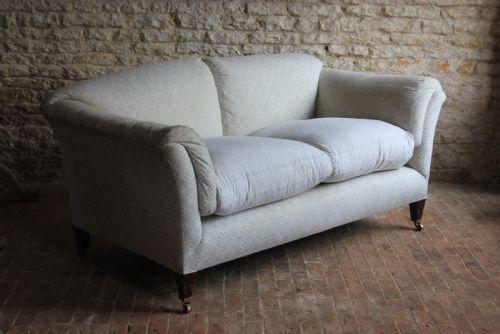
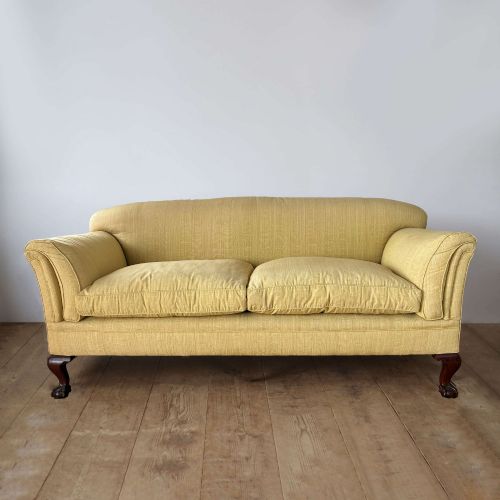
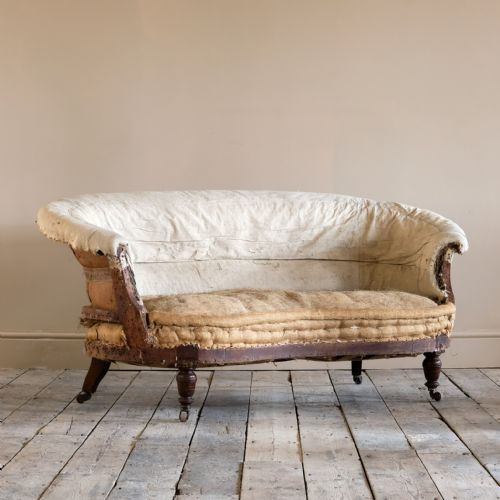


Traditional Two Seater Settee
A traditional two seater settee offers intimate proportions and classic seating for a compact drawing room or a country house study.
Traditional Two Seater Settee
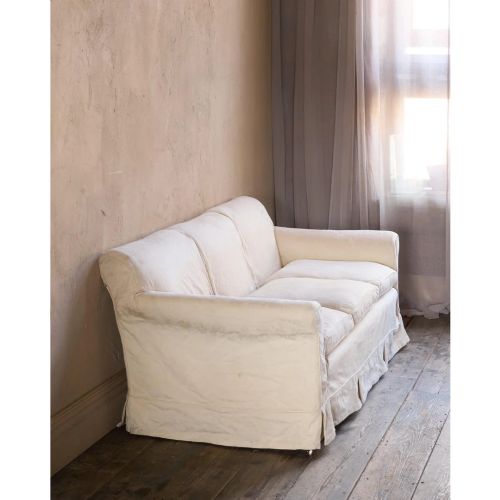
When you search for a traditional two seater settee, you encounter a compact seating form designed for intimate spaces, spanning periods from the nineteenth century through the early decades of the twentieth century. These pieces appear as deep-seated country house sofas, drop-arm settees, and show-frame drawing room seats.
The materials and frameworks vary across these eras, combining sturdy timber frames of mahogany, oak, and walnut with upholstered surfaces in fabric, leather, and horsehair fill. Styles range from Victorian and Edwardian interpretations to specific revivals including Queen Anne, George II, and Victorian Chippendale.
You are most likely to meet Edwardian and Victorian examples on this page, often upholstered in aged leather or traditional woven fabrics. Makers and retailers such as Howard and Sons and Hampton and Sons frequently define the higher tier of these offerings.
Materials and Construction Methods
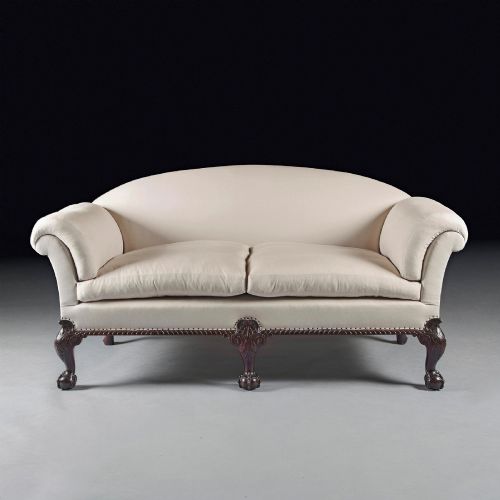
The construction of these pieces relies on solid timber frames fashioned from walnut, mahogany, oak, and general hardwood timber. Artisans shaped these structural supports with hand-carved details, turned legs, and ball and claw feet.
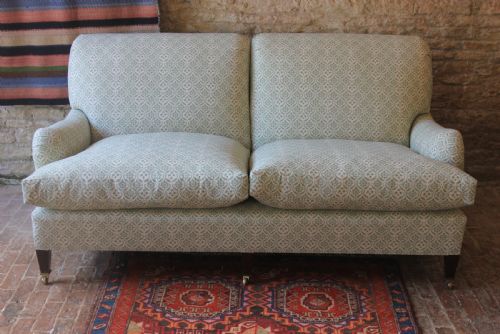
Upholstery methods incorporate traditional horsehair fill within deep-seated sprung structures. Outer surfaces utilise heavy upholstery fabric, hand-dyed leather, and specialised textiles from makers such as Colefax and Fowler.
Listings feature walnut, mahogany, and oak frames paired with leather and fabric upholstery across the Victorian and Edwardian eras.
Indicators of Quality
Quality rests upon the integrity of the underlying timber frame and the authenticity of its period construction. Pieces bearing maker stamps or attributed to notable workshops command greater attention from collectors.
The execution of hand-carved elements, such as ball and claw feet or floral motifs on show frames, distinguishes superior workshops from standard production. Furthermore, the retention of original materials and sympathetic re-upholstery preserves the character of the piece.
Howard and Sons·Hampton and Sons
The Traditional Two Seater Settee Glossary
- Drop arm
- A sofa mechanism allowing one end of the settee to lower into a chaise position. This feature offers adjustable lounging configurations.
- Show frame
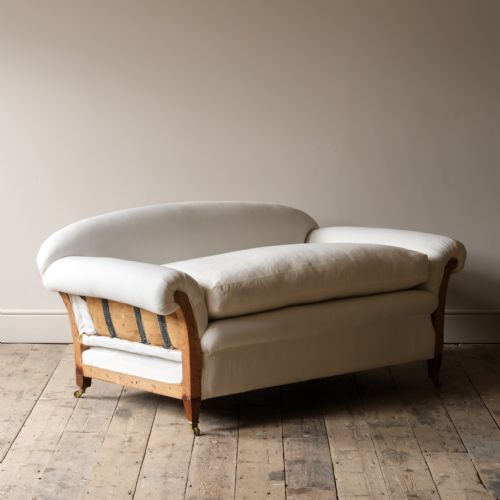
- An exposed wooden structural framework surrounding the upholstered components. This showcases the carved walnut or mahogany timber beneath.
- Horsehair fill
- Traditional stuffing material utilised in period upholstery for firm resilience. It provides long-lasting structural support within the seat and back.
- Ball and claw
- A decorative foot style depicting a bird's talon clutching a ball. This detail frequently appears on revival pieces from the nineteenth century.
- Chesterfield
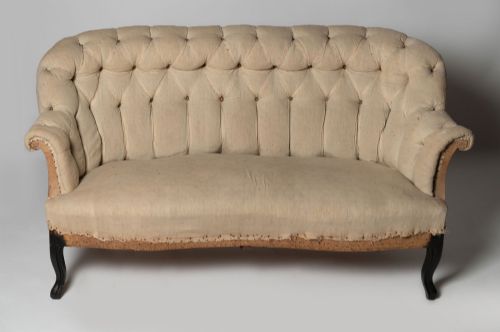
- A upholstered seating form characterised by deep button tufting and rolled arms of equal height. It remains a staple of traditional British interiors.
Traditional Two Seater Settee: Frequently Asked Questions
What periods do these settees date from?
The listings span the nineteenth century, the Victorian and Edwardian eras, and extend into the 1920s and 1930s. Various revival styles mirror earlier aesthetics.
Craftsmanship and materials shift subtly across these decades, moving from ornate carved walnut to streamlined country house comfort.
Are these settees upholstered in leather?
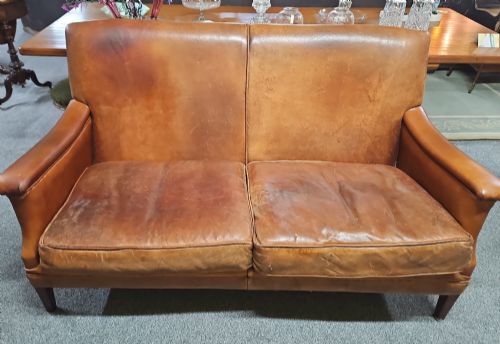
Many examples feature hand-dyed leather, whisky brown finishes, or button-back detailing. These materials suit traditional studies and libraries.
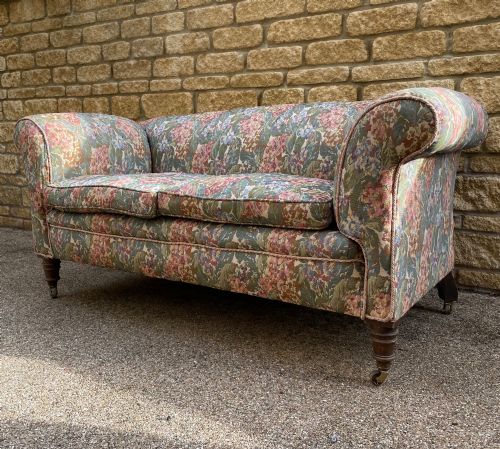
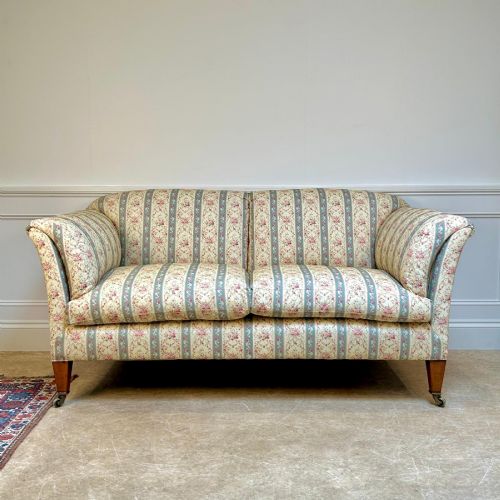
Alternatively, numerous pieces utilise woven upholstery fabric or specialised textile houses like Colefax and Fowler.
How do I identify a drop arm settee?
A drop-arm mechanism enables one side of the sofa to fold downward for reclining. This practical Victorian invention creates a versatile daybed configuration.
Such pieces combine formal upright seating with adaptable comfort.
What wood types are used in the frames?
Frames are constructed primarily from walnut, mahogany, and oak, often referred to simply as timber or wood in period descriptions. These sturdy woods support intricate hand-carved details.
Exposed wooden show frames frequently display polished walnut or rich mahogany grains.