



Traditional Turkmen Textile
A traditional turkmen textile brings the rich tribal heritage of Central Asia into a modern interior through deep reds and intricate motifs.
Traditional Turkmen Textile
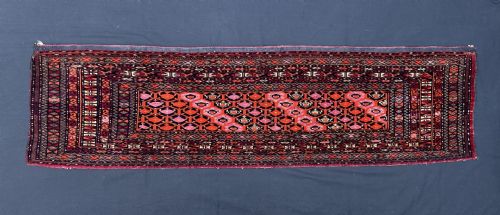
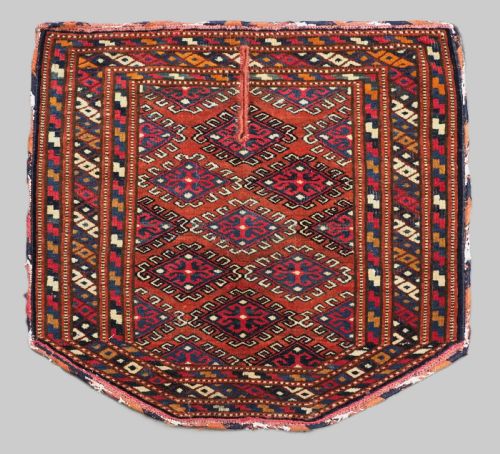
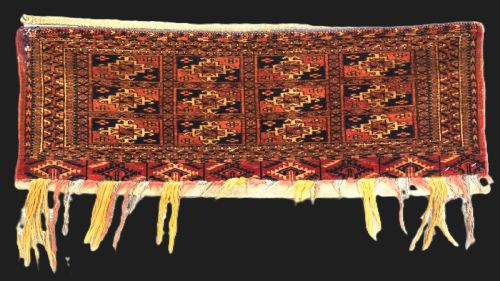
Traditional turkmen textile works encompass a variety of tribal weaving traditions originating from Central Asia, including Turkmenistan and surrounding regions. Buyers searching for a traditional turkmen textile will encounter woven rugs, ceremonial tent bags, saddle covers, and horse trappings.
The pieces available frequently include torbas, chuvals, and asmalyks created by tribal groups such as the Tekke, Yomut, Saryk, and Ersari. These items served functional roles within nomadic households, doubling as dowry items and household storage.
Aside from floor coverings and storage bags, the category extends to embroidered garments like the ceremonial lady's coat, known as a chyrpy. Each format reflects the specific cultural identity and weaving vocabulary of the tribe that produced it.
Materials and construction
The foundational materials of a traditional turkmen textile rely heavily on locally sourced wool, cotton, and silk, combined to achieve durability and texture. Weavers utilised natural dyes to produce characteristic rich madder-red grounds, complemented by cochineal highlights and contrasting dark tones.
Construction methods range from finely knotted pile weaving on wool or cotton warps to flat-woven techniques seen in kilims and tent bands. Embroidery on silk appears particularly in ceremonial garments and decorative panels, executed with dense needlework.
Traditional Turkmen Textile Retail Price Guide 2026
Typical asking prices for traditional turkmen textile among the pieces listed under this phrase on Sellingantiques today, from the lower quarter to the upper quarter. They describe what is for sale here now, not the wider market.
Listings feature wool, cotton, and silk textiles spanning the mid nineteenth century through the early twentieth century.
Factors of quality
Quality in a traditional turkmen textile rests on the density of the weave and the precision with which tribal guls and geometric patterns are executed. Pieces displaying a very fine weave and crisp, saturated natural dyes generally represent the higher tier of tribal production.
The completeness of a piece also influences its standing, with surviving items retaining their original plain weave backs, borders, or complete formats commanding attention. Furthermore, the clarity of design elements, such as multiple guls or balanced elem panels, distinguishes master weaver output from standard utility items.
Sariq Tribe·Yomut Tribes·Teke Tribes·Karadashli Tribe·Ersary Tribes
The Traditional Turkmen Textile Glossary
- Gul
- A primary octagonal medallion motif repeated across the field of many carpets and bags, often identifying the specific tribe.
- Chuval
- A large tent storage bag used by nomadic families for bedding and household goods, woven in pile technique.
- Torba
- A smaller storage bag, typically wider than it is tall, used inside the yurt for personal possessions.
- Asmalyk
- A large pentagonal trapping used on the flanks of a camel during wedding processions.
- Engsi
- A rug designed to hang over the doorway of a felt tent, featuring a characteristic cross-panel layout.
Traditional Turkmen Textile: Frequently Asked Questions
How were torbas used?
Torbas functioned primarily as utility storage bags inside nomadic tents, holding smaller household belongings and personal items.
They hung against the lattice walls of the yurt, contributing to the colourful interior decoration of the nomadic dwelling.
How do I identify tribe work?
Tribal identity is typically determined by examining the specific structure of the guls, the border patterns, and the colour palette.
Different groups like the Tekke, Yomut, and Ersari utilised distinct design vocabularies and structural quirks.
Can I hang these on walls?
Many smaller formats, such as chuval faces and torbas, lend themselves well to wall display due to their manageable dimensions.
Using a sleeve or specialist mounting technique protects the structure of the textile while showcasing the tribal patterns.