


Traditional Turkmen Carpet
When you search for a traditional turkmen carpet, you enter a world of tribal weaving defined by deep red grounds, geometric guls, and nomadic heritage.
Traditional Turkmen Carpet
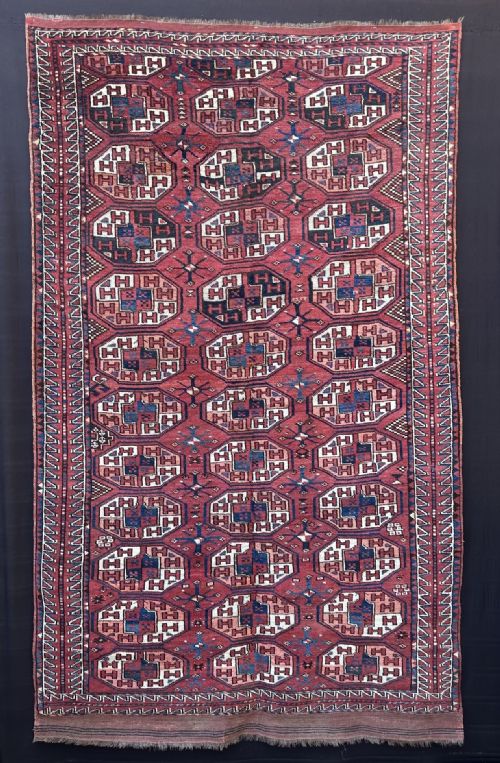
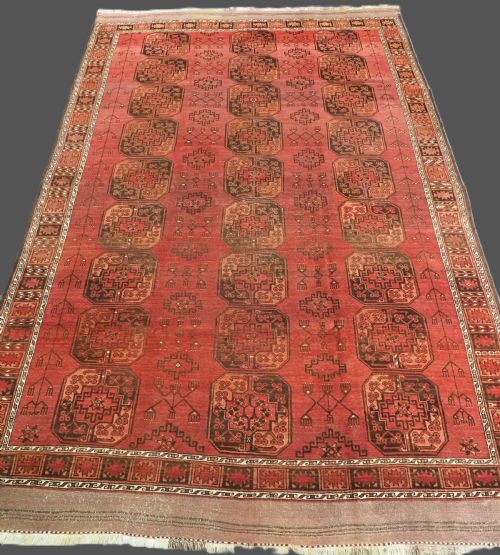
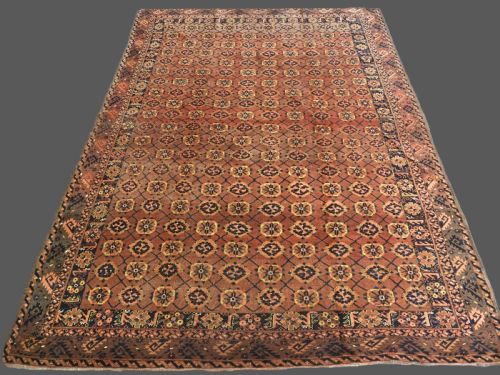
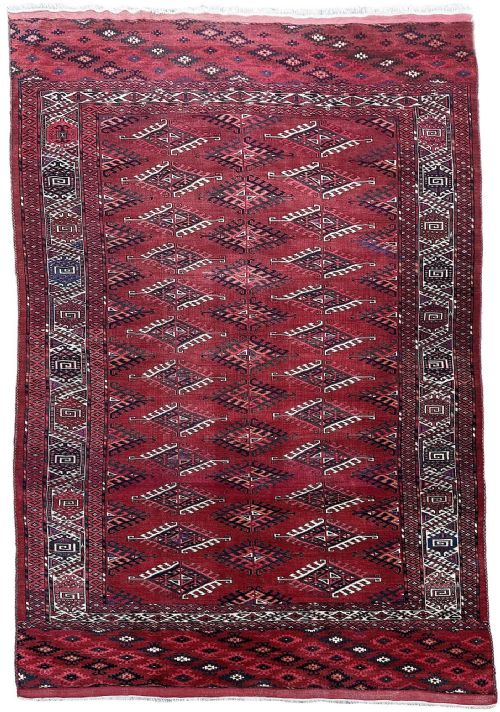
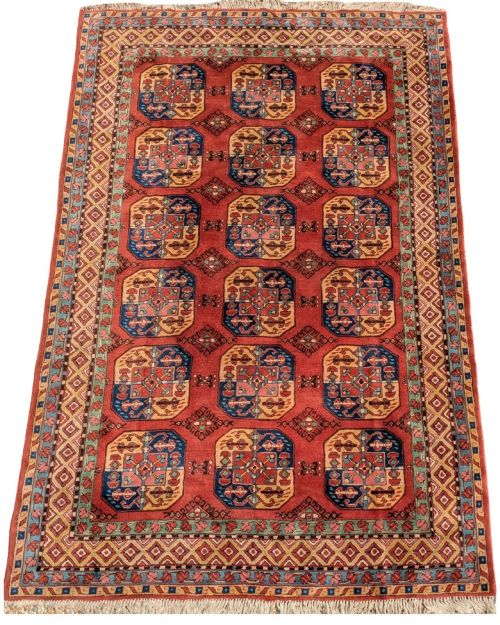
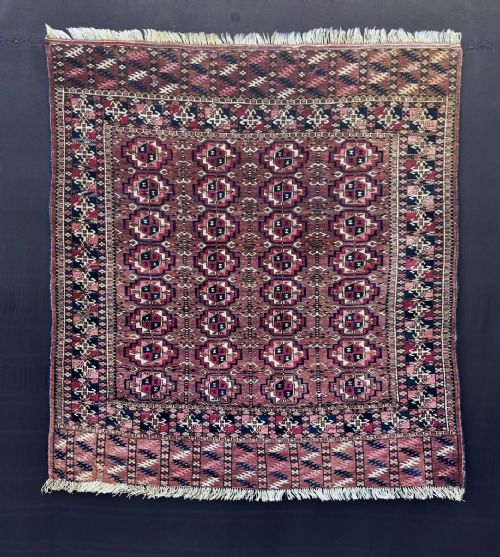
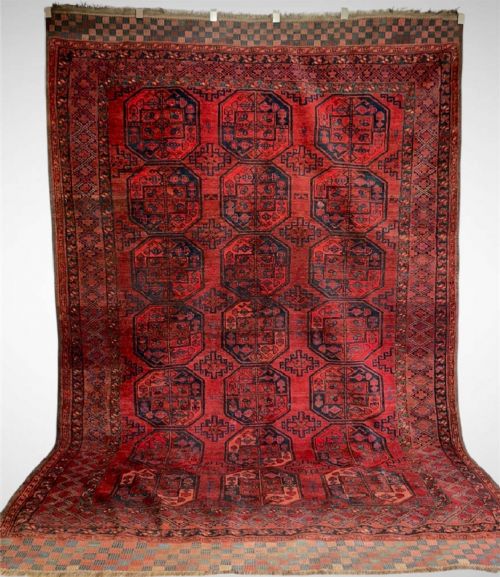
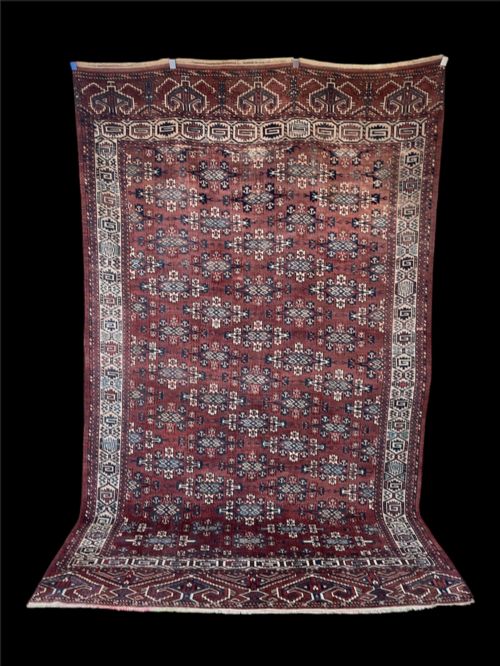
A traditional turkmen carpet encompasses floor coverings and smaller tribal weavings originating from Central Asian groups such as the Tekke, Yomut, Ersari, and Saryq tribes. These pieces typically display structured geometric layouts dominated by repeating primary motifs known as guls, reflecting the specific clan or nomadic lineage of the makers.
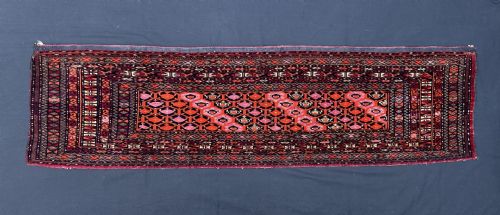
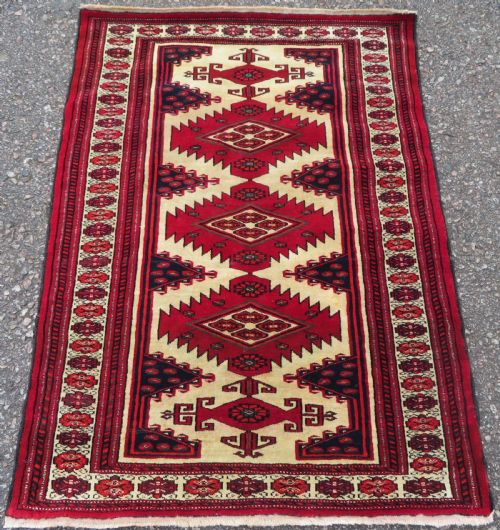
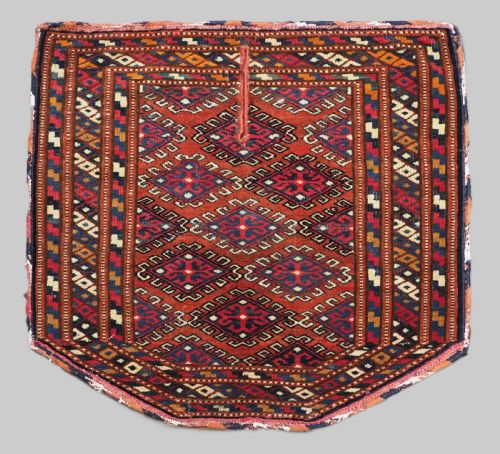
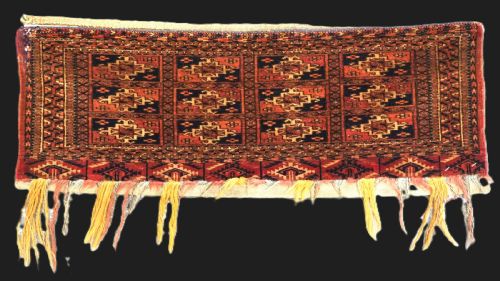
The selections available here range from room-sized main carpets down to smaller utility items like torbas, wedding rugs, and asmalyks created across the nineteenth and early twentieth centuries. Rugs and carpets dominate the physical formats, alongside specialised tent-hanging bags and door rugs known as ensis.
Geographically, these items trace their origins to regions spanning Turkmenistan, the Trans-Caspian steppes, and northern Afghanistan. Buyers encounter both large village room carpets and finely knotted dowry pieces produced by Central Asian tribal weavers working within traditional nomadic design systems.
Materials and construction methods
Weavers constructed these traditional turkmen carpet examples primarily using hand-spun wool for the pile, foundation warp, andweft threads. Natural dyes provided the distinctive palette, anchored by deep madder reds alongside secondary shades of indigo, brown, and ivory.
Certain finer domestic or dowry pieces incorporated silk highlights to accentuate specific motifs within the design field. Auxiliary fibres such as goat hair and horsehair occasionally appear in the outer selvedges or structural edges for added durability.
Nomadic weavers occasionally included deliberate small wool colour shifts in the borders, playfully defying strict symmetry.
Determinants of quality
The fineness of the knot density and the precision of the geometric execution dictate the upper tiers of quality among these textiles. Tightly packed knots allow intricate secondary details within the guls and minor borders to remain crisp and well-defined.
The integrity and depth of the natural dyes significantly influence overall aesthetic merit. Well-preserved wool piles utilising rich, saturated madder roots display a luminous quality that separates superior tribal weaving from simpler utilitarian work.
The Traditional Turkmen Carpet Glossary
- Gul
- A primary octagonal medallion motif repeated across the field of a traditional turkmen carpet. Each tribal group utilised distinct gul variants to signal lineage and identity.
- Ensi
- A specialised tribal rug used as a tent door hanging. These pieces typically feature a quartered cruciform design separating the field into distinct panels.
- Torba
- A small utilitarian wall-hanging bag produced by nomadic weavers for storage inside a yurt. They often share the design vocabulary and finer knotting of main carpets.
- Asmalyk
- A camel-flank trapping created for wedding processions. These pentagonal weavings are prized by collectors for their expressive decorative geometry.
- Madder
- A natural organic dye derived from the root of the Rubia tinctorum plant. It yields the foundational red tones characteristic of Central Asian textiles.
Traditional Turkmen Carpet: Frequently Asked Questions
What is a traditional turkmen carpet?
A traditional turkmen carpet is a hand-knotted textile created by nomadic and village tribes of Central Asia, primarily recognised by its deep red colour palette and repeating geometric gul motifs.
These pieces served functional and ceremonial roles within tribal life, ranging from large floor coverings for living spaces to specialised dowry items and tent furnishings.
How do I identify different Turkmen tribes?
Attribution relies heavily on the specific primary gul shape, border patterns, and secondary colours used in the field. Tekke, Yomut, and Ersari weavers each employed distinct structural signatures and design arrangements.
Examining the weave fineness and structural materials like wool or silk highlights also assists in narrowing down the likely producing group or region.
How were these carpets used originally?
Nomadic families used these heavy woollen carpets for floor insulation, seating, and decorative division within traditional circular tents or yurts. Smaller formats functioned as storage bags, saddle covers, or prayer rugs.
Wedding trappings and dowry rugs were specially woven to celebrate marriages and display the technical skill of the maker within the community.
How should I care for an antique wool rug?
Antique wool carpets require gentle regular vacuuming without rotating brush bars to protect the fragile pile and aged foundation threads. Keeping them out of direct sunlight prevents natural dyes from fading over time.
Professional cleaning tailored to antique vegetable-dyed textiles ensures the lanolin in the wool remains nourished without damaging the natural dyes.