

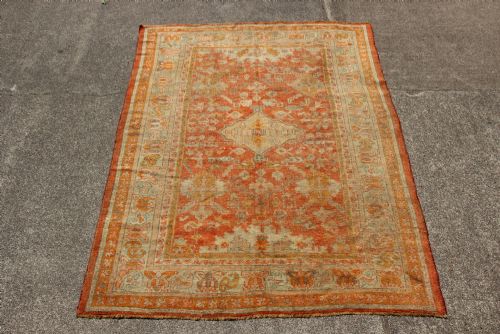


Traditional Turkish Floor Rug
These traditional turkish floor rug examples bring woven history into a room, offering tactile warmth and centuries of Anatolian design.
Traditional Turkish Floor Rug
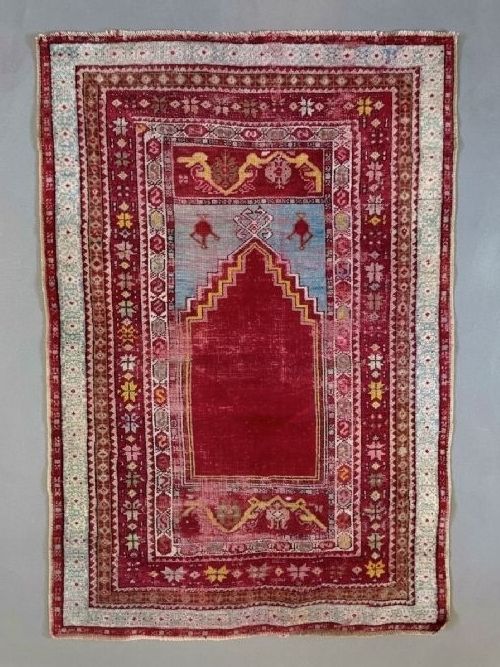
A traditional turkish floor rug is a woven textile originating from Anatolia, designed for domestic use as a floor covering, runner, or prayer mat. These pieces span the nineteenth and early twentieth centuries, encompassing village and workshop productions from regions such as Oushak, Ghiordes, Konya Karapinar, and Bergama.
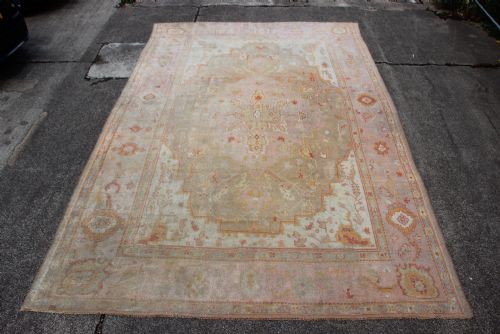
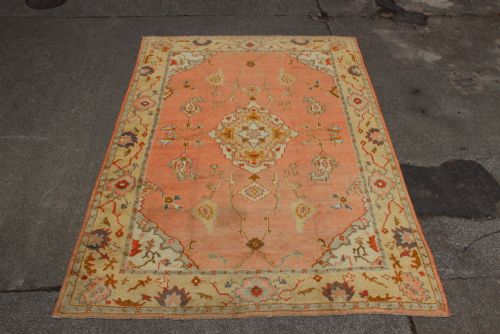
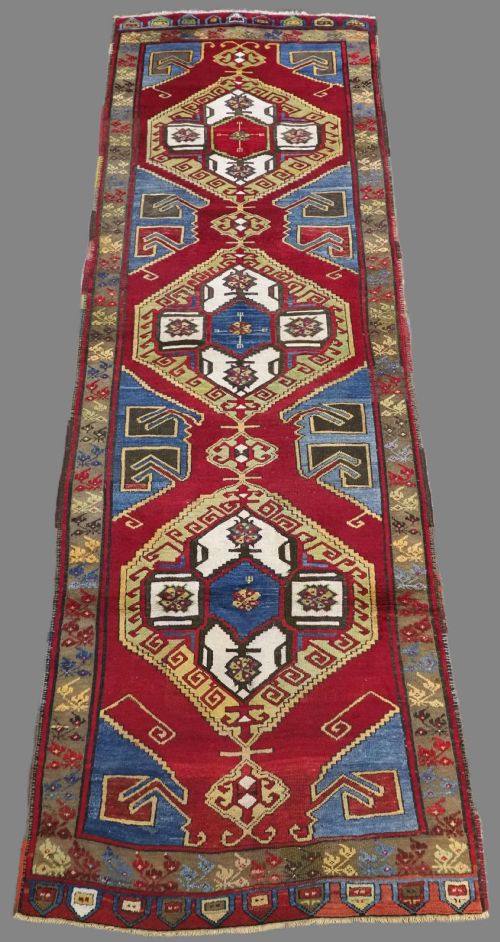
Buyers browsing this selection will most frequently encounter large carpets and runners attributed to Oushak, alongside flat-woven kilims and village rugs. Formats range from expansive room-sized carpets down to narrow runners and compact prayer rugs, reflecting the diverse domestic architecture they originally served.
How They Were Made
These textiles rely primarily on wool and cotton foundations, utilising hand-spun wool for the pile to achieve durability and rich texture. Certain later pieces incorporate art silk or mercerised cotton to introduce a distinct surface sheen.
Weavers knotted the pile by hand onto warp and weft threads, or employed flat-weaving techniques for kilims without a raised pile. Natural dyestuffs and traditional pigments provided the characteristic palette seen across Ottoman and regional Anatolian designs.
The inventory highlights traditional regional styles including Ottoman, Anatolian, Oushak, Ghiordes, Kula, Melas, Bergama, and Yuruk.
What Varies in Quality
Quality rests heavily on the fineness of the knot density and the precision of the weave, which dictate how sharply the geometric or floral patterns resolve. Tighter construction in the foundation ensures the textile maintains its structural integrity under foot traffic.
The choice of materials and the depth of the wool quality influence the tactile handle and how gracefully the pile ages. Furthermore, the artistic merit of the design, whether an Oushak floral scheme or a geometric village pattern, elevates specific examples above standard production.
The Traditional Turkish Floor Rug Glossary
- Oushak
- A major carpet-producing town in western Turkey known for large-scale floral designs and subdued pastel colour palettes. These carpets often utilise a looser, softer weave than other regional types.
- Kilim
- A flat-woven carpet or rug produced without a pile by tightly interweaving warp and weft strands. This technique creates a lightweight textile with identical patterns visible on both sides.
- Prayer rug
- A small rug featuring a mihrab design or niche motif at one end, oriented towards Mecca during Islamic prayer. They were traditionally woven in village workshops across Anatolia.
- Ghiordes
- A historic town and weaving centre in western Turkey famous for prayer rugs and classical Ottoman motifs. The term also designates a symmetrical knot technique used in rug construction.
- Runner
- A long, narrow carpet format specifically proportioned for hallways, corridors, and staircases. These pieces accommodate restricted spatial dimensions while displaying full village or workshop patterns.
Traditional Turkish Floor Rug: Frequently Asked Questions
How do I clean an antique rug?
Surface dust should be removed gently using a suction-only vacuum without a rotating brush bar. Professional textile conservators should handle deeper washing to protect the natural wool and dyes.
Water exposure must be strictly controlled during any maintenance to prevent the cotton foundations from shrinking or weakening over time.
Can I place these rugs in heavy traffic areas?
Many of these durable wool and cotton textiles were built for daily domestic use in hallways and living spaces. Placing a quality underlay beneath the textile prevents slipping and cushions the fibres against hard flooring.
Rotating the placement periodically ensures even exposure to light and wear across the surface of the weave.
How do I identify an Oushak carpet?
Oushak carpets typically feature large-scale floral motifs, medallions, and palmettes rendered in a softer, more relaxed knotting style. The colour palette often relies on warm terracottas, muted yellows, and distinctive pale or pink grounds.
Unlike tightly packed Persian village rugs, these pieces exhibit a more expansive composition with generous negative space.
What is the difference between a rug and a kilim?
A standard rug is constructed with a raised pile formed by individual knots tied to the foundation threads. This creates a thick, plush surface texture designed for warmth and cushioning.
A kilim is a flat-weave textile made by interlocking warp and weft threads together without creating a pile. This results in a thinner, lighter floor covering with a smooth finish.