
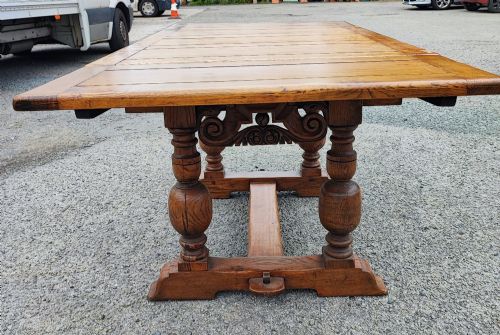
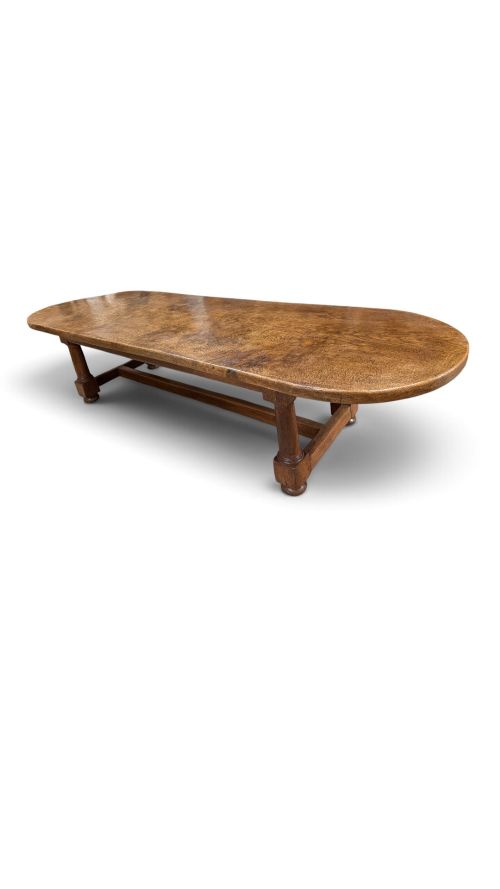
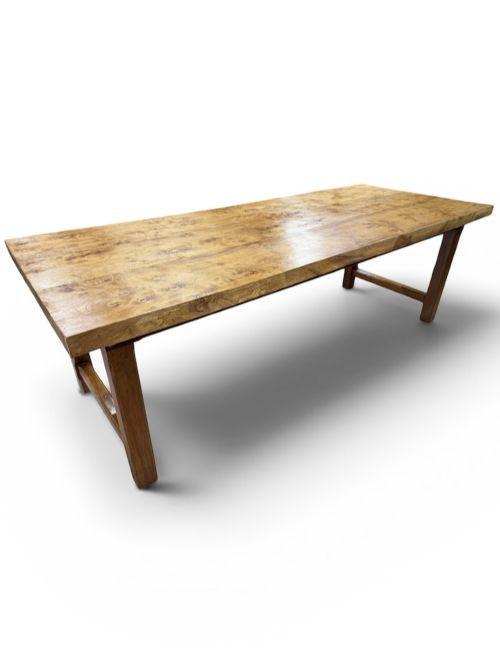
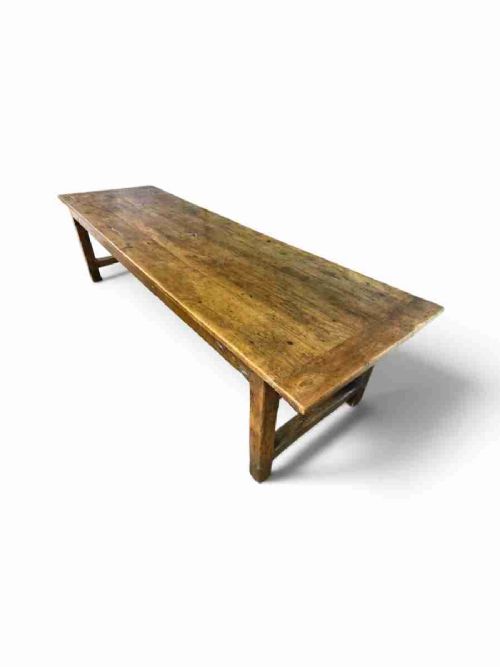
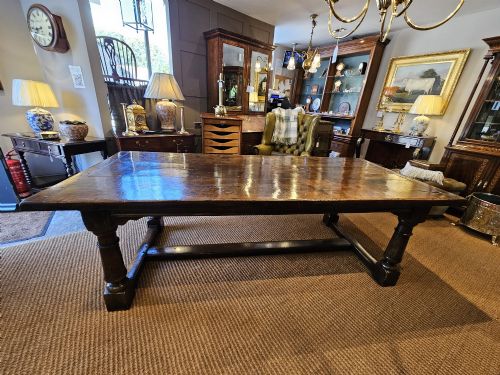
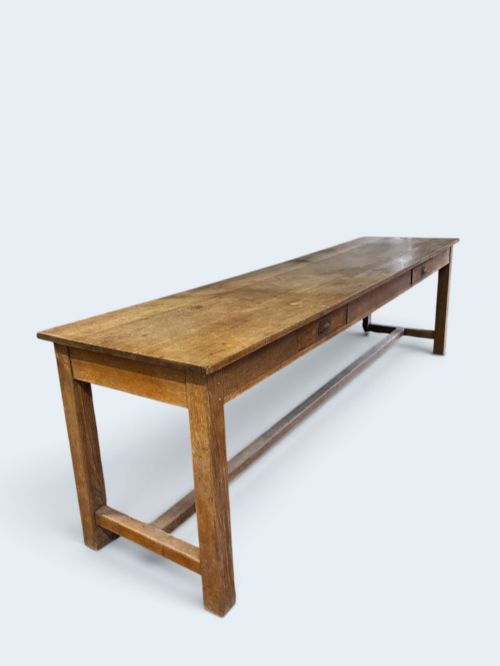
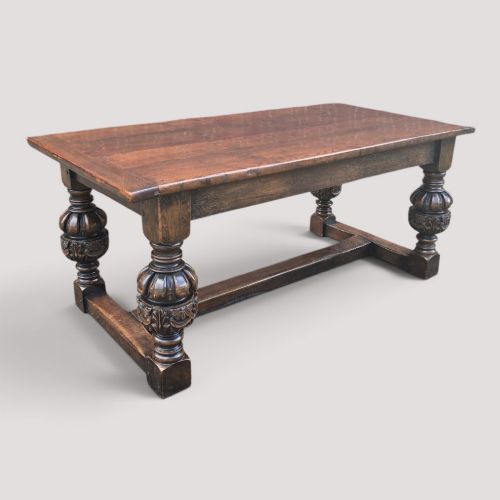
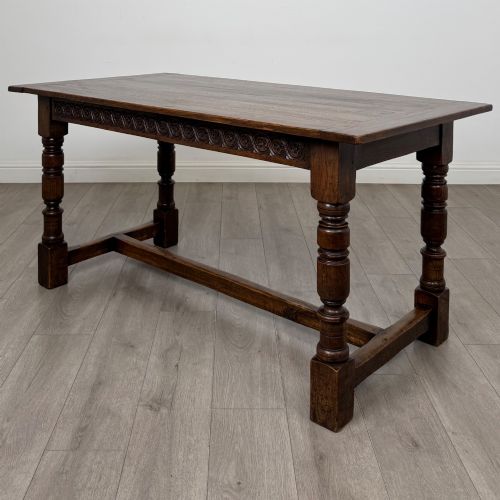
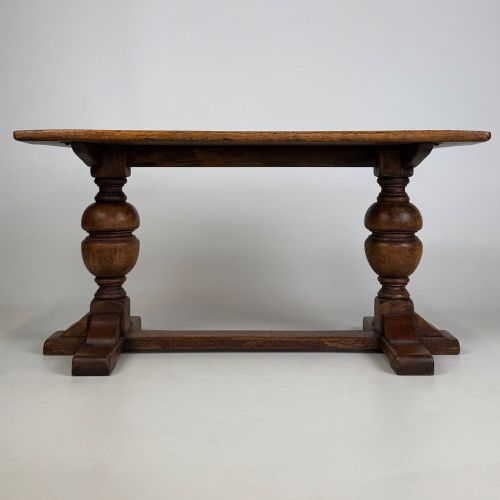
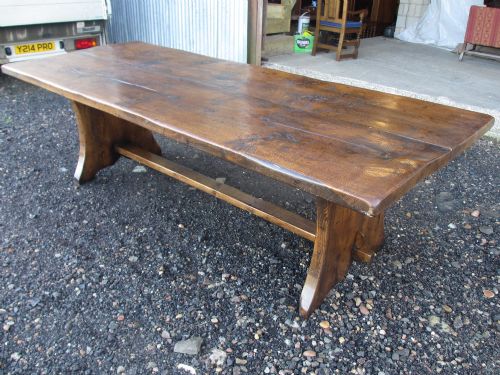
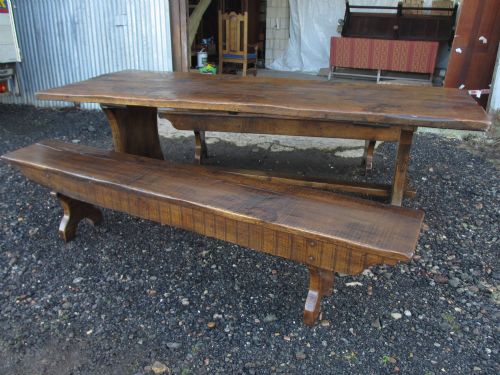
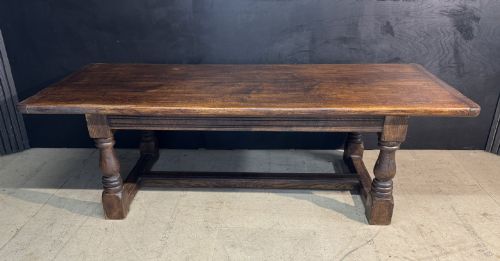
Traditional Trestle Table
A traditional trestle table brings sturdy timber boards and grounded lines to a room, offering generous seating for daily meals.
Traditional Trestle Table
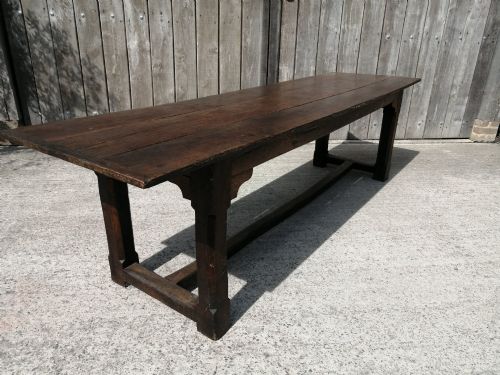
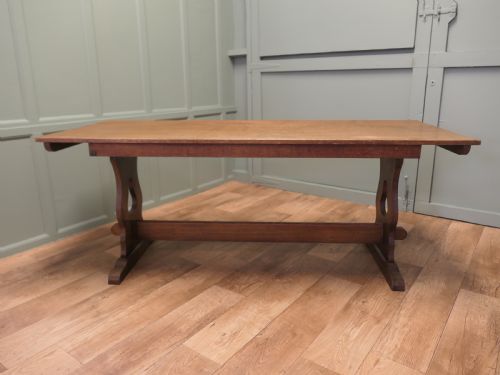
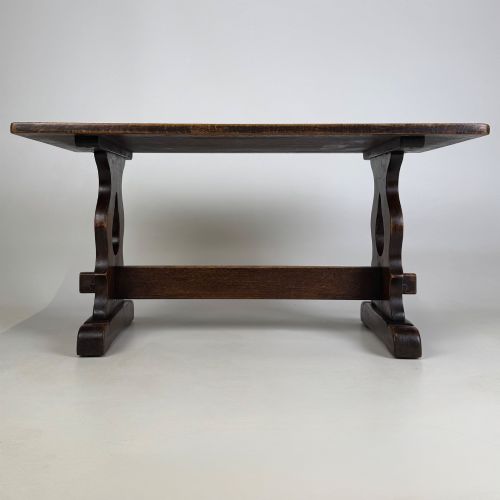
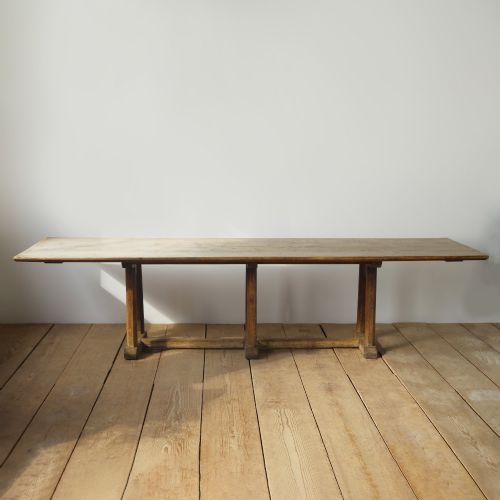
When you search for a traditional trestle table, you encounter robust dining surfaces supported by sturdy end uprights rather than four corner legs. These pieces draw on centuries of utilitarian furniture design, serving large households and communal gatherings.
The versions most common on this page span from the seventeenth century through the Edwardian era and into the nineteen-twenties. You find substantial oak refectory boards alongside pine farmhouse boards, elm tops, and occasional walnut or beech examples.
The formats range from long dining tables and serving tables to coffee tables, tavern tables, and writing desks. Many retain the classic stretcher base that joins the trestle ends for structural stability.
How they were made
Carpenters built these tables using solid timber boards of oak, pine, elm, and walnut, often selecting single planks for the main surface. Iron hardware and wooden pegs secured the joints, while hand planes smoothed the timber top.
The underframes rely on heavy trestle ends connected by central longitudinal stretchers. Draw-leaf mechanisms and drop leaves appear on later examples to extend the surface area for dining.
Listings feature oak, pine, elm, and walnut materials across periods spanning the seventeenth century to nineteen-forty.
What varies in quality
Quality rests in the selection of the timber and the integrity of the joinery rather than surface ornamentation. Solid single-plank tops demonstrate superior material selection compared to multi-board tops.
The proportion of the trestle ends and the weight of the central stretcher dictate the visual balance and physical stability of the piece. Tables with integrated matching benches or carved detailing show higher levels of workshop ambition.
The Traditional Trestle Table Glossary
- Refectory table
- A long narrow dining table historically used in monastic dining halls. These forms provide ample seating along the length of the board.
- Trestle ends
- Upright supports placed near the ends of a table to hold the top. They distribute weight evenly and allow leg room along the sides.
- Draw leaf table
- A table with pull-out leaves stored beneath the main surface. This mechanism increases table length without removing the central boards.
- Stretcher
- A horizontal beam connecting the legs or trestle ends of a table. It prevents the legs from bowing outward under heavy loads.
- Single plank top
- A table surface constructed from one wide piece of timber. This feature indicates large mature trees and skilled milling.
Traditional Trestle Table: Frequently Asked Questions
How do I identify an older trestle table?
Look at the underside of the top boards and the joinery methods used in the frame. Hand-cut peg joints and adze marks indicate older construction methods.
Examine the wear patterns and the patina on the timber. Centuries of use create a distinct depth in the grain that modern reproductions cannot replicate.
Can I use a refectory table daily?
These tables served as the centre of household activity for generations. Solid oak and elm surfaces handle daily meals and family gatherings with ease.
Apply wax polish regularly to protect the timber grain from moisture and heat rings. Regular care maintains the finish against everyday wear.
What is the difference between farmhouse and refectory tables?
Refectory tables traditionally feature trestle ends connected by a low stretcher rail. Farmhouse tables often employ simpler uprights or thick corner legs.
Both styles utilise heavy timber boards suited for communal dining. The distinction lies primarily in the underframe architecture and regional vernacular.
How do draw-leaf mechanisms work?
Hidden leaves slide out from beneath the main top boards when extra dining space is required. The central top section lifts slightly as the leaves pull outward.
This clever engineering allows quick adjustment of table length. The leaves drop back into place level with the main surface when pushed inward.