



Traditional Trestle Desk
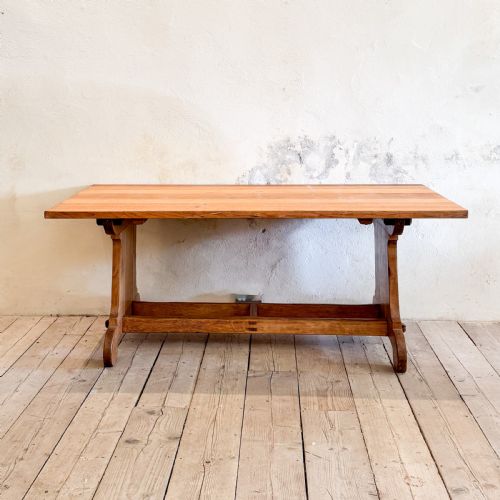
These traditional trestle desk examples unite solid timbers and sturdy frameworks, offering an enduring workspace built for daily utility.
Traditional Trestle Desk
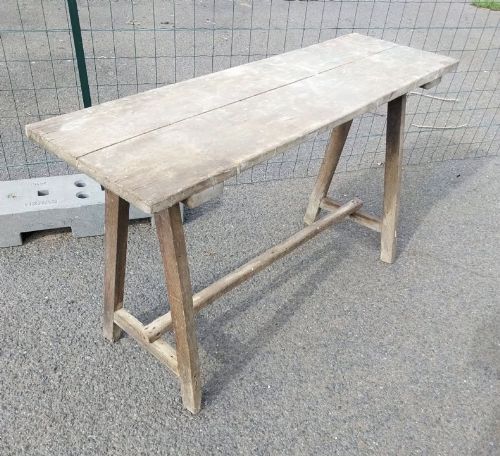
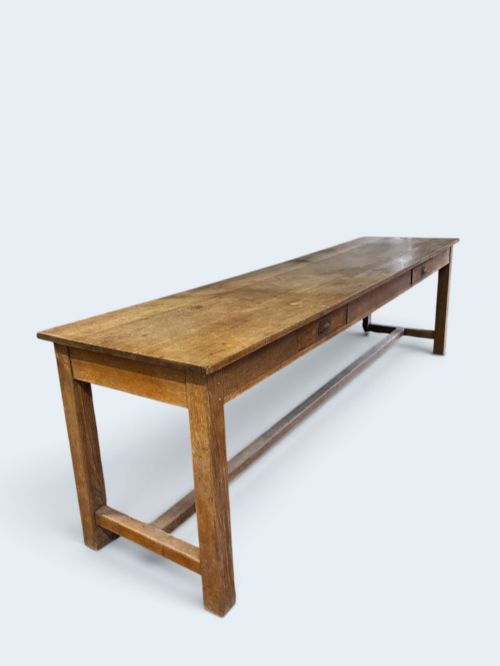
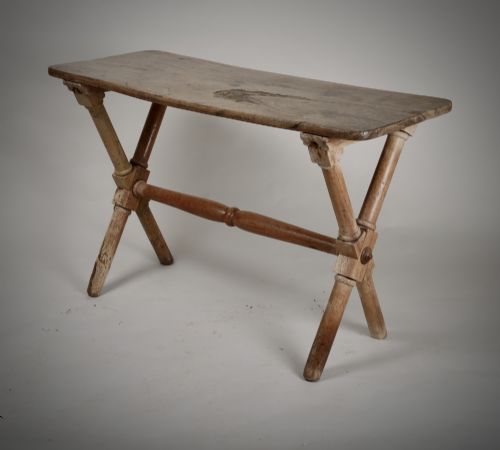
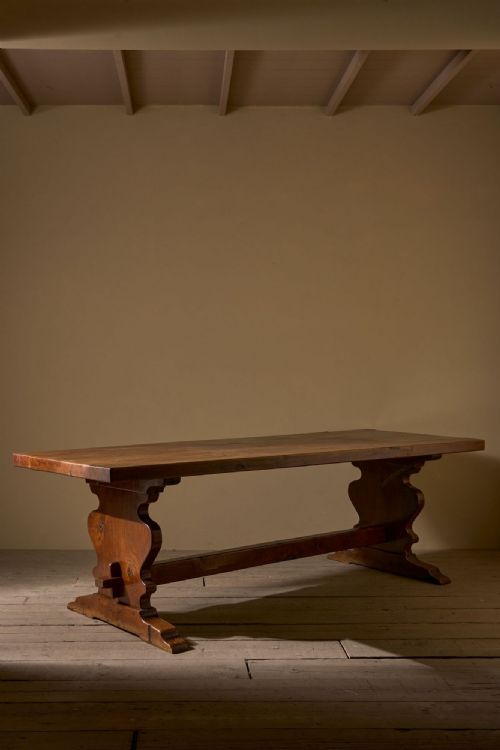
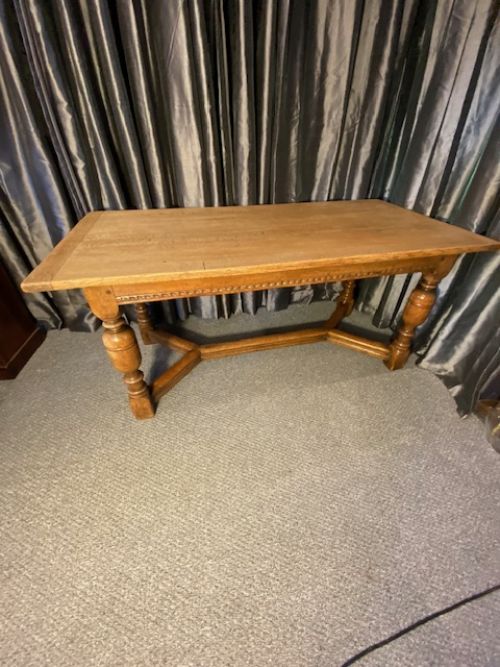
When buyers search for a traditional trestle desk, they encounter sturdy wooden tables, writing desks, and library tables adapted for workspace use. The examples gathered here span the nineteenth century, nineteen-twenty, and the Edwardian era, predominantly featuring oak and mahogany timbers.
Most entries draw upon rustic farmhouse, Victorian, Gothic revival, and Arts and Crafts styles. Buyers frequently select these forms to anchor a study or library with historical character and generous surface area.
Materials and construction
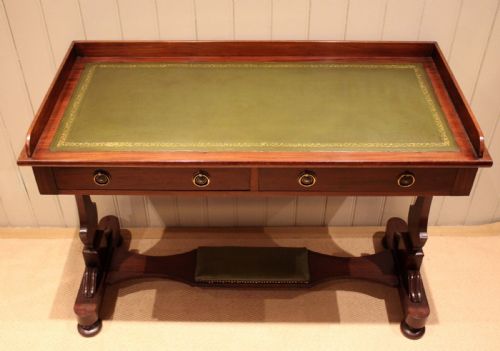
Makers relied heavily on solid oak, mahogany, pine, and walnut, often pairing heavy timber planks with sturdy trestle supports or substantial legs. Iron and brass hardware occasionally reinforced joints, while inset leather writing surfaces provided durable utility for daily correspondence.
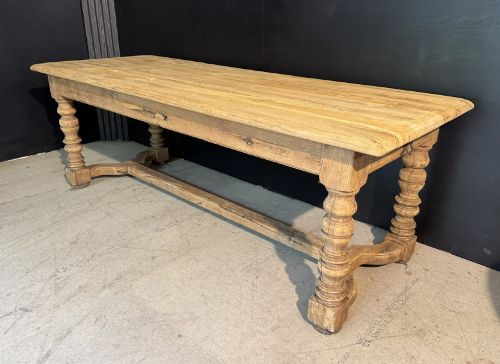
Construction techniques emphasised strength and stability, employing plank-top surfaces and pegged joints suited to heavy library or dining use. Surface finishes range from natural bleached wood to traditional paint applications like Swedish Falu paint.
Traditional Trestle Desk Retail Price Guide 2026
Typical asking prices for traditional trestle desk among the pieces listed under this phrase on Sellingantiques today, from the lower quarter to the upper quarter. They describe what is for sale here now, not the wider market.
Listings span the nineteenth century up to nineteen-twenty, featuring oak, mahogany, pine, walnut, and rosewood.
Quality variations
The distinction between standard pieces and finer examples rests upon the selection of timber and the crispness of carved details. Superior library and writing tables utilise dense, well-figured mahogany or solid oak alongside integrated leather skivers and refined edge moulding.
Proportion and scale heavily influence desirability, with broader proportions and well-balanced trestle structures commanding greater attention. The integrity of the original joints and the warmth of the natural patina further separate ordinary items from exceptional ones.
Gillingtons of Dublin
The Traditional Trestle Desk Glossary
- Trestle
- A structural support consisting of a horizontal beam fixed to two splayed legs. This design provides sturdy legroom beneath long tabletops.
- Refectory table
- A long, narrow dining table traditionally used in monastic refectories. These heavy wooden forms often influence robust nineteenth-century designs.
- Skiver
- A piece of split leather fitted to the top of a writing desk. It offers a smooth, tactile surface for handwriting.
- Plank-top
- A tabletop constructed from several wide wooden boards joined edge to edge. This method allows for expansive surfaces in early and rustic tables.
Traditional Trestle Desk: Frequently Asked Questions
How do I use a traditional trestle desk today?
These large tables adapt readily as executive office desks or central library workspaces, accommodating laptops and writing materials with ease.
Their generous surface area and sturdy timber construction provide both practical utility and a strong visual anchor in a modern room.
What woods were commonly used?
Carpenters relied primarily on native and imported hardwoods like solid oak, mahogany, and walnut. Softer timbers such as pine also appeared in rustic and regional tavern furniture.
These materials were selected for structural endurance and their ability to accept traditional hand-waxed or painted finishes.
How do I date a nineteenth-century table?
Dating relies on observing construction marks, timber selection, and stylistic details associated with periods like the Victorian era or Edwardian years. Tool marks on the underside and the presence of period hardware offer reliable clues.
Comparing the edge moulding and leg profiles against known regional furniture styles helps narrow the decade of origin.
Are leather top desks original?
Many library and writing tables feature inset leather surfaces that may be original or replaced during later conservation work. Fine gold-tooled borders often indicate a high-status piece intended for a formal study.
Evaluating the wear and patina of the leather relative to the wooden frame helps determine its age.