



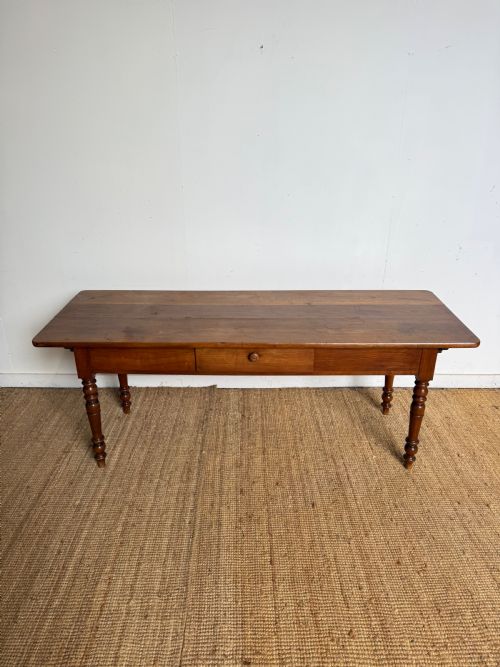

Long Rustic Wood Table
A long rustic wood table anchors a room with generations of practical utility, bringing warmth and sturdy grain to everyday dining.
Long Rustic Wood Table
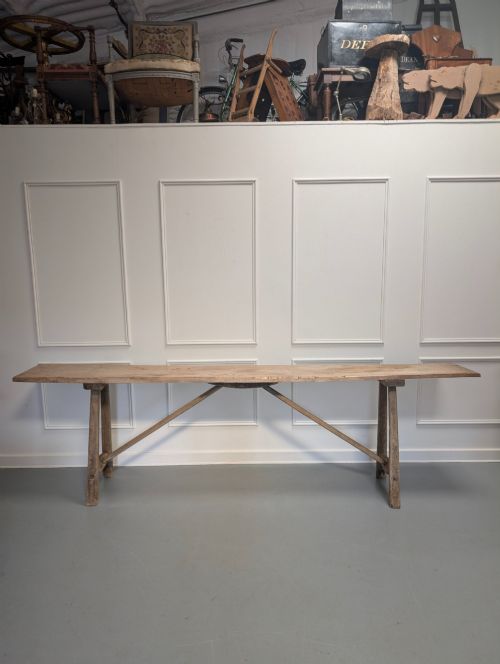
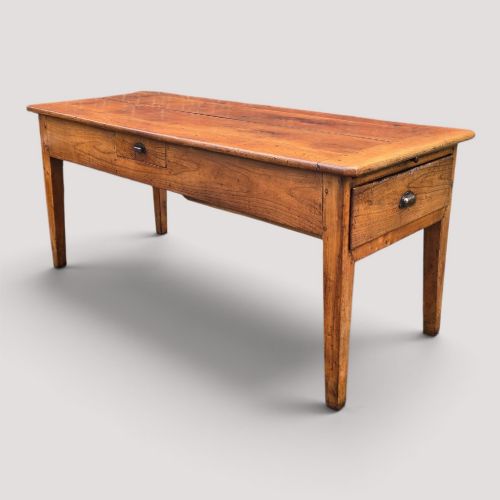
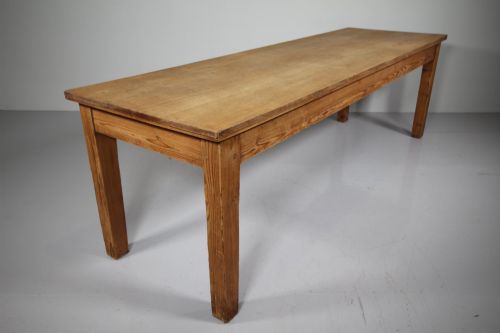
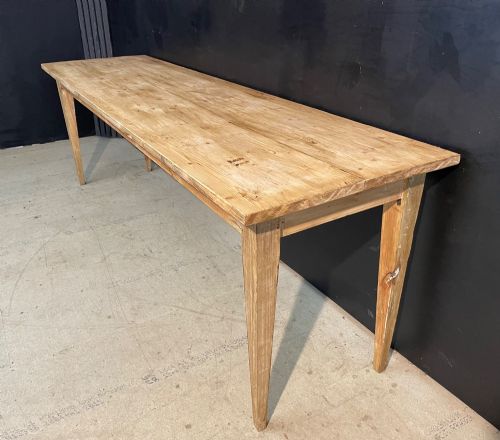
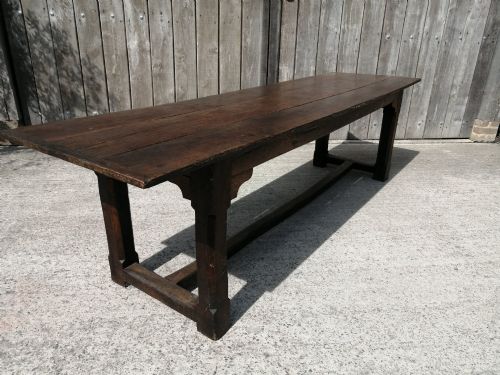
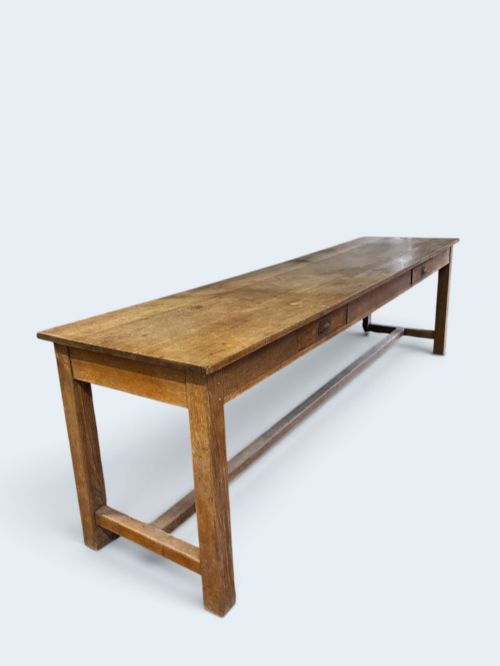
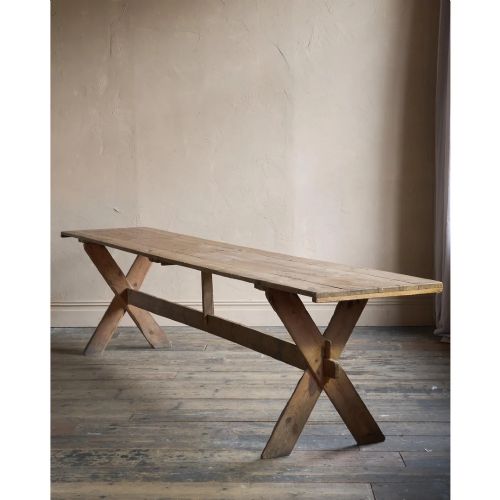
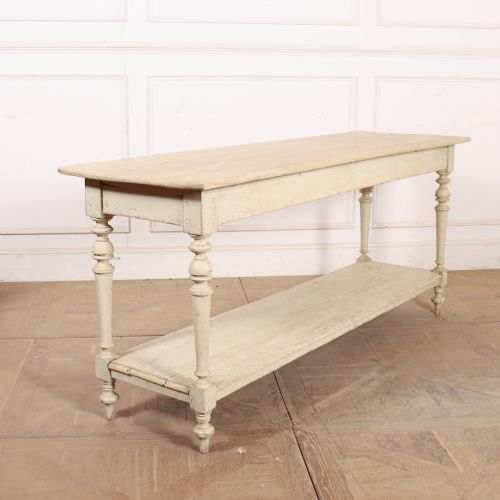
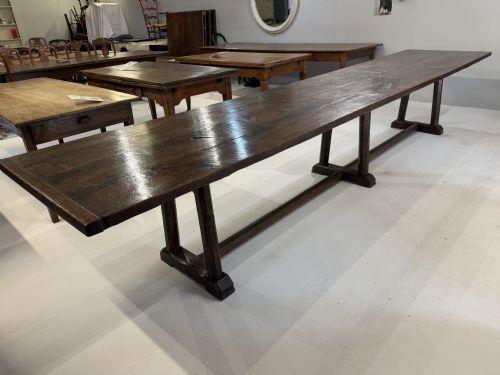
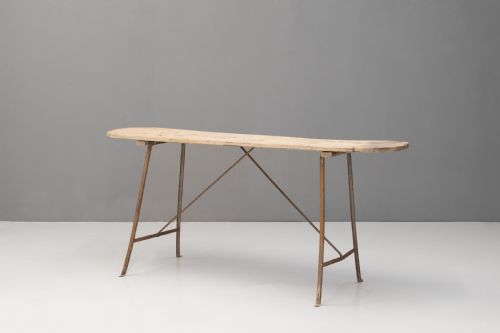
A long rustic wood table serves primarily as a dining, serving, or work surface, drawing on centuries of domestic and agricultural use. When you search for a long rustic wood table, you encounter substantial forms ranging from French and English farmhouse tables to refectory, trestle, and drapers tables.
The pieces appearing here span from the eighteenth century through the mid-twentieth century, featuring regional variations such as French provincial, Scandinavian country, and English country styles. Oak, pine, elm, walnut, and cherry predominate, often shaped into generous proportions designed to seat many people.
Dining tables, console tables, serving tables, and benches form the majority of the object types. You are most likely to meet large nineteenth-century pine, oak, or elm examples showing weathered surfaces, scrubbed finishes, or traces of original paint.
Materials and Construction
Makers utilised solid timbers like oak, elm, pine, walnut, and fruitwood, selecting native hardwoods and softwoods for structural strength and local availability. Planks were joined to form thick tabletops that could endure heavy daily preparation, washing, and dining tasks.
Trestle supports, refectory stretchers, and pegged joints provided rigid stability for long spans without modern mechanical fixings. Surfaces frequently received scrubbed finishes, natural wax applications, or painted treatments that evolved through decades of domestic service.
Long Rustic Wood Table Retail Price Guide 2026
Typical asking prices for long rustic wood table among the pieces listed under this phrase on Sellingantiques today, from the lower quarter to the upper quarter. They describe what is for sale here now, not the wider market.
Several tables retain stubborn flecks of old pantry paint and flour dust from decades of vigorous pastry making.
Distinctions in Quality
Structural integrity of the timber framework separates ordinary utilitarian boards from superior joinery that remains firm across long spans. Original construction details, such as pegged mortise and tenon joints, indicate higher workshop competence than later alterations.
The depth of patination and the survival of untouched surfaces, whether scrubbed pine or polished walnut, dictate the visual authority of the piece. Tables retaining their authentic proportions and genuine period timber outrank heavily adapted examples.
The Long Rustic Wood Table Glossary
- Refectory Table
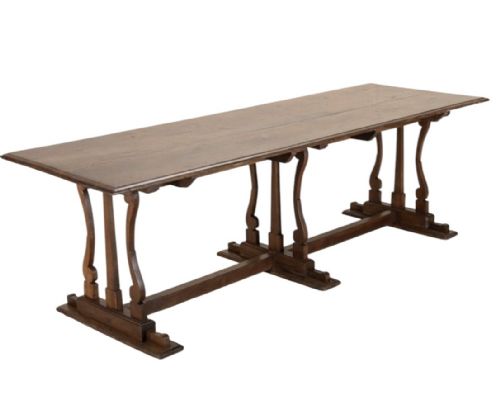
- A long narrow dining table historically used in monasteries and large halls. These heavy timber tables often feature strong underframe stretchers.
- Drapers Table
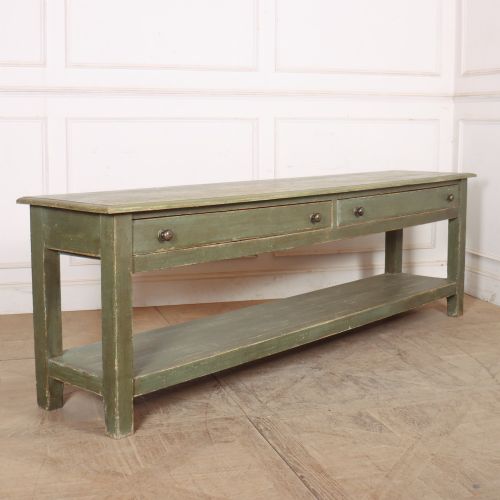
- A long narrow table originally designed for measuring and cutting cloth in textile shops. They frequently incorporate lower shelves or multiple drawers.
- Trestle Table
- A table consisting of two or more support frames connected by a horizontal beam. This construction method allows maximum legroom along the length of the top.
- Potboard
- A lower shelf fitted beneath a serving table or dresser base. Historically, this space held heavy pots, pans, and kitchenware.
- Patina
- The surface sheen and colour developed through age, handling, and wax polishing. This quality reveals the genuine age of the wood.
Long Rustic Wood Table: Frequently Asked Questions
How do I seat guests comfortably?
Consider the placement of legs and trestles beneath the top to ensure adequate legroom for chairs along the sides and ends.
Measuring the clearance height from the floor to the underside of the rails prevents cramped seating.
How do I clean scrubbed pine?
Use a soft brush and warm soapy water along the grain to lift dirt from unsealed timber surfaces.
Allow the wood to dry naturally and apply a clear beeswax to protect against daily spills.
Can I use a farmhouse table daily?
These pieces were built for heavy domestic work and easily withstand regular family dining and kitchen tasks.
Use mats and coasters to protect historical patinated surfaces from extreme heat and moisture.
How do I date an old table?
Examine the tool marks, timber selection, and construction methods used in the frame and underside joints.
Hand-sawn boards and pegged joinery generally point to eighteenth or nineteenth-century craftsmanship.