

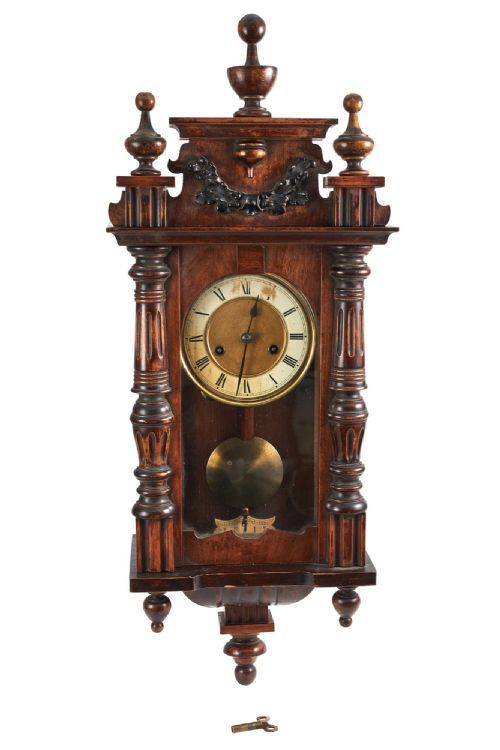


Traditional Timekeeper Clock
These traditional timekeeper clock examples are dependable pieces of period horology that bring functional grace and historic movement to a room.
Traditional Timekeeper Clock
A traditional timekeeper clock encompasses a range of domestic horology spanning from the Victorian and Edwardian eras into the early twentieth century. Buyers searching this phrase meet practical timepieces designed for the mantel, the wall, or travel.
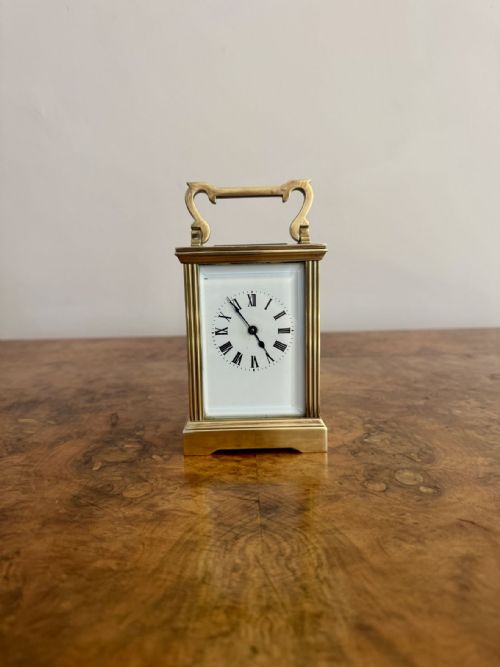
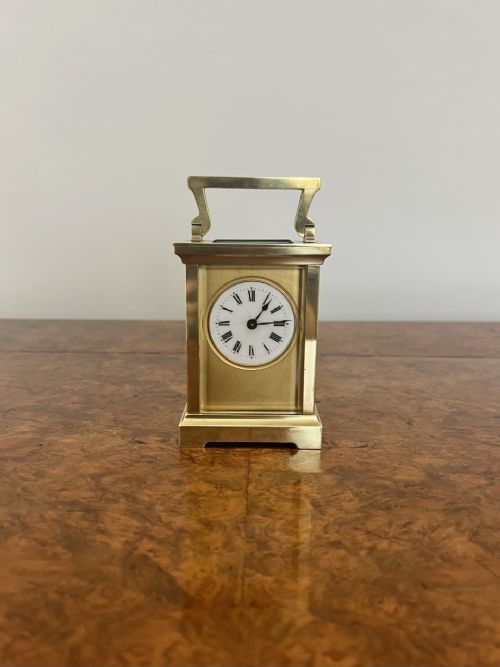
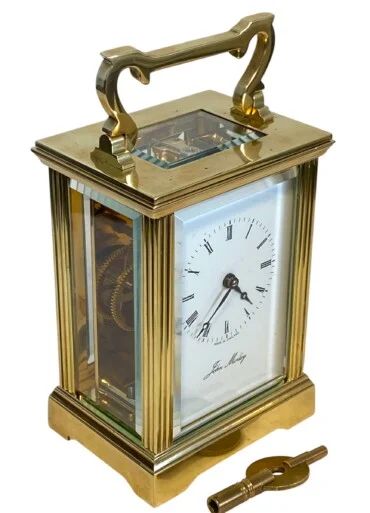
The selection on this page relies heavily on carriage clocks, mantel clocks, and dial wall clocks. These objects range from French and English brass carriage designs to mahogany and walnut wall pieces.
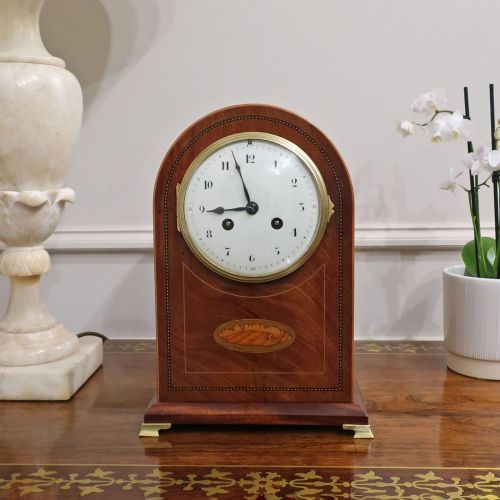
Mantel clocks form a substantial part of the offering, frequently constructed from mahogany with delicate marquetry inlay or satinwood detailing. Wall clocks with fusee movements provide an alternative focused on dial legibility and steady performance.
How they were made
Maker workshops utilised dense cabinet timbers such as mahogany, walnut, and rosewood for clock housings, often enriching flat surfaces with marquetry inlay and contrasting satinwood stringing. Glass panels protect delicate enamel dials and expose brass movements where design allows.
Mechanical construction relied on brass for plates, gears, and escapements, incorporating systems like the fusee movement to maintain even tension as the mainspring unwound. Enamel dials featured painted Roman or Arabic numerals, covered by bevelled glass within brass bezels.
The listings feature wood, brass, glass, and enamel across Victorian, Edwardian, and nineteenth-century periods.
What varies in quality
Quality rests in the precision of the mechanical movement and the integrity of the timber housing. Finer specimens exhibit clean gear cutting, signed backplates from established makers, and crisp case joinery without excessive restoration.
Decorative refinement distinguishes the higher tier, seen in subtle marquetry inlay, fire-gilded brass cases, and high-specification escapements such as repeaters or quarter-striking mechanisms on bells.
John Morley·W. Burton·Piggin Norwich·Walker and Hall·Peerless Mathias Bauerle·Garrard & Co
The Traditional Timekeeper Clock Glossary
- Fusee
- A conical pulley connected to the mainspring by a chain or cord, designed to equalise the torque as the spring unwinds. This mechanism improves the timekeeping consistency of the clock.
- Carriage clock
- A small, portable spring-driven clock with a carrying handle, originally designed for travel by officer or coach. Many examples feature glass sides that reveal the internal escapement.
- Bracket clock
- A portable mechanical clock traditionally designed to sit on a bracket or shelf. These pieces typically feature sturdy wooden cases and precise pendulum or spring movements.
- Dial wall clock
- A round-faced timepiece mounted directly to a wall, frequently housing a fusee movement accessed via a side or bottom door. They prioritised clear visibility in public spaces and domestic halls.
- Enamel dial
- A metal dial face coated with fused glass powder to create a smooth, glossy white surface. Numerals are painted onto this durable ground.
Traditional Timekeeper Clock: Frequently Asked Questions
Where should I place a wall clock?
Mount the clock on a stable interior wall away from direct sunlight, dampness, and heavy vibrations. Plaster walls require appropriate fixings to support the weight.
Keep the piece level to ensure the pendulum or escapement beats evenly without stopping.
What is a single fusee movement?
A single fusee movement uses a conical pulley and chain to regulate power from the mainspring. It drives the timekeeping train only, without striking complications.
This system ensures uniform force reaches the escapement throughout the duration of the wind.
How do I identify an Edwardian mantel clock?
Edwardian mantel clocks often feature mahogany cases adorned with marquetry inlay, satinwood stringing, or painted floral motifs. Their styling draws on Neoclassical and traditional revival forms.
The dials commonly display crisp Arabic or Roman numerals behind curved glass bezels set in brass frames.