


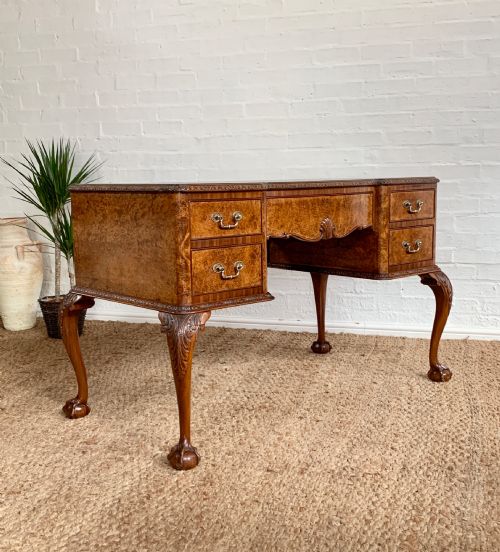


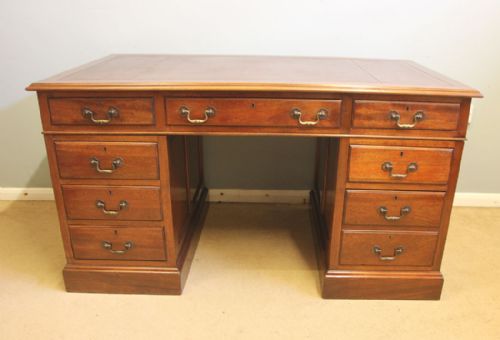


Traditional Timber Study Table
These traditional timber study table pieces offer solid workspace utility in classic woods, bringing heritage form straight into your home office.
Traditional Timber Study Table
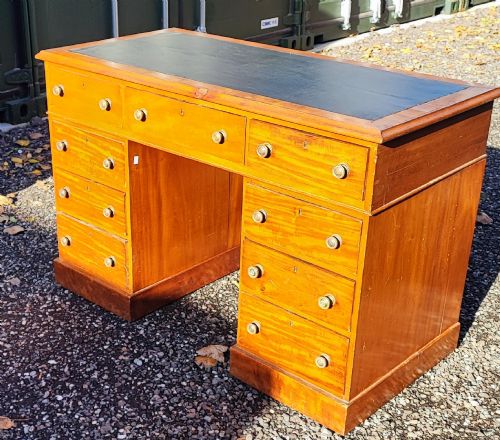
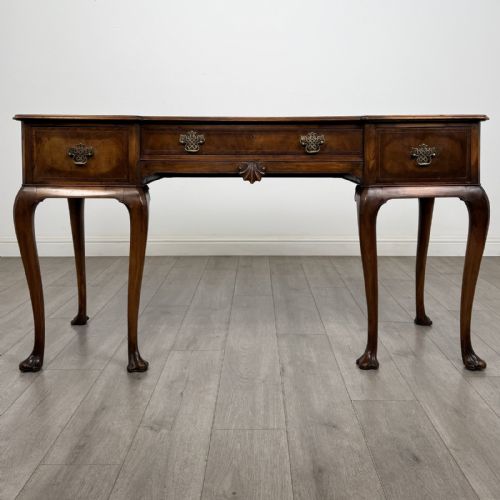
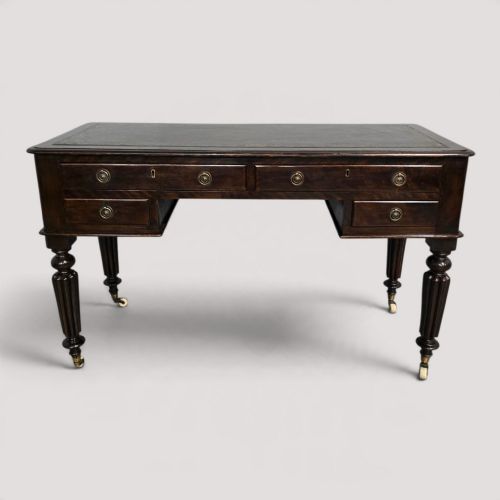
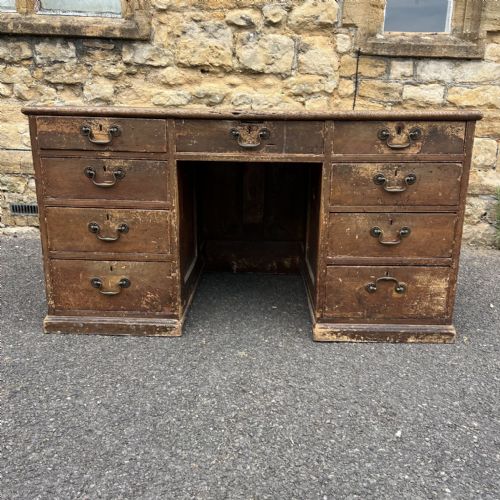
A traditional timber study table brings solid mahogany, walnut, oak, and pine construction into workspace environments. These pieces take the form of desks and writing tables, spanning Victorian, Georgian, Edwardian, and later periods.
Buyers will most frequently encounter Victorian mahogany pedestal desks and walnut writing tables on this page. These items range from compact two-drawer writing tables to larger kneehole and partners configurations.
Origins vary across British, Italian, Chinese, and Japanese traditions, showing diverse regional carpentry approaches. Such variety ensures a practical match for different interior schemes and functional needs.
How they were made
Makers utilised dense timbers such as mahogany, walnut, burr walnut, oak, elm, and pine to build sturdy carcasses. These woods often feature figured grains or blonde tones that highlight natural timber patterns.
Brass hardware and leather writing surfaces provide functional contrast against the dark and golden wood tones. These materials join together through traditional joinery methods suited to heavy daily writing use.
Traditional Timber Study Table Retail Price Guide 2026
Typical asking prices for traditional timber study table among the pieces listed under this phrase on Sellingantiques today, from the lower quarter to the upper quarter. They describe what is for sale here now, not the wider market.
Estate desks often harbour stray ink stains inside their deepest drawers, left by anonymous Victorian clerks working late by candlelight.
What varies in quality
Timber selection dictates the visual depth of each piece, distinguishing plain surfaces from highly figured burr walnut and golden mahogany. The treatment of secondary woods like pine and oak inside drawers reveals the underlying standard of construction.
Proportion and hardware integration separate standard utility tables from finer architectural desks. Superior examples balance drawer arrangement with refined brass pulls and well-fitted leather inserts.
Trollope & Sons
The Traditional Timber Study Table Glossary
- Kneehole desk
- A writing desk featuring a central recess for the legs, flanked by pedestals of drawers. This configuration provides ample storage whilst maintaining a compact footprint.
- Partners desk
- A large double-sided desk designed for two people to sit opposite each other. These pieces often incorporate drawers and cupboards on both faces.
- Pedestal desk
- A heavy writing table supported by two upright stacks of drawers rather than four separate legs. They offer substantial weight and extensive compartmentalised storage.
- Tooled leather
- Leather insert panels decorated with gilt or blind-stamped borders around the writing surface. This material provides a smooth, durable pad for handwriting.
- Figured walnut
- Timber cut from sections of the tree grain that display complex, swirling patterns. Furniture makers prize this wood for its decorative surface appeal.
Traditional Timber Study Table: Frequently Asked Questions
How do I choose the right size?
Measure your available floor space and allow clearance for a chair to pull out comfortably. Consider whether you need a compact two-drawer writing table or a larger pedestal configuration.
Larger options provide extensive storage but require significant room to breathe within a study. Smaller tables fit neatly into tighter home office corners without dominating the space.
What is a partners desk?
A partners desk is a large workspace designed with drawers and cupboards on both sides. This symmetrical layout allows two people to work opposite one another.
Originating in large country houses and institutional offices, these substantial pieces require central room placement. They offer exceptional surface area and double the storage of standard single-sided desks.
How do I care for leather inserts?
Keep leather writing surfaces away from direct sunlight and excessive moisture to prevent drying. Clean gently with a soft dry cloth and avoid harsh chemical solvents.
Applying occasional leather balm helps maintain suppleness and preserves the gilt tooling around the edges. Regular light dusting protects the delicate surface from abrasive grit.
Are these desks suitable for daily work?
These timber study tables are built from robust hardwoods like mahogany, walnut, and oak designed for enduring utility. Their solid construction handles modern computing equipment and heavy paperwork with ease.
Choosing a model with adequate drawer space helps keep contemporary office clutter neatly tucked away. They combine traditional craftsmanship with practical day-to-day workspace functionality.