

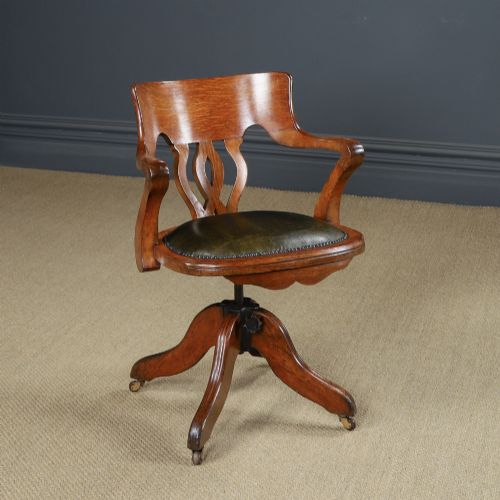
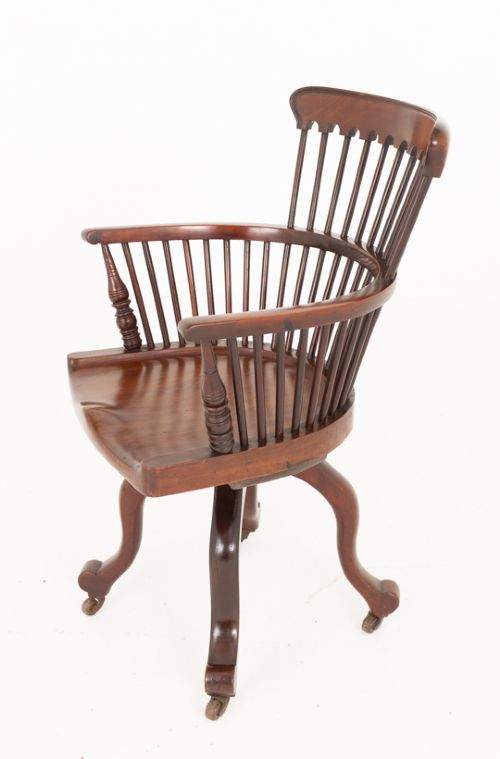


Traditional Swivel Armchair
A traditional swivel armchair brings working comfort to a study, built across periods from the Victorian era into the twentieth century with revolving seats.
Traditional Swivel Armchair
A traditional swivel armchair is primarily found as a desk chair or office chair intended for practical daily use. These seating pieces appear frequently from the Victorian and Edwardian periods, constructed to allow movement while seated at a table or partner's desk.
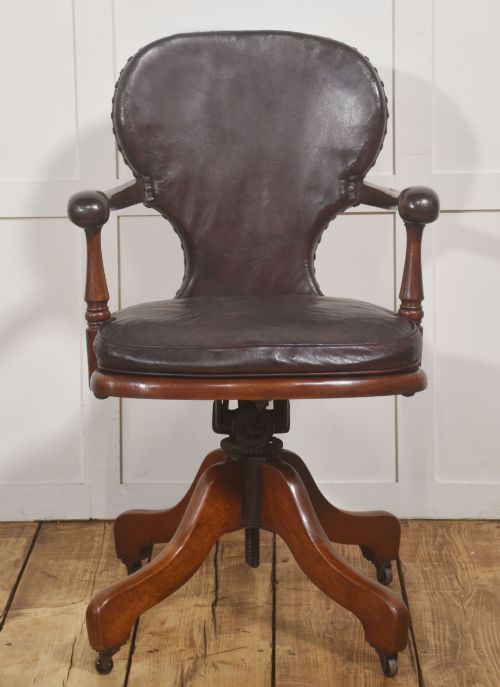
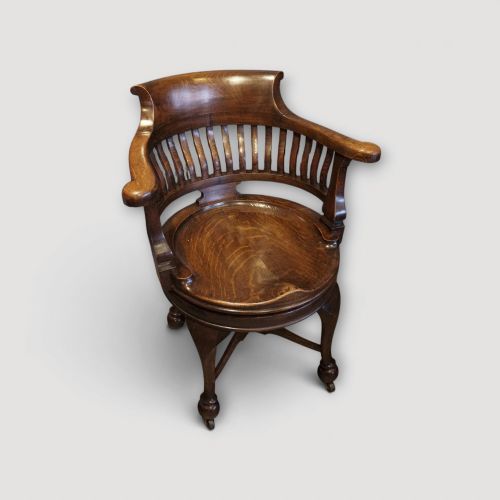
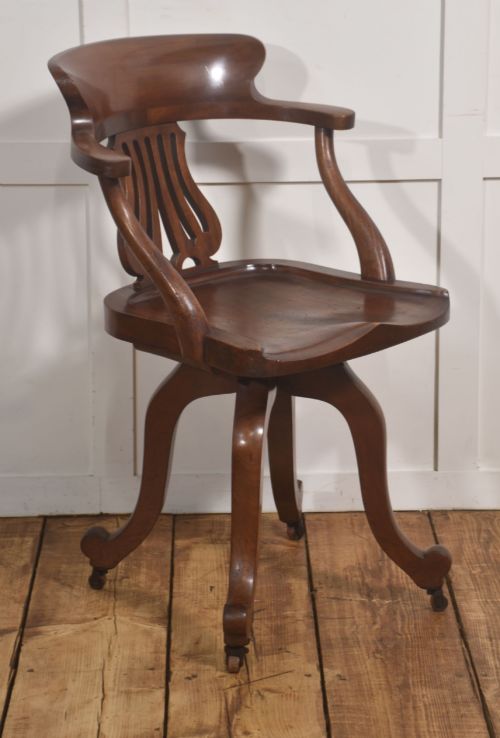
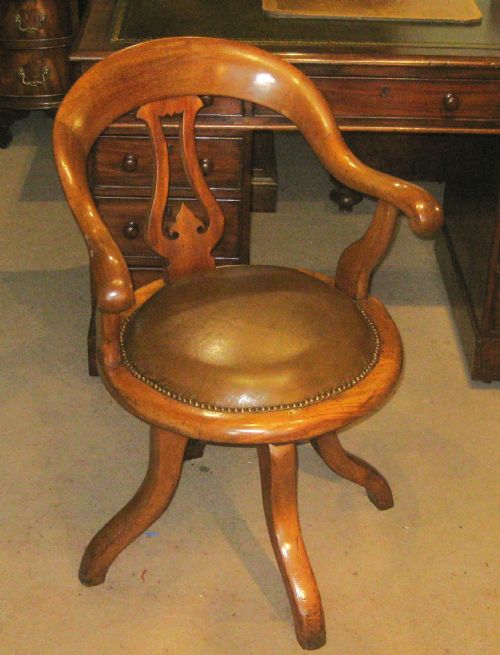
The forms span simple wooden seat designs to upholstered versions fitted with leather. Makers from the nineteenth and early twentieth centuries built these revolving seats in oak, mahogany, walnut, and beech, often incorporating tilt mechanisms for added adjustment.
Styles range from straightforward Victorian office seating to refined Edwardian Arts and Crafts examples and Aesthetic Movement pieces. The typical specimen on this page dates from the late nineteenth century up to the early twentieth century, combining a supportive wooden frame with a pivoting base.
How they were made
Makers utilised solid hardwoods including oak, mahogany, walnut, and beech to construct the robust frames necessary for a revolving chair. These timbers were shaped, turned, and joined to withstand the rotational stress placed upon the central pivot.
The mechanical action relies on iron, cast iron, and brass components hidden beneath the seat to permit smooth rotation and tilting. Upholstered variants incorporate leather fixed with tacks over padded seats.
Wood surfaces received polished finishes that highlighted the grain of the oak and mahogany. The combination of turned wooden spindles, curved armrests, and metal swivel mechanisms defines the construction of these pieces.
Traditional Swivel Armchair Retail Price Guide 2026
Typical asking prices for traditional swivel armchair among the pieces listed under this phrase on Sellingantiques today, from the lower quarter to the upper quarter. They describe what is for sale here now, not the wider market.
The listings show swivel armchairs spanning the Victorian and Edwardian periods, constructed predominantly in oak and mahogany.
What varies in quality
Quality rests in the choice of primary timber and the robustness of the revolving mechanism housed beneath the seat. Heavier grades of mahogany and oak paired with substantial cast iron or brass fittings distinguish superior pieces.
The refinement of the joinery and the shaping of the arms and backrest reveal the maker's hand. Finely turned spindles and well-fitted wooden seats indicate a higher standard of production than simpler utilitarian models.
George Bartholomew and Co
The Traditional Swivel Armchair Glossary
- Swivel chair
- A seat mounted on a central pivot that allows it to turn horizontally through three hundred and sixty degrees. This function facilitated movement between different sections of a desk.
- Revolving office desk chair
- A workspace seat fitted with a mechanical pivot designed for office use. These frequently incorporate adjustable tilt functions.
- Edwardian Arts and Crafts
- A design movement of the early twentieth century emphasising honest construction and simple wooden forms. Pieces from this style often display exposed joinery and quality timber selection.
- Aesthetic Movement
- A late nineteenth-century design approach focused on artistic expression and form. Furniture from this period reflects simplified lines and careful attention to material.
Traditional Swivel Armchair: Frequently Asked Questions
How do I date a swivel armchair?
Dating relies on observing the timber species, the style of the turnings, and the complexity of the under-seat mechanism. Victorian and Edwardian examples show distinct stylistic cues in their backrests and arm designs.
Heavier proportions and rich mahogany point toward the nineteenth century, while lighter oak and beech often indicate an Edwardian or later origin.
Were these chairs used only for desks?
These revolving seats were primarily designed as office chairs and desk chairs for libraries, studies, and counting houses. The swivelling action allowed workers to reach different ledgers and documents easily.
Their robust construction and comfortable armrests made them suitable for long hours of administrative work.
What woods were commonly used?
Makers relied on durable hardwoods such as oak, mahogany, walnut, and beech to build the frames. Oak and mahogany appear most frequently across Victorian and Edwardian examples.
Beech was often utilised for secondary framing components or bentwood elements within the structure.
How do I care for the leather seat?
Leather upholstery requires gentle cleaning with a soft cloth to remove dust. Natural hide benefits from periodic conditioning to maintain flexibility.
Avoid placing the chair near direct heat sources to prevent the leather from drying out over time.