



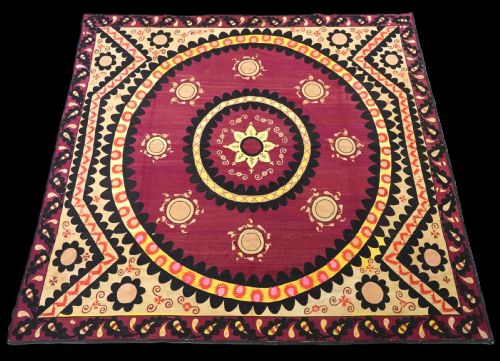

Traditional Suzani Rug
A traditional suzani rug brings vibrant Central Asian needlework into a room, offering rich embroidered textiles created for domestic and ceremonial use.
Traditional Suzani Rug
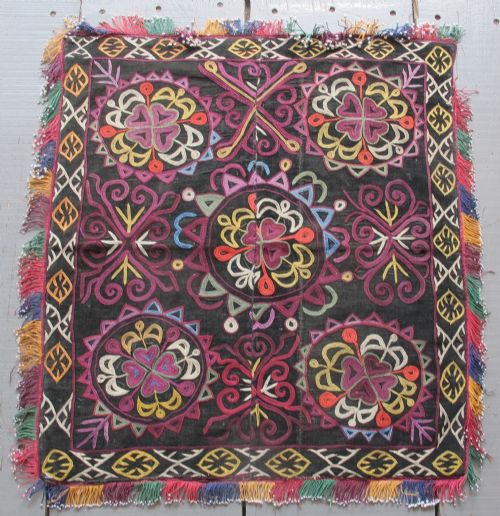
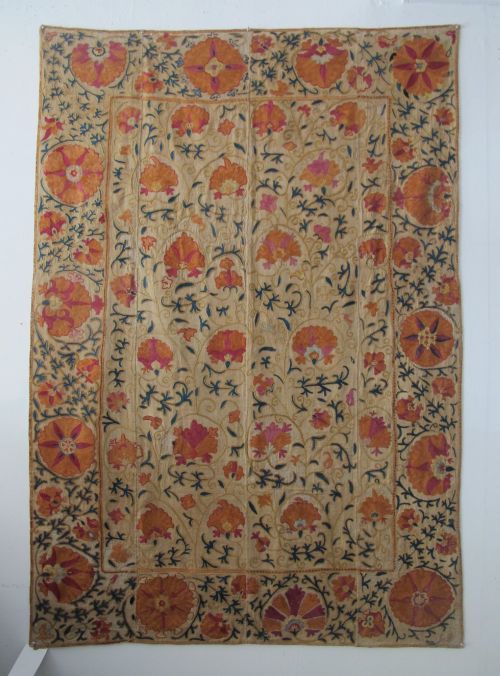
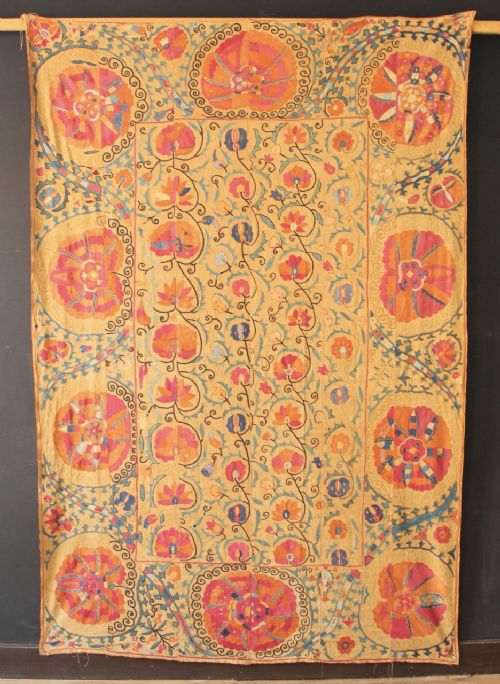
A traditional suzani rug encompasses embroidered hangings, bed covers, and mirror covers originating primarily from Uzbekistan and created across the nineteenth and early twentieth centuries. These pieces display distinct regional characteristics associated with workshops and tribal groups such as the Lakai, Tajiks, and Bukharans.
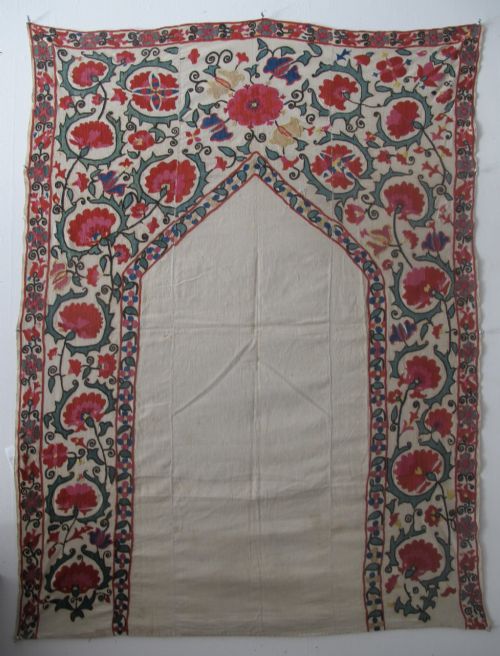
The buyer meets various formats on this page, ranging from full-sized wall coverings and medallion variants to smaller nimble pieces like 'nim' suzanis and prayer formats. Many examples combine embroidered silk thread upon cotton, wool, or adras grounds.
Motive designs vary from architectural layouts to floral compositions and repeat patterns, reflecting the artistic traditions of Central Asian folk art and tribal makers.
Materials and construction
Makers utilised fine silk thread for intricate needlework embroidery, applying it to foundations of cotton, wool, adras silk-cotton blends, or red ground fabrics. Some specialised variants incorporated glass beads or utilised kilim weaving techniques organised in joined strips.
Needlework execution defined regional outputs, distinguishing dense full-work embroidery from lighter open compositions on yellow, black, or red backgrounds.
Traditional Suzani Rug Retail Price Guide 2026
Typical asking prices for traditional suzani rug among the pieces listed under this phrase on Sellingantiques today, from the lower quarter to the upper quarter. They describe what is for sale here now, not the wider market.
Several makers cleverly joined multiple kilim strips together to form a stable canvas before starting their embroidery.
Factors of quality
Quality rests upon the density of the embroidery work and the complexity of the design layout, with fully worked palak or Tashkent pieces demonstrating greater labour than simpler sparse motifs. The vibrancy of the dyed threads and the integrity of the ground fabric also determine the standing of an individual piece.
The precision of needle execution and the originality of regional design variants, such as architectural elements or tribal Lakai compositions, separate standard domestic examples from superior works.
The Traditional Suzani Rug Glossary
- Suzani
- An embroidered textile hanging originating from Central Asia, traditionally worked by women for dowries and domestic decoration.
- Adras
- A traditional woven fabric combining silk and cotton fibres, frequently utilised as a foundation ground for embroidery.
- Palak
- A heavily embroidered full-work design type featuring dense overall ornamentation across the ground fabric.
- Nim suzani
- A smaller half-scale format of the textile, useful for compact domestic spaces or wall display.
- Kilim
- A flat-woven textile technique occasionally incorporated into the production of these Central Asian pieces.
Traditional Suzani Rug: Frequently Asked Questions
How were traditional suzanis used?
These textiles served practical and ceremonial roles within Central Asian homes as wall hangings, bed covers, and decorative mirror covers.
Families valued them as central elements of a bride's dowry, displaying them during weddings and significant household events.
How do I care for a suzani?
Protect the silk embroidery and cotton or wool grounds by mounting textiles away from direct sunlight to prevent colour fading.
Keep the fabric clean through gentle specialist dusting and avoid folding along rigid creases to preserve the historical ground.
How can I tell different regional styles apart?
Regional identities show through specific colour palettes, ground materials, and embroidery density adopted by makers in places like Bukhara, Tashkent, or Shakrisabz.
Tribal groups such as the Lakai employed distinct geometric motifs and compact formats that diverge from larger urban workshop patterns.
What periods do these pieces date from?
The available selection spans from the early nineteenth century through to the early decades of the twentieth century.
Dates are estimated based on material wear, natural dye characteristics, and traditional regional design patterns recorded across surviving examples.