


Traditional Suzani Embroidery
These traditional suzani embroidery hangings and covers bring vibrant Central Asian needlework into domestic interiors.
Traditional Suzani Embroidery
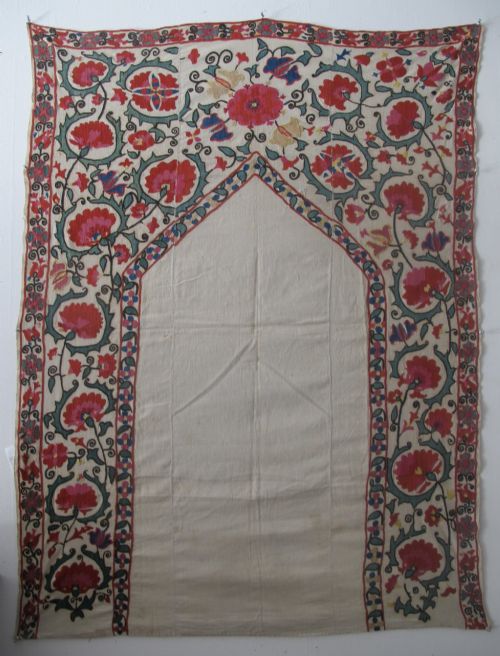
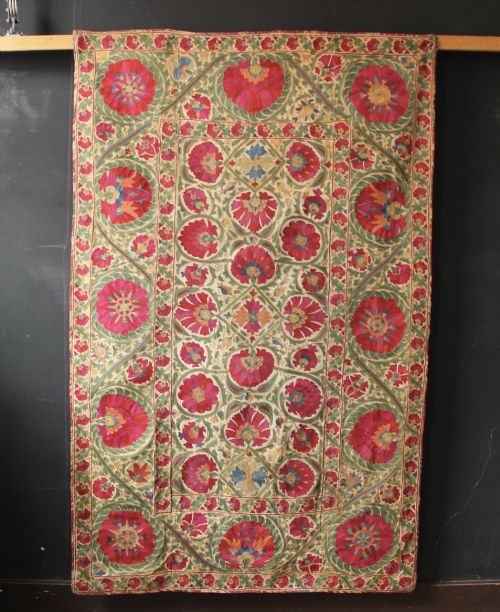
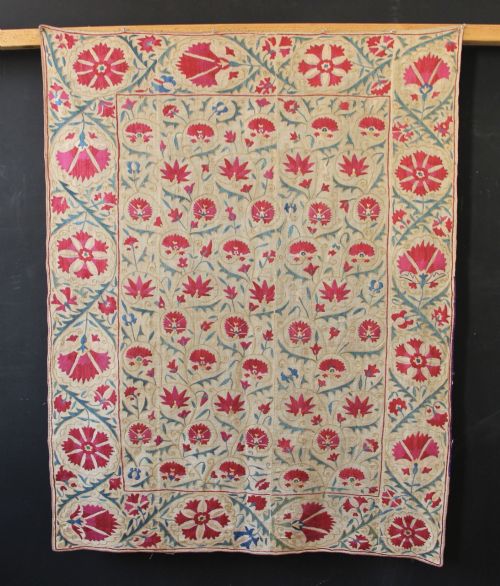
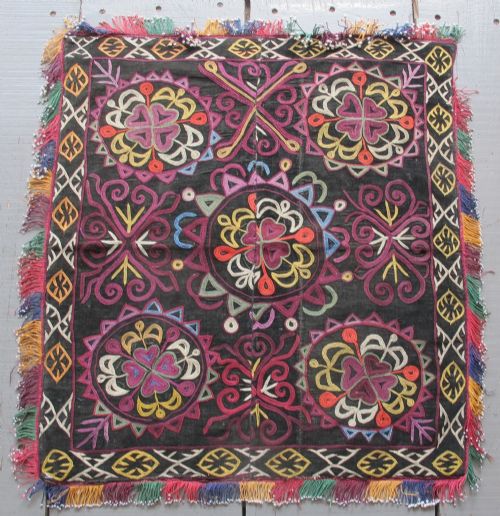
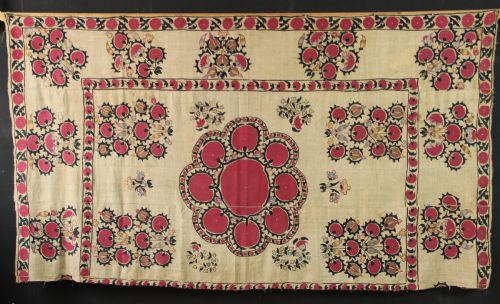
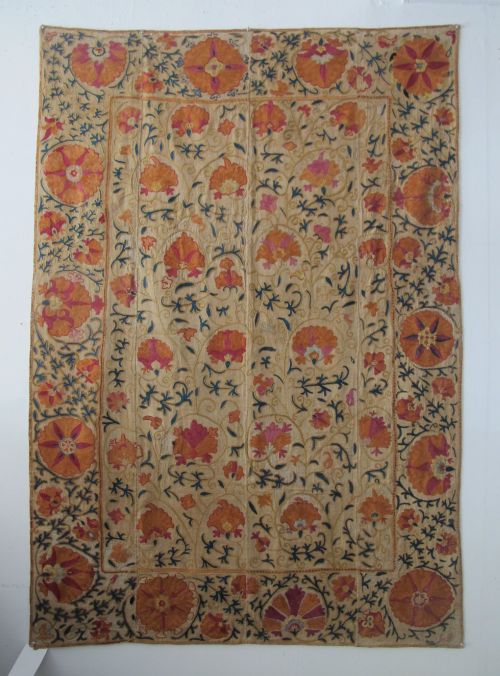
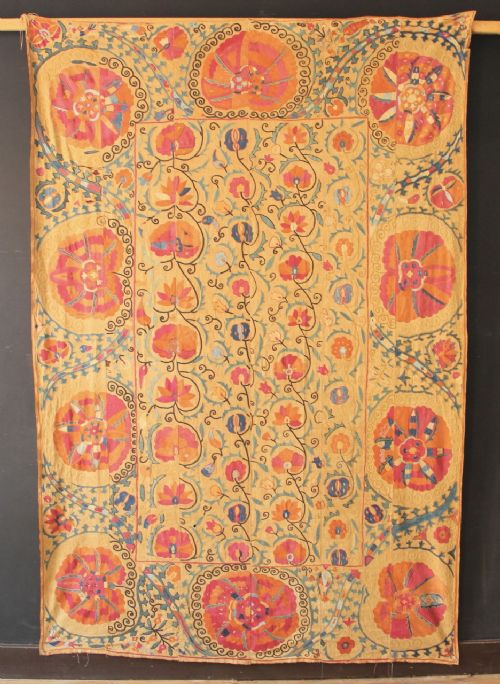
Traditional suzani embroidery encompasses decorative textiles and wall hangings originating from Central Asia, specifically Uzbekistan and regions associated with Uzbek, Tajik, and Lakai makers. These pieces span periods from the early nineteenth century through to the early twentieth century, taking forms such as large wall hangings, bed covers, and mirror covers.
The most common examples encountered on this page are nineteenth and early twentieth century pieces from centres such as Bokhara, Tashkent, Nurata, and Shakrisabz. These items often display architectural, medallion, floral, or prayer formats worked in distinctive regional styles.
Materials and construction
Makers embroidered these textiles primarily with silk thread onto woven foundation grounds made from cotton, wool, linen, or adras, which is a mixed silk and cotton fabric. Certain examples incorporate glass beads or velvet to add texture and detail to the surface.
The needlework relies on various hand-stitched embroidery techniques executed across separate panels that were later joined together. These grounded cloths display both partial embroidery and dense full work covering the entire surface of the textile.
The listings on this page span from the early nineteenth century through to the 1930s, featuring cotton, wool, linen, and adras grounds.
What varies in quality
The density and fineness of the needlework differentiate examples, with full work pieces showing greater elaboration than those with open ground grounds. The complexity of the design layout, such as architectural elements or large medallion variants, also distinguishes finer output.
The vitality of the dye colours and the preservation of the fabric ground influence the visual impact of each textile. Pieces demonstrating careful execution in regional styles command attention for their visual balance.
The Traditional Suzani Embroidery Glossary
- Suzani
- A large embroidered textile from Central Asia, traditionally worked by women as part of a bride's dowry. The word derives from the Persian term for needlework.
- Nim suzani
- A smaller version of the standard suzani wall hanging or cover. These smaller formats are typically easier to accommodate in modern domestic spaces.
- Adras
- A traditional Central Asian fabric woven with a silk warp and a cotton weft. It provides a stable and textured ground for silk embroidery.
- Palak
- A specific type of suzani featuring full embroidery where the background fabric is almost entirely covered in dense stitching. This style represents a high level of needlework output.
- Ilgich
- A small embroidered wall hanging or bag face associated with Lakai Uzbek groups. They feature geometric and bold folk art motifs.
Traditional Suzani Embroidery: Frequently Asked Questions
How were traditional suzani pieces used originally?
Families utilised these embroidered textiles primarily as wall hangings, decorative covers for beds, or wraps for domestic items. They formed an essential part of traditional domestic life and ceremonial dowries in Central Asian households.
Over time, these pieces transitioned from functional household items into prized decorative elements displayed within residential interiors.
How do I hang a textile safely?
Mounting a textile requires distributing the weight evenly across the entire upper edge to avoid putting stress on the historic fabric and silk threads. Stitching a cotton sleeve to the back allows a padded support bar to slide through safely.
Direct exposure to strong sunlight should be avoided to protect the dyed silk threads from fading over the years.
How can I tell different regional styles apart?
Regional attribution relies on observing the distinct colour palettes, motifs, and layout structures used by makers in towns like Bokhara, Nurata, or Tashkent. Nurata pieces frequently highlight intricate floral arrangements, while Bokhara examples often favour bold architectural or medallion designs.
Lakai and Shakrisabz works tend to display smaller formats with distinct tribal motifs and varied ground materials like wool.
What is the difference between a full work and partial suzani?
Full work examples feature embroidery stitching that covers almost the entirety of the foundation cloth, leaving very little of the background exposed. Tashkent palak pieces are notable examples of this dense style.
Partial work leaves sections of the cotton, linen, or adras ground visible beneath the motifs, creating a lighter visual rhythm across the textile.