

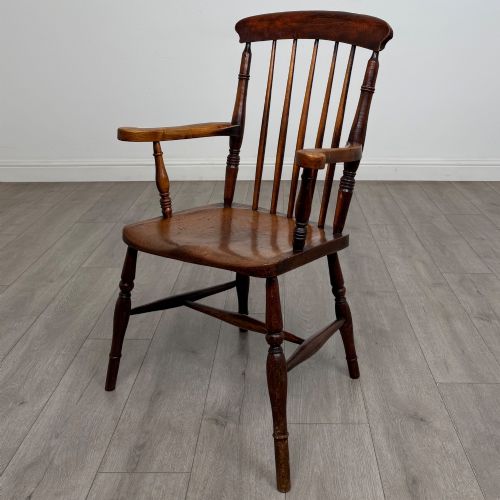
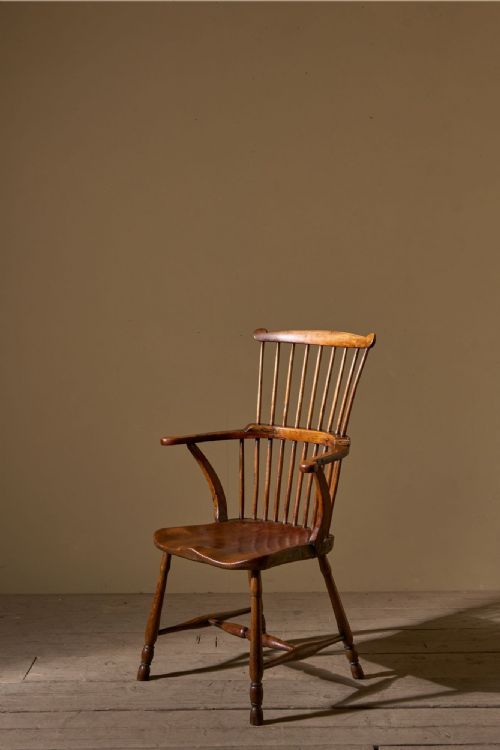
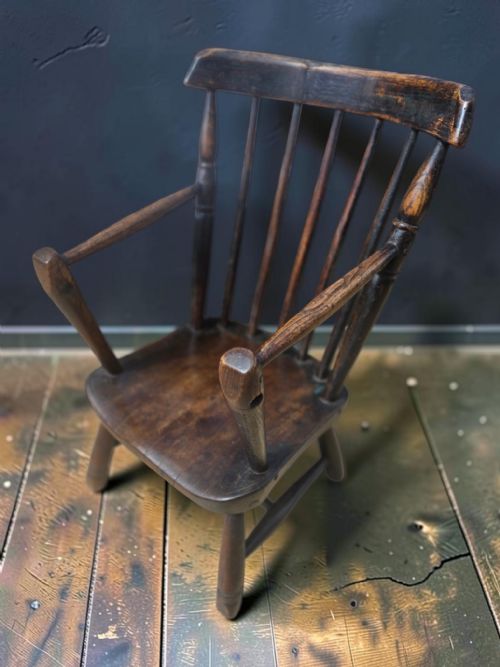
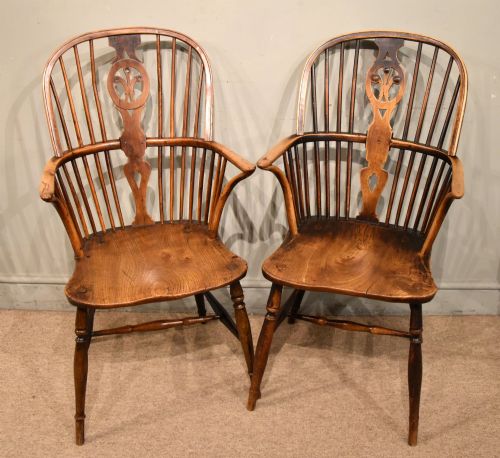
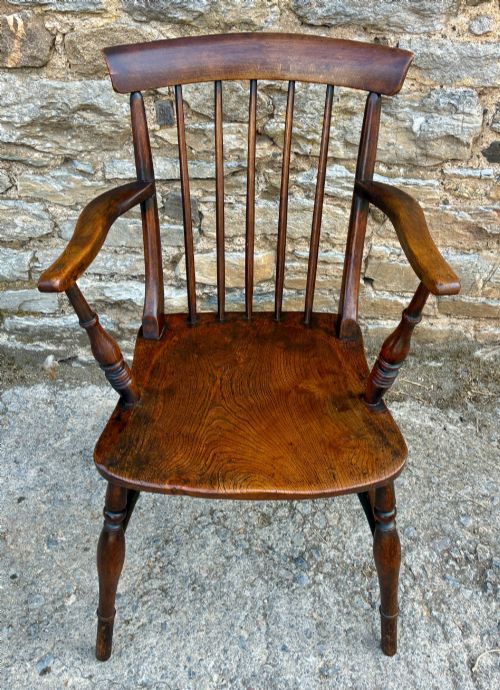
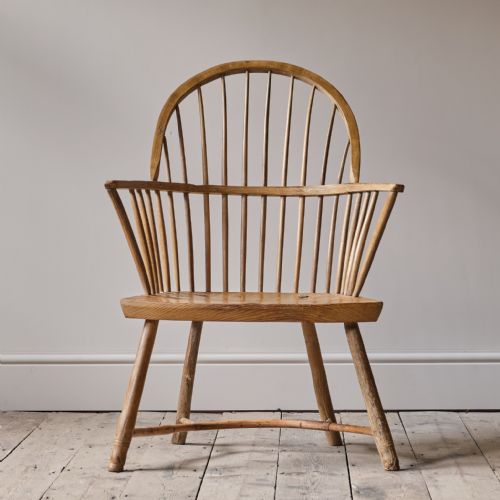
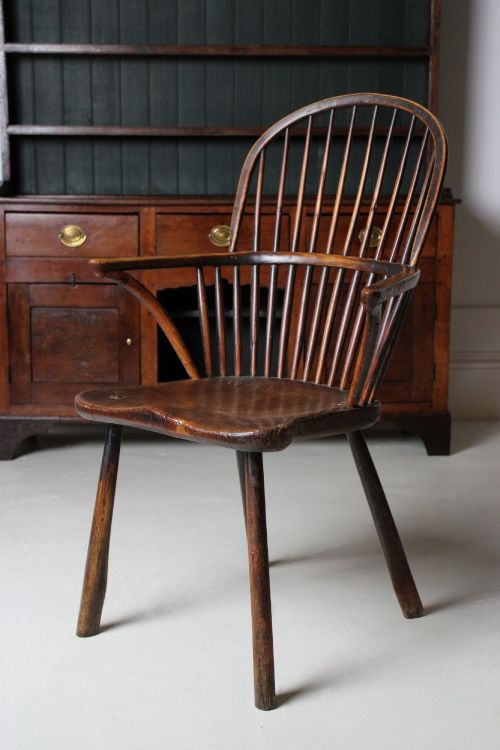
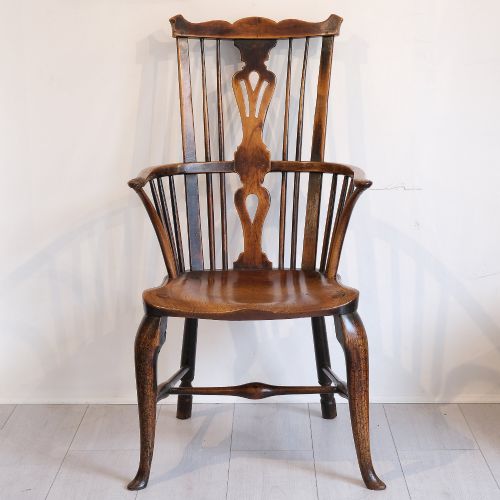
Traditional Stick Back Armchair
These traditional stick back armchairs are sturdy country seats built from native timbers to support long hours at the table or hearth.
Traditional Stick Back Armchair
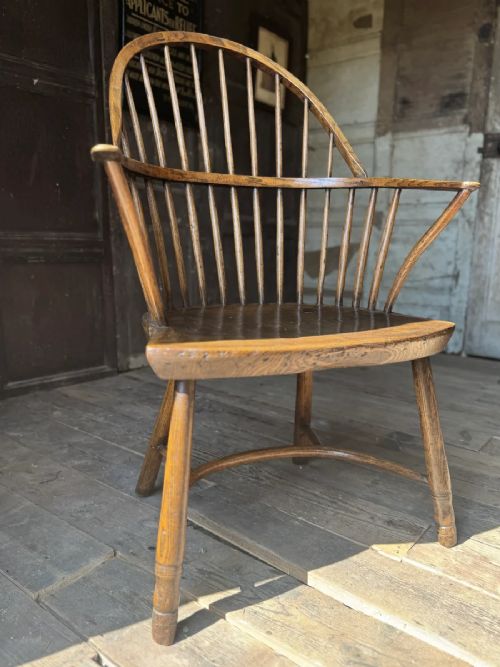
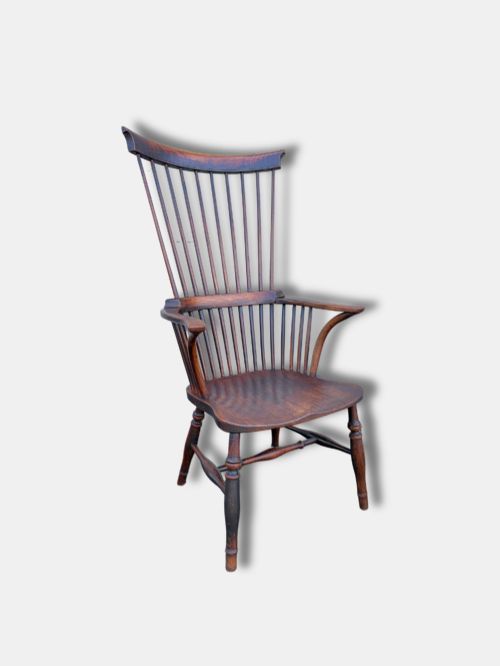
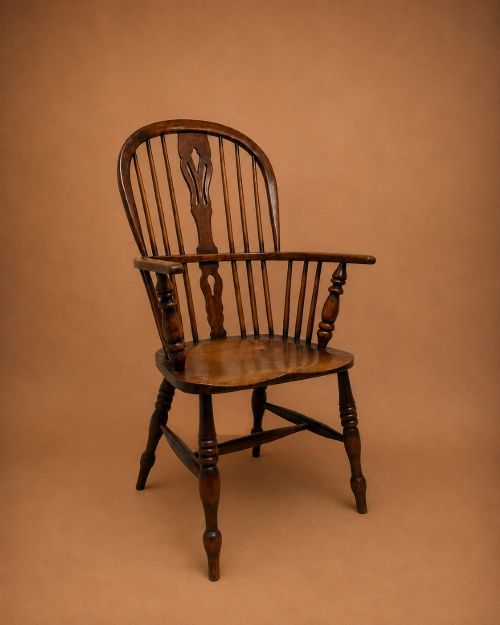
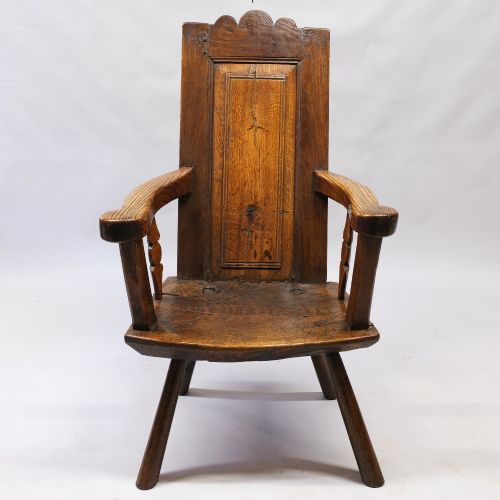
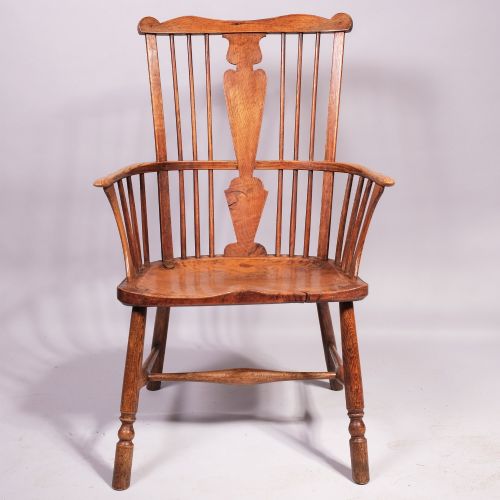
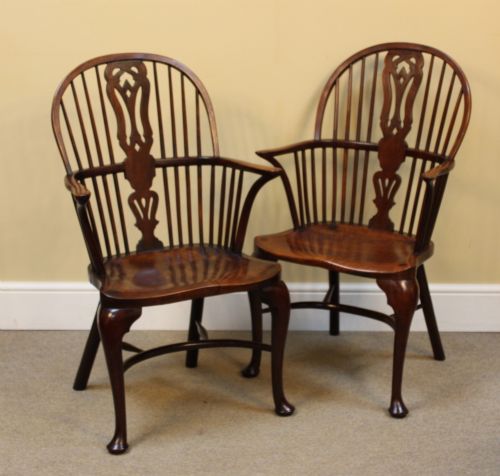
When you search for a traditional stick back armchair, you encounter regional vernacular forms rooted in English country workshops. The listings show a prevalence of Windsor chairs featuring comb backs, hoop backs, and high backs originating from the eighteenth and nineteenth centuries.
Most examples meet the eye as a combination of bentwood bows and spindles socketed directly into a solid wooden seat. Makers built these chairs for utility in farmhouses and cottages, producing sturdy armchairs designed to withstand generations of daily use.
How they were made
Cabinet makers and bodgers constructed traditional stick back armchairs by combining contrasting native timbers within a single frame. Elm provided a stable, splitting-resistant material for the solid saddle seats, whilst ash and yew supplied flexible strength for the steam-bent bows and slender spindles.
Makers shaped the heavy plank seats using an adze and scorp before boring angled holes with a spoon bit to receive the legs and back sticks. This construction method relied on unglued tapered tenons locking tightly into green wood seats as the timber dried and shrank.
What varies in quality
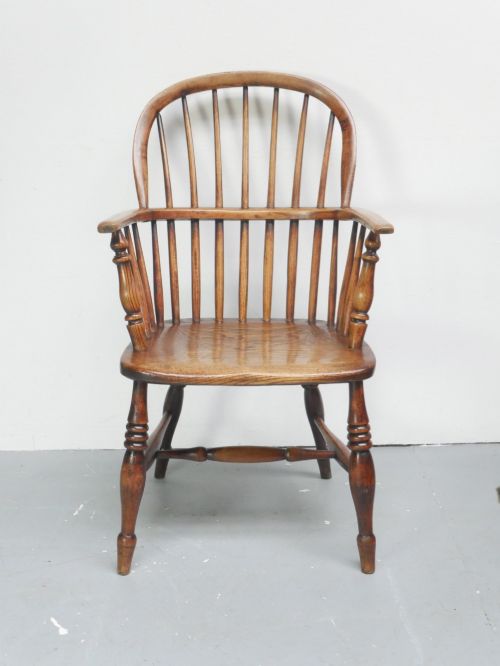
Quality in a traditional stick back armchair resides in the harmony of proportion and the selection of timber figures. Superior examples display balanced turnings on the arm supports and legs, coupled with a deep, characterful grain across the seat plank.
The sophistication of the comb or hoop back dictates the standing of the piece within regional traditions. Chairs exhibiting crisp steam-bending, well-defined crinoline stretchers, and thoughtful combinations of yew and fruitwood represent the upper tier of vernacular carpentry.
John Brand of Sleaford
The Traditional Stick Back Armchair Glossary
- Comb back
- A chair back featuring vertical spindles rising from the arm rail to support a horizontal top rail, resembling the teeth of a dressing comb. This form emerged during the eighteenth century to provide additional upper back support.
- Hoop back
- A continuous bentwood bow forming both the arms and the arched backrest of a Windsor chair. Steam-bending allowed makers to create this single strong curve from a single piece of ash or yew.
- Crinoline stretcher
- An arched underframe connecting the legs of a Windsor chair to provide rigidity. The hoop shape resembles the steel frames worn beneath Victorian skirts.
- Bodger
- A travelling woodturner who worked in the woods, using a pole lathe to produce green wood chair legs and spindles for local chair makers. Their skill ensured the consistent supply of turned components for regional workshops.
- Vernacular
- Objects built by regional craftsmen following local traditions rather than academic design blueprints. These pieces prioritize function and local timber availability over fashionable London styles.
Traditional Stick Back Armchair: Frequently Asked Questions
What is a stick back armchair?
A stick back armchair is a traditional wooden seat where turned or cleft spindles are wedged into a solid plank seat. These chairs developed in rural workshops across Britain as durable seating for everyday domestic life.
Craftsmen utilised locally sourced hardwoods like elm and ash, creating robust seating structures that relied on simple joinery and wedged tenons for stability.
How do I date an old Windsor chair?
Dating involves examining the construction methods, tool marks, and timber choices visible on the underside of the seat. Eighteenth-century examples often feature thicker elm seats and simpler Ash undercarriages, whereas Victorian pieces show more standardised lathe turning.
Changes in back design also help determine age, as low backs and comb backs generally precede the taller hoop backs of the nineteenth century.
Where were these chairs made?
These chairs originated in rural regions across England, Wales, and Scotland, with distinct styles developing in the Thames Valley, the West Country, and Yorkshire. Local timber availability dictated whether a chair featured yew, elm, or fruitwood.
Country makers adapted designs to suit local materials and the specific demands of farmers, tradesmen, and cottage dwellers in their communities.
How do I care for antique elm furniture?
Maintain antique elm by keeping the timber away from direct heat sources and sudden temperature shifts that cause wood to split. Regular dusting and occasional application of traditional beeswax help preserve the natural patina.
Avoid modern chemical polishes, as they build up on the surface and dull the warm tones acquired through centuries of handling.