


Stickback Chair
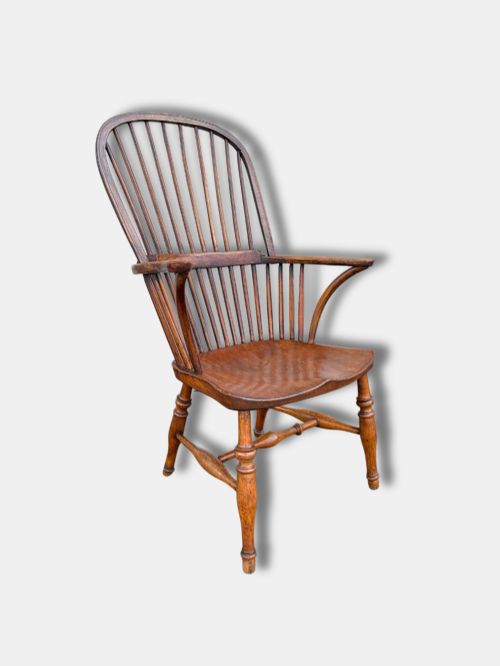
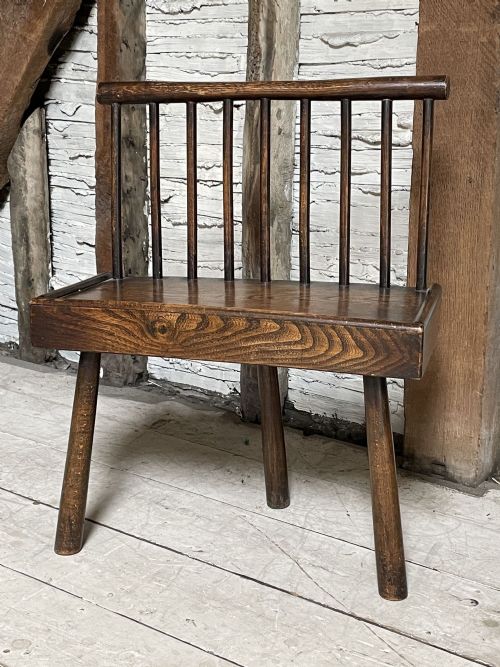
A stickback chair brings honest country craftsmanship and robust vernacular seating into a room.
Stickback Chair
A stickback chair is a form of Windsor seating where individual turned spindles form the back, creating a sturdy and functional seat for the kitchen or farmhouse.
You will most frequently meet elm and ash kitchen armchairs dating from the nineteenth century on this page, alongside occasional child-sized versions and dining chairs.
The regional styles range from English country vernacular and Victorian farmhouse examples to Regency and Georgian pieces built for daily domestic utility.
How they were made
Maker traditions combined resilient native timbers, typically using solid elm for the shaped seats and tough ash, beech or yew for the steam-bent bows and slender turned spindles.
Joints relied on traditional bodger methods, wedging legs and uprights directly into bored holes in the thick plank seat for enduring stability.
The inventory records vernacular forms including kitchen armchairs, children's seats, settles, and dining chairs.
What varies in quality
The distinction between standard utility seating and superior examples lies in the balance of the proportions, the thickness of the plank seat and the elegance of the spindle turnings.
Maturity of timber selection and the retention of original surface patination distinguish pieces that have aged gracefully through generations of domestic use.
Fred Walker Rockley
The Stickback Chair Glossary
- Stickback
- A Windsor chair variant where multiple slender spindles rise from the seat to support the back rail, omitting a central solid splat. This construction provides resilient support.
- Bodger
- A travelling pole-lathe turner in the woods who produced Greenwood chair legs and spindles for local chairmakers. Their efficient methods shaped country furniture production.
- Windsor
- A chair built with a solid wooden seat into which the legs and back spindles are tenoned directly. This seating form developed deep roots in English rural workshops.
- Vernacular
- Everyday objects made by regional craftsmen following local traditions rather than strict academic design rules. These pieces prioritize function and local materials.
Stickback Chair: Frequently Asked Questions
What is a stickback chair?
A stickback chair is a traditional wooden seat featuring turned spindles fitted directly into a thick plank base. They originate from rural workshops and kitchen traditions.
Most examples employ native timbers like elm and ash, combining comfort with sturdy construction for daily use.
Where were these chairs used?
These chairs served primarily in farmhouses, cottages and kitchens where robust seating was essential. Their durable build suited heavy domestic labour and dining.
Over time, vernacular pieces moved from utility rooms into living spaces for their unpretentious character.
How do I date a stickback chair?
Dating relies on observing tool marks, timber shrinkage, construction methods and the wear patterns on the seat. Earlier eighteenth-century models often display heavier proportions.
Nineteenth-century versions frequently incorporate steam-bent components and standardised spindle turnings from regional production.
How do I care for antique elm?
Elm responds best to stable indoor humidity and occasional treatment with suitable natural waxes to nourish the grain. Avoid placing chairs near direct heat sources.
Gentle dusting maintains the surface while preserving the historical patination accumulated over decades.