


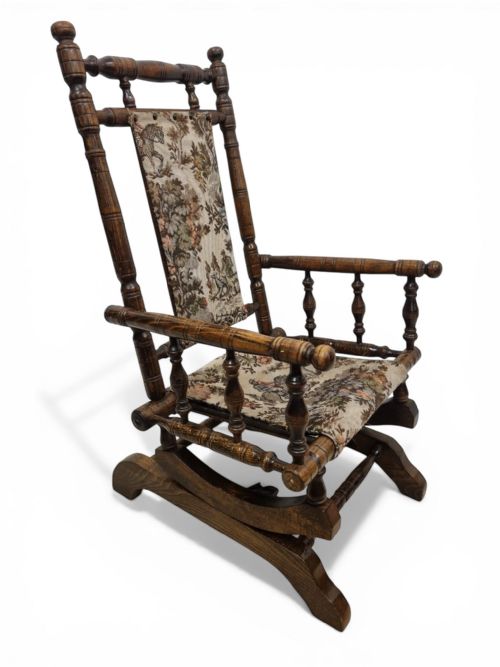


Vintage Childs Wooden Chair
A vintage childs wooden chair brings domestic history into a room through honest craftsmanship and diminutive scale.
Vintage Childs Wooden Chair
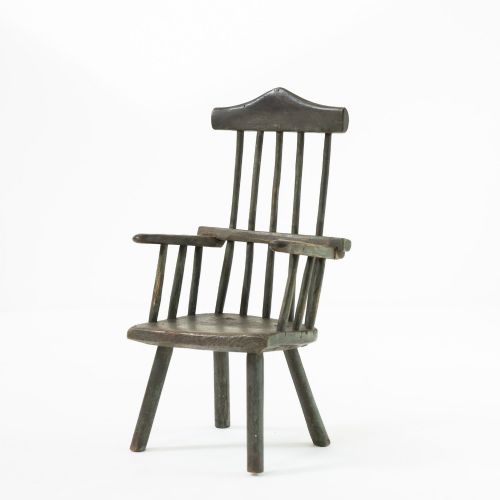
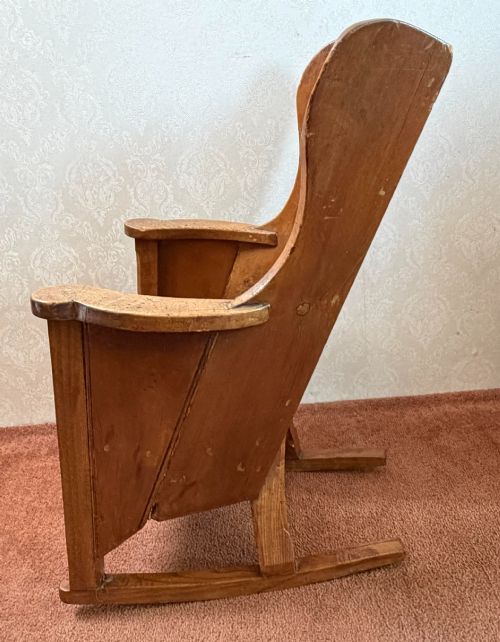
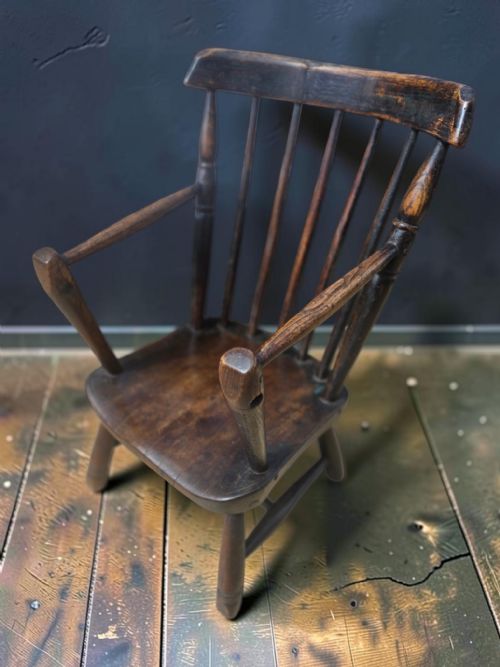
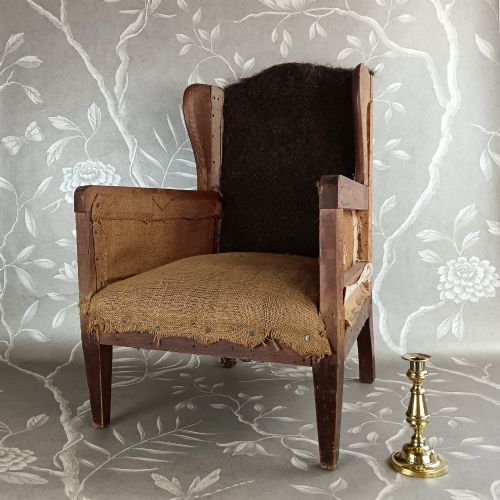
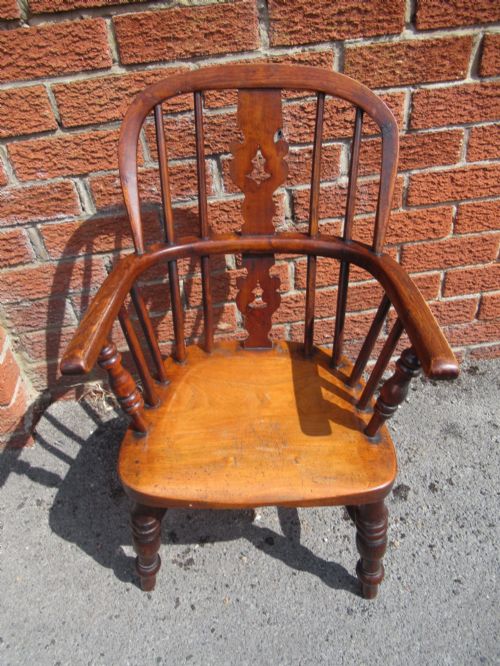
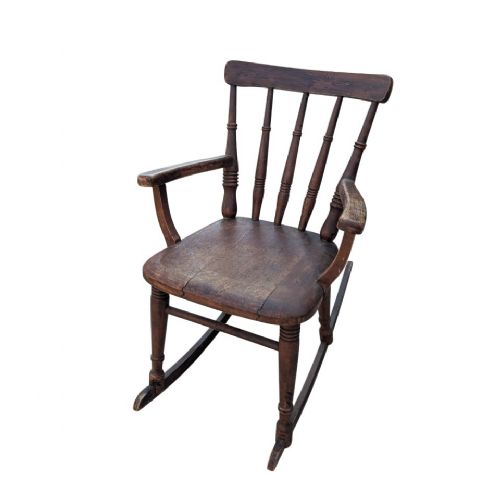
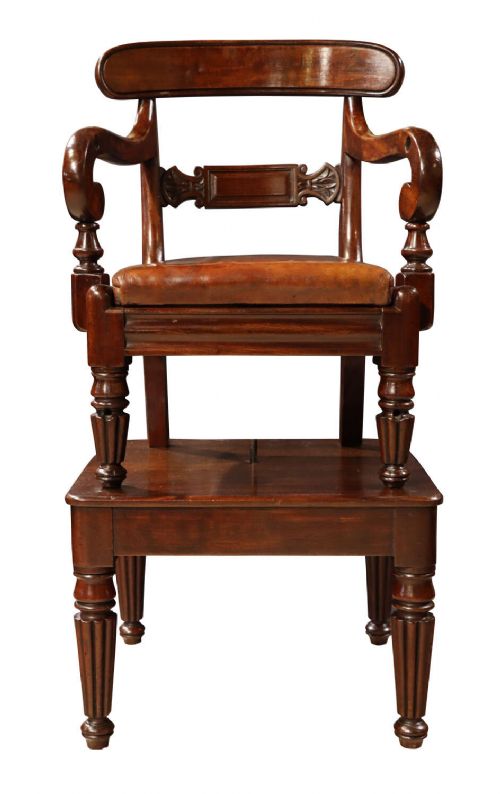
A vintage childs wooden chair encompasses a wide variety of seating forms scaled for younger occupants, ranging from simple armchairs to rocking chairs and high chairs. These pieces span periods from the Georgian era through the Victorian period and into the early twentieth century, reflecting the domestic habits of past generations. You will frequently encounter stick back, Windsor, and ladderback designs alongside metamorphic high chairs and potty rockers.
The materials utilised in these chairs demonstrate traditional cabinetmaking and rural craftsmanship, drawing on native timbers like elm, ash, mahogany, and oak. Many examples display regional British vernacular traits, while others originate from Scandinavian or European workshops. Whether built as miniature versions of adult seating or purpose-made for nursery use, each piece shows the practical needs of historic households.
How they were made
Maker-joiners constructed these chairs using solid hardwoods such as elm, ash, and beech for structural resilience against heavy daily use by children. Turned spindles, curved Windsor hoop backs, and mortise and tenon joints provided sturdy frames without relying on metal fasteners.
Surfaces were often left bare to acquire a natural patina over time, though some examples feature painted finishes, rush seating, caned panels, or upholstered pads in materials like tapestry and fabric.
Listings feature pieces spanning the Georgian, Regency, William IV, Victorian, and Edwardian periods, constructed in elm, mahogany, oak, ash, beech, and cane.
What varies in quality
The distinction between ordinary and superior pieces rests on the selection of timber and the complexity of the joinery. Chairs fashioned from figured mahogany or well-matched combinations of ash and elm display a higher level of workshop skill than plain utility items.
Proportion and structural integrity also define better examples, particularly in metamorphic high chairs and Windsor designs where balanced scaling matters as much as durability.
The Vintage Childs Wooden Chair Glossary
- Windsor
- A chair built with a solid wooden seat into which the legs and back spindles are directly bored and wedged. This traditional construction method provides robust support through interlocking wooden components.
- Metamorphic
- A piece of furniture designed to transform from one functional form into another, such as a high chair that converts into a low play chair and desk combination.
- Potty rocker
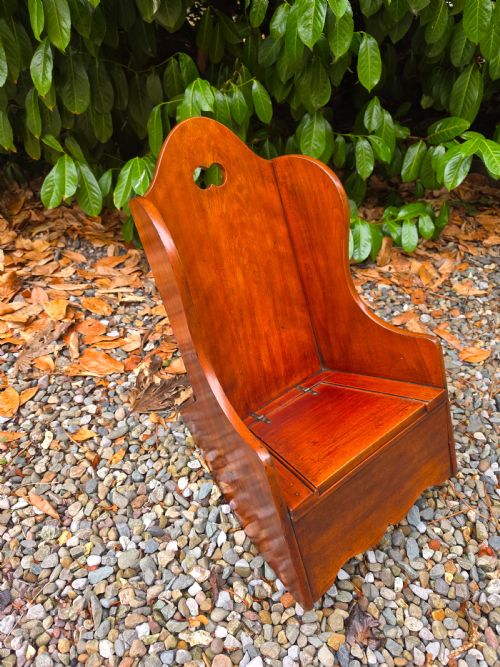
- A low rocking chair fitted with a concealed cut-out seat or commode drawer beneath the removable centre. These domestic items combined nursery seating with practical toilet training.
- Bergere
- A type of upholstered armchair featuring woven cane panels on the backrest and arm sides. This French-influenced technique lightens the visual weight of heavy timber frames.
Vintage Childs Wooden Chair: Frequently Asked Questions
What is a metamorphic high chair?
A metamorphic high chair is a convertible piece of furniture engineered to shift between a tall feeding position and a low chair with a play table.
These clever designs allowed nineteenth-century families to adapt a single nursery item as the child grew older.
How do I date a wooden childs chair?
Dating relies on examining the timber species, construction joints, tool marks, and overall stylistic vernacular. Georgian and early nineteenth-century pieces often feature hand-turned spindles and local woods like elm, while Edwardian examples show machine-sawn components.
Comparing the scaling and decorative details against known period furniture helps narrow the manufacturing decade.
Are these chairs safe for modern children?
While historic child seating makes charming decorative objects or display pieces for dolls and textiles, original items generally lack modern safety certifications. Tighter regulations and stability standards mean vintage high chairs are best appreciated as historic artefacts rather than for active daily use.
Collectors usually place them in living spaces as standalone decorative accents.
What woods were commonly used?
Cabinetmakers and country joiners utilised whatever native hardwoods were locally abundant and durable enough to withstand nursery wear. Elm and ash frequently appear in country vernacular pieces for their strong, interlocking grain, while mahogany was favoured for formal parlour and Victorian high chairs.
Secondary timbers like beech often formed the internal framework and turned legs.