
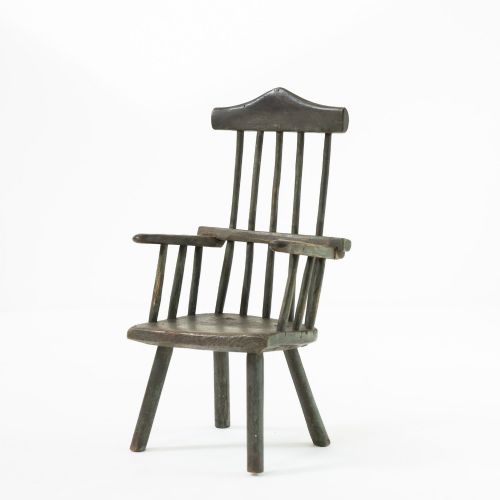
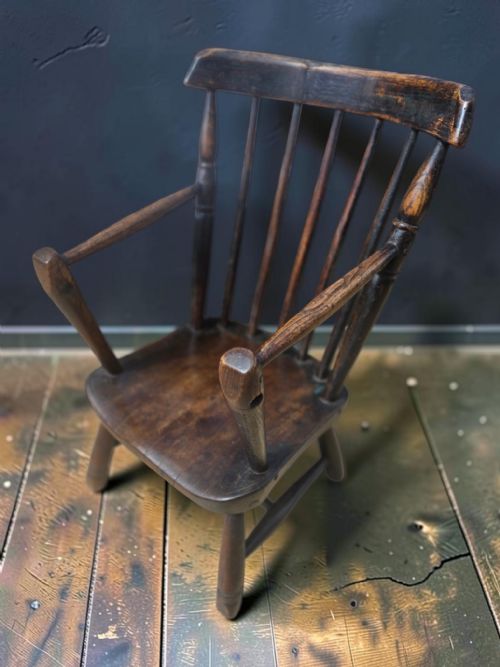


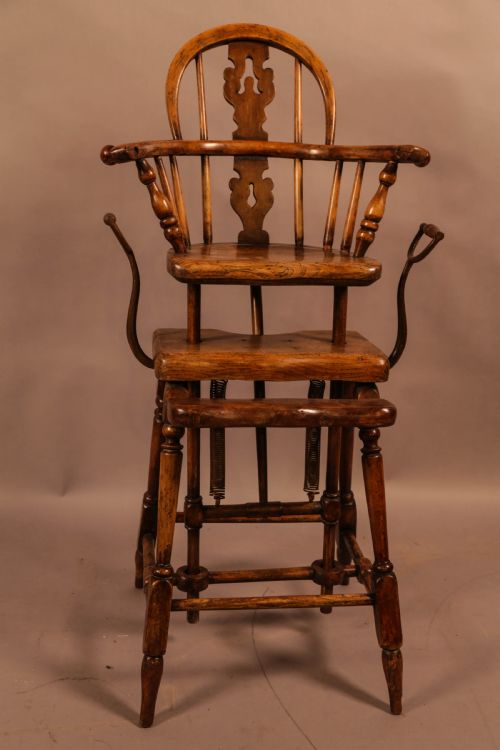


19th Century Child Windsor Chair
A 19th century child windsor chair is a scaled-down vernacular seat offering sturdy construction and domestic history.
19th Century Child Windsor Chair
When you search for a 19th century child windsor chair, you encounter small-scale vernacular seating designed for domestic use. These pieces mirror the robust construction methods of full-sized country seating adapted for younger occupants.
The versions most frequently met on this page span the Georgian, Regency, and Victorian periods. They appear in forms ranging from standard armchairs and elbow chairs to rocking chairs and high chairs.
Makers constructed these pieces using regional vernacular traditions found across England and Wales. Many examples combine stick-back or hoop-back frames with low, miniature proportions.
How they were made
Craftsmen built these chairs using solid native timbers including elm, ash, yew, oak, and beech. Hardwood seats were typically shaped and drilled to receive slender spindles and legs.
Makers utilised traditional green woodworking techniques, combining steam-bent ash or yew for the hoops and backs with turned uprights. Some examples retain original painted surfaces while others display polished wood grains.
One surviving nineteenth century example preserves the carved initials of its original young owner.
What varies in quality
The choice of timber creates distinct variations in character, with figured yew wood generally marking the more ambitious end of production compared to simpler ash and elm combinations. Grain figure and natural patina distinguish exceptional examples from standard workshop output.
Proportion and structural harmony separate skilled regional vernacular work from basic utility pieces. Subtle details such as carved initials, comb-backs, or well-turned arm supports elevate the presence of individual chairs.
The 19th Century Child Windsor Chair Glossary
- Windsor chair
- A chair built with a solid wooden seat into which the legs and back spindles are tenoned directly. This method provides robust structural integrity without relying on a bulky frame.
- Hoop back
- A continuous bentwood bow that forms the upper backrest and arm supports. It is typically steam-bent from a single piece of timber.
- Vernacular
- Objects built by local craftsmen following regional traditions rather than strict academic design rules. These pieces reflect the materials available in the immediate countryside.
- Stick back
- A chair back constructed from multiple plain turned spindles socketed into the seat and top rail. This design offers lightweight strength.
19th Century Child Windsor Chair: Frequently Asked Questions
How were child windsor chairs used?
These small chairs provided functional seating for children within domestic family spaces. Many examples incorporated rocking functions or elevated heights for nursery use.
Their robust construction allowed them to withstand daily use by younger family members over generations.
How do I live with one?
Position your chair in a stable environment away from direct heat sources to protect the historic timber. Gentle dusting and occasional wax application help maintain the surface.
They function well as decorative display pieces or as stable standalone seats in domestic interiors.
How do I date a child windsor chair?
Examine the wood species, turning styles, and construction wear to estimate the period of origin. Georgian and Regency examples often feature finer turning and specific timber combinations.
Compare the form against documented regional vernacular styles from the nineteenth century.
What is a primitive windsor chair?
A primitive windsor chair displays basic, unpretentious construction methods typical of rural workshops. These pieces often feature simpler turnings and heavier reliance on local timber.
Such chairs highlight the utilitarian roots of country furniture making.