
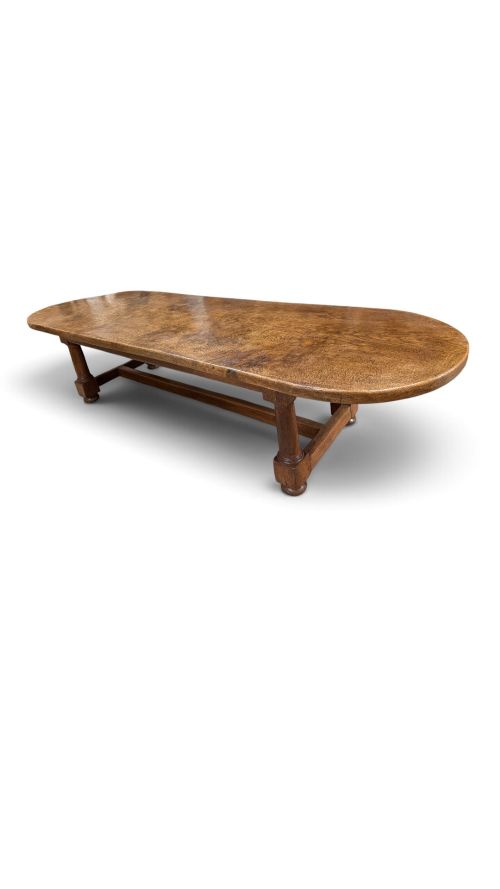
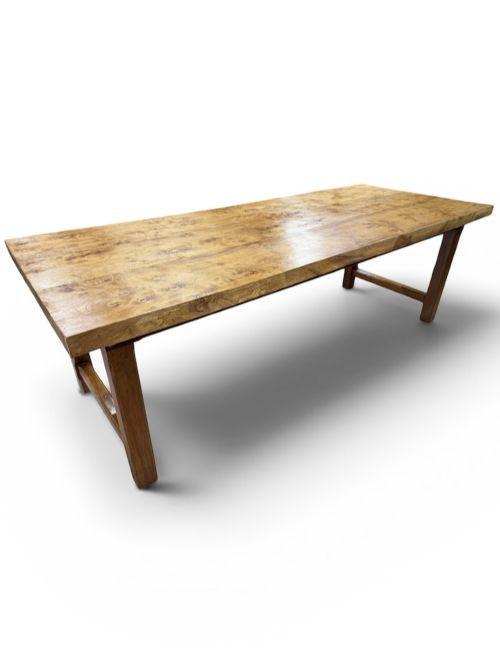
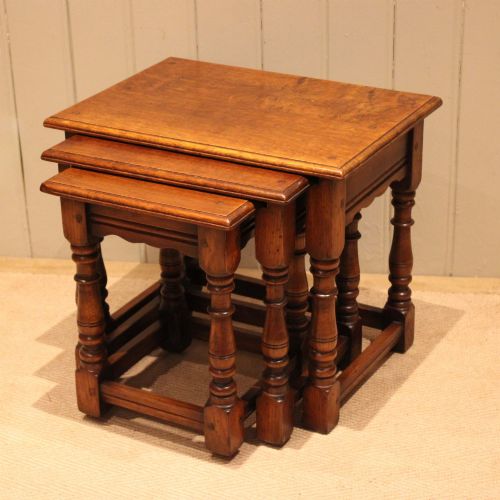
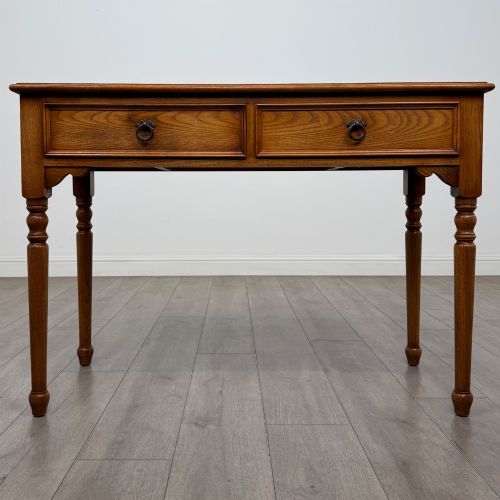
Traditional Solid Oak Table
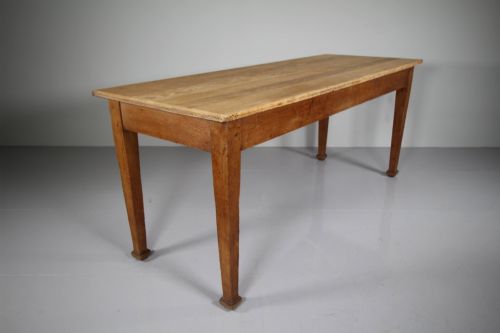
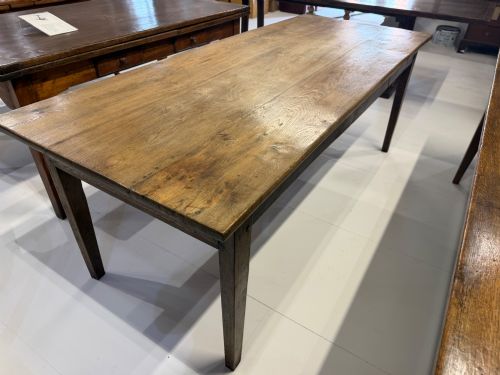
A traditional solid oak table brings genuine timber character and hardy utility to a room, built to endure daily use for generations.
Traditional Solid Oak Table
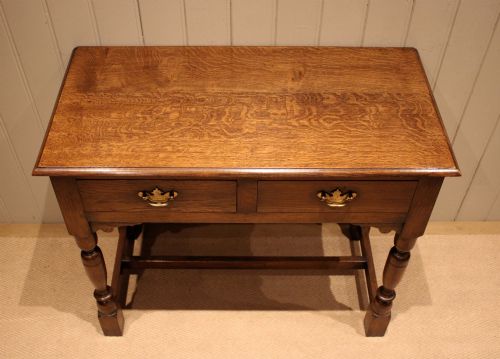
A traditional solid oak table encompasses forms built for gathering, working, and resting, from expansive refectory dining boards to compact side tables and writing desks. Buyers searching this phrase meet pieces spanning the eighteenth, nineteenth, and early twentieth centuries, reflecting enduring domestic functions.
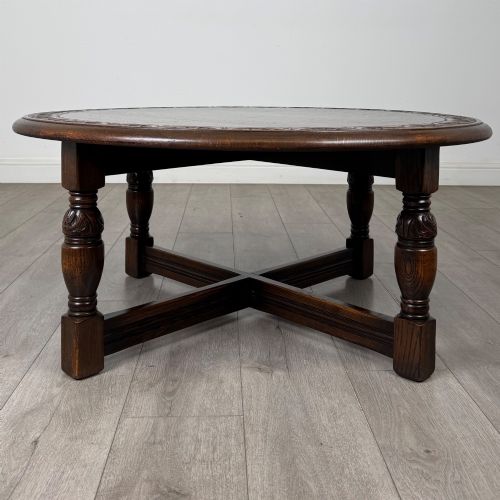
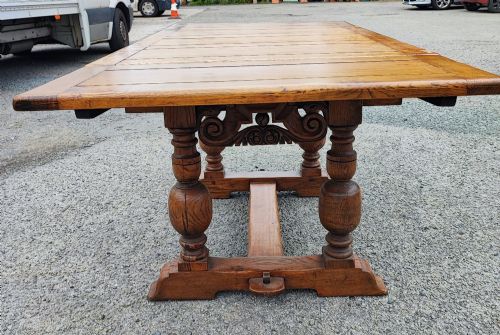
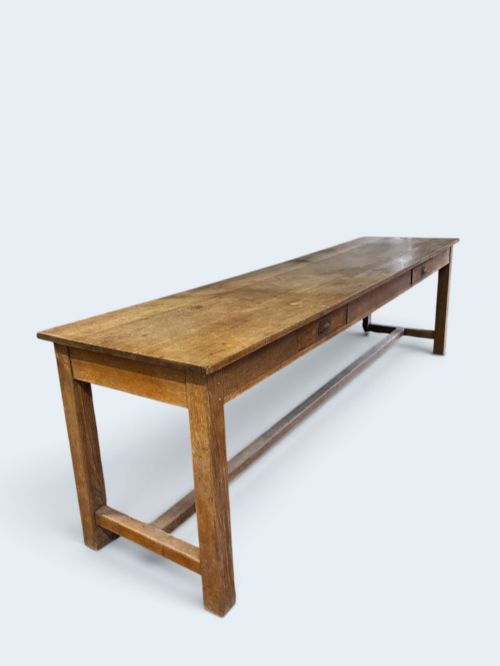
The most common formats on this page are refectory and farmhouse dining tables, often paired with trestle ends, draw leaves, or gateleg actions to extend their surface area. Alongside these large dining pieces sit smaller coffee tables, nests, and desks styled in Jacobean Revival, Arts and Crafts, or rustic country traditions.
What separates different examples
Quality in these tables rests on the selection of timber, such as single plank surfaces or finely figured golden oak, compared against more utilitarian boards. The integrity of the original construction, including the weight of the frame and the stability of extension mechanisms like draw leaves or gatelegs, determines durability.
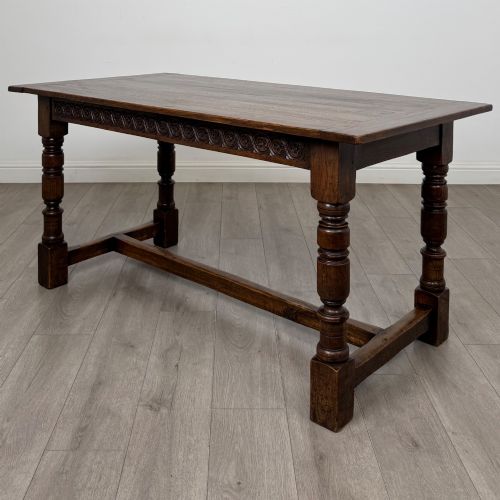
The refinement of hand-carved details, such as Jacobean revival motifs or shaped trestle supports, distinguishes standard utility furniture from finer workshop pieces produced during the Edwardian period or earlier centuries.
The Traditional Solid Oak Table Glossary
- Refectory table
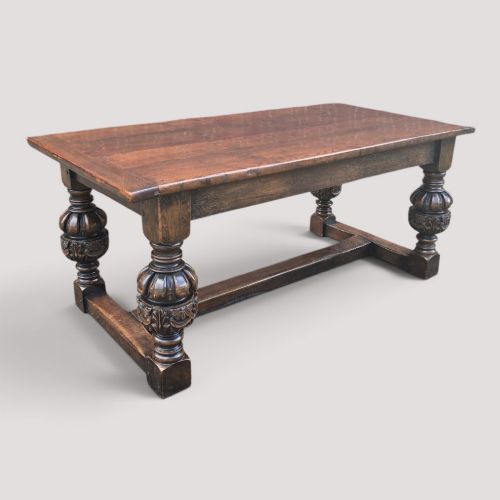
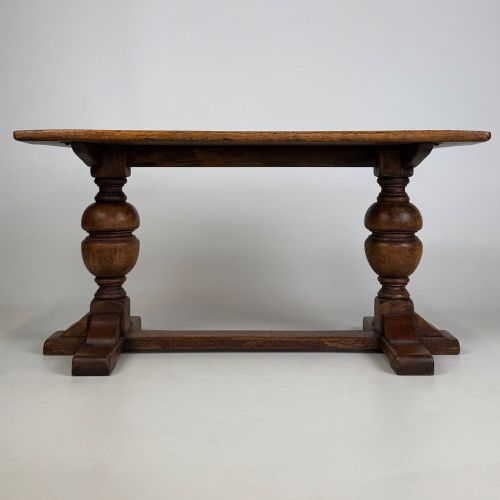
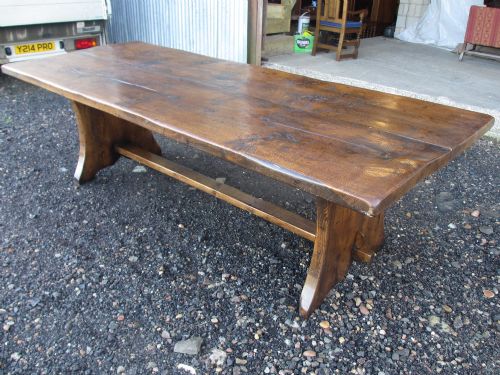
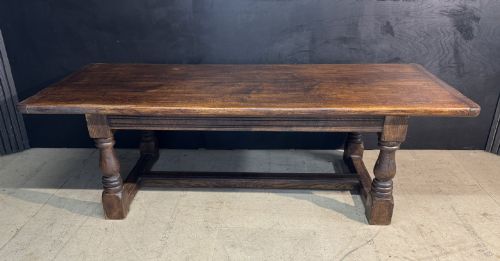
- A long, narrow dining table traditionally used in monasteries and large halls, characterised by substantial legs connected by a central stretcher. These forms form a large portion of the larger dining tables available here.
- Draw leaf table
- A table equipped with concealed leaves stored beneath the main top that pull out to extend the surface length. This mechanism offers flexible sizing for dining without requiring separate table leaves.
- Gateleg table
- A drop-leaf table featuring hinged flaps supported by swing-out legs that resemble a opening gate. This design allows the sides to fold down when floor space is limited.
- Linenfold
- A style of carved wooden panelling that resembles folded vertical folds of fabric. This decorative motif appears on the woodwork of specific Edwardian and revival desks and tables.
- Joint stool
- A sturdy wooden stool built with mortise and tenon joints, serving as a versatile seat or small stand. These pieces share construction methods with larger jointed tables of the period.
Traditional Solid Oak Table: Frequently Asked Questions
How do I maintain a solid oak table?
Clean the surface regularly with a soft, dry cloth and nourish the timber periodically with appropriate beeswax to preserve the grain and prevent drying.
Avoid placing solid wood furniture in direct sunlight or near heat sources to minimise the risk of warping or splitting.
Can I use an antique oak table daily?
These tables were originally built for heavy domestic service in kitchens, dining rooms, and studies, making them well-suited for everyday family life.
Using mats under hot dishes and coasters for drinks protects the historic finish from heat rings and moisture marks.
How do I tell different periods apart?
Earlier pieces from the eighteenth century often feature hand-planed single planks and simpler, pegged structures born from necessity and early tool use.
Later Edwardian and revival pieces frequently incorporate mechanical extensions, decorative carving styles like linenfold, or lighter golden oak tones.
Are these tables easy to dismantle for moving?
Many refectory and farmhouse styles utilise pegged frames that can be disassembled into separate tops and base trestles for transport.
Gateleg and smaller side tables are typically fixed structures that remain assembled, requiring careful measurement of doorways before relocation.