
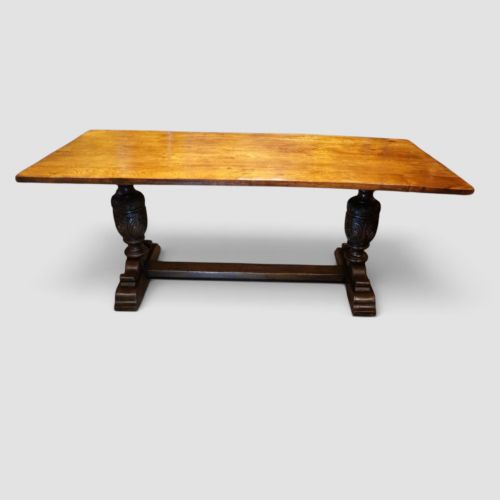
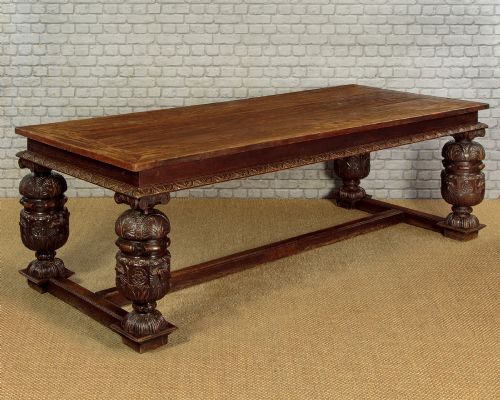


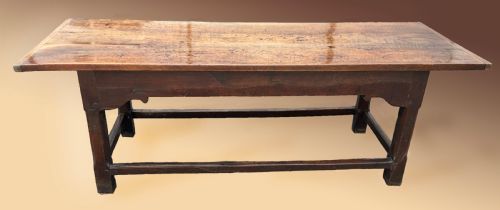
Heavy Oak Monastery Table
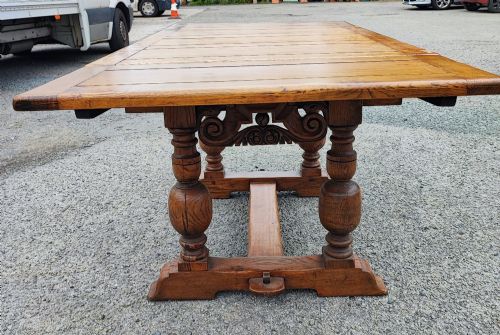
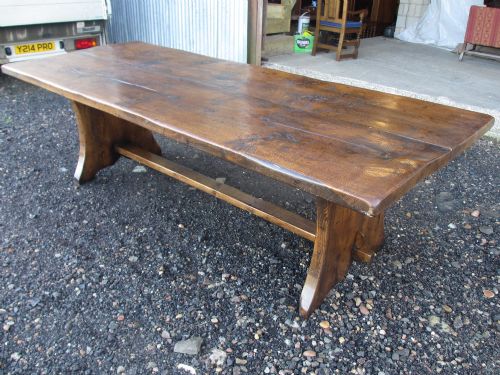
A heavy oak monastery table grounds a large dining room with solid timber and centuries-old character.
Heavy Oak Monastery Table
A heavy oak monastery table is a substantial dining surface built for communal gatherings and daily utility. When searching for this phrase, a buyer encounters robust refectory tables, draw leaf versions, and long dining boards suited for large spaces.
The pieces appearing on this page span several centuries and revival movements, including authentic seventeenth-century examples alongside nineteenth-century Gothic revivals, Edwardian interpretations, and early twentieth-century designs. French country and provincial styles also feature prominently among these listings, offering alternative base configurations and proportions.
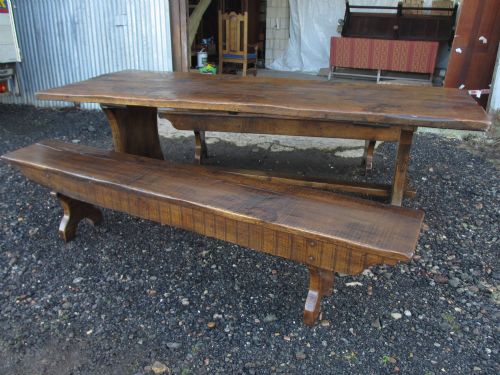
Most examples function primarily as dining tables or come accompanied by matching bench forms. They provide considerable length and seating capacity, accommodating twelve diners comfortably in larger iterations.
Materials and construction
Construction relies heavily upon solid oak timber, frequently utilised in thick multi-plank tabletop formations that show distinct grain patterns and historical wear. Master carpenters joined these massive boards using traditional methods to ensure structural stability across long spans.
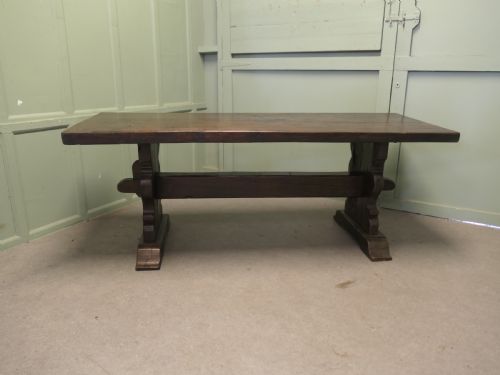
Support systems combine sturdy timber uprights with shaped trestle ends, draw leaf mechanisms, or stretcher bases. Iron hardware occasionally appears in structural joints and bracing, providing additional reinforcement to the heavy timber frames.
Listings span from the seventeenth century through to the Edwardian era, predominantly featuring oak and iron materials in refectory and farmhouse formats.
Assessing quality and authenticity
Quality separates tables built from genuine period timber with original patina from later revival pieces made to mimic antique proportions. The integrity of the plank top, the depth of the natural wood ageing, and the rigidity of the trestle base determine the standing of each piece.
Proportion and balance dictate the visual success of these large tables. Superior examples display harmonious scaling between the heavy topboards and the supporting trestles, ensuring the piece commands the room without appearing clumsy.
The Heavy Oak Monastery Table Glossary
- Refectory table
- A long, narrow dining table traditionally used in monastic dining halls. These pieces evolved from utilitarian monastic boards into centrepieces for large domestic dining rooms.
- Draw leaf table
- A dining table equipped with sliding leaves tucked beneath the main surface. This mechanism allows the user to extend the length of the table quickly.
- Trestle base
- A support structure consisting of vertical uprights connected by a horizontal stretcher or foot. This design provides robust stability beneath heavy timber tops.
- Jacobean Revival
- An architectural and furniture style popular during the nineteenth and early twentieth centuries. It mimics the dark woods, heavy turnings, and sombre ornamentation of seventeenth-century English design.
- Plank top
- A table surface constructed from multiple parallel boards joined together. Older versions often utilise wide individual boards that highlight the natural grain of the oak.
Heavy Oak Monastery Table: Frequently Asked Questions
How many people can sit at a monastery table?
These large dining boards easily accommodate ten to twelve diners depending on the overall length of the timber top and the presence of matching bench forms.
The substantial clearance beneath the trestle ends also allows chairs to be pushed in fully along the sides.
Are these tables suitable for daily family use?
Solid oak construction and robust joinery make these pieces exceptionally durable for everyday meals and heavy gatherings.
Existing historical marks and surface patinas often absorb future use gracefully, reducing the need for constant caution.
How do I distinguish seventeenth-century originals from revival pieces?
Original pieces display authentic hand-tool marks, period-specific joint construction, and timber shrinkage consistent with centuries of age.
Revival pieces from the nineteenth and twentieth centuries often feature machine-sawn elements and stylistic interpretations of earlier eras.