



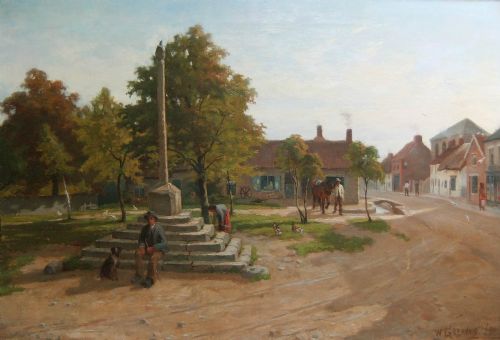
Traditional Rural Scene Artwork
Traditional rural scene artwork captures the quiet rhythm of the countryside through pastoral views and agricultural life.
Traditional Rural Scene Artwork
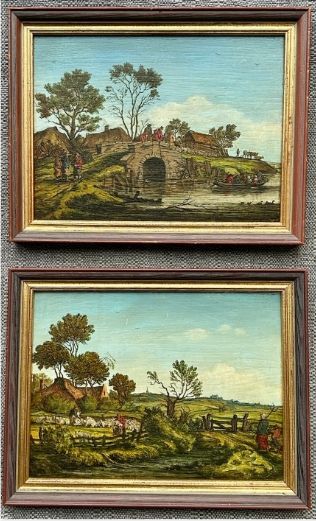
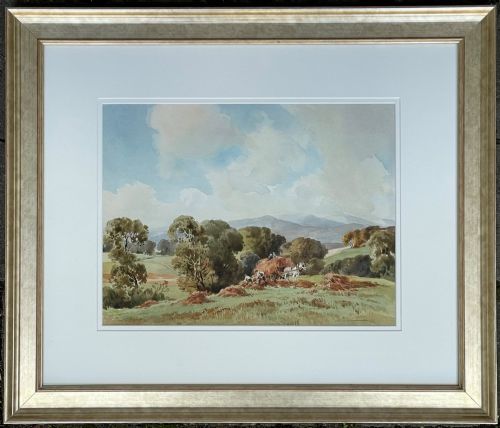
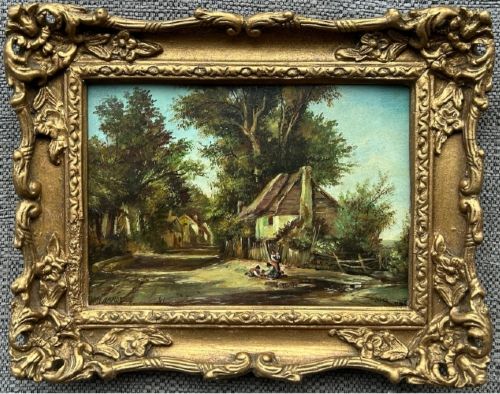
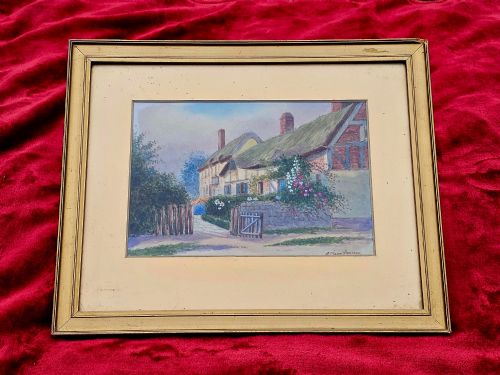
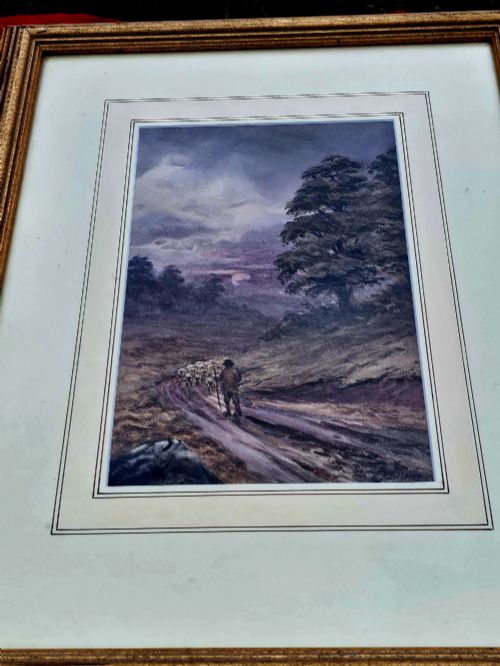
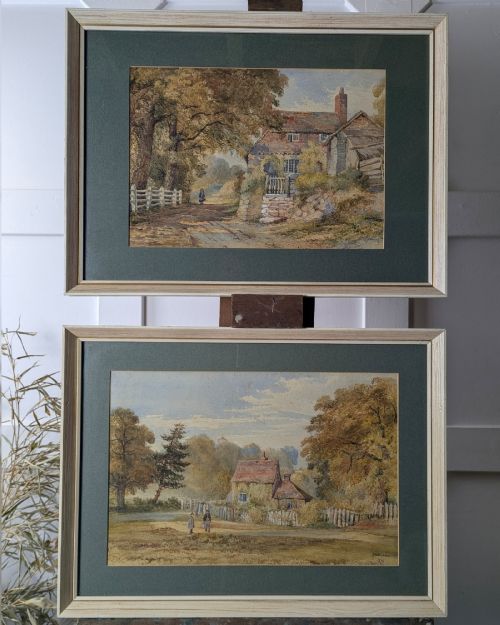
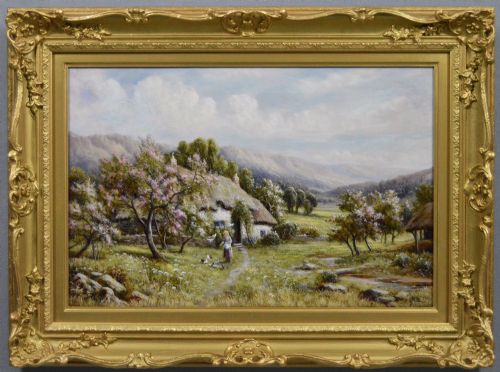
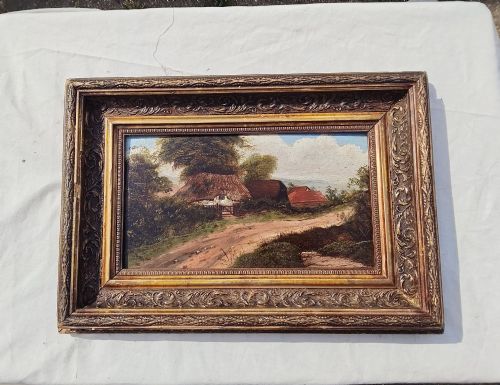
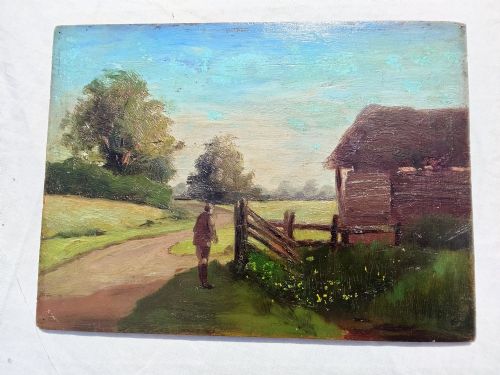
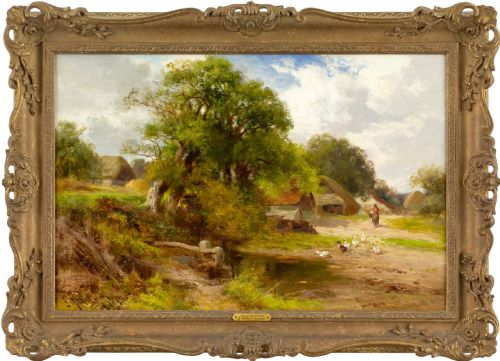
Traditional rural scene artwork depicts agricultural landscapes, farming communities, and pastoral vistas that reflect the nineteenth and early twentieth centuries. Buyers searching this phrase meet framed watercolours, oil paintings on canvas or wood panels, and works on paper showing cottages, farm animals, and field labourers. These pieces preserve historical visions of the British and European countryside, executed in styles ranging from Victorian realism to British impressionism.
The selections span the Victorian and Edwardian eras, stretching from mid-nineteenth century watercolours up to post-war twentieth century interpretations. Common subjects include sheep herding, cattle grazing, harvesting, and river landscapes populated by figures outside cottages. Most works arrive framed in period surrounds, often utilising gilt wood and gesso to house the paintings securely.
Materials and Techniques
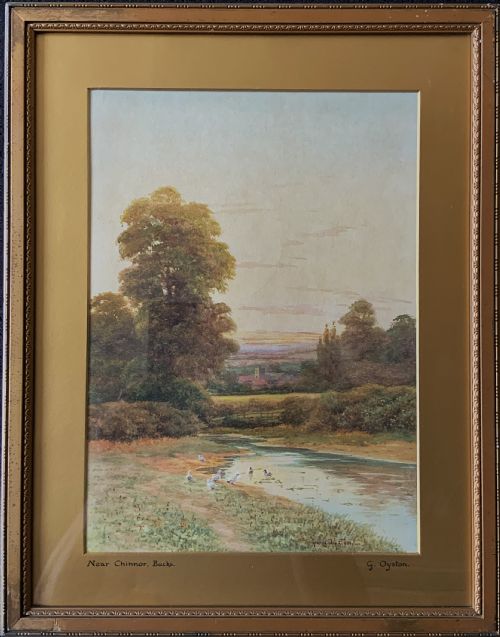
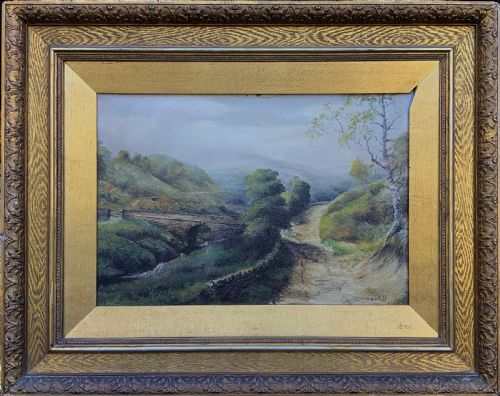
Artists creating traditional rural scene artwork relied heavily on oil paint and watercolour applied to varied surfaces like canvas, wooden boards, wood panels, paper, and card. Oil on canvas and wooden panels allowed for textured brushwork and depth in farmyard and landscape depictions, while watercolours captured softer atmospheric qualities in pastoral scenes. Frames accompanying these works typically incorporated carved gilt wood and moulded gesso.
Techniques varied from detailed realism capturing livestock and agricultural machinery to looser impressions of English riverbanks and Scottish crofts. Painters utilised natural light effects to render cottages, fields, and village scenes authentically, securing their compositions within protective glass or robust wooden frames.
Listings feature works spanning the nineteenth and twentieth centuries, including Victorian, Edwardian, and post-war periods.
Evaluating Quality
Quality in traditional rural scene artwork rests upon the surety of the draughtsmanship, the handling of light, and the fidelity of the composition. Stronger pieces demonstrate precise anatomical rendering of horses, cattle, and sheep alongside balanced atmospheric perspective in the surrounding landscape. Lesser works rely on formulaic repetition without the observed detail that distinguishes works by named nineteenth and twentieth century artists.
The harmony between the artwork and its original framing also dictates the standing of a piece. Finer examples retain period gilt wood and gesso frames that complement the palette and era of the painting, whereas replacement frames can alter the visual weight of the composition.
Percy Lancaster·William Joseph Shayer Senior·David Bates·Robert John Hammond·John Horace Hooper·George Oyston·William Greaves·Miles Birkett Foster·Herbert Royle·James Kyd·Samuel Joseph Clark·James Hardy Junior·Willem Anton Alexander Knip·Charles Vickers·John Atkinson·William Grant Murray·Robert Finley McIntyre·Arthur Longley Vernon·Edward Brice Stanley Montefiore·Robert Winchester Fraser
The Traditional Rural Scene Artwork Glossary
- Oil on Canvas
- A painting medium where pigments suspended in drying oil are applied to stretched canvas fabric. This technique permits rich colour blending and textured brushstrokes.
- Watercolour
- A painting method where water-soluble pigments are applied to paper. It produces translucent washes of colour suited to pastoral landscapes.
- Gesso
- A plaster-like mixture applied to wood or canvas to prepare a surface for painting or moulding. It frequently forms the decorative relief on antique picture frames.
- Gilt Wood
- Wood treated with a thin layer of gold leaf or gilt finish. This material creates the characteristic metallic sheen seen on traditional Victorian frames.
- Pastoral Style
- An artistic genre depicting rural life and idyllic country settings. It romanticises farming, herding, and village communities.
Traditional Rural Scene Artwork: Frequently Asked Questions
What subjects appear in traditional rural scene artwork?
These works typically show farming life, agricultural landscapes, sheep herding, cattle grazing, and cottages in the countryside. Figures working in fields or near rivers also feature frequently.
The compositions capture historical rural life across Britain and Europe, reflecting the daily routines of farmers and labourers during the nineteenth and early twentieth centuries.
How should I care for an antique oil painting?
Keep oil paintings away from direct sunlight and steady temperature fluctuations to protect the canvas and paint layers. Dust the surface gently with a soft, dry brush.
Avoid using water or chemical cleaners on the paint or the gilt frame, as moisture damages older wood, gesso, and canvas.
Are watercolours framed differently from oil paintings?
Watercolours require glass protection because paper and water-soluble pigments remain vulnerable to atmospheric moisture and physical damage. Oil paintings on canvas or wood panels typically hang exposed without glass.
Both mediums frequently utilise period wooden frames enhanced with gilt and gesso details to match their respective eras.
How do I identify the period of a landscape painting?
Dating relies on stylistic clues, framing materials, and artist signatures recorded in the work. Victorian and Edwardian pieces often exhibit specific realist or pastoral conventions.
Examine the back of the panel or stretcher bars for old inscriptions, labels, or stamps that indicate the creation date or framing origin.