

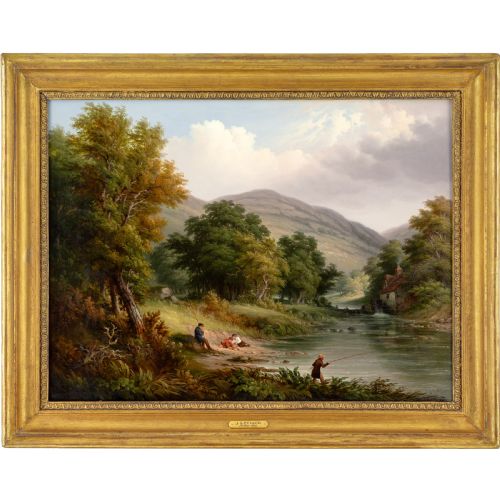
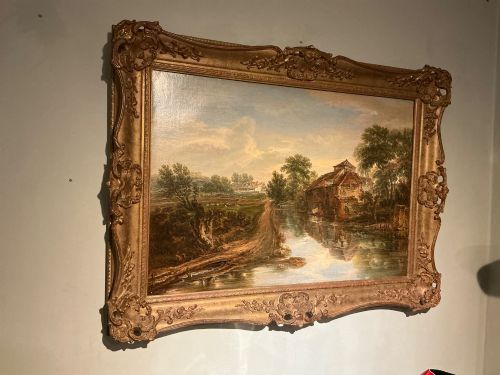
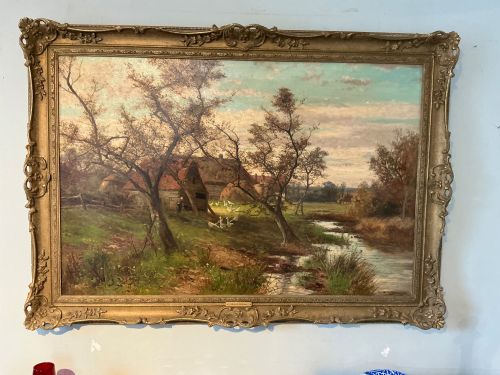
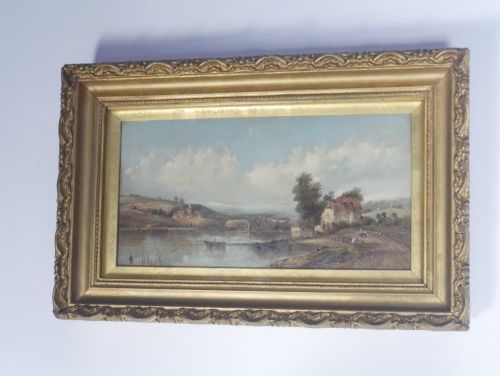
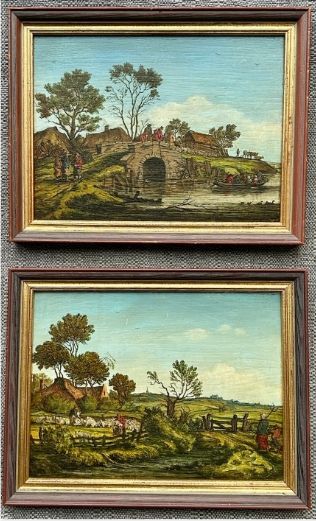

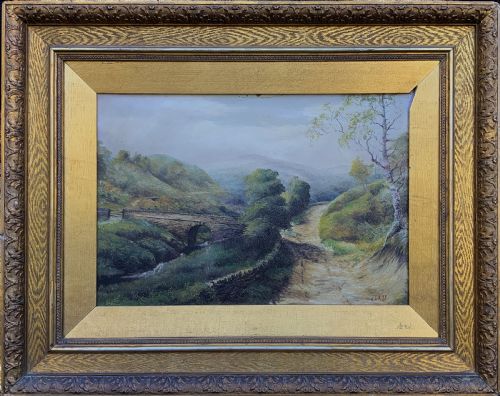
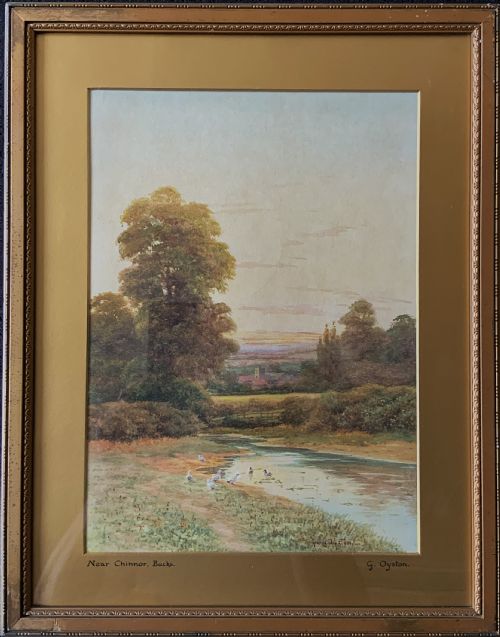

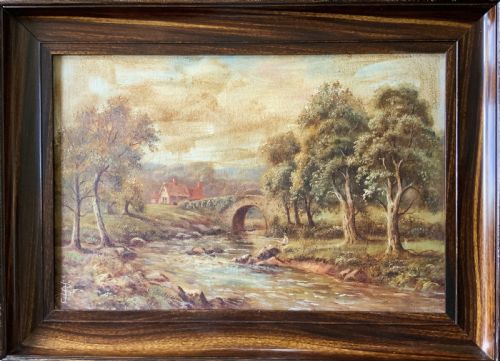

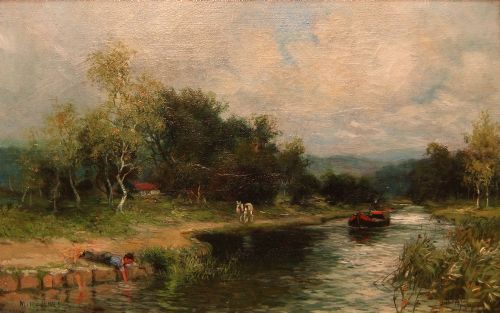


Traditional Rural River Scene
A traditional rural river scene brings the quiet of nineteenth-century waterways and pastoral riverbanks directly into a room.
Traditional Rural River Scene
A traditional rural river scene depicts pastoral waterways, mills, and figures fishing or crossing fords, typically captured in oil or watercolour. These works span the Victorian, Edwardian, and mid-twentieth-century periods, recording quiet British and European landscapes. Buyers encounter framed canvas works and wood panels alongside delicate watercolours on paper.
The subjects focus on daily rural life beside water, featuring cottages, cattle, and willow trees along riverbanks. Works range from nineteenth-century realism and British impressionism to twentieth-century revival styles. Many pieces document specific regional locations, from Welsh valleys to Berkshire streams.
Materials and Technique
Artists painted these river scenes primarily with oil paint on canvas stretched over wooden frames, or directly onto prepared wood panels. Watercolours on paper provide a lighter alternative, often mounted behind glass. Frames are frequently constructed from wood with gesso ornamentation and gilt finishes.
Brushwork varies from the tight detail of nineteenth-century academic realism to the looser, atmospheric strokes of British impressionism. Pigments were layered to capture the shifting light on water and foliage, while watercolours utilised washes to achieve transparent effects for skies and rivers.
Traditional Rural River Scene Retail Price Guide 2026
Typical asking prices for traditional rural river scene among the pieces listed under this phrase on Sellingantiques today, from the lower quarter to the upper quarter. They describe what is for sale here now, not the wider market.
Several canvases record local anglers patiently waiting by mill streams and locks, proving that nineteenth-century fish were just as elusive.
Judging Quality
Quality rests on the handling of light, atmosphere, and natural movement in the water and surrounding trees. Superior compositions display a confident balance between the landscape elements and human activity, such as figures fishing or harvesting by the bank. Lesser works often rely on formulaic repetition without observing actual light conditions.
The skill of the brushwork and the preservation of the canvas, wood panel, or paper surface determine the standing of a piece. Original frames with intact gesso and giltwood enhance the presentation, whereas compromised supports or unsympathetic overpainting diminish the integrity of the work.
Abraham Hulk junior·George Oyston·Robert Winchester Fraser·William Langley·William Sidney Cooper·Robert Gallon
The Traditional Rural River Scene Glossary
- Canvas
- A heavy woven fabric stretched across a wooden frame to serve as a support for oil painting. It provides a textured surface that holds layered pigment.
- Gesso
- A plaster-like mixture applied to wood panels or frames as a smooth base for gilding or paint. It is often moulded into decorative relief patterns.
- Watercolour
- A painting method where fine pigment is suspended in a water-soluble binder on paper. It relies on the white of the paper to show through translucent washes.
- Giltwood
- Timber carved and coated with a thin layer of gold leaf or metallic powder. It was widely used for traditional picture frames.
- Wood Panel
- A rigid flat wooden board used as a painting support before canvas became standard. Panels offer a stable surface that preserves fine brush detail.
Traditional Rural River Scene: Frequently Asked Questions
What periods do these paintings date from?
These artworks span the Victorian era, the Edwardian period, and into the twentieth century. Most examples cluster around the late nineteenth and early twentieth centuries.
Earlier nineteenth-century works share space with mid-century regional landscapes, reflecting shifting pastoral styles over several decades.
How should I hang and light them?
Hang these paintings away from direct sunlight to protect oil pigments and watercolours from fading. Stable room humidity prevents the cracking of canvas and wooden panels.
Use picture lights or neutral ambient illumination to bring out the subtle tones of riverbanks and skies without generating excessive heat.
Are the frames original to the pieces?
Many works retain their period giltwood or wood frames, which complement the age and style of the painting. Some pieces have been reframed over time to suit contemporary interiors.
Examining the back of the frame often reveals clues about its age and whether it has been paired with the canvas at a later date.