
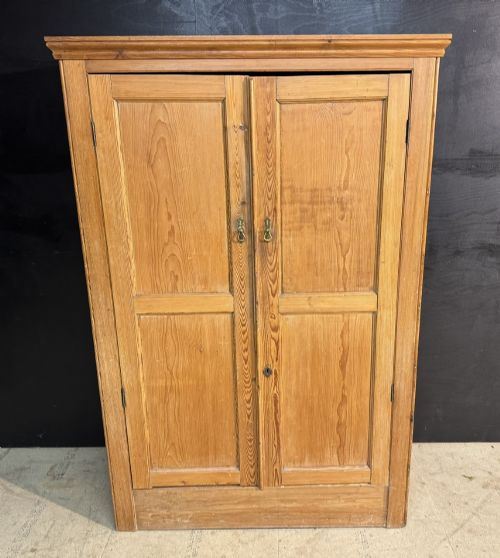
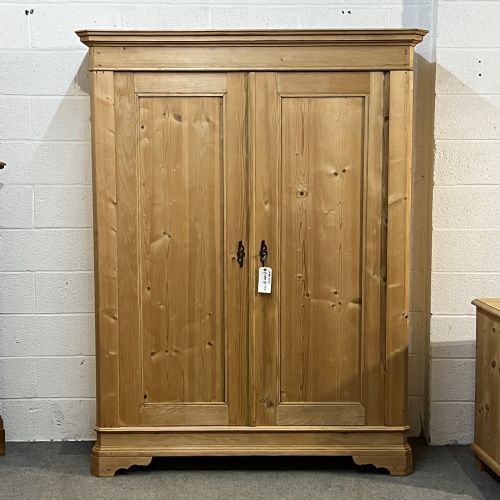
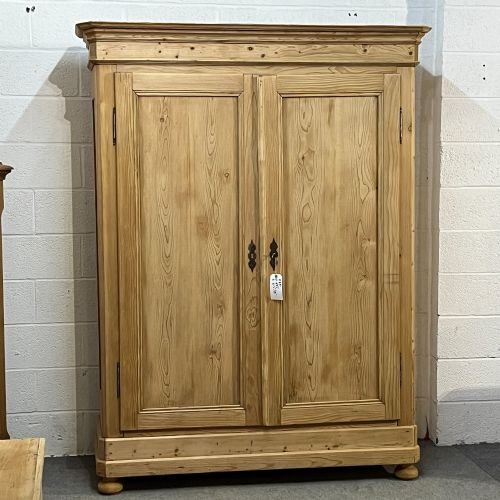
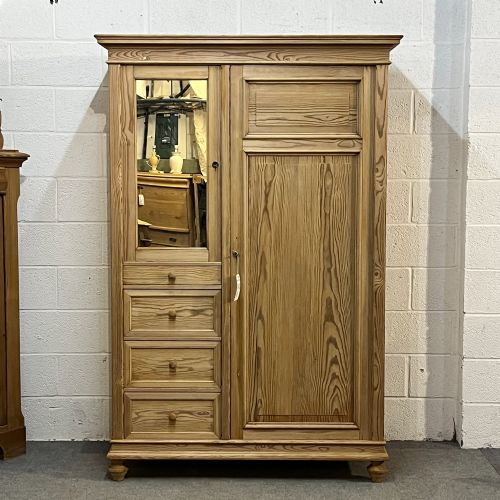
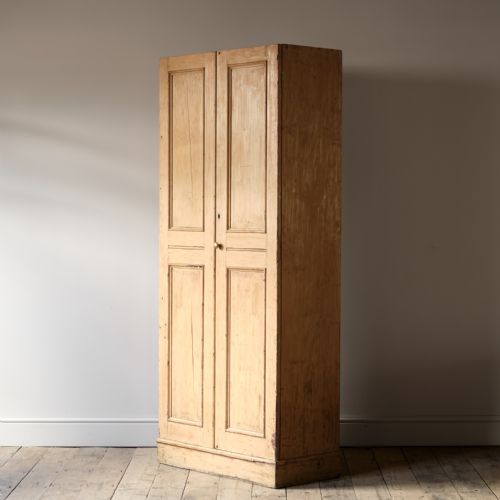
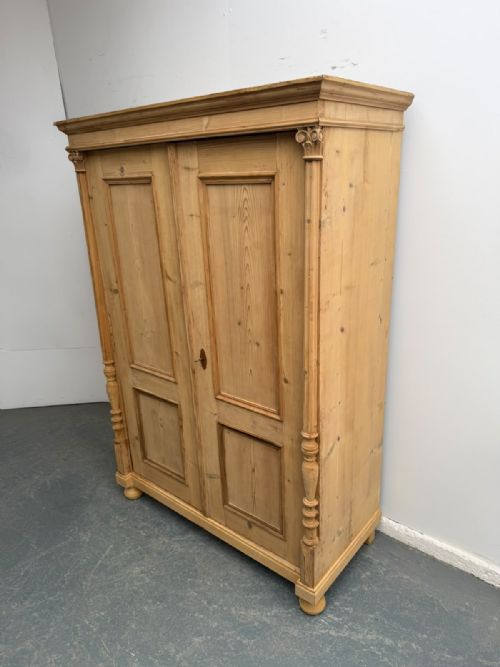
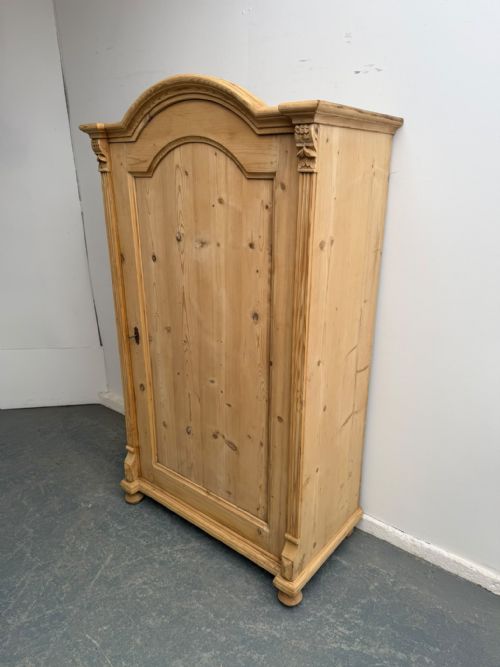
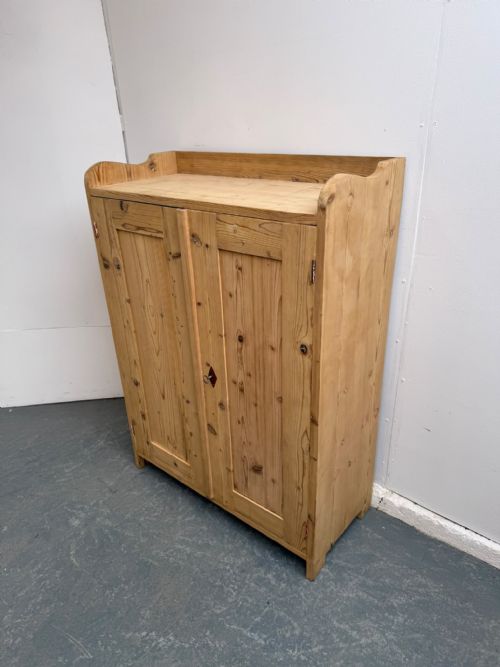
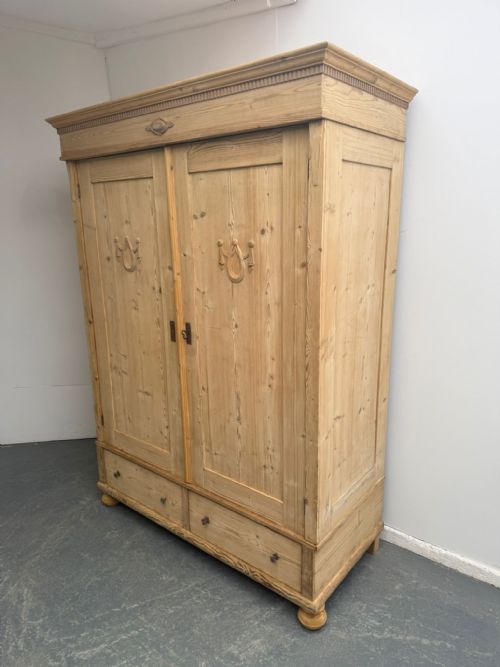


Traditional Pine Linen Cupboard
A traditional pine linen cupboard offers robust utility and honest charm, bringing generous storage and natural texture into a bedroom or hallway.
Traditional Pine Linen Cupboard
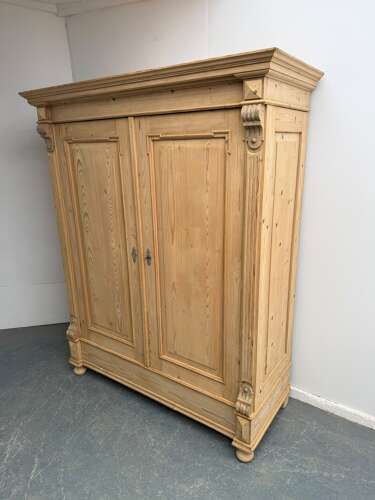
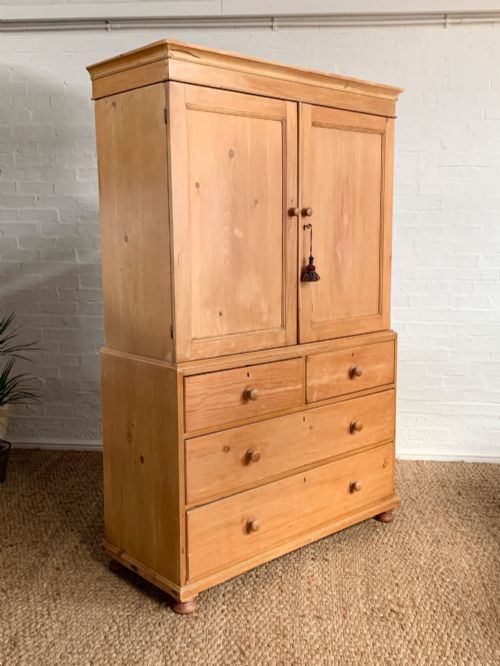
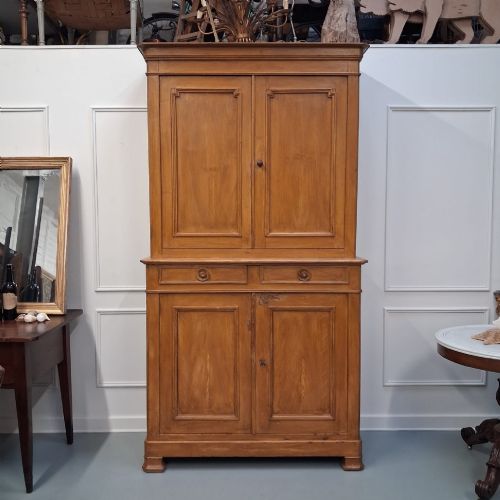
A traditional pine linen cupboard provides tall, enclosed storage for textiles and garments across periods from the eighteenth century through to the early twentieth century. Buyers seeking a traditional pine linen cupboard will find pieces ranging from Georgian country workshops to Victorian domestic interiors.
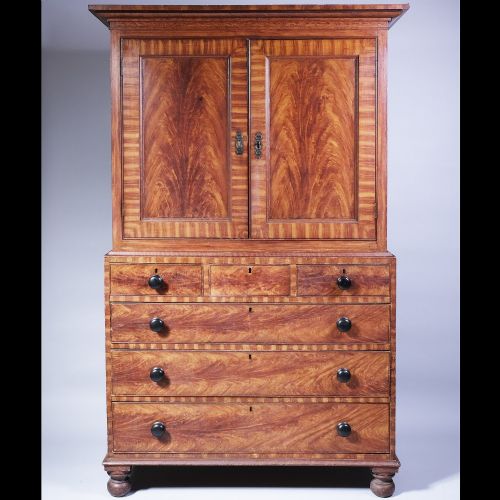
The forms encompass straightforward single and double door wardrobes, multi-piece knockdown constructions designed for tight staircases, and housekeepers cupboards fitted with internal shelving. Many examples retain original paint finishes, scumble glaze, or bare waxed surfaces suited to a country interior.
Origins stretch across English, Welsh, French, Hungarian, Baltic and Scandinavian traditions, showing local vernacular details like arched panels, moulded cornices, and lower storage drawers. These functional items served generations of households before entering the antique market.
How they were made
Construction relies primarily on solid pine, joined with traditional framing methods and pegged mortise and tenon joints to withstand heavy domestic use. Knockdown systems allowed large wardrobes to be disassembled easily for transport between rooms and properties.
Hardware elements such as iron hinges, brass escutcheons, and bone pulls secure doors and drawers, while surface treatments range from clear wax to layered oil paints and decorative scumble effects. Hand-planed boards and pegged panels reveal the manual labour of regional carpenters and provincial cabinet makers.
Listings feature pieces spanning the Georgian, Victorian, and early twentieth-century eras, alongside regional styles from Britain, France, Hungary, and Scandinavia.
What varies in quality
Quality rests upon the integrity of the original timber frame, the survival of early or original surface finishes like paint or scumble, and the balance of regional proportions. Pieces retaining their original backing boards, internal shelving layouts, and matching hardware hold greater integrity than altered examples.
The sophistication of the joinery distinguishes standard utility storage from finer regional vernacular pieces, particularly in knockdown mechanisms and panel mouldings. Patina accumulated through decades of waxing and daily handling separates honest period surfaces from heavily stripped or over-restored timber.
The Traditional Pine Linen Cupboard Glossary
- Knockdown wardrobe
- A large piece constructed to be taken apart into sections for transport and reassembled on site.
- Housekeepers cupboard
- A large storage cabinet traditionally used in large domestic kitchens or halls for linen, dry goods, and household stores.
- Scumble paint
- A translucent glaze brushed over a lighter base coat and manipulated with combs or rags to imitate the grain of finer hardwoods.
- Linen press
- A tall cabinet featuring upper sliding trays or shelves for linen storage above a chest of drawers in the base.
- Compactum
- A fitted wardrobe divided internally into dedicated sections for hanging clothes, drawers, and shelving.
Traditional Pine Linen Cupboard: Frequently Asked Questions
What is a knockdown wardrobe?
A knockdown wardrobe is a large piece built with modular sections and pegged joints that can be taken apart entirely. This clever construction method allowed bulky furniture to be moved up narrow staircases and through tight doorways in older houses.
Buyers often encounter these eighteenth and nineteenth-century pieces in pine, where the dismantle design remains as sturdy today as it was when first constructed.
How do I date a pine cupboard?
Dating relies on observing construction methods, timber characteristics, and regional stylistic details such as mouldings and foot styles. Georgian pieces often display simpler panel layouts and hand-planed surfaces, while Victorian examples frequently introduce mechanical fittings and more elaborate cornices.
Paint finishes also offer clues, as original scumble glazes or early layers help anchor a piece within the nineteenth century.
Are these cupboards suitable for modern clothes hangers?
Many older pine wardrobes were built for folded linens, shelves, or shallow hanging depths rather than modern bulky coat hangers. It is sensible to check internal depths before purchase if full-length garment hanging is required.
Some buyers adapt the interior by adding contemporary hanging rails while preserving the outer shell and original backboards.