
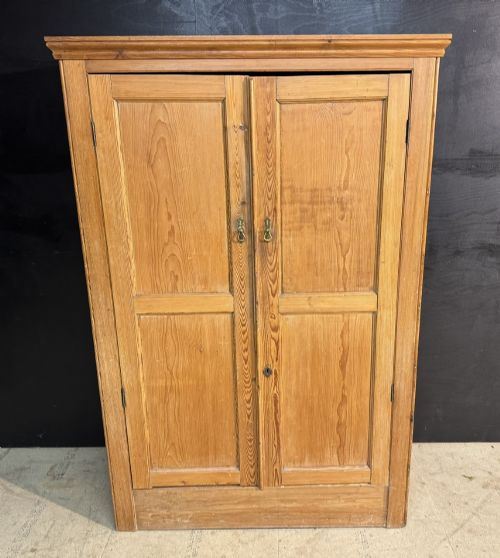
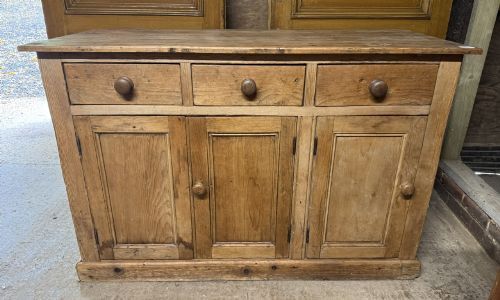
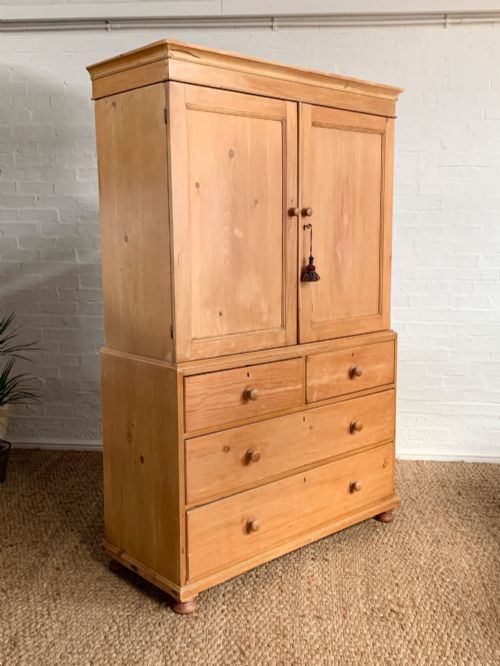
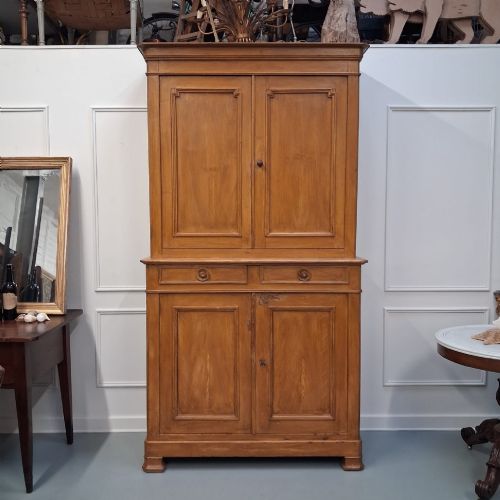


Traditional Pine Housekeepers Cupboard
A traditional pine housekeepers cupboard offers generous rural storage, and you are most likely to encounter robust Victorian or nineteenth-century examples here.
Traditional Pine Housekeepers Cupboard
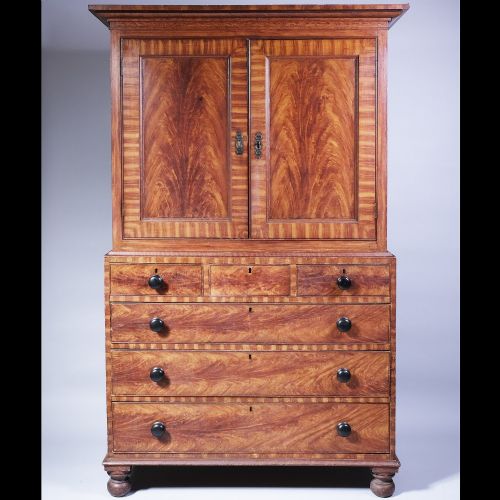
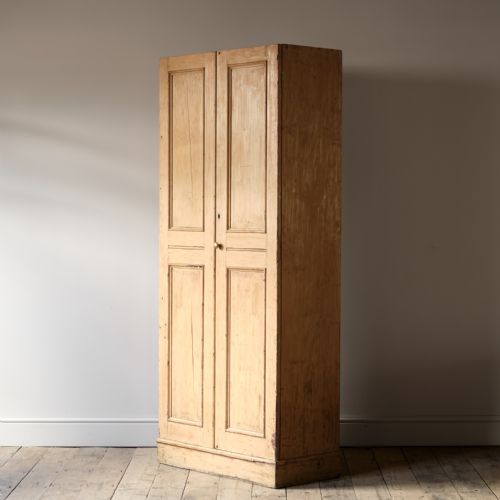
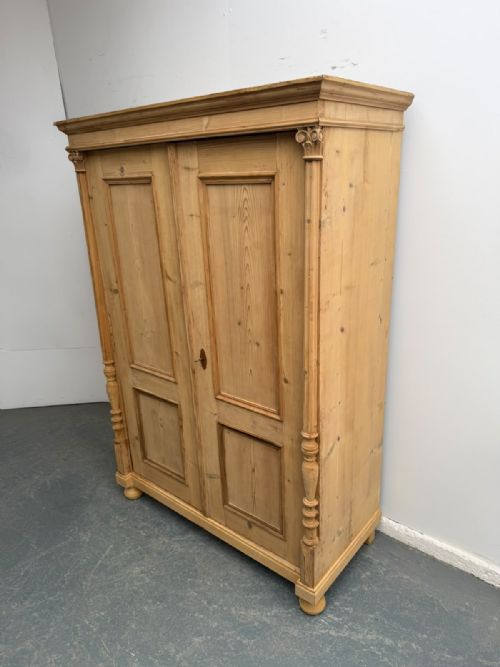
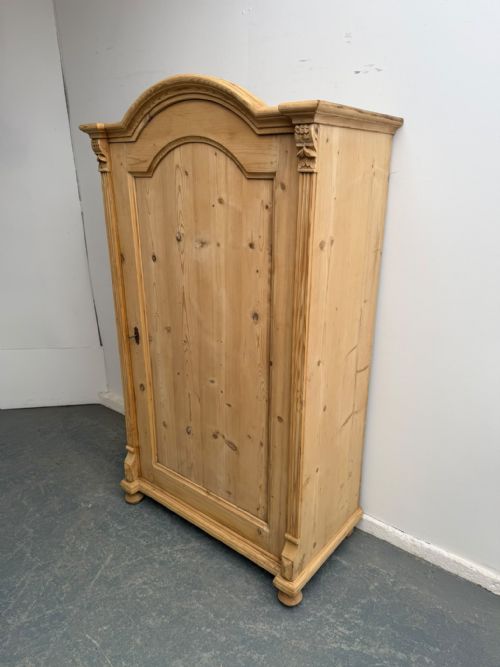
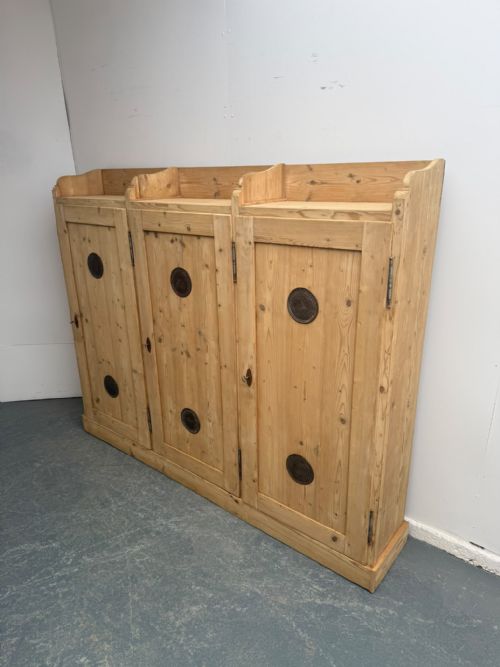
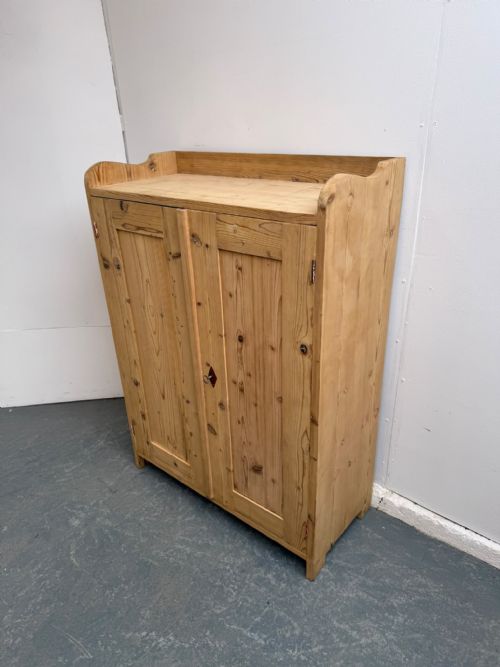
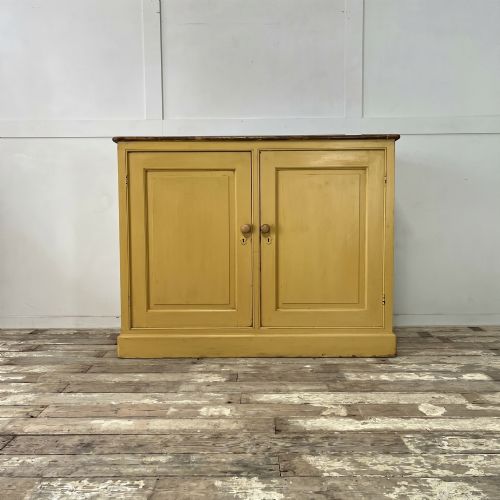
When you search for a traditional pine housekeepers cupboard, you are looking at substantial utilitarian storage pieces originally built to hold house linens, dry goods, and domestic provisions in large country homes. These pieces span several centuries, with the majority of available examples dating from the nineteenth century, including specific Victorian, Edwardian, and Georgian periods.
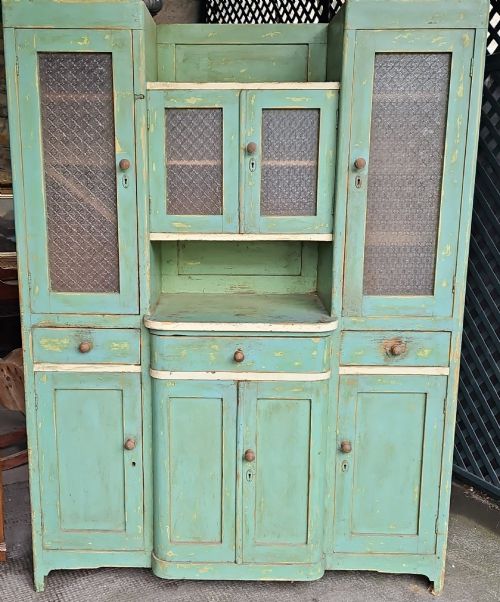
The form varies from tall two-piece linen presses and wide arched storage cupboards to scumble painted chapel cupboards, larder cupboards, and kitchen cabinets. Origins range across English country workshops, Welsh makers, and continental traditions such as French, Scandinavian, and East European pieces.
You will frequently encounter sturdy two-door formats and fitted interior shelving designed for practical household organisation. These functional forms reflect their domestic origins in large country houses, farmhouses, and school rooms where reliable daily storage was essential.
How They Were Made
Makers utilised solid pine timbers for the primary carcase and shelving, often pairing the wood with iron and brass hardware such as hinges, latches, and pulls. Construction relied on traditional joinery techniques suited to heavy daily domestic use in rural settings.
Surfaces were frequently finished in multiple ways, ranging from waxed natural wood to applied paint finishes, including scumble paint, original grey paint, and traditional painted schemes. Textured glass occasionally appears in upper doors, alongside vented panels designed for kitchen and larder storage.
Several cupboards retain their original ventilation panels, once punched by country makers to keep the damp British air away from stored cheeses.
What Varies in Quality
The distinction between ordinary and superior pieces rests largely on the integrity of the original construction and the preservation of authentic surface finishes, such as early paint layers or scumble work. Pieces retaining their fitted interior shelving, original backboards, and period metalwork command greater appreciation among collectors.
Proportion and scale also dictate quality, as grander multi-door cupboards, architectural cornicing, and well-balanced two-piece linen presses demonstrate a higher degree of joinery skill from the maker. Conversely, heavily altered interiors or stripped surfaces that remove historic character place examples lower down the scale.
The Traditional Pine Housekeepers Cupboard Glossary
- Housekeepers cupboard
- A large storage piece traditionally used in country houses to store household linens, dry goods, and provisions. These units typically feature deep cupboards and internal shelving.
- Linen press
- A tall piece of furniture designed for storing folded linen, generally comprising upper door storage and lower drawer sections. Many surviving examples date from the Georgian and Victorian eras.
- Scumble paint
- A decorative glazing technique applied to wood to imitate finer grains or create mottled patterned effects. It appears frequently on nineteenth-century country furniture.
- Larder cupboard
- A tall ventilated storage cabinet used originally for food preservation before refrigeration. These pieces often incorporate pierced metal or louvred panels for airflow.
Traditional Pine Housekeepers Cupboard: Frequently Asked Questions
What rooms suit a housekeepers cupboard?
These large storage pieces suit kitchens, large hallways, and bedrooms where deep shelving and generous capacity are required. Their substantial presence anchors a room while providing practical concealed storage.
Because they were built for utility, they adapt easily to modern storage needs for tableware, linens, or pantry items. Placing one in a high-ceilinged room allows the proportions to sit comfortably within the space.
How do I care for waxed pine?
Waxed pine requires occasional feeding with a quality beeswax to maintain the finish and prevent the timber from drying out. Avoid placing these cupboards near direct heat sources like radiators.
Cleaning should be done with a soft, dry cloth rather than wet products that can penetrate the grain and dull the wax. Regular gentle buffing helps preserve the natural lustre of the wood over time.
Are painted cupboards original?
Many cupboards retain their original period paint finishes, including historic scumble glazes, regional greys, and traditional country colours. Original paint adds significant character and historical value to the piece.
Other examples were stripped to bare wood during later decades or prepared for waxing. Examining the layers around hinges and recesses helps reveal the age and history of the surface finish.
What is the difference between a cupboard and a press?
A cupboard generally refers to an enclosed storage space with doors opening to shelves or hanging room. A linen press specifically combines upper shelving storage with a chest of drawers integrated into the lower half.
Presses were engineered for folding and storing household textiles flat within shallow sliding trays or drawers. This architectural division makes linen presses taller and heavier than standard storage cupboards.