
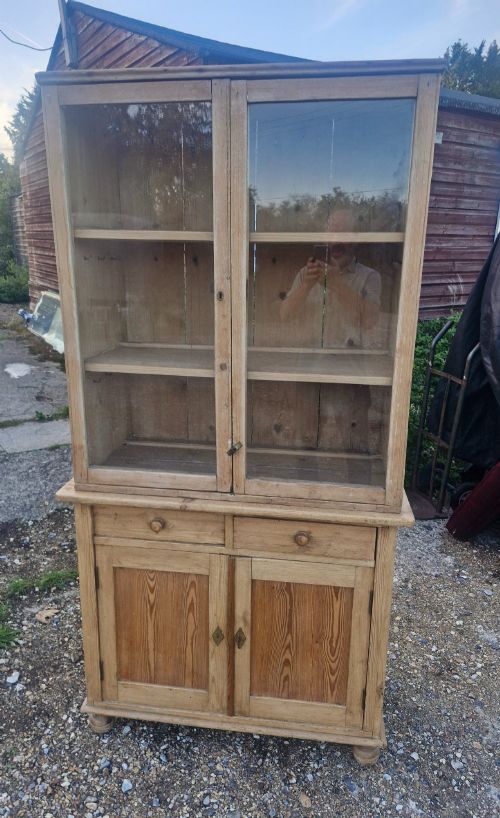
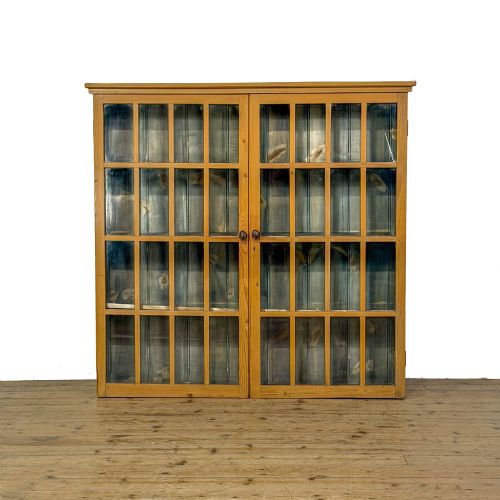
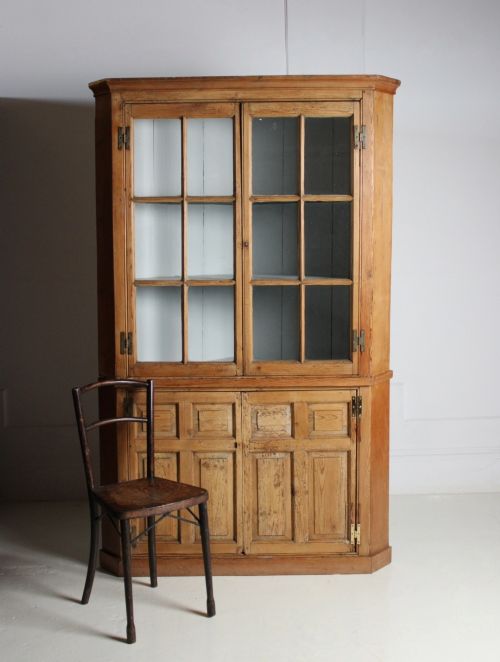
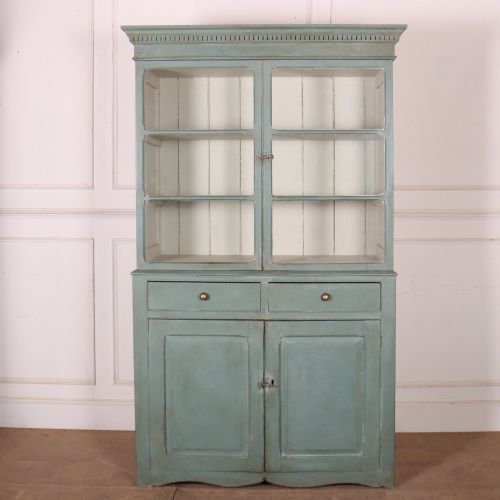


Traditional Pine Glazed Bookcase
Traditional pine glazed bookcase pieces bring practical storage and rustic charm to a room, combining visible shelving with timber character.
Traditional Pine Glazed Bookcase
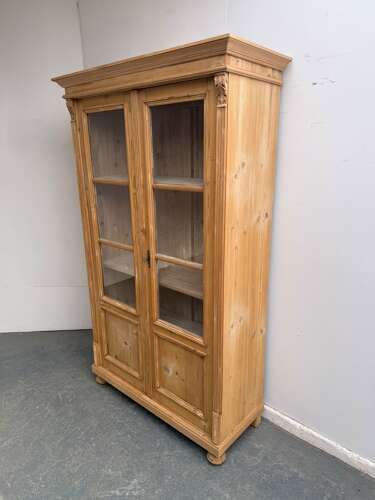
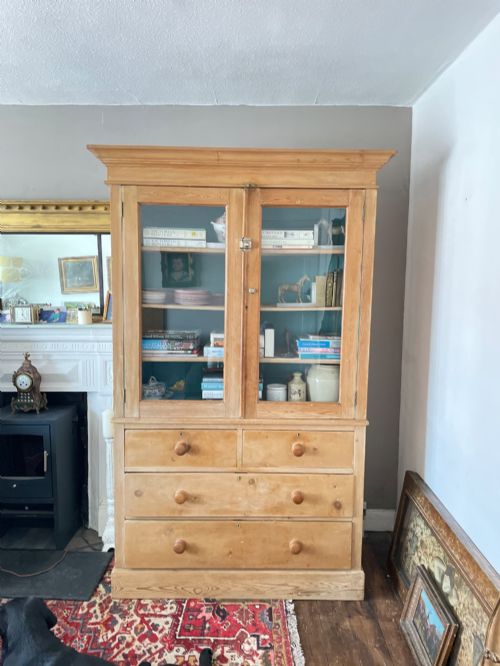
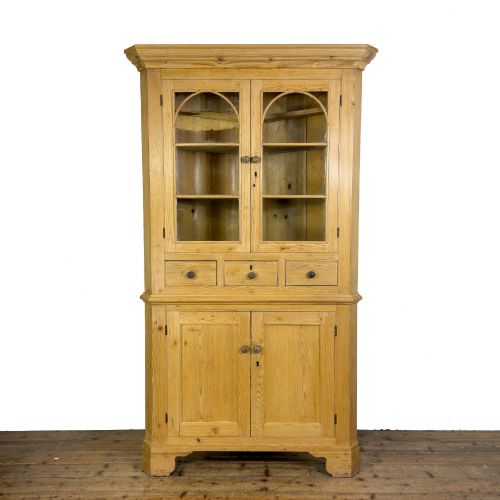
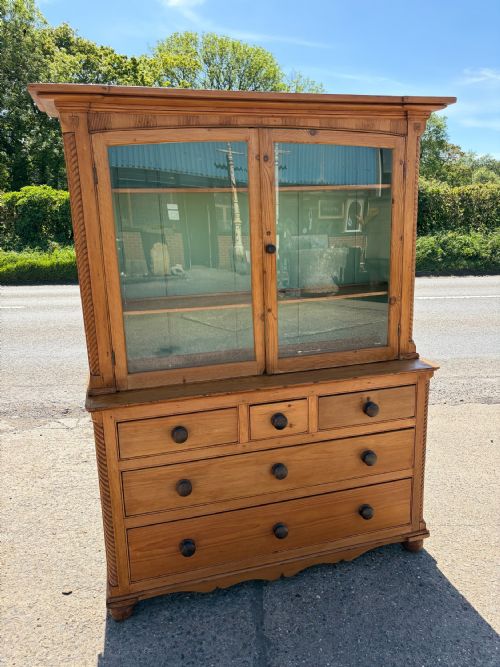
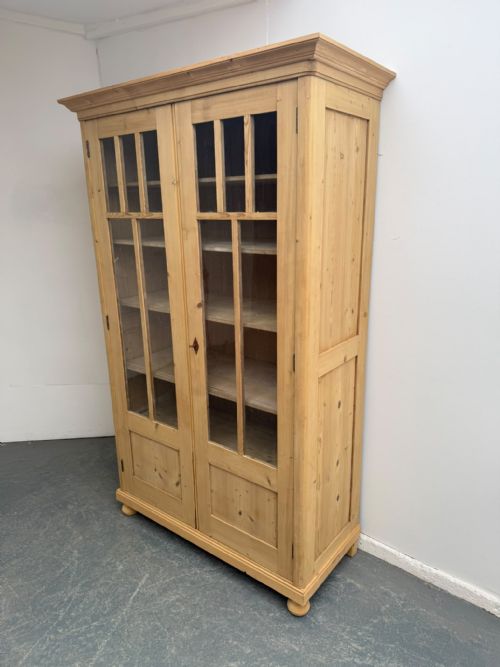
A traditional pine glazed bookcase serves primarily as functional shelving enclosed by glass doors, often incorporating lower cupboards or drawers. These items emerge from nineteenth century and Victorian periods, reflecting practical domestic storage needs in regional settings.
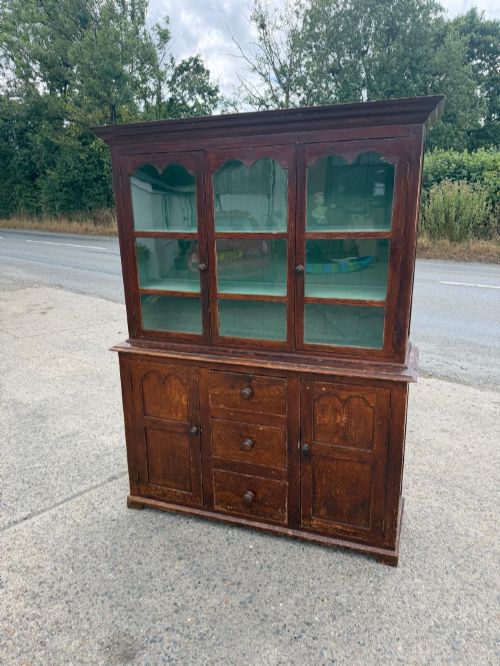
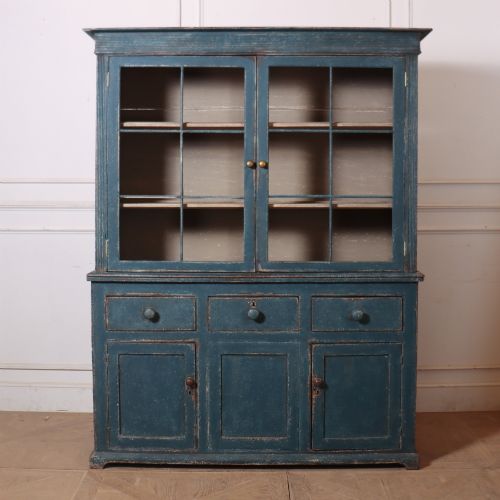
The pieces on this page appear in various regional guises, including English country, Scottish, Irish, and West Country variants. Alongside dedicated bookcases, buyers encounter related forms such as glazed kitchen dressers, corner cupboards, and display cabinets sharing similar timber construction.
Most examples rely on sturdy softwood construction, sometimes utilising pitch pine for greater resilience. Surface finishes vary from natural waxed timber to historic painted schemes, offering distinct visual textures for domestic interiors.
How they were made
Makers constructed these cabinets using solid pine and pitch pine timbers, shaped into upright carcasses with fitted shelving. Glazing bars hold individual glass panes within doors designed to protect books and crockery from dust.
Iron and brass hardware secure the doors and drawers, while secondary materials like wire mesh occasionally appear in related cupboards. Surfaces receive either traditional wax finishes or coats of paint, preserving the softwood beneath.
Some nineteenth century kitchen dressers carry the quiet evidence of flour dust settled deep inside their corner joints.
What varies in quality
The proportion and architectural presence of the cabinet set better examples apart from plain utilitarian boxes. Cornice details, well-proportioned glazing bars, and the configuration of base cupboards dictate the visual weight of the piece.
Timber selection and surface preservation also influence the character of each cabinet. Pieces retaining original paint surfaces or dense pitch pine grain carry distinct qualities compared to heavily stripped or altered examples.
The Traditional Pine Glazed Bookcase Glossary
- Glazing bars
- The narrow strips of wood that hold individual panes of glass within a cabinet door. Their arrangement defines the window pattern of the bookcase.
- Breakfront
- A cabinet design where the central section projects forward from the flanking wings. This configuration adds architectural depth to larger bookcase forms.
- Cornice
- The decorative moulded projection running along the top of the bookcase. It caps the cabinet and provides a formal architectural finish.
- Corner cupboard
- A specialised storage cabinet constructed with angled sides to fit snugly into the corner of a room. These typically feature glazed upper doors for display.
Traditional Pine Glazed Bookcase: Frequently Asked Questions
How do I care for waxed pine furniture?
Apply a natural beeswax periodically using a soft cloth, buffing gently along the grain to maintain the protective sheen.
Keep the timber away from direct heat sources and strong sunlight to prevent drying and splitting.
What is the difference between a dresser and a bookcase?
A bookcase generally focuses on enclosed shelving for books, whereas a traditional kitchen dresser incorporates a base of deep cupboards or drawers beneath an open or glazed display top.
Both forms share similar regional pine construction and glazing techniques from the Victorian era.
Can I paint a waxed pine cabinet?
Waxed surfaces require thorough preparation and cleaning to remove residual oils before any new paint layer will adhere properly.
Many historic pieces already display original or later painted finishes that contribute to their country aesthetic.