

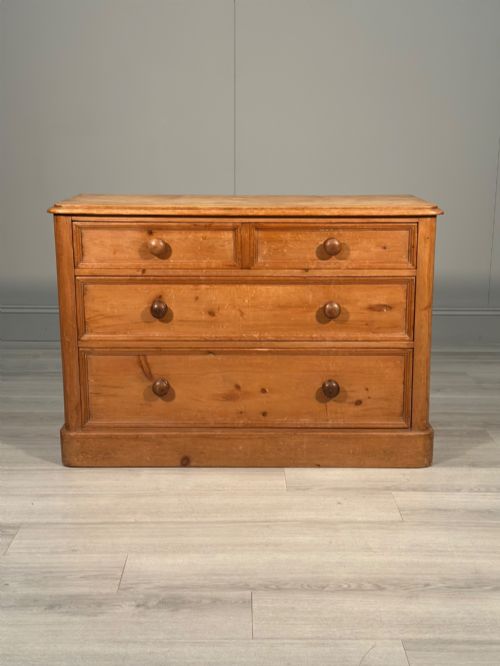
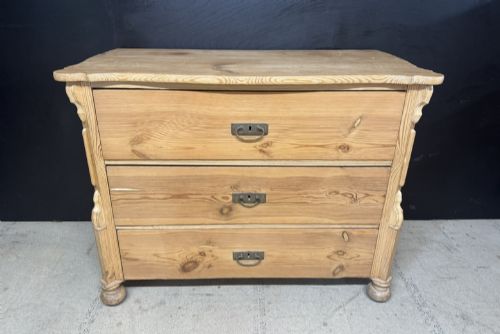
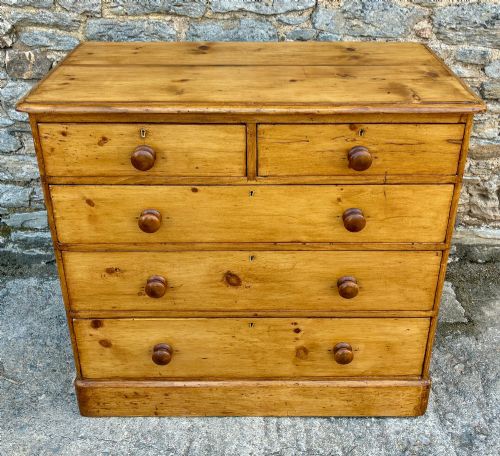
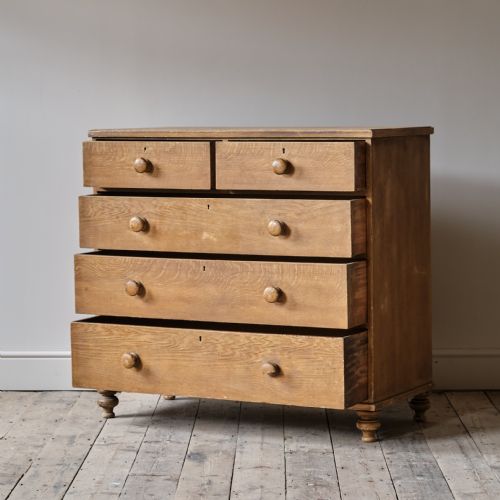
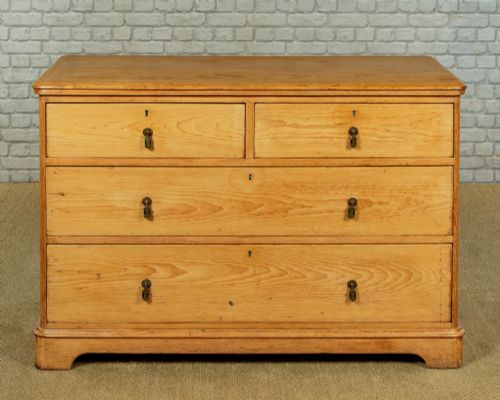
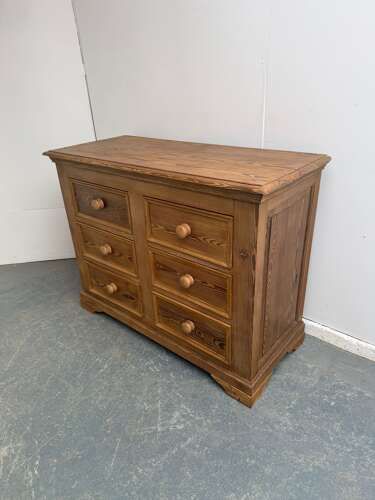
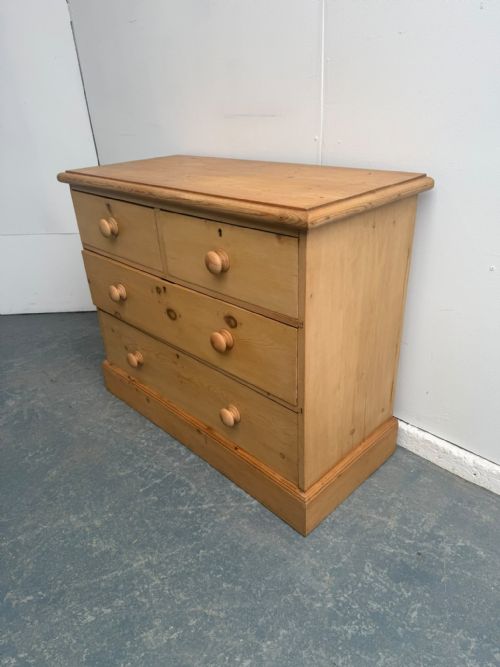
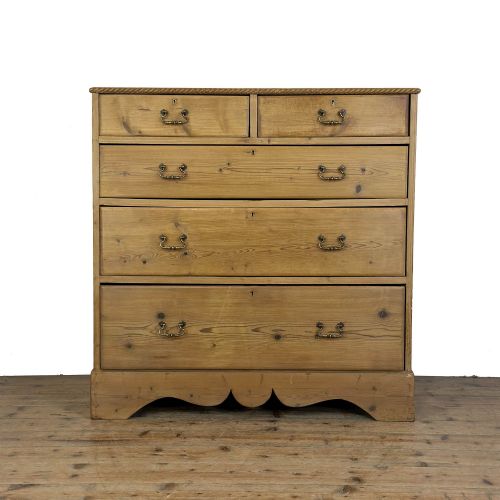

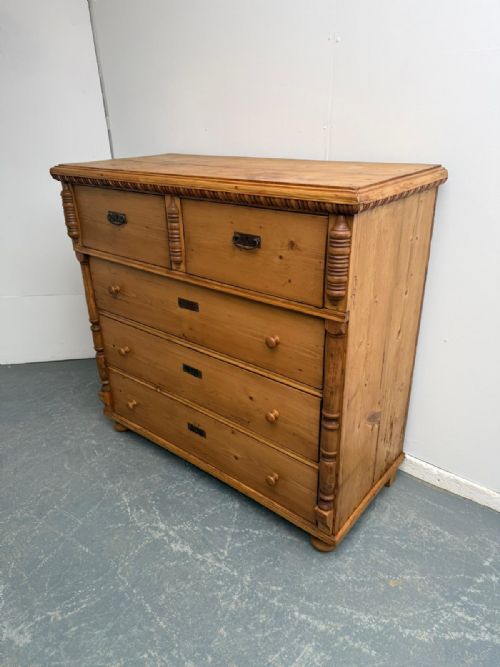

Traditional Pine Bureau Drawers
Traditional pine bureau drawers bring robust storage and vernacular charm to a room, spanning Victorian chests and 19th-century writing pieces.
Traditional Pine Bureau Drawers
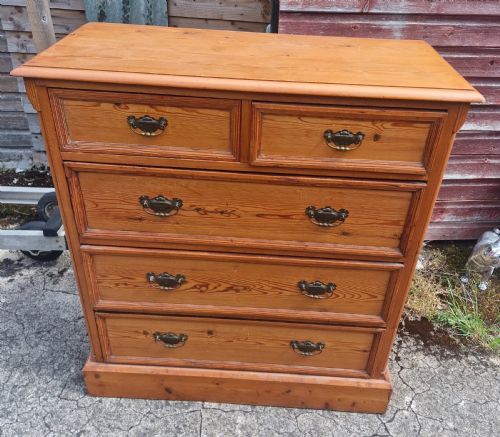
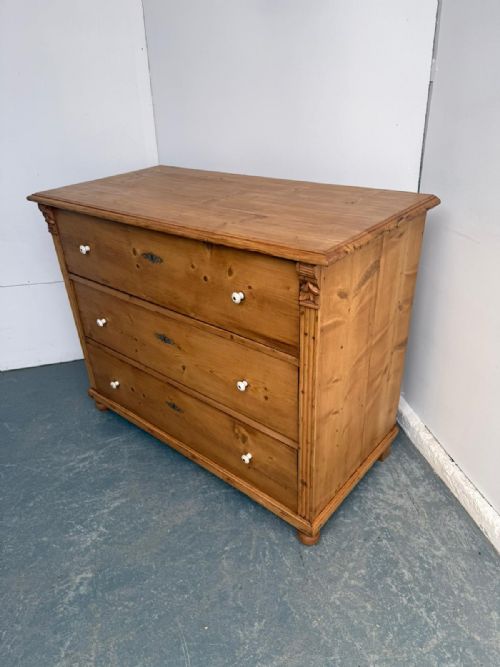
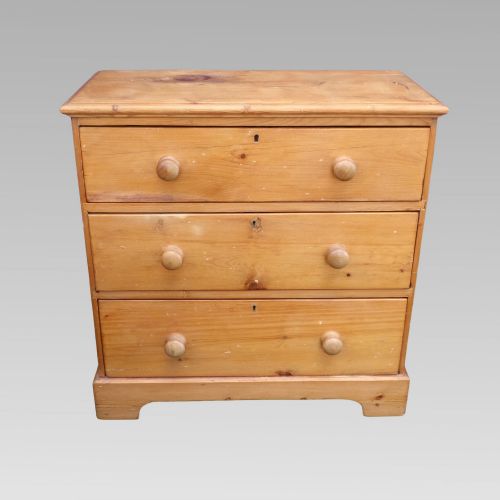
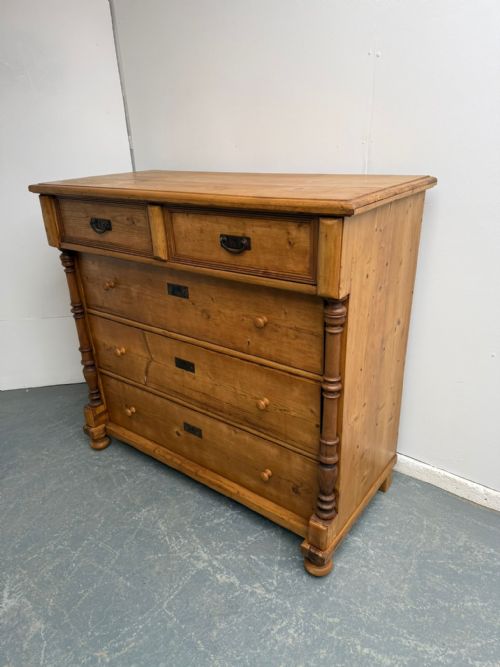
Traditional pine bureau drawers comprise practical storage chests and slope-front writing pieces, predominantly originating from the Victorian and Edwardian eras. Buyers searching for traditional pine bureau drawers generally encounter chests of drawers with multiple tiers, alongside occasional secretaire bureaux featuring internal writing slopes. These domestic furnishings reflect country workshops and regional styles, extending from the British Isles to continental Europe.
The material expression ranges from plain stripped surfaces to waxed finishes and original paint schemes. Pieces incorporate functional variations such as gallery backs, columned corners, and mixed drawer configurations including two-over-three arrangements. Surviving examples demonstrate straightforward utility designed for everyday household storage.
Materials and Construction
Construction relies heavily on solid pine timbers, supplemented by turned wood, iron, and brass hardware components. Joinery serves structural durability, while surfaces receive either historical wax treatments or protective original paint finishes.
Details such as ceramic drawer pulls and applied wood mouldings appear across many examples. The integration of metal fittings provides operational strength to drawer pulls and structural joints.
Several pieces arrive bearing the specific descriptor 'cracking', reminding us that antique pine carries undeniable personality alongside its drawers.
Distinctions in Quality
Quality differences emerge in the preservation of original surfaces, such as untouched wax patination or genuine early paint rather than modern stripping. Cabinetmaking execution, including the crispness of turned columns and the stability of drawer construction, also separates standard items from superior pieces.
Regional detailing and structural additions like gallery backs or integrated writing slopes elevate specific examples. The integrity of the timber and the retention of period hardware contribute significantly to an object's overall character.
The Traditional Pine Bureau Drawers Glossary
- Bureau
- A desk or writing cabinet featuring a sloping lid that opens to reveal internal compartments and small drawers. It often sits above a set of full-width storage drawers.
- Gallery
- A low decorative rail or upright border positioned along the top edge of a chest of drawers. It helps prevent items placed on top from sliding off.
- Secretaire
- A piece of furniture containing a pull-out writing drawer or drop-front desk compartment combined with standard drawer storage. This form merges writing utility with chest storage.
- Waxed
- A surface finish applied to timber using natural waxes to nourish the wood and produce a soft sheen. This treatment protects the pine while maintaining a tactile, matte appearance.
Traditional Pine Bureau Drawers: Frequently Asked Questions
What is a pine bureau chest?
A pine bureau chest is a domestic storage item combining drawer space with a writing surface or compartment. These pieces utilise softwood construction typical of country and provincial workshops.
They provide functional storage alongside a designated area for correspondence, often featuring a fall-front slope or pull-out writing drawer.
How do I date a pine chest?
Dating relies on observing construction methods, hardware types, and overall stylistic markers associated with the Victorian and Edwardian periods. Regional variations and finish types like original paint or early wax also offer clues.
Examine the drawer construction and timber thickness to understand the period of manufacture. Secondary woods and fastener types help confirm the age.
Are these pieces painted or waxed?
Surviving pieces display a variety of surface treatments, including historical wax patinas and original painted finishes. Some items retain their early paint schemes, while others show stripped pine surfaces.
Waxed finishes highlight the natural grain of the softwood. Painted examples preserve an alternative domestic aesthetic from the nineteenth century.
What is a gallery back?
A gallery back is a raised wooden barrier affixed to the rear top surface of a chest of drawers. It serves both a decorative and practical function.
This feature stops objects from falling behind the furniture and frames the top surface of the piece.