





Traditional Persian Floor Rug
A traditional persian floor rug brings depth and tactile warmth to a room through centuries-old weaving traditions.
Traditional Persian Floor Rug
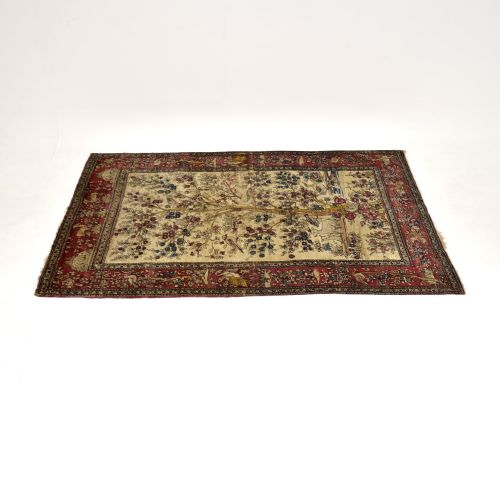
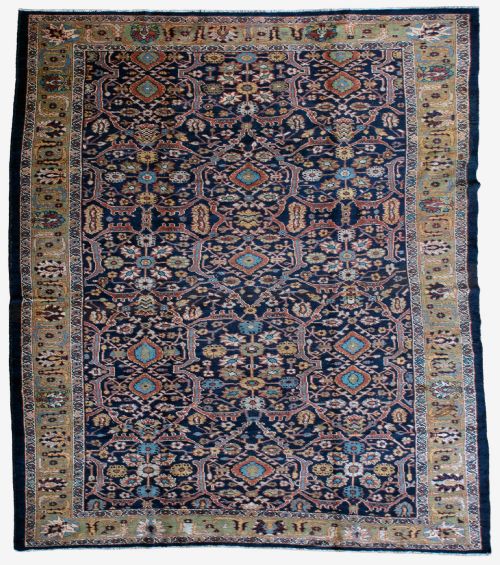
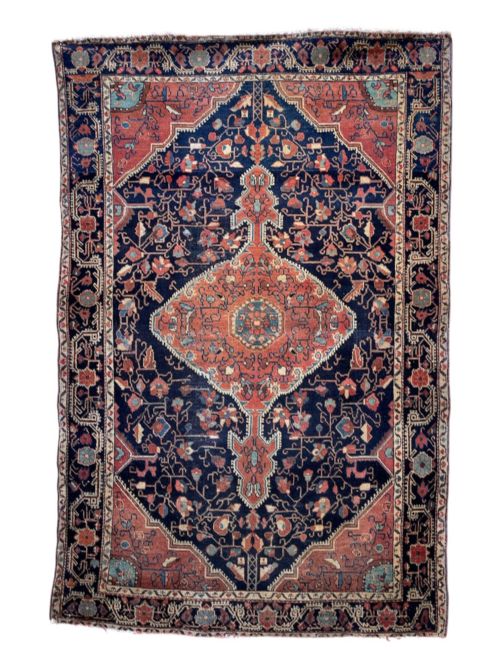
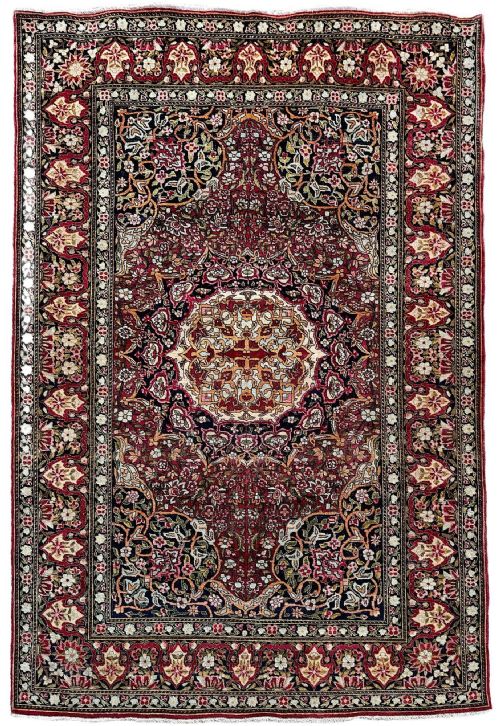
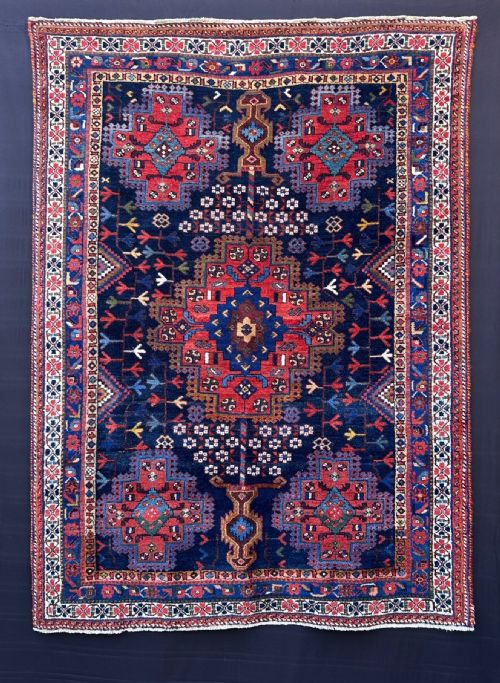
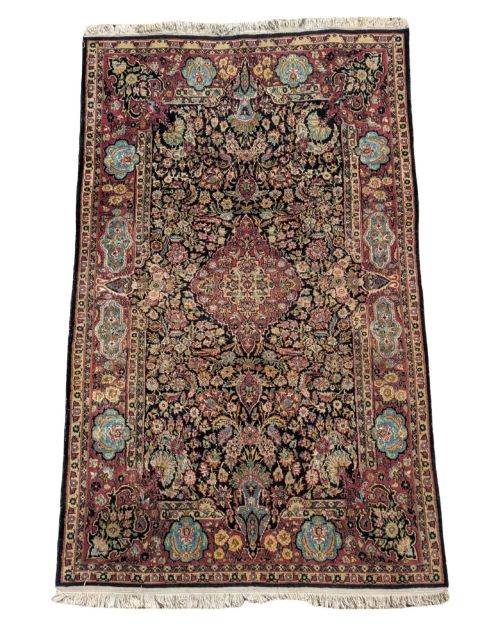
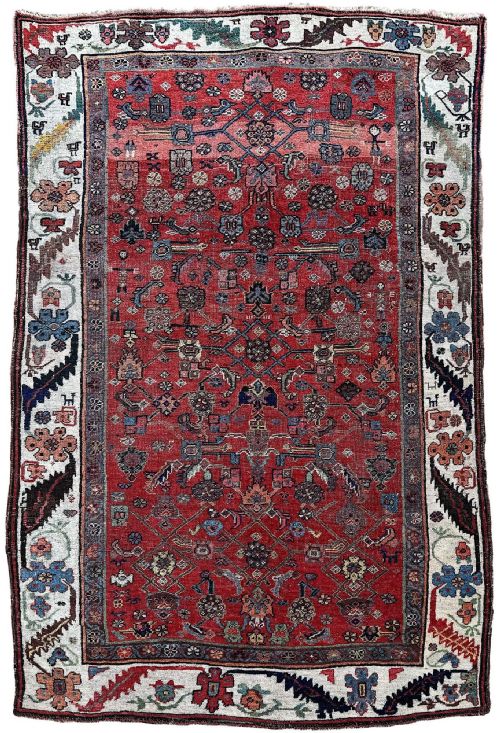
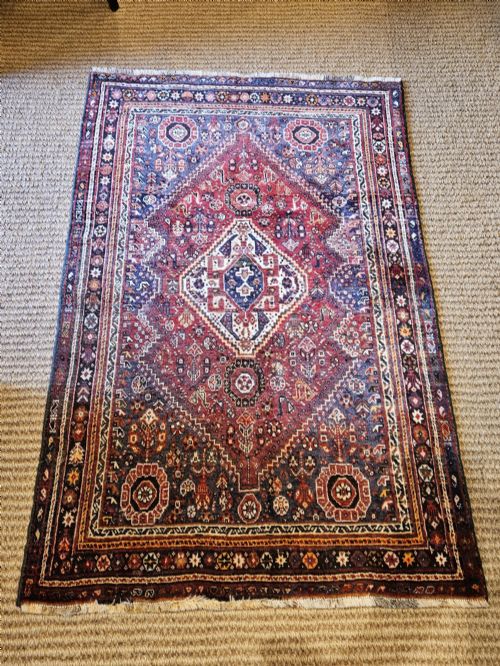
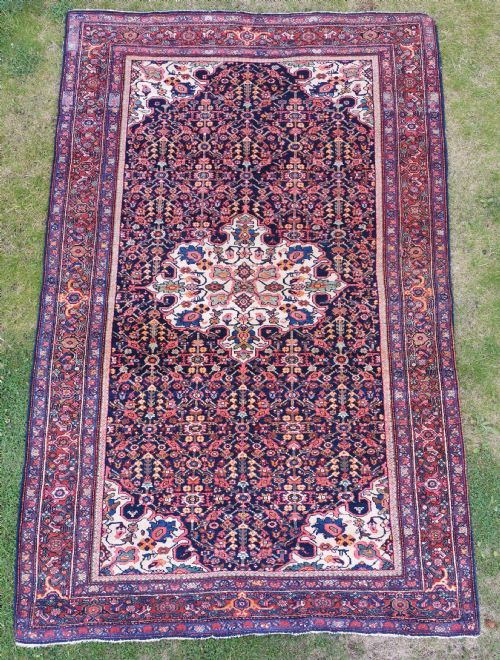
A traditional persian floor rug is a hand-knotted textile originating from workshops, villages, and nomadic confederacies across Persia and surrounding regions. Buyers searching this phrase encounter formats ranging from intimate hearth-sized mats and hallway runners to large room-scale carpets.
The pieces available span the late nineteenth and early twentieth centuries, encompassing tribal weaves alongside city workshop productions. Common regional designations include Heriz, Bakhtiar, Bidjar, and Tabriz, each bringing distinct structural and aesthetic properties to the floor.
How they were made
Weavers utilised natural dyes derived from plants and minerals to colour wool, cotton, and occasionally silk yarns, producing rich tones that age gracefully. Foundation warps andwefts are predominantly cotton or wool, supporting dense wool pile knotted by hand.
The construction technique relies on either symmetric or asymmetric knots tied onto vertical looms, followed by clipping the pile to an even level and finishing the edges with sturdy selvages.
Traditional Persian Floor Rug Retail Price Guide 2026
Typical asking prices for traditional persian floor rug among the pieces listed under this phrase on Sellingantiques today, from the lower quarter to the upper quarter. They describe what is for sale here now, not the wider market.
Listings feature pieces spanning from eighteen-fifty to nineteen-thirty, incorporating wool, cotton, and silk materials dyed with natural colours.
What varies in quality
Quality depends upon knot density, the purity and handling of the wool, and the depth of the dye palette. Finer village and city carpets display meticulous precision in curvilinear or geometric drawing, while tribal pieces rely on expressive, spontaneous design execution.
The structural integrity of the foundation and the condition of the pile heavily influence the standing of an individual carpet. Superior examples maintain balance between resilient materials and harmonious colour saturation across the entire field.
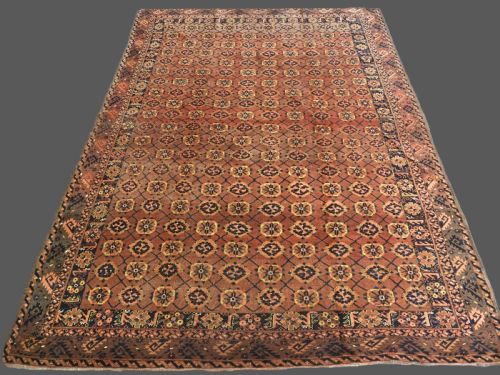
Ersari Beshir Turkmen
The Traditional Persian Floor Rug Glossary
- Knot density
- The number of individual knots per square inch or decimetre, dictating the crispness of the pattern.
- Medallion
- A central ornamental motif dominating the field of the rug, frequently geometric or floral in derivation.
- Selvage
- The bound or reinforced outer edges of a rug that prevent the side cords from unravelling.
- Weft
- The horizontal threads passed back and forth through the warps to hold the knotted rows in place.
- Kelleh
- A long, narrow format of carpet traditionally produced for specific room dimensions in Persian domestic architecture.
Traditional Persian Floor Rug: Frequently Asked Questions
How do I place a runner rug?
Runner rugs suit high-traffic thoroughfares such as hallways, landings, and long corridors, protecting floorboards while defining linear space.
Ensure you leave an even border of exposed flooring around the perimeter to let the runner sit naturally within the architectural proportions of the passage.
How do I clean an antique rug?
Gentle surface dust removal through regular light shaking or careful sweeping preserves the pile without stressing the foundation threads.
Avoid aggressive chemical treatments and consult a specialist in historic textiles for deep washing to protect the natural dyes.
What is a Heriz carpet?
Heriz carpets originate from the Northwest region of Persia and are celebrated for sturdy, geometric medallion designs woven with resilient local wool.
Their robust construction makes them well suited to heavy use in living rooms and dining areas.
Can I put a rug on carpet?
Placing a rug over fitted wall-to-wall carpet requires a suitable underlay to prevent shifting and bunching under foot traffic.
This extra layer also provides stability and stops the pile from compressing unevenly against the softer surface below.