






Traditional Persian Floor Covering
A traditional persian floor covering brings centuries of woven artistry into a room, offering rich geometric and floral patterns crafted by skilled hands.
Traditional Persian Floor Covering
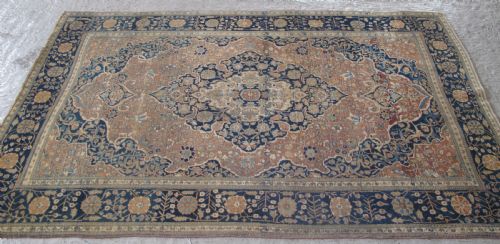
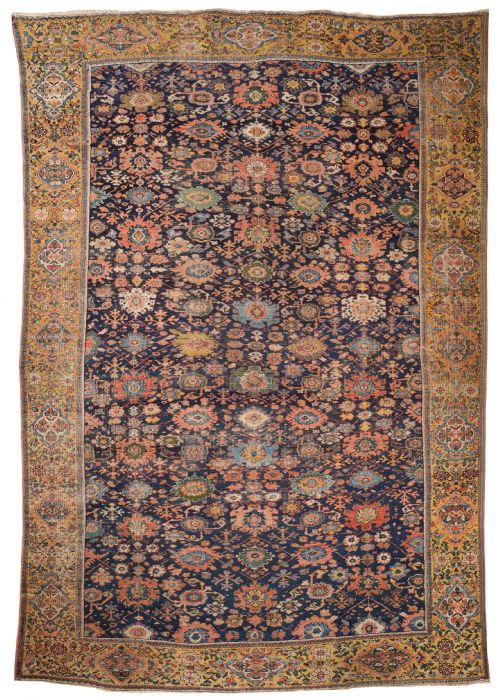
When searching for a traditional persian floor covering, you encounter woven floor textiles originating from various regions and workshops across Persia. The selection spans from smaller village formats to large palace-size carpets suited for substantial reception spaces.
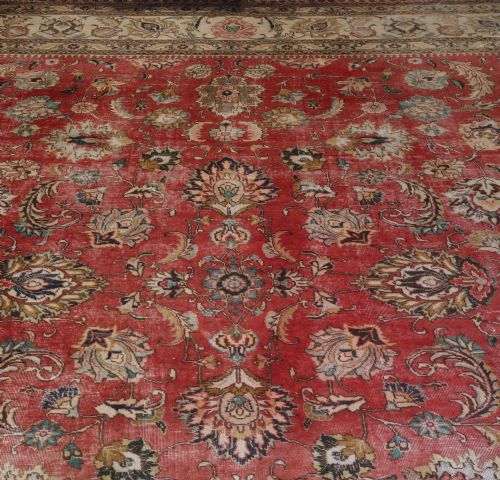
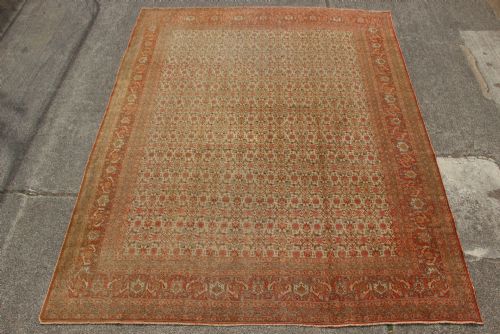
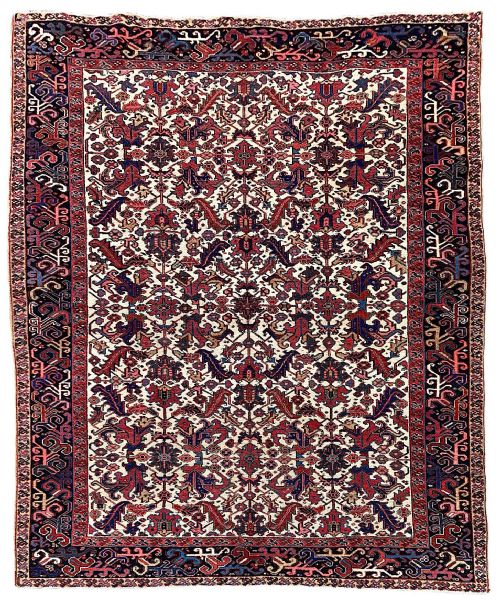
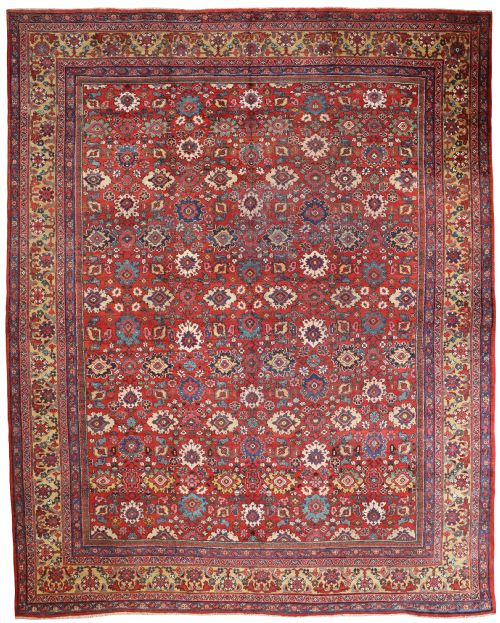
You are most likely to meet room-size and area carpets dating from the late nineteenth century through to the early decades of the twentieth century. These pieces encompass distinct regional traditions such as Heriz, Tabriz, Isfahan, and Mahal, each bearing characteristic patterns.
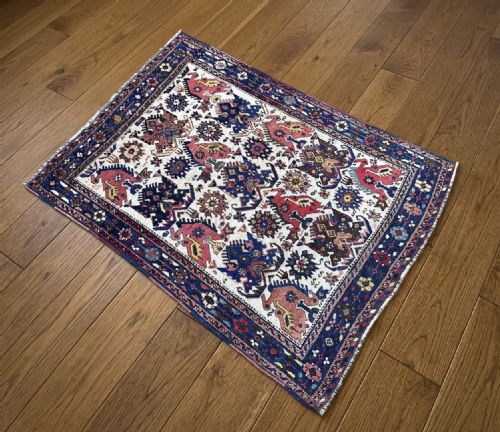
Alongside large floor carpets, the category includes tribal rugs and smaller furnishings like cushion faces that utilise the same knotting traditions. Village pieces often display bold geometric motifs, whereas city workshops produce finer floral compositions.
Materials and construction
The foundation of a traditional persian floor covering typically relies on cotton or wool warps and wefts that support the dense pile. Artisans knot the pile yarns by hand, creating a durable surface that withstands generations of use.
Makers select wool and hand-spun wool for the pile, yielding varied textures and a natural capacity for absorbing dye. Natural dyestuffs react to time and wear, developing nuanced patinas across the surface.
Weavers structure the designs according to regional blueprints, employing symmetrical or asymmetrical knots tied tightly around the foundation threads. Finished edges are often reinforced with overcast binding to secure the sides against fraying.
Traditional Persian Floor Covering Retail Price Guide 2026
Typical asking prices for traditional persian floor covering among the pieces listed under this phrase on Sellingantiques today, from the lower quarter to the upper quarter. They describe what is for sale here now, not the wider market.
The inventory spans production dates from the mid-nineteenth century through the 1930s, encompassing room-size carpets and small tribal bags.
Assessing quality
Quality in a traditional persian floor covering rests on the precision of the knotting and the density of the weave. Tighter knots allow for sharper delineation of intricate medallion and floral designs.
The choice of materials dictates the handle and longevity of the textile, with hand-spun wool providing superior resilience and depth of colour compared to standard commercial yarns. Well-chosen materials age gracefully, maintaining structural integrity despite decades of foot traffic.
Design execution distinguishes standard village production from master workshop output. Balanced proportions, harmonious palette transitions, and confident drawing elevate certain regional carpets above routine examples.
Benlian·Mokhtashem·Ziegler
The Traditional Persian Floor Covering Glossary
- Pile
- The upright yarn loops that form the soft surface of a carpet. This layer absorbs the wear of daily use while displaying the woven design.
- Warp
- The stationary lengthwise threads stretched on a loom before weaving begins. The pile knots are tied around these foundational elements.
- Weft
- The horizontal threads passed across the warp strands to lock the rows of knots in place. Together with the warp, they form the stable grid of the textile.
- Medallion
- A prominent central ornamental motif found in many carpet designs. It serves as the visual focal point around which secondary patterns and borders are arranged.
- Knot
- The individual loop of yarn tied around the warp threads by the weaver. The density and type of knot define the technical origin and fineness of the piece.
Traditional Persian Floor Covering: Frequently Asked Questions
Where were Afshar rugs made?
Afshar rugs originate from the tribal groups inhabiting the Kerman province in southern Persia. These pieces frequently display repeating boteh motifs or geometric field patterns.
The nomadic background of the makers influences the compact formats and rich, saturated wool colours characteristic of this regional group.
What is a tribal bag face?
A tribal bag face is the decorative front section of a utilitarian storage sack woven by nomadic groups. These fragments were repurposed into cushions or small decorative floor pieces.
They concentrate complex tribal iconography into a compact format, offering insight into the domestic arts of pastoral communities.
How do I care for an antique carpet?
Care for an antique carpet involves regular gentle vacuuming without rotating beater bars to protect the wool pile. Professional cleaning by specialists in historic textiles ensures the natural dyes remain stable.
Keeping the piece out of direct sunlight prevents uneven fading across the cotton and wool fibres over time.