


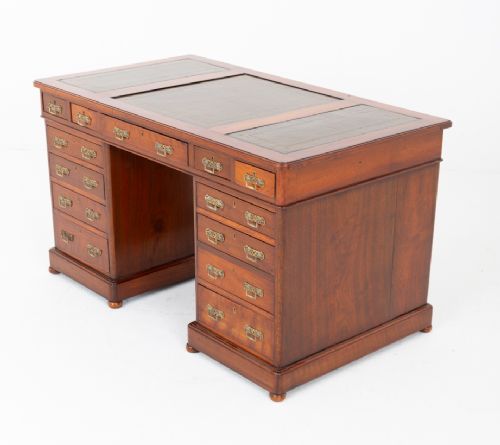
Traditional Pedestal Desk
A traditional pedestal desk is a heavy timber workspace with banks of drawers below, built to anchor a serious study.

Traditional Pedestal Desk
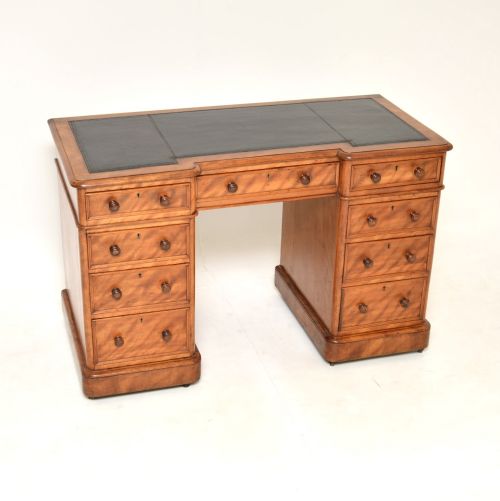
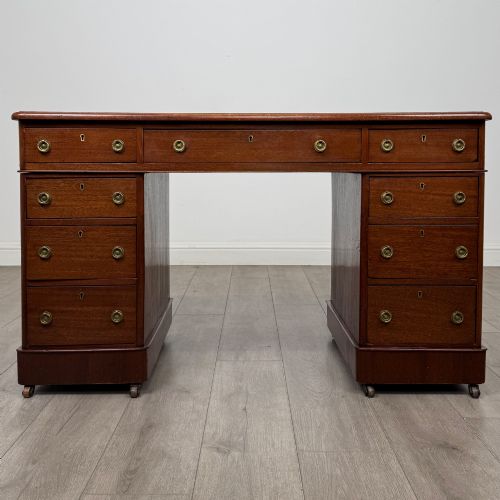
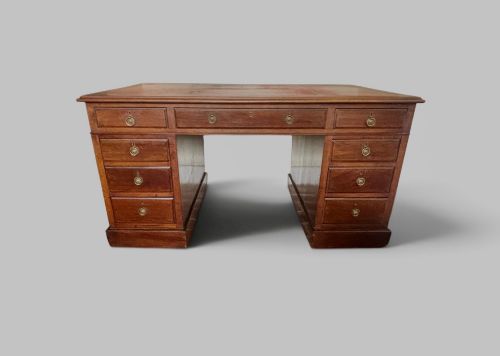
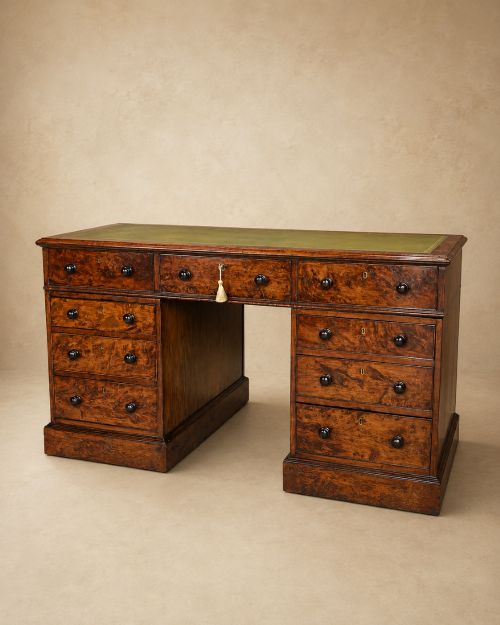
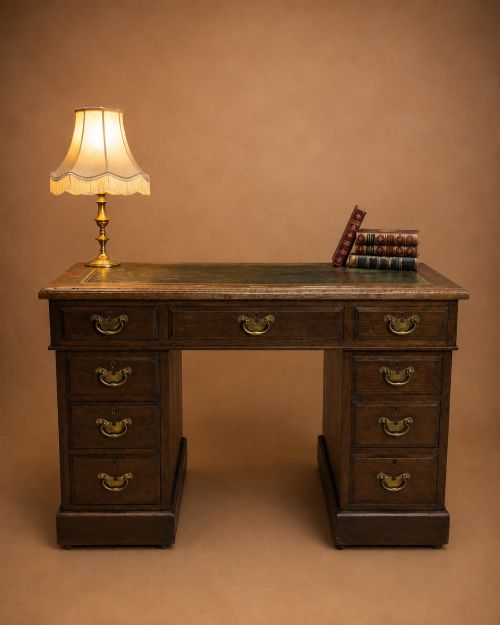
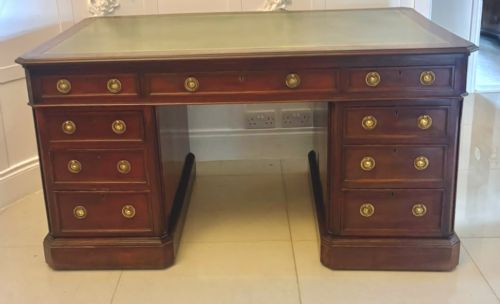
A traditional pedestal desk consists of two independent stacks of drawers supporting a single top, leaving a central kneehole for the seated writer. The most common examples on this page date from the Victorian and Edwardian eras, constructed in substantial timbers like mahogany and oak.
Makers produced these pieces in various revivals, including Georgian and Queen Anne styles, alongside simpler utilitarian formats such as the banker's desk. Formats range from modest nine-drawer kneeholes to large partners desks designed for two people to work face to face.
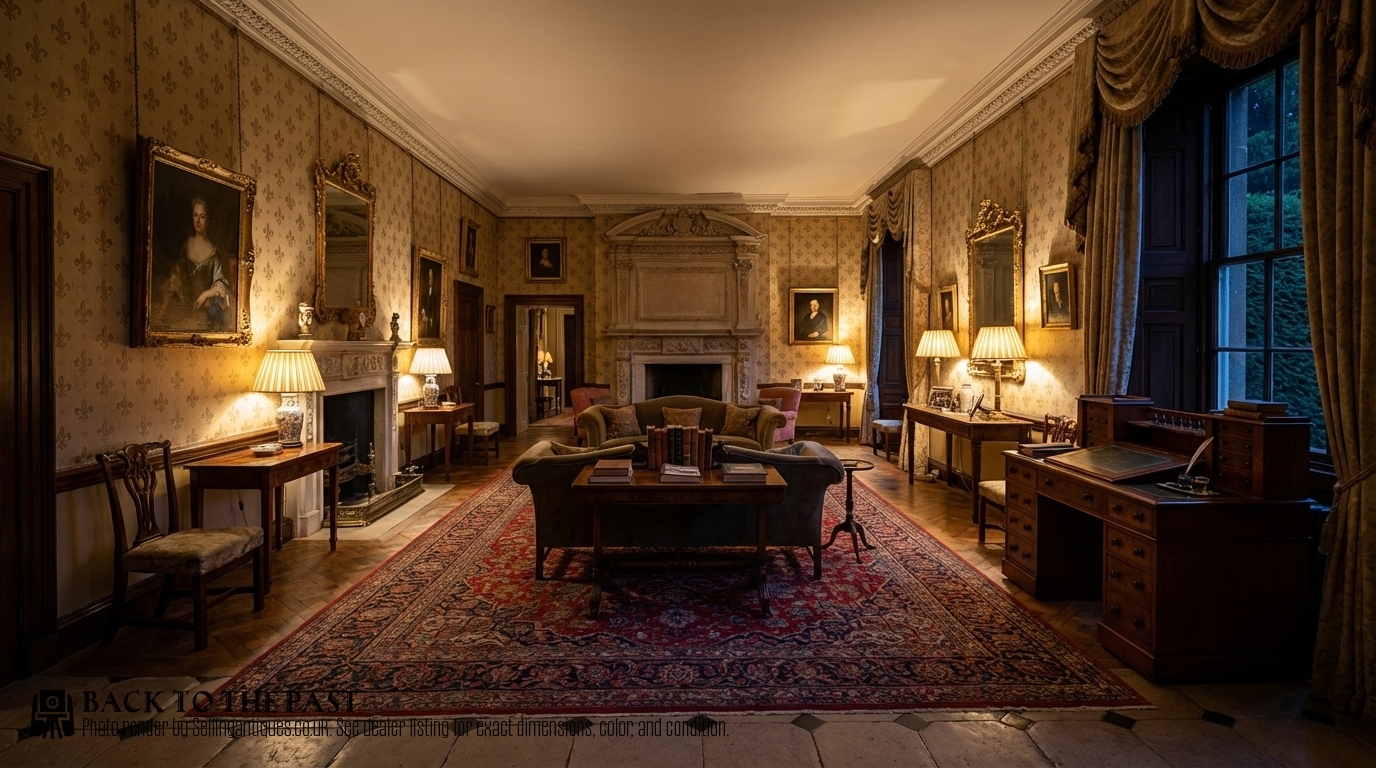
Materials and Construction
Workshops constructed these desks primarily using solid mahogany, oak, and walnut, often applying burr walnut or figured veneers to prominent surfaces like drawer fronts and tops. Secondary woods such as pine appear in internal framing and drawer linings.
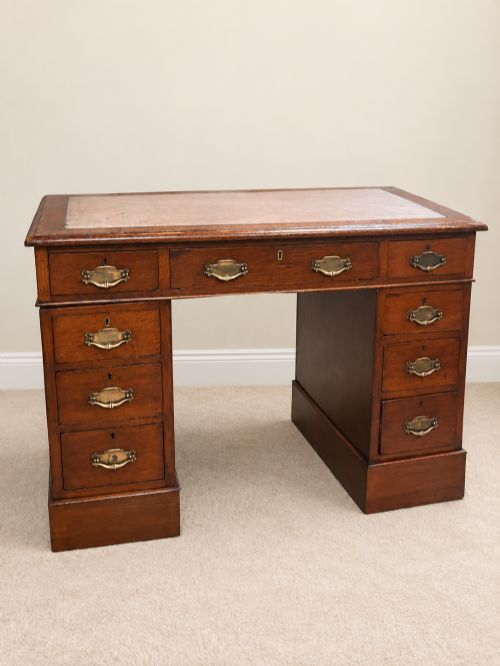
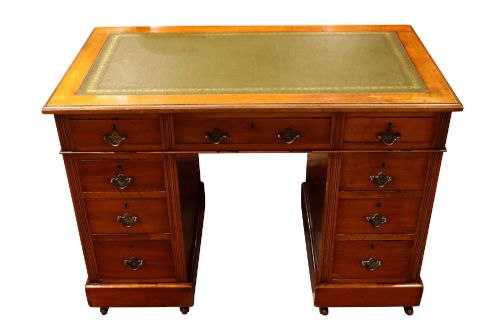
Many writing surfaces feature inset panels of tooled leather, whilst brass handles and drawer pulls provide functional hardware. Joinery relies on traditional methods to support heavy pedestal weights and frequent daily use.
Traditional Pedestal Desk Retail Price Guide 2026
Typical asking prices for traditional pedestal desk among the pieces listed under this phrase on Sellingantiques today, from the lower quarter to the upper quarter. They describe what is for sale here now, not the wider market.
Current listings span the eighteenth, nineteenth, and twentieth centuries, incorporating woods such as mahogany, oak, walnut, burr walnut, and pine.
Quality and Distinction
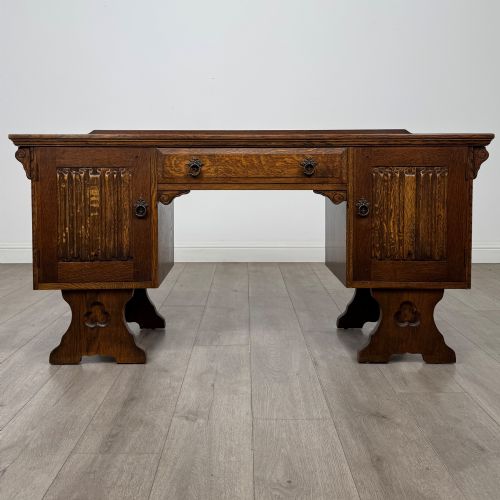
The distinction between standard utility desks and finer specimens lies in the selection of timber figures, such as matching burr walnut veneers across drawer banks, and the crispness of carved details like linenfold panels or period mouldings.
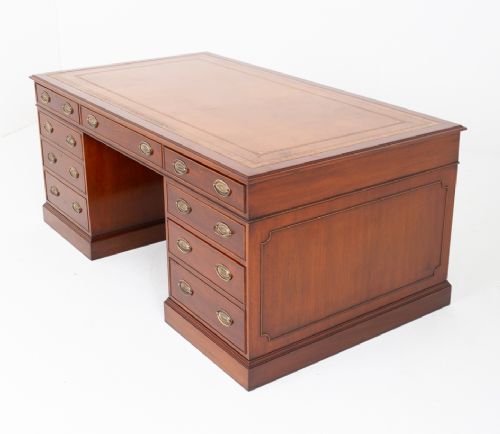
Superior construction involves fully finished backs for free-standing placement in the middle of a room, alongside thoughtful internal fittings such as stationery drawers and pull-out writing slides.
Trollope & sons
The Traditional Pedestal Desk Glossary
- Pedestal desk
- A heavy writing table comprising two freestanding pedestals of drawers with a central desktop surface. This format provides substantial storage capacity while maintaining a clear kneehole space.
- Partners desk
- A large pedestal desk designed with matching drawer banks on both sides, allowing two individuals to sit opposite each other. These pieces often feature cupboards or banks of drawers on both operational faces.
- Kneehole desk
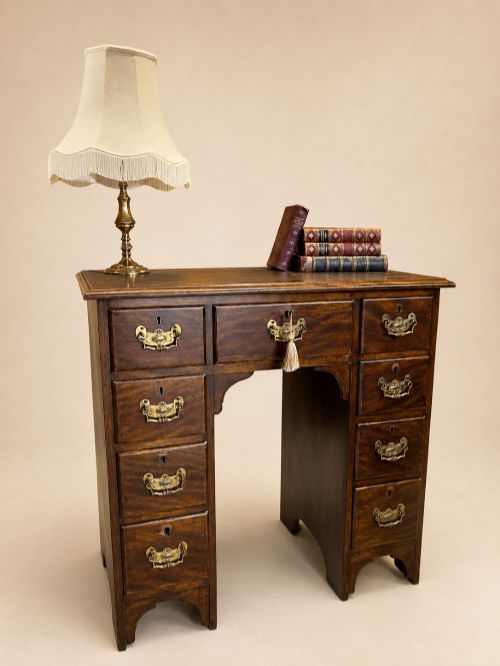
- A smaller variation of the pedestal desk focused on a central recessed space for the legs. They typically feature a single drawer above the kneehole flanked by narrower drawer stacks.
- Roll top desk
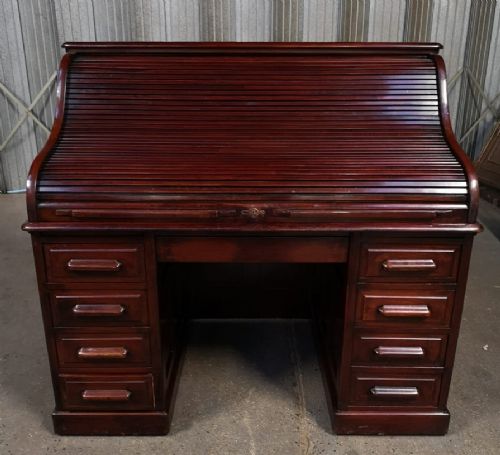
- A cylinder or tambour desk featuring a slatted wooden shutter that pulls down to conceal the writing surface and interior pigeonholes. This mechanical closure protects correspondence and papers.
- Bureau Mazarin
- An early double-pedestal cabinet form with a recessed central cupboard and multiple small drawers, named after the French cardinal. These elaborate writing cabinets set a precedent for later pedestal designs.
Traditional Pedestal Desk: Frequently Asked Questions
How do I care for the leather top?
Keep leather writing surfaces away from direct sunlight to prevent fading and drying out. Apply a neutral leather cream occasionally to maintain suppleness and protect the gold tooling.
Avoid using harsh chemical cleaning agents or excess water on the leather insert. A soft, dry cloth is sufficient for regular dusting.
Can these desks stand in a room?
Many examples are finished on all four sides, allowing them to float in the middle of a study rather than pushed against a wall. Check listings for descriptions noting free-standing or partner configurations.
Desks designed to face a wall typically feature plain or unpolished backs and should remain anchored to room perimeters.
What is a partners desk?
A partners desk is built with storage accessible from both sides, featuring two complete pedestals facing front and back. This allows two people to work opposite one another at the same piece of furniture.
These pieces tend to have larger proportions than standard single-sided desks and occupied the centres of estate libraries and boardrooms.
How do I distinguish Victorian from Edwardian desks?
Victorian desks generally employ dense, dark mahogany or walnut with heavier proportions and traditional hardware. They date from an era when office furniture needed to project authority and permanence.
Edwardian pieces often utilise lighter oak or brighter walnut finishes, sometimes incorporating revival styles like Queen Anne or Chippendale with slightly more restrained decoration.