



Traditional Passage Rug
A traditional passage rug brings linear warmth to a hallway, anchoring long floors with centuries of woven wool and storied motifs.
Traditional Passage Rug
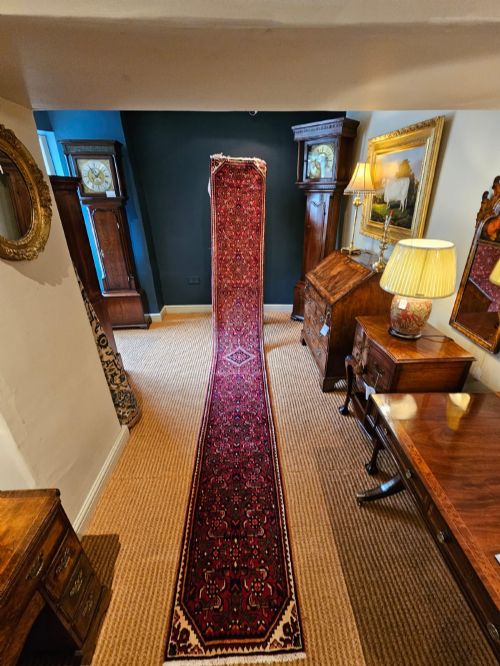
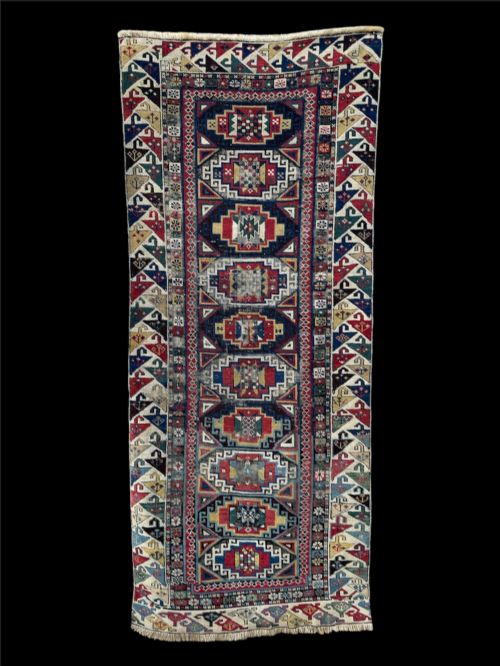
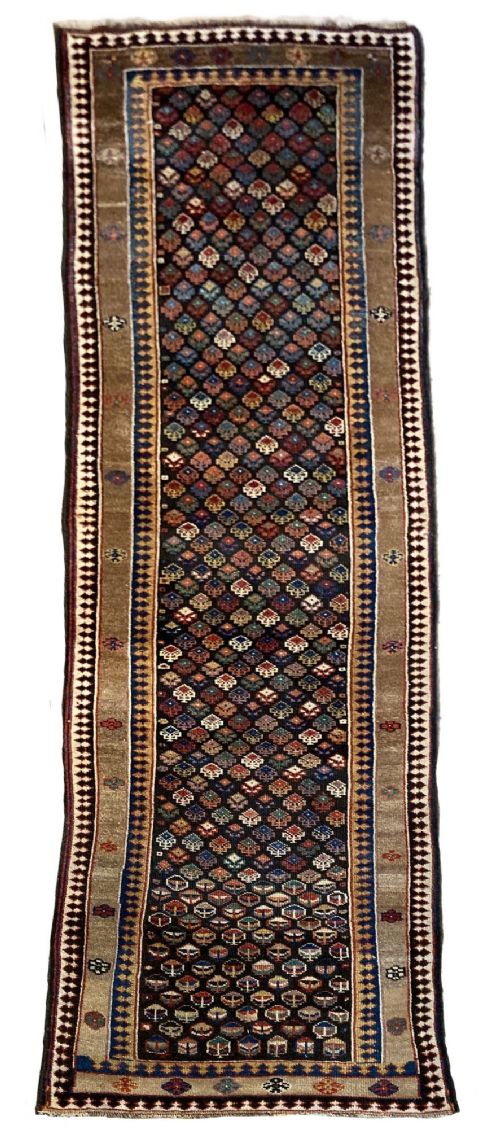
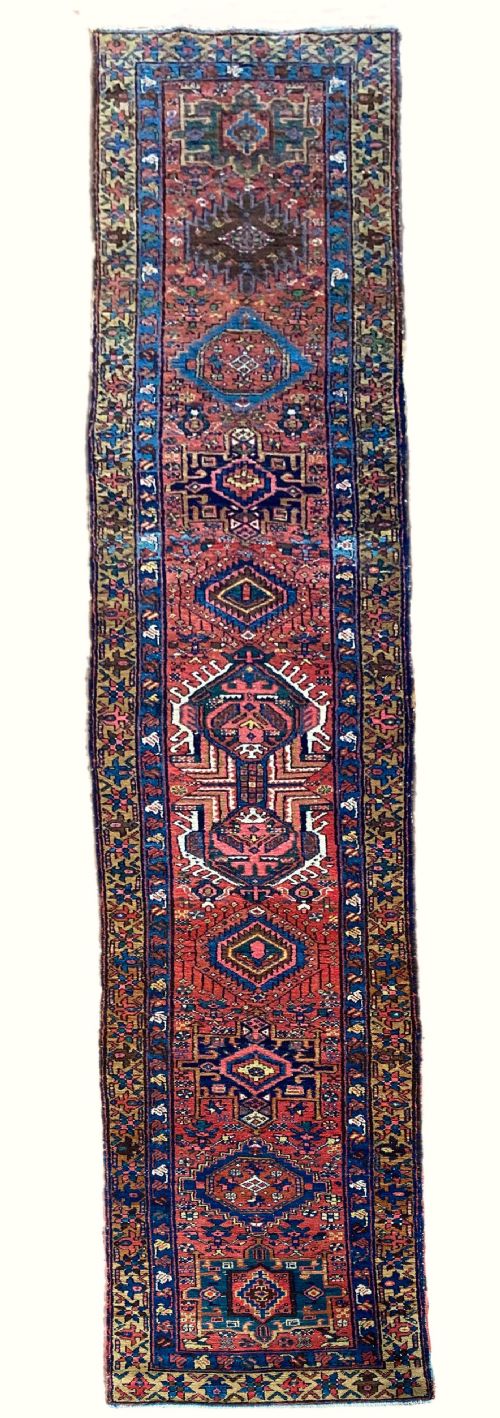
A traditional passage rug takes the form of a narrow, elongated runner designed specifically for hallways, staircases, and galleries. When searching for a traditional passage rug, buyers encounter nineteenth and early twentieth-century examples originating from Persian and Caucasian weaving traditions.
The selections span distinct regional styles including Heriz, Kurdish, Shirvan, and Bidjar, alongside utility-focused formats like hallway runners and stair carpet runners. These pieces serve to traverse long architectural spaces while introducing rich heritage designs underfoot.
Most entries belong to the broader categories of Persian tribal, Kurdish tribal, and Caucasian rugs, reflecting nomadic and village workshops rather than urban court manufactures. The proportions consistently favour length over width to suit domestic corridors.
How they were made
These floor coverings rely on foundational textile materials of wool and cotton, utilised for pile and structural foundations respectively. Pure wool provides the soft yet resilient surface pile necessary for areas of heavy foot traffic.
Weavers knotted wool yarn onto stable cotton warps andwefts, constructing dense textiles capable of withstanding decades of continuous use. The resulting fabrics combine structural integrity with pliable handling suitable for long corridors and stairs.
Listings span periods from the nineteenth century through the 1930s, utilising pure wool and cotton in Persian and Caucasian styles.
What varies in quality
Quality rests upon the tightness of the knotting and the density of the wool pile, which dictate how well the structure resists compression over time. Finer execution yields sharper geometric and floral definition across narrow formats like the Ferahan and Talish examples.
The depth and harmony of the natural dye palette also distinguish finer specimens, separating straightforward utility pieces from exceptional village and tribal artistry.
The Traditional Passage Rug Glossary
- Runner
- A long, narrow carpet format traditionally used in hallways, corridors, and on staircases. These pieces measure significantly longer than they are wide.
- Warp
- The vertical foundation threads stretched lengthwise on a loom, onto which individual knots of wool are tied. Cotton is frequently utilised for this structural element.
- Weft
- The horizontal threads passed across the warp threads after each row of knots to bind the structure firmly together.
- Pile
- The upright surface of the rug formed by the cut ends of knotted wool yarn. Dense pile provides both comfort and durability for high-traffic corridors.
Traditional Passage Rug: Frequently Asked Questions
Where do traditional passage rugs work best?
These elongated floor coverings suit narrow corridors, grand hallways, and long staircases where standard rectangular formats fail to fit. Their linear proportions guide the eye down architectural pathways while protecting timber floorboards.
They also find placement in gallery spaces and large landings requiring a focused band of warmth and pattern.
How do I maintain wool hallway runners?
Regular gentle vacuuming without a rotating brush roll prevents dust and grit from settling deep into the wool pile. Professional cleaning suited to antique textiles preserves the lanolin in the wool.
Using an appropriate underlay prevents slipping and cushions the foundation against hard subfloors.
What distinguishes Heriz runners?
Heriz runners typically display bold geometric medallion designs executed with robust wool foundations suited to heavy domestic use. Their distinctive palette and sturdy construction set them apart from finer, curved floral Persian weaving.
These pieces command attention through their strong architectural patterning.
Are these rugs suitable for stairs?
Many sturdy runner formats serve well on staircases, provided the length matches the specific rise and run of the steps. Professional installation ensures the textile secures safely to each step without straining the warp.
Longer formats accommodate multi-flight staircases found in period townhouses.