



Traditional Painted Storage Box
A traditional painted storage box brings centuries of folk art colour and practical utility directly into a modern room.

Traditional Painted Storage Box
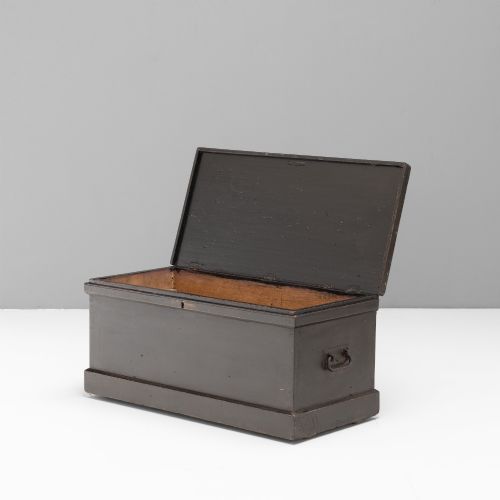
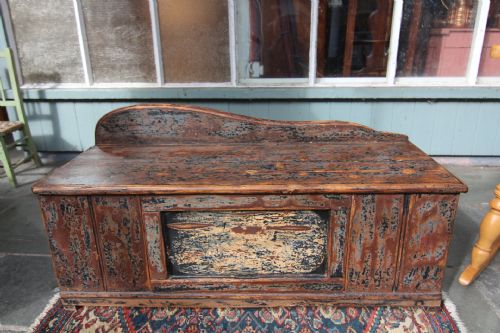
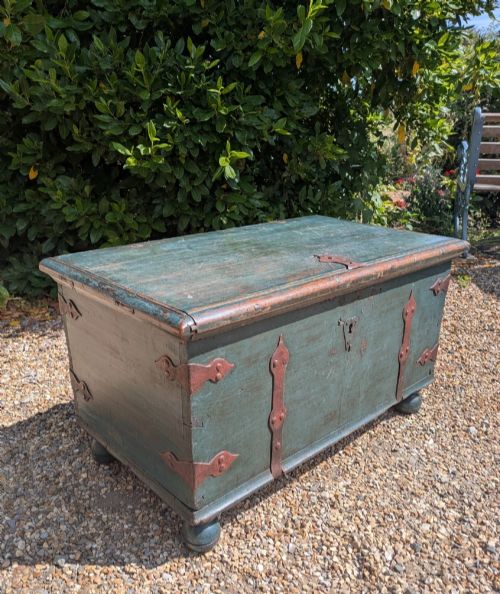
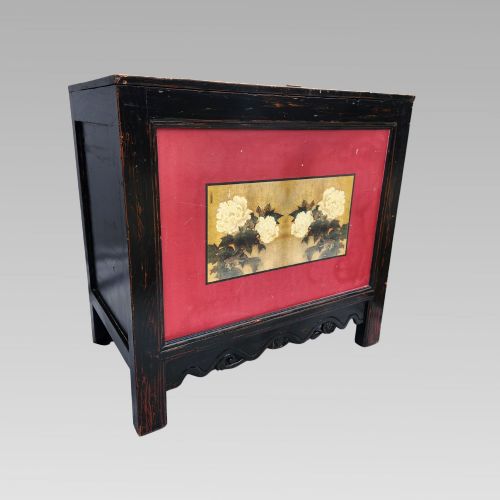
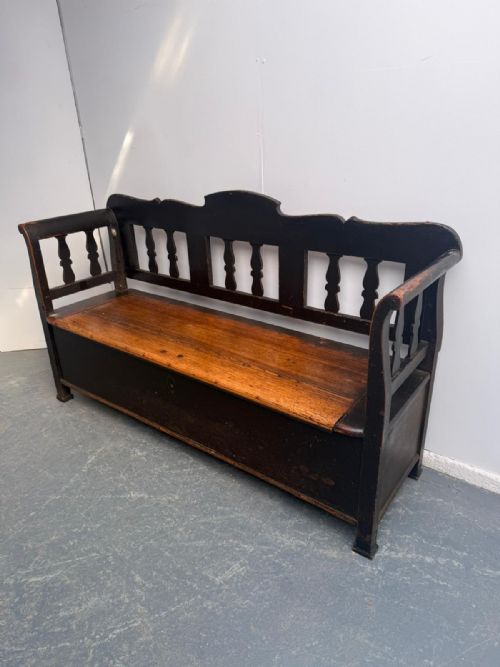
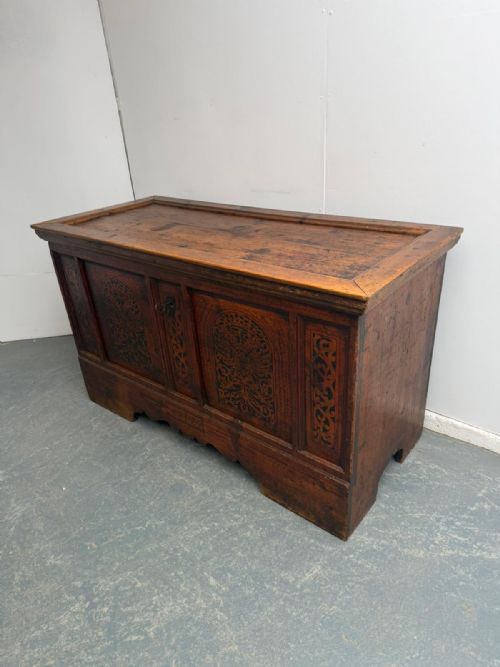
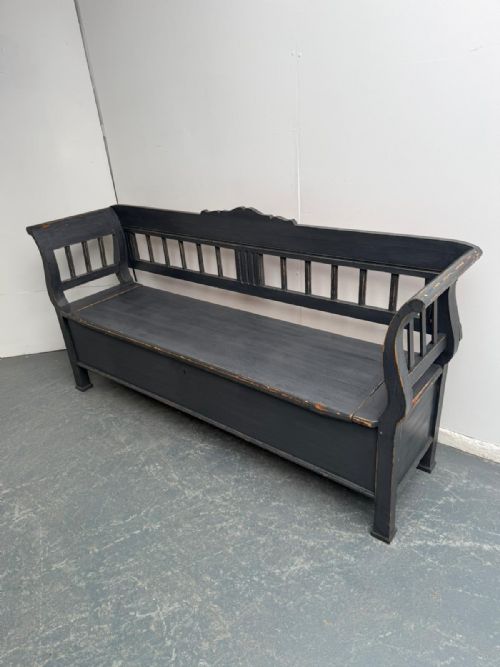
When searching for a traditional painted storage box, a buyer encounters a diverse group of domestic containers spanning nineteenth-century European folk traditions. These pieces include pine marriage trunks, blanket boxes, blanket chests, and box settles originating from workshops in Hungary, Scandinavia, and the Alpine regions.
The domestic forms vary from small decorative boxes to massive mules and benches with hinged lids, designed originally to hold linens, dowries, or household goods. Pine serves as the primary structural timber across most examples, carrying layers of historical pigment, scumble glaze, or floral motifs.
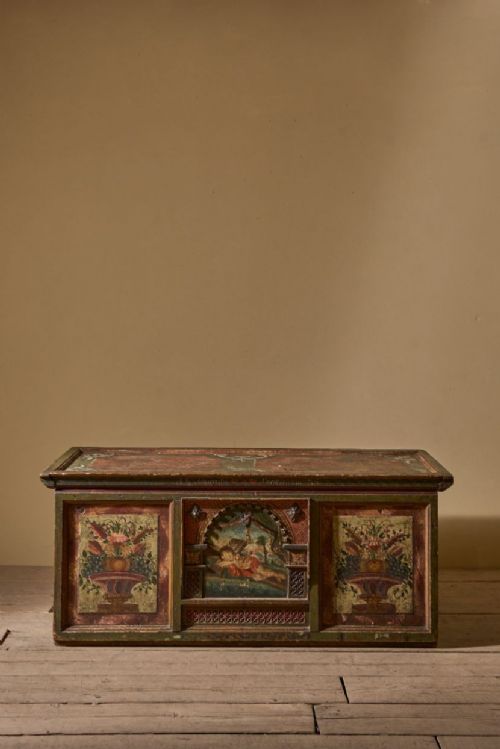
Regional styles dominate the selection, ranging from rustic country pieces to Scandinavian folk art and Hungarian painted coffer boxes. Many retain their original surface decoration, showing the hand of regional makers who ornamented everyday utilitarian furniture.
How they were made
Makers constructed these storage pieces predominantly from solid pine, joining boards with pegged or dovetailed joints suited to heavy domestic use. Hand-forged iron strapwork, brass hinges, and metal locks were fitted to secure the lids and reinforce corners.
Surface decoration relied on natural pigments applied over bare wood or prepared grounds, sometimes enhanced with scumbling techniques to imitate grained hardwoods. Artisans utilised oil-based paints, often adding floral details, motifs, or freehand patterns unique to their specific region.
Listings feature pine storage pieces spanning the Georgian period, the Victorian era, and into the early twentieth century.
What varies in quality
The survival and integrity of the original paint layer determine much of the distinction between examples, with untouched historical surfaces commanding greater interest than later overpainting. The execution of folk art motifs, floral decoration, and regional lettering shows the skill level of the original painter.
Structural preservation of the pine body, including the retention of original wrought iron hardware, bracket feet, and working hinges, separates everyday utility pieces from finer decorative works.
The Traditional Painted Storage Box Glossary
- Mule chest
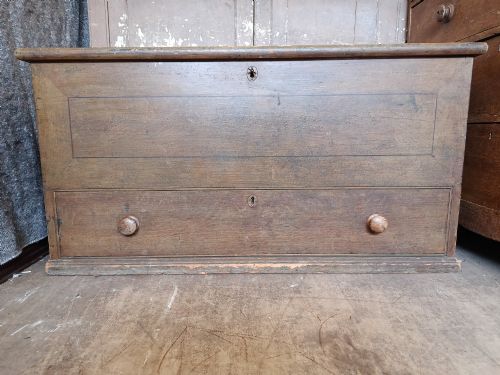
- A storage chest fitted with one or more drawers beneath the main compartment. This form bridges the traditional trunk and the chest of drawers.
- Scumble
- A translucent layer of glaze manipulated over a pale painted base to create simulated wood grain or textured depth. It was widely used on nineteenth-century pine furniture.
- Coffer
- A robust wooden box with a hinged lid used for safekeeping valuables or textiles. Examples often feature heavy iron strapwork and regional painted finishes.
- Box settle
- A high-backed wooden bench incorporating a concealed storage compartment beneath the seat. These dual-purpose seats were common in vernacular farmhouse interiors.
- Strapwork
- Flat bands of metal, typically iron, fastened across wood surfaces to reinforce joints and corners. Hand-forged examples add decorative linear pattern to domestic boxes.
- Cassone
- A large Italian marriage chest used historically to transport a bride's dowry. Elaborate versions feature painted panels and decorative ornamentation.
Traditional Painted Storage Box: Frequently Asked Questions
What were traditional painted storage boxes used for?
These boxes served as essential household containers for storing textiles, winter blankets, personal clothing, and valuable domestic items. In rural communities, larger marriage chests held the dowry accumulated for a wedding.
Many designs also functioned as seating furniture. Box settles and storage benches provided dual utility in farmhouse kitchens and halls by combining a seated bench with a deep chest below.
How do I identify the regional origin?
Regional origin is typically read through the distinct style of the folk art, floral motifs, and colour palette applied to the pine body. Hungarian pieces often feature vibrant painted panels, whereas Scandinavian examples tend toward specific folk patterns and muted tones.
Construction traits and vernacular joinery also offer clues to provenance. Local cabinetmakers utilised specific building methods handed down within particular European regions.
Are painted finishes original?
Determining original paint involves examining surface wear, crackle patterns, and the buildup of historical pigment layers under close inspection. Untouched surfaces show consistent ageing and integration with the pine timber beneath.
Many pieces received later decorative coats or touch-ups during their working lives. Expert assessment looks for traces of earlier colour schemes beneath losses in the top layer.
How do I care for antique pine furniture?
Antique pine responds best to stable indoor environments away from direct heat sources and strong sunlight, which can dry out the timber and fade historical pigments. Maintaining moderate humidity prevents the wood from warping or splitting.
Cleaning should be limited to a soft, dry cloth to protect fragile surface paint and scumble glazes. Modern chemical polishes or abrasive cleaners should be avoided entirely.