


Brown Painted Blanket Box
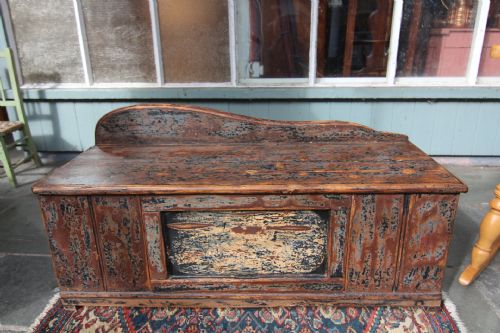
These brown painted blanket box pieces are sturdy storage chests carrying centuries of decorative surface history, offering both practical depth and characterful folk art.

Brown Painted Blanket Box
A brown painted blanket box provides substantial interior volume for household storage while displaying the distinct patination of historic painted wood surfaces. When searching for a brown painted blanket box, buyers encounter examples ranging from vernacular pine storage chests to more ornate travelling trunks and mule chests.
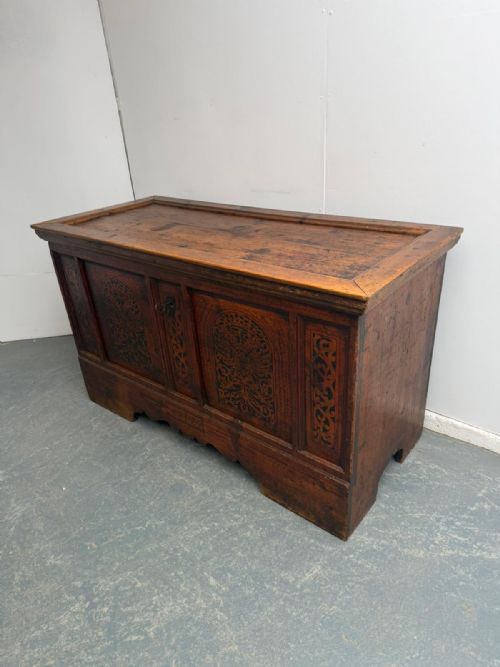
The selection spans various regional traditions, including Victorian pieces alongside Scandinavian, Hungarian, and Welsh country examples. These storage chests frequently double as box seats or low tables depending on their proportions and bracket feet.
Most entries belong to the nineteenth century, with occasional mid-eighteenth century items and early twentieth century farmer chests appearing. Pine is the predominant structural timber beneath the historic paint layers.
Materials and construction methods
Construction relies primarily on solid pine and oak planks joined to form deep rectangular bodies intended for heavy daily use. Iron and wrought iron hardware, such as strap hinges, side carrying handles, and metal banding, reinforce the corners and lids.
Surfaces are finished with paint, graining, or scumble effects applied over the bare timber, sometimes revealing polychrome decoration or labyrinth motifs. Brass details occasionally appear on more formal nineteenth-century travel trunks and strong boxes.
Regional styles represented include Victorian, Folk Art, Scandinavian Country, and Welsh Vernacular.
Factors separating exceptional pieces
Quality rests upon the preservation of the original painted surface rather than later overpainting, with untouched scumbled or grained finishes commanding attention. The integrity of the underlying timber joinery and the presence of period hardware, such as original bracket feet and iron locks, further elevate a piece.
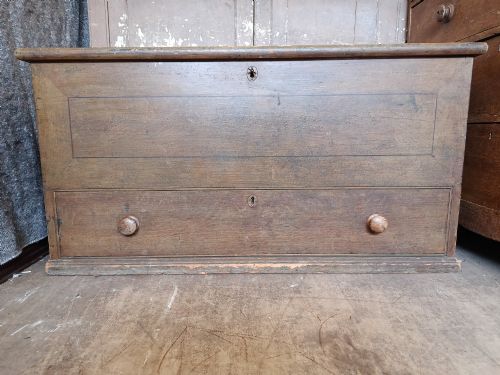
Proportion and regional character define the visual appeal, where crispfolk art motifs or unusual structural forms like mule chests with lower drawers distinguish the finer items from utilitarian storage containers.
The Brown Painted Blanket Box Glossary
- Mule chest
- A storage chest featuring one or more drawers beneath the main lift-up compartment. This hybrid form bridges the traditional blanket box and the modern chest of drawers.
- Scumble
- A decorative painting technique where a translucent glaze is dragged or manipulated over a lighter base coat. This process creates mottled, simulated wood grain effects common on Victorian storage boxes.
- Cofer
- An archaic spelling of coffer, denoting a strong box or chest used historically for valuables and textiles. These heavy wooden boxes often feature iron bands for added security.
- Polychrome
- Decorated in multiple colours. In folk art pieces, this involves hand-painted floral or geometric motifs applied directly to the pine ground.
- Bracket feet
- Small, structural feet supporting the corners of a chest, often shaped in an ogee or simple curved profile. They lift the box off the floor to protect the base timber from dampness.
Brown Painted Blanket Box: Frequently Asked Questions
What were blanket boxes used for?
These boxes served primarily to store heavy woolen blankets, linens, and domestic textiles away from dust and pests. In vernacular homes, they also functioned as impromptu benches or tables when extra surface space was needed.
Over time, households adapted them for travel or general storage, utilising the deep internal well for bulky items.
How do I identify original paint?
Original paint surfaces show natural wear, craquelure, and fading consistent with age rather than uniform modern brushstrokes. Close inspection often reveals subtle layers and depth that point to historic application.
Secondary surfaces applied decades later typically sit heavily over bumps and ironwork without integrating into the timber's grain.
Are these boxes suitable for daily use?
Solid pine and iron-bound construction make these chests exceptionally robust for holding modern household items or heavy blankets. Their sturdy lids allow them to double as low seating or functional surface tables in living spaces.
Care should be taken to place them away from direct heat sources to protect the aged wood and painted finishes.
What is a mule chest?
A mule chest combines the deep top-opening compartment of a traditional blanket box with one or more lower drawers. This design allowed access to smaller garments stored below without moving items stacked in the main well.
They represent a transitional step in furniture history before dedicated chests of drawers became standard.
How do I date an antique box?
Dating relies on observing construction marks, hand-cut dovetails, iron nail types, and the style of the hinges or bracket feet. Pine boards showing wide girths and irregular sawing patterns point towards eighteenth and nineteenth-century origin.
Comparative regional paint styles, such as Hungarian folk art or Scandinavian graining, further narrow down the decade of manufacture.