
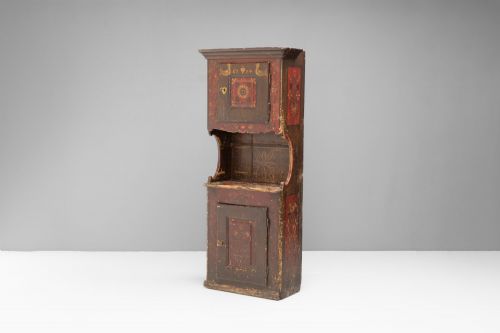
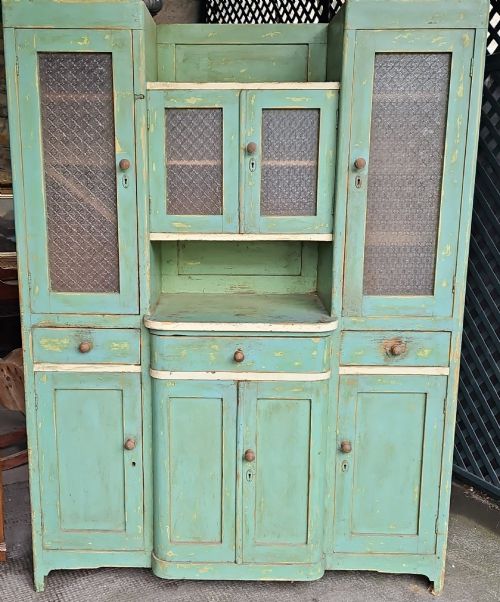


Traditional Painted Pantry Cupboard
These traditional painted pantry cupboard pieces are practical storage units offering honest character and rustic charm for any farmhouse kitchen.
Traditional Painted Pantry Cupboard
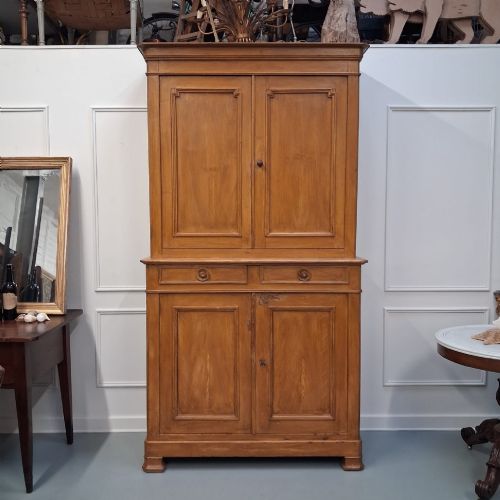
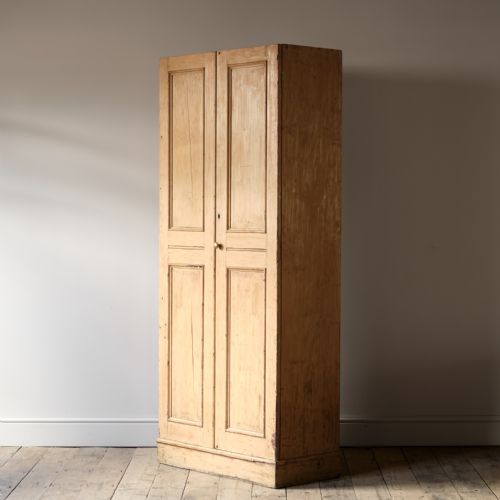
When you search for a traditional painted pantry cupboard, you encounter substantial utilitarian furniture designed to store provisions, linen, and household stores. The examples found here span the eighteenth century, the nineteenth century, and the Edwardian era, taking forms such as housekeepers cupboards, kitchen cabinets, and larder cupboards.
Regional vernacular styles dominate these listings, reflecting domestic life from Georgian times through to the Victorian period. From shallow vented kitchen cupboards to breakfront dressers and food cupboards, each piece offers generous internal storage behind panelled doors.
How they were made
Makers constructed these storage pieces primarily using solid pine and painted wood, often finished with applied paint layers, scumble effects, or faux oak graining. Iron and brass fittings such as hinges and latches secure the doors, while occasional pieces incorporate textured or clear glass panels.
Traditional joinery methods governed their construction, relying on pegged joints, panelled doors, and sturdy shelving designed to bear the weight of provisions and household linen. Surfaces received protective and decorative coats of paint, which weathered over generations of domestic use.
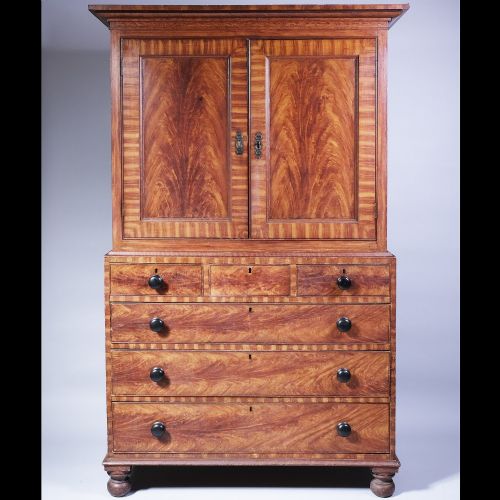
Some nineteenth century panels wear faux oak scumble paint so convincingly they trick the eye until you knock on the pine.
What varies in quality
Quality in a traditional painted pantry cupboard rests in the integrity of the original timber frame, the survival of early or historic paint surfaces, and the balance of proportions. Pieces retaining their untouched scumble glaze or original decorative paintwork command greater interest than those stripped down to bare pine.
The sophistication of the vernacular joinery and the retention of original brass or iron hardware further distinguish finer examples. Substantial scale and balanced architectural door panels elevate a utilitarian storage piece into a notable piece of country furniture.
The Traditional Painted Pantry Cupboard Glossary
- Housekeepers cupboard
- A large storage furniture form traditionally used in large homes for housing linen, dry goods, and tableware. These often feature upper and lower cupboard sections with multiple internal shelves.
- Scumble paint
- A decorative painting technique involving a translucent glaze dragged or textured over a pale base coat to imitate finer woods like oak. This finish was widely applied across nineteenth century country furniture.
- Bread and cheese cupboard
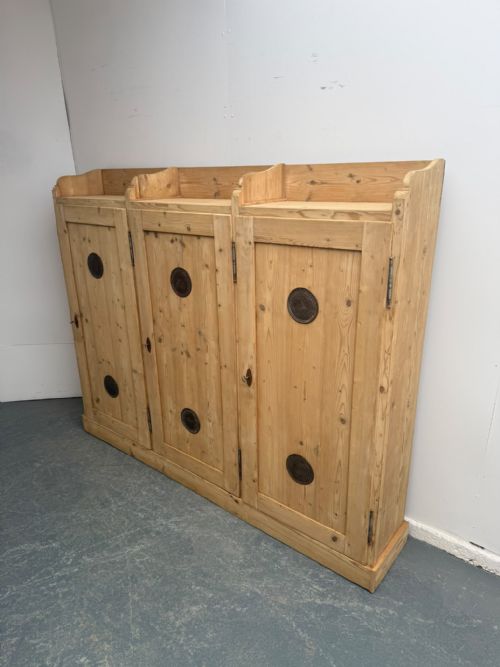
- A regional vernacular food cupboard featuring ventilated panels, often pierced with holes or wire mesh, designed to keep dairy and provisions cool. These are quintessential items of early country kitchen storage.
- Breakfront
- A cabinet design where the central section projects forward from the flanking wings, adding architectural depth and presence to large cupboards and dressers.
Traditional Painted Pantry Cupboard: Frequently Asked Questions
What is a housekeepers cupboard?
A housekeepers cupboard is a large storage piece historically used to store household linen, blankets, and dry provisions. They typically feature multiple doors enclosing deep shelves for practical domestic organisation.
In modern homes, these substantial units serve as pantry cupboards or linen presses, offering vast amounts of enclosed storage for kitchens and hallways.
How do I care for antique painted pine?
Antique painted pine requires gentle cleaning with a dry or lightly damp cloth, avoiding harsh modern chemical cleaners that can lift historic paint layers. Maintaining stable room humidity prevents the timber from warping or splitting.
Wax polish can be applied sparingly to unpainted wooden sections, while original painted surfaces are best left untouched to preserve their historic character.
What is scumble paint?
Scumble paint is a decorative surface finish where a translucent top layer of dark paint or glaze is manipulated over a lighter base coat. This technique was used to simulate the appearance of expensive hardwoods like oak on cheaper woods such as pine.
On country furniture, aged scumble creates a mottled, textured appearance that patinates richly over time.
Where were these cupboards used?
These cupboards originated in domestic kitchens, sculleries, larders, and large housekeepers rooms across England, France, Scandinavia, and the Baltic region. They were designed strictly for utilitarian storage before finding a place in modern decorative interiors.
Their sturdy construction made them ideal for daily use in busy households storing food, crockery, and linens.