
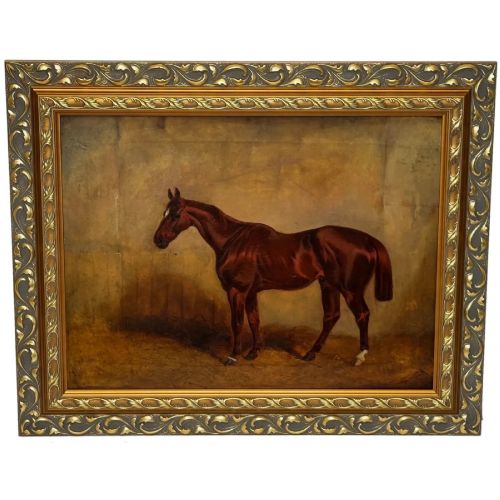
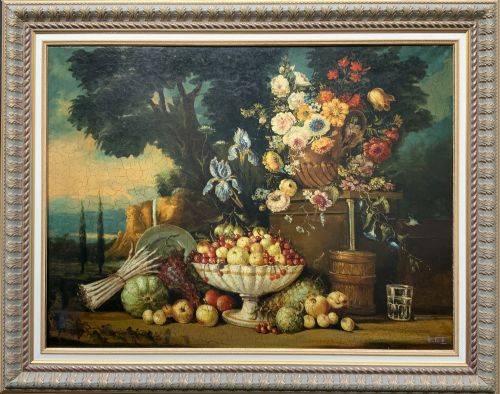
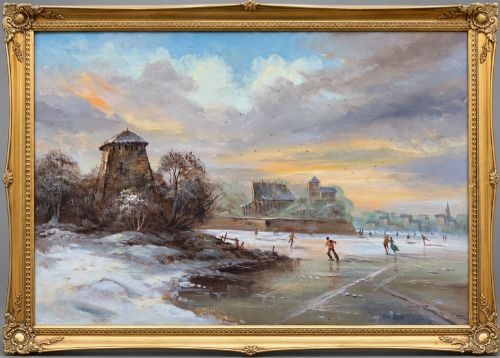
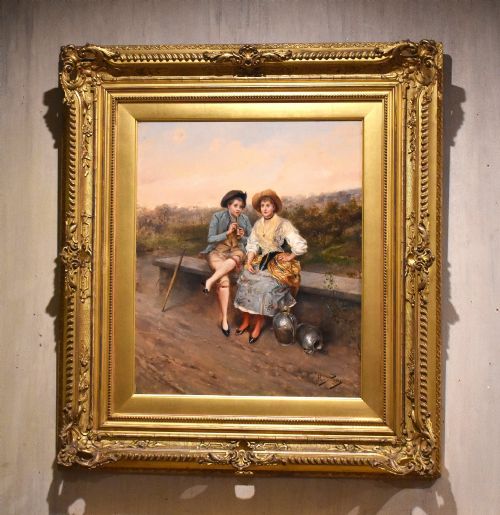
Traditional Oil Painting Wall Art
Traditional oil painting wall art brings centuries of layered pigment, textured canvas and carved framing into a room.
Traditional Oil Painting Wall Art
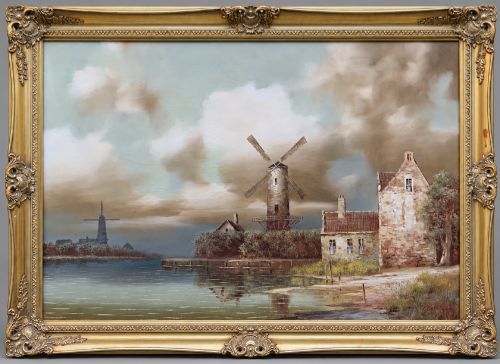
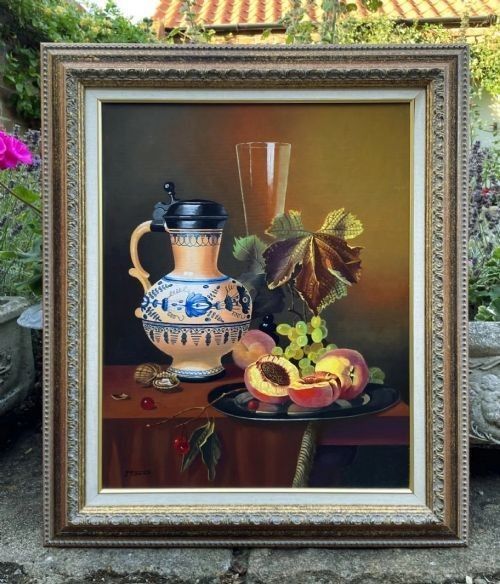
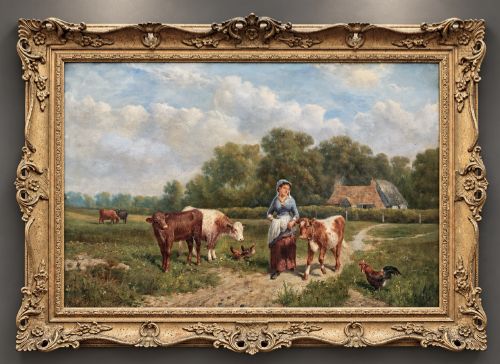
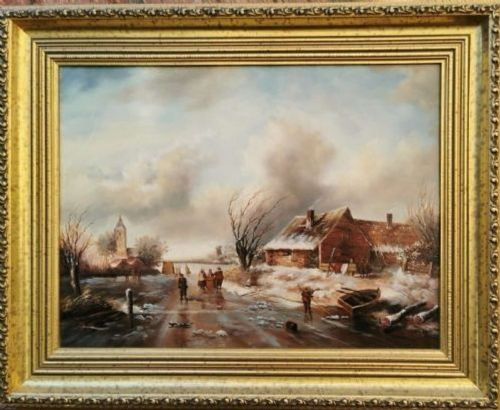
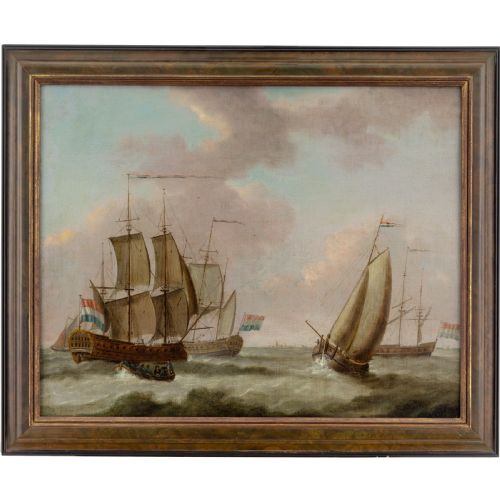
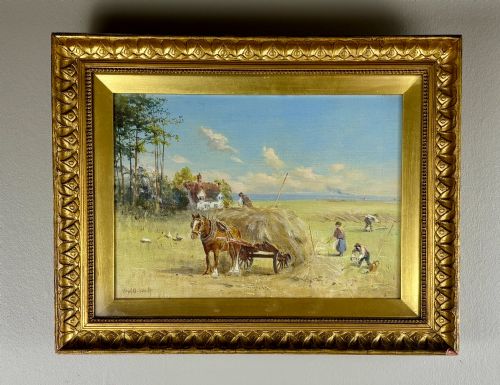
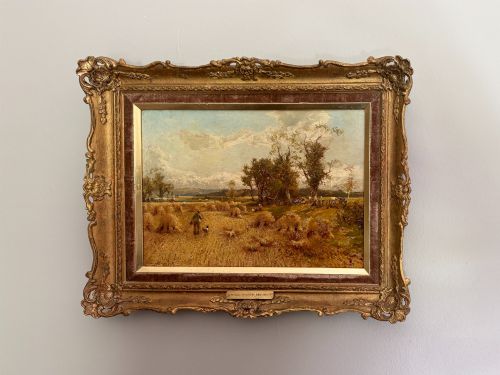
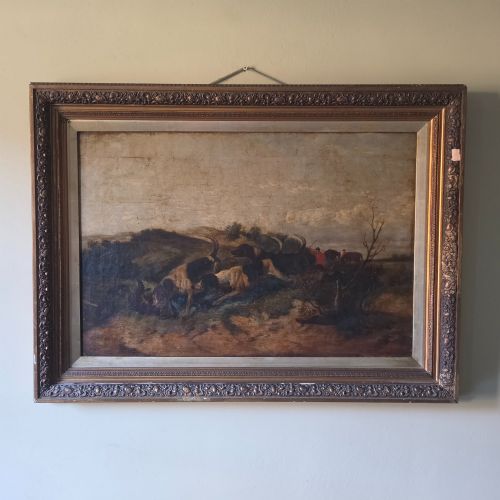
Traditional oil painting wall art encompasses framed canvases, wood panels and board paintings spanning from the seventeenth century through to the mid-twentieth century. Buyers seeking traditional oil painting wall art will find portraits of noblewomen, pastoral landscapes, marine scenes and floral still lifes.
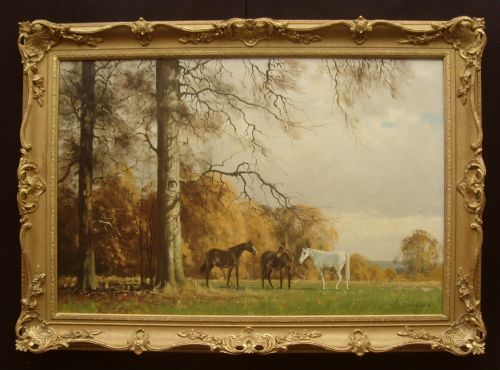
The nineteenth century provides the highest volume of available pieces on this page, often showing romantic landscapes and rural scenes by named British and European artists. Earlier works from the seventeenth and eighteenth centuries tend to focus on formal portraiture and classical compositions.
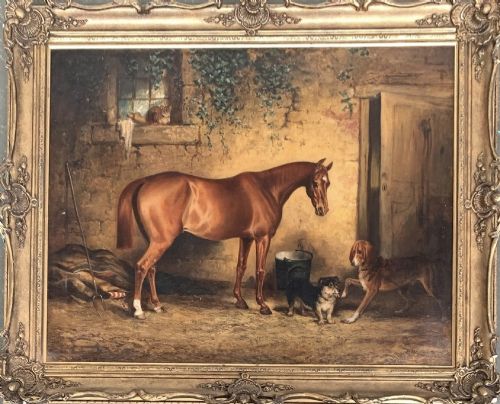
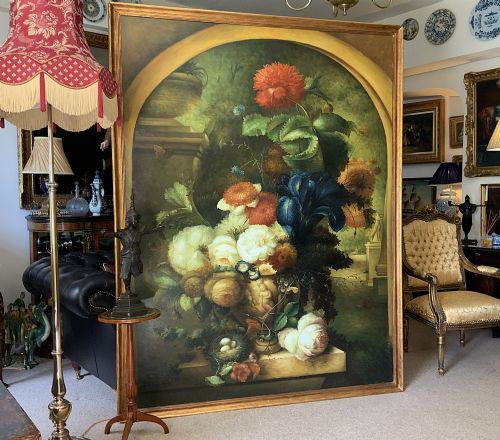
Later twentieth-century examples frequently include decorative floral studies, animal portraits and copies after old masters executed in oils. Each piece retains the distinct brushwork and rich varnish accumulated over decades or centuries of display.
How they were made
Painters applied oil paint formulated from ground pigments and linseed oil onto stretched canvas, prepared wood panels or wooden boards. This medium allowed artists to build translucent glazes and thick impasto texture that dried slowly.
Finished canvases and panels were housed in heavy timber frames, frequently enhanced with gilt wood, gold leaf or moulded gesso ornament. These frames were integral to protecting the edges of the painting and completing the visual weight of the wall art.
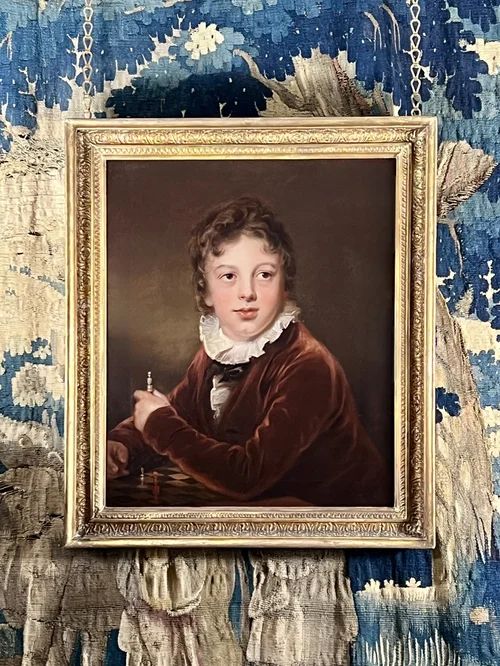
Several portraits preserve the intense gazes of eighteenth-century sitters who sat entirely still while wearing elaborate lace collars.
What varies in quality
Quality rests in the handling of light, anatomical precision and the expressiveness of the brushwork across the canvas or panel. Master artists achieved depth through careful glazing, whereas lesser works rely on flat colour application and stiff composition.
The condition of the original surface and the retention of a period-appropriate gilt frame significantly elevate the standing of a piece. Retaining legible signatures, exhibition labels or documented attributions adds historical weight to the artwork.
John Hayls·Richard Sebastian Bond·William Beattie-Brown·Jozsef Molnar·William H Myers·Tom Campbell·George Willison·John Horace Hooper·William McAlpine·Reginald Arthur Borstel·Hendrik Willem Schweickhardt·Edward Mills·George Houston·Thomas Barker of Bath·Thomas W Lascelles·David Bates·C Sørensen
The Traditional Oil Painting Wall Art Glossary
- Impasto
- Paint applied thickly to a canvas or panel, standing out in relief from the surface. This technique captures the physical gesture of the artist's brush.
- Gesso
- A plaster-like mixture applied to wood frames or panels as a base for gilding or painting. It provides a smooth, durable foundation for decorative work.
- Provenance
- The documented history of ownership of an artwork from its creation to the present day. Clear provenance helps verify authenticity and past exhibitions.
- Glaze
- A thin, transparent layer of oil paint brushed over a dry underlayer to modify colour depth and luminosity. It creates rich optical effects impossible with opaque paint.
- Canvas
- Woven fabric stretched across a wooden stretcher frame to form the primary support for oil painting. Linen and cotton are the most common textile bases.
Traditional Oil Painting Wall Art: Frequently Asked Questions
How do I hang a heavy oil painting safely?
Heavy framed oil paintings require fixings secured directly into wall studs or solid masonry using appropriaterawl plugs and steel screws. Wire alone should be backed by sturdy D-rings screwed firmly into the wooden stretcher frame.
Ensuring the wall bracket matches the weight of the timber and gilt frame prevents structural slip over time. Professional mirror and picture hangers offer the most reliable support for monumental canvases.
How do I identify the period of a frame?
Period frames often display hand-carved wooden ornament, composition ornament moulded over wood, and layers of gesso that show natural age cracking. The construction joints at the corners usually reveal hand-mitring and older joining methods.
Later replacement frames may use modern cast resin or machine-extruded mouldings lacking the crisp detail of antique examples. Examining the backboards and fixings provides additional clues regarding the age of the framing.
What is the difference between canvas and panel?
Canvas consists of woven textile stretched over a wooden frame, offering slight flexibility and a textured surface weave. Wood panels provide a rigid, flat foundation that prevents the canvas slackening over decades.
Panel paintings often date to earlier centuries or specific regional schools where rigidity was preferred for fine detail work. Both supports require stable indoor humidity to prevent warping or fabric degradation.