


Traditional Office Writing Table
A traditional office writing table provides a sturdy workspace, connecting period character to daily utility through classic wood and leather forms.
Traditional Office Writing Table
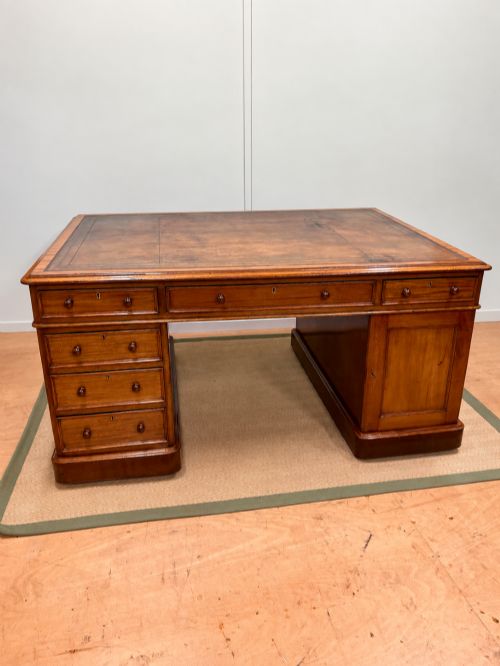
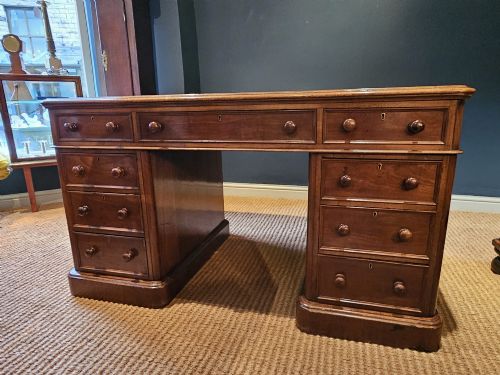
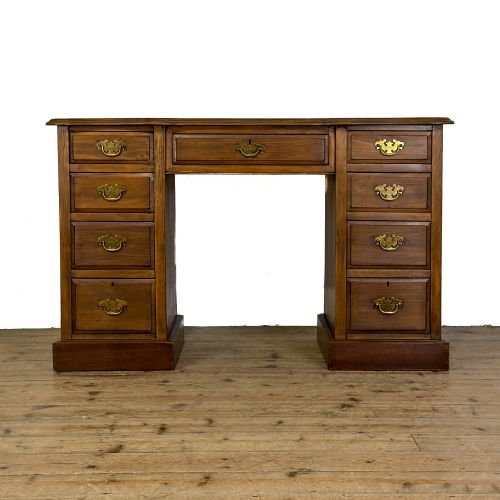
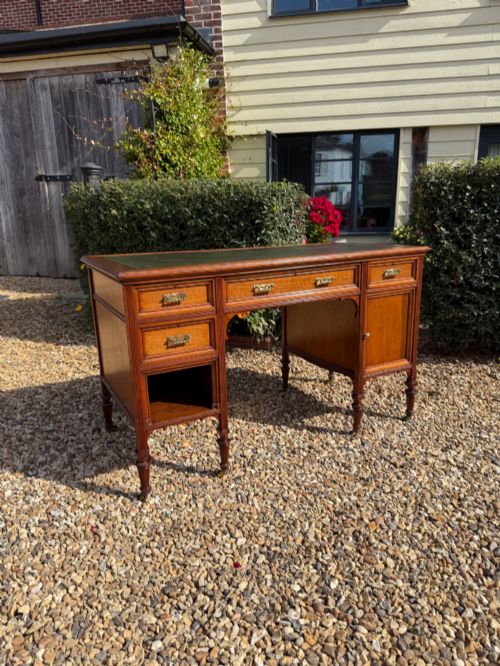
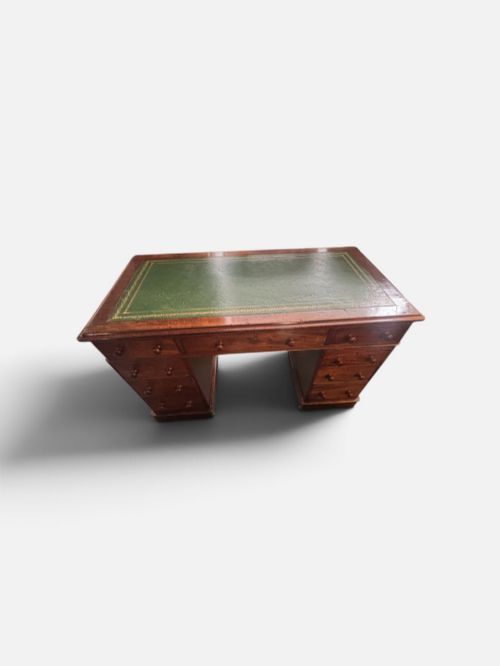
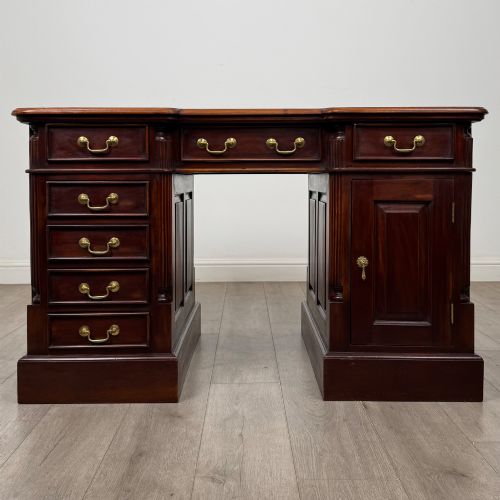
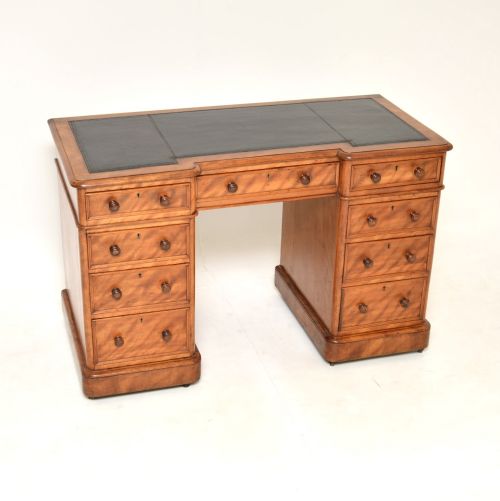
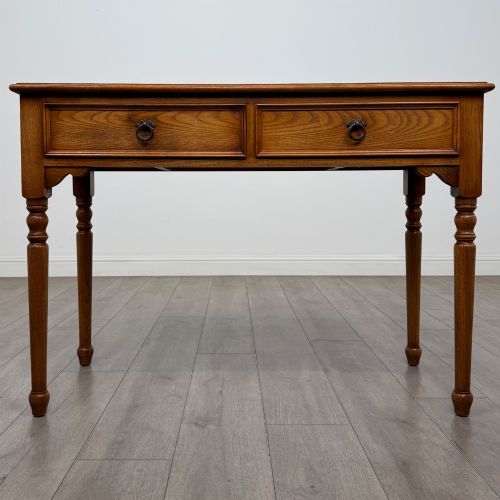
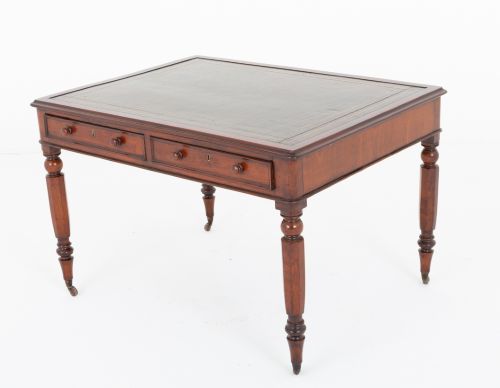
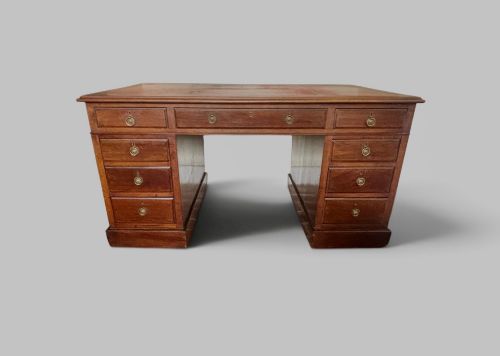
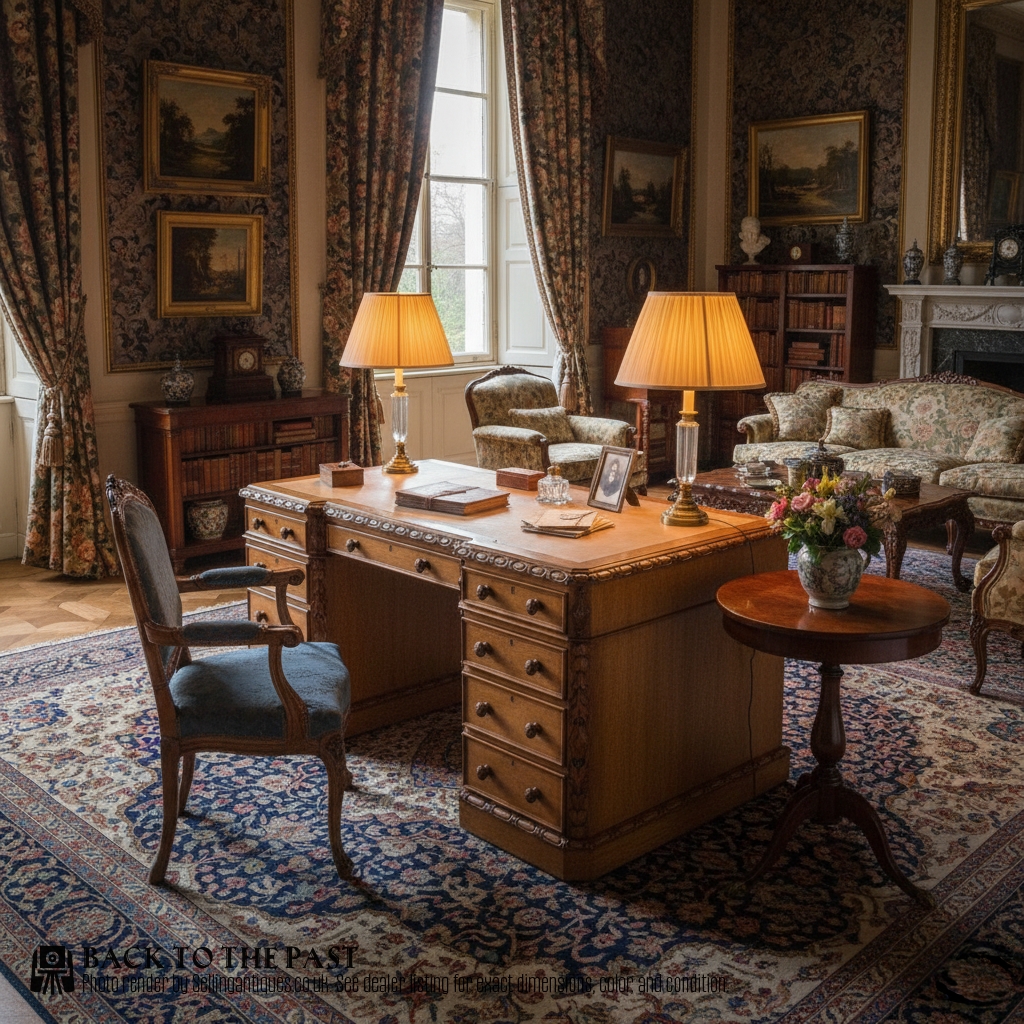
A traditional office writing table encompasses sturdy pedestal desks, partners desks, and kneehole formats designed for clerical and administrative work. These pieces emerge primarily from the nineteenth century, the Edwardian era, and the early twentieth century.
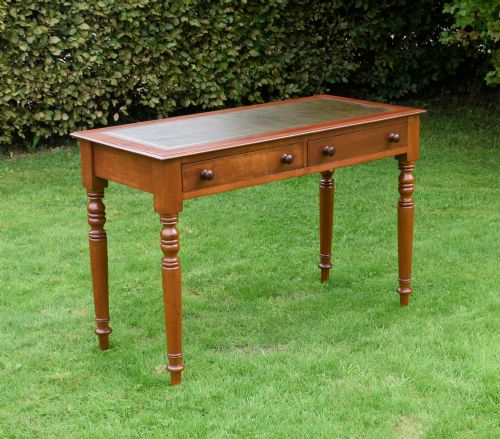
Mahogany and oak dominate the selection, frequently paired with fitted drawers and writing surfaces. Pieces range from large twin pedestal configurations to compact writing tables suited for domestic studies.
Victorian and Edwardian workshops produced the majority of these tables, alongside revival interpretations of Georgian and Queen Anne styles.
Materials and Construction
Cabinetmakers utilised solid timbers and veneers, relying heavily on mahogany, oak, and burr walnut for exterior surfaces. Drawer construction typically involved hand-cut dovetails to ensure durability under daily use.
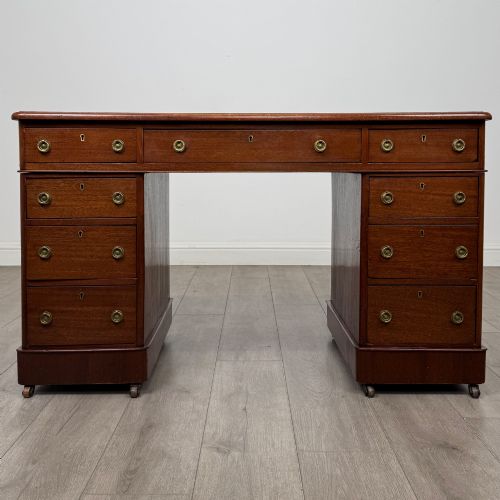
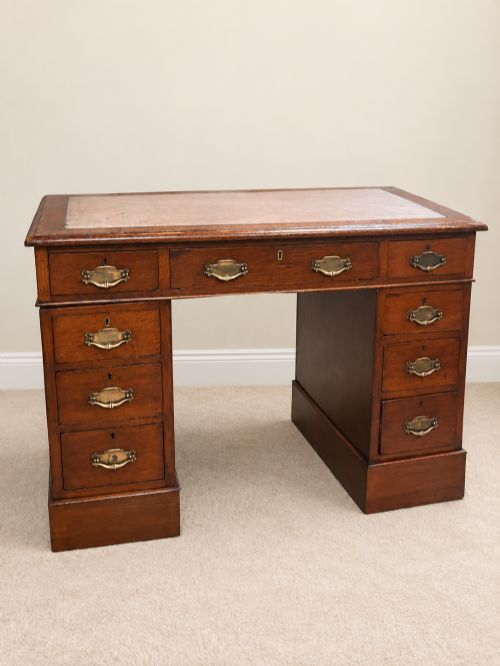
Writing surfaces were routinely inset with panels of tooled leather, sometimes bordered by canvas or polished wood edges. Brass hardware, including handles and key escutcheons, completed the functional assembly of these desks.
Periods represented span from the 18th century through the Victorian and Edwardian eras into the 1930s.
Distinctions in Standard
Quality rests upon the selection of timber figures, such as matched burr walnut or dense grain mahogany, combined with precise joinery. The crispness of carved details, including linenfold panels or restrained mouldings, separates standard utility items from finer workshop output.
Internal construction, such as solid oak drawer linings and original brass fixtures, distinguishes superior examples. The integration of finished backs allows free-standing placement in a room, raising the utility and status of the table.
Trollope and Sons·Wylie and Lochhead Glasgow
The Traditional Office Writing Table Glossary
- Pedestal desk
- A heavy freestanding desk comprising two supporting banks of drawers beneath a main writing surface. This format provides substantial storage and a formal presence.
- Partners desk
- A double-sided pedestal desk designed for two people to work opposite one another. These large tables feature drawers on both faces.
- Kneehole desk
- A compact desk featuring a central recessed space for the user's legs, flanked by smaller banks of drawers. They suit smaller studies and rooms.
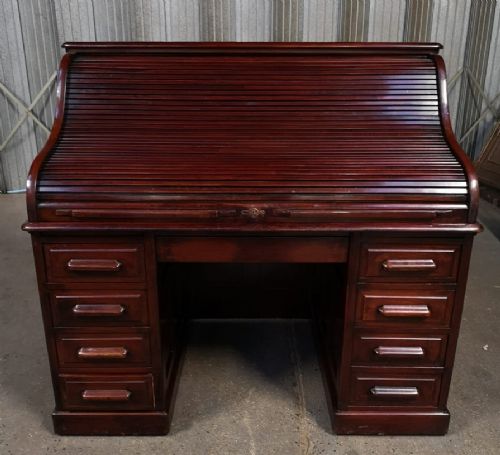
- Tambour
- A flexible sliding shutter formed of narrow strips of wood glued to canvas, used to enclose the upper section of a roll top desk. This mechanism conceals pigeonholes and small drawers.
- Linenfold
- A carved wood panel motif resembling folded fabric. This style appears frequently on early twentieth-century oak furniture.
Traditional Office Writing Table: Frequently Asked Questions
What is a traditional office writing table?
A traditional office writing table is a wooden desk built for administrative tasks, featuring drawers and often an inset leather writing surface.
These pieces range from compact Edwardian writing tables to large Victorian pedestal desks designed for studies and offices.
How do I maintain the leather top?
The leather writing surface benefits from gentle dusting and occasional applications of neutral wax or leather cream to prevent drying.
Avoiding excessive moisture and direct sunlight helps preserve the gold tooling and suppleness of the leather over time.
Are partners desks double-sided?
Partners desks feature drawers and cupboards on both sides, allowing two people to sit and work opposite each other.
This double-sided arrangement requires a larger floor area and allows the desk to stand centrally within a room rather than against a wall.
How do I identify a Victorian desk?
Victorian desks are typically constructed from dense mahogany or oak, often displaying heavy pedestals, hand-cut dovetails, and traditional brass hardware.
Design cues lean towards robust proportions and functional layouts developed during the nineteenth century.