




Traditional Ocean Seascape Painting
A traditional ocean seascape painting captures the movement of coastal waters and maritime life across canvas and paper.
Traditional Ocean Seascape Painting
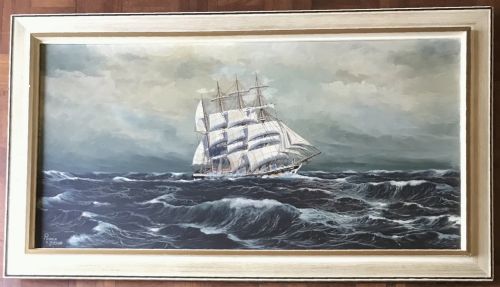
A traditional ocean seascape painting focuses on coastal views, harbours, and open water executed in oil or watercolour. The pieces encountered on this page span the nineteenth century through to the mid-twentieth century, encompassing Victorian marine art and later realist interpretations.
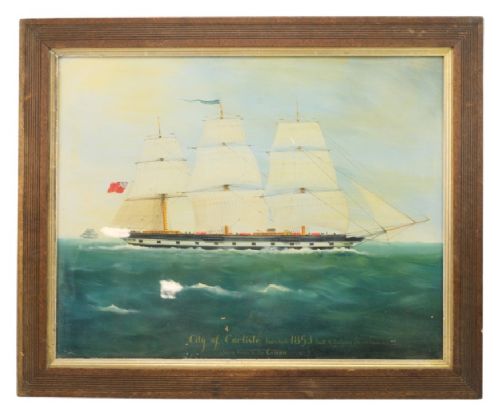
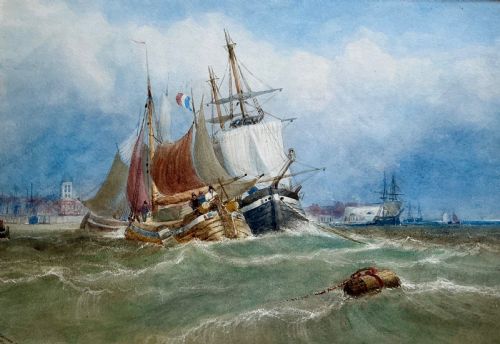
Motive subjects range from fishing boats in choppy seas to specific vessels and coastal harbours in Cornwall, Scotland, and further afield. Works appear on canvas, board, and paper, frequently housed within period wooden or gilt frames.
Quality Variations
The success of a piece rests upon the artist's ability to render the weight of water and the play of light across maritime conditions. Stronger works demonstrate confident brushwork and precise handling of rigging, hull structures, and coastal architecture.
Condition of the paint surface and the preservation of the original paper or canvas support influence the overall character. Framing choices also contribute, as period-appropriate gilt wood enhances the visual presentation.
Several vessels captured by nineteenth-century artists sailed away from home waters into distant military engagements and foreign trade.
William Banks Fortescue·Henry Barlow Carter·Hendrik Willebrord Jansen·Dion Pears·George Henry Knight·John Callow·Owen Bowen·Charles Martin Powell
The Traditional Ocean Seascape Painting Glossary
- Watercolour painting
- A work executed with water-soluble pigments on paper. This medium provides translucent washes of colour well suited to delicate atmospheric coastal scenes.
- Oil on canvas
- A painting technique utilising pigments suspended in a drying oil applied to stretched fabric. This method allows for rich texture and deep tonal contrast in marine depictions.
- Ebonised frame
- A wooden picture frame treated to imitate ebony wood. Such dark frames were frequently utilised during the Victorian and Edwardian periods.
- Gilt wood
- Wood coated with a thin layer of gold leaf or gold paint. These frames surround many nineteenth-century oil paintings and watercolours.
Traditional Ocean Seascape Painting: Frequently Asked Questions
What periods do these paintings date from?
The works span from the nineteenth century through the Victorian and Edwardian eras up to the mid-twentieth century.
Most examples reflect the maritime traditions of the eighteen-hundreds and early nineteen-hundreds.
Are these paintings executed on canvas or paper?
Artists utilised both oil paint and watercolour across different surfaces depending on the desired effect.
Oil paintings appear on canvas or wood board, while watercolours are executed on paper.
How should I care for a framed watercolour?
Works on paper require protection from direct sunlight to prevent the fading of watercolour pigments.
Keeping them away from damp environments ensures the paper and original backing remain stable.
What subjects typically appear in these scenes?
Depictions commonly feature coastal harbours, fishing boats in choppy seas, and named sailing vessels.
Locales range from Cornish ports to Scottish borders and Dutch coastal waters.