

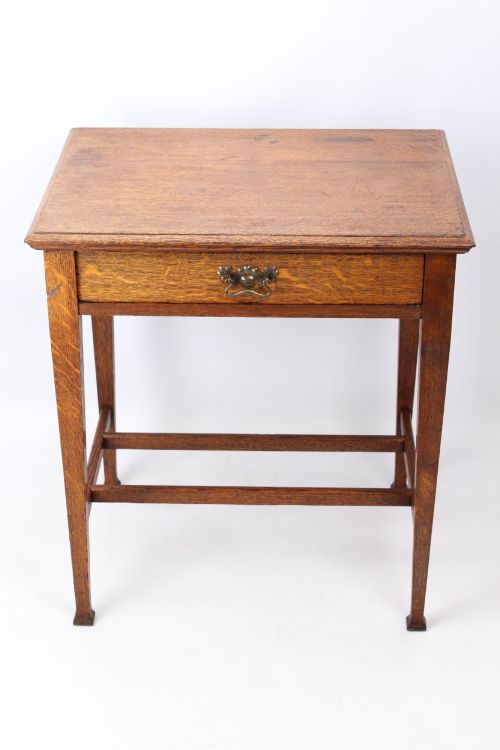
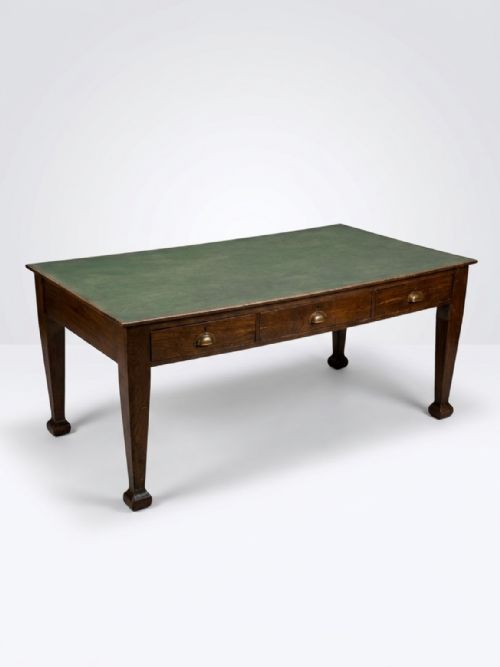
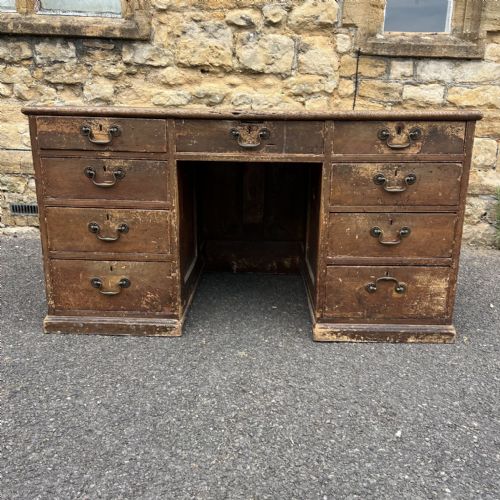
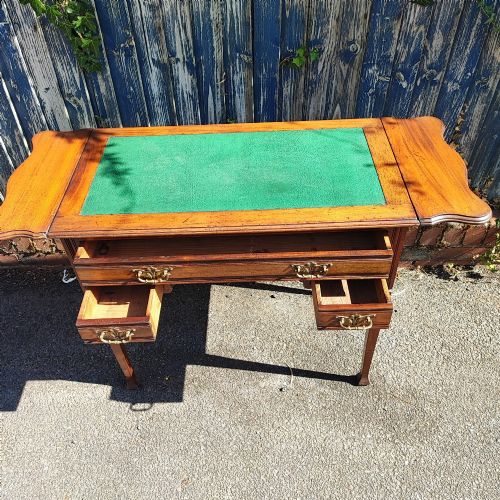
Traditional Oak Study Table
A traditional oak study table anchors a room with solid presence, offering a sturdy workspace shaped by decades of purposeful daily use.

Traditional Oak Study Table
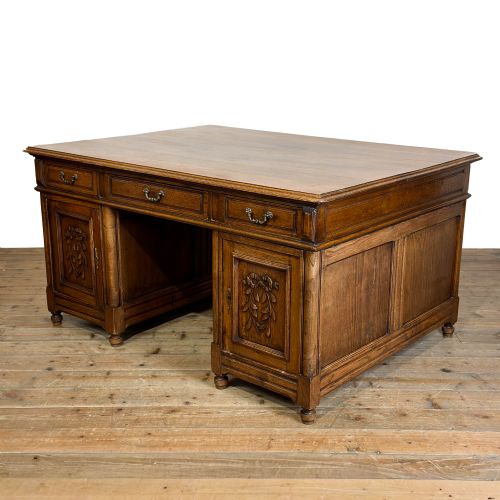
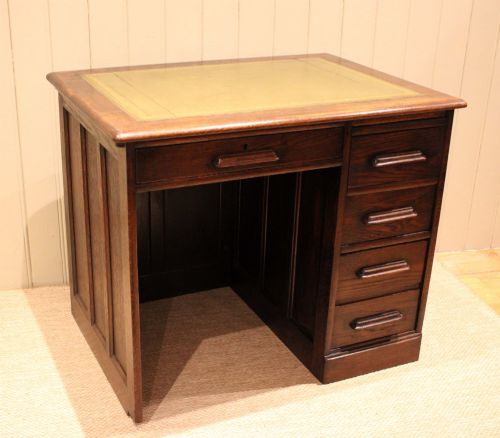
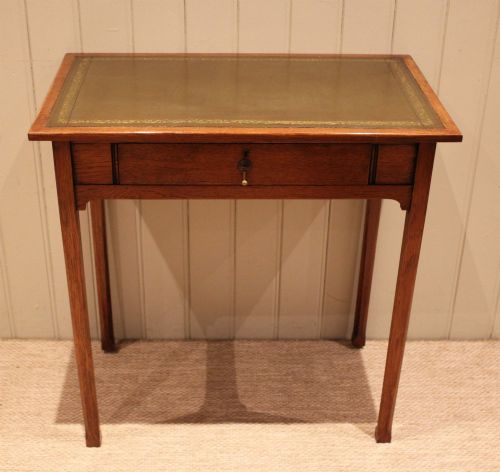
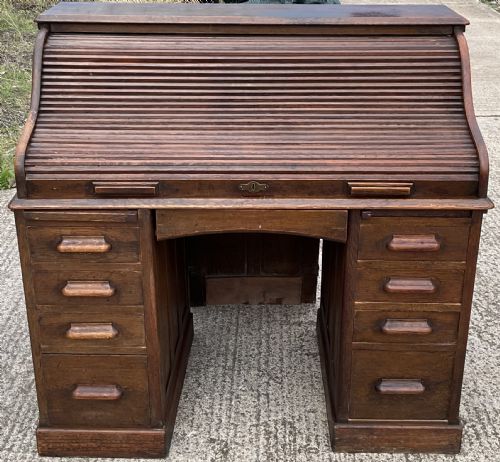
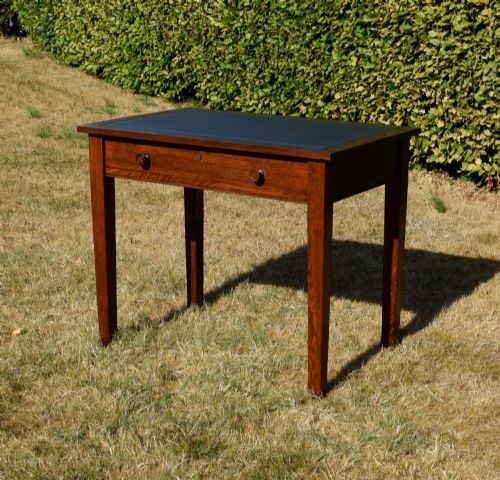
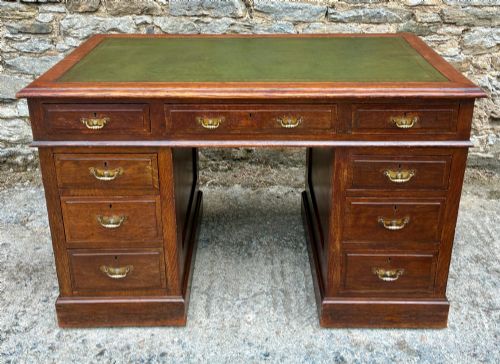
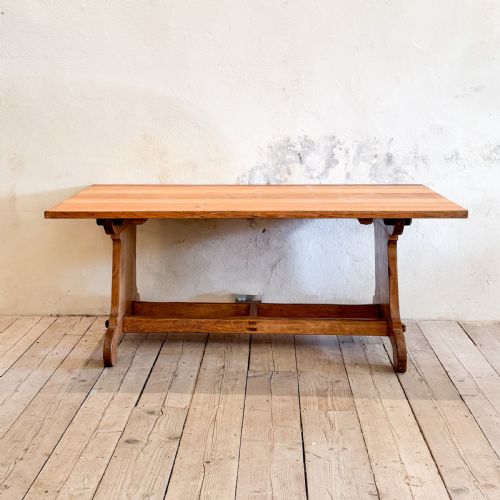
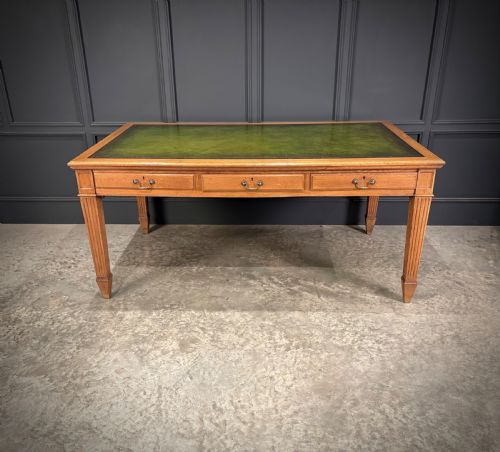
A traditional oak study table covers a broad family of writing surfaces, library pieces and pedestal desks designed for serious work. When you search for a traditional oak study table, you meet pieces originating across the Victorian, Edwardian and early twentieth-century periods.
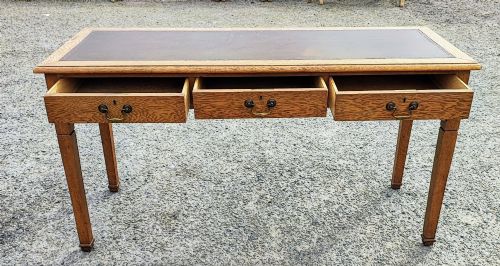
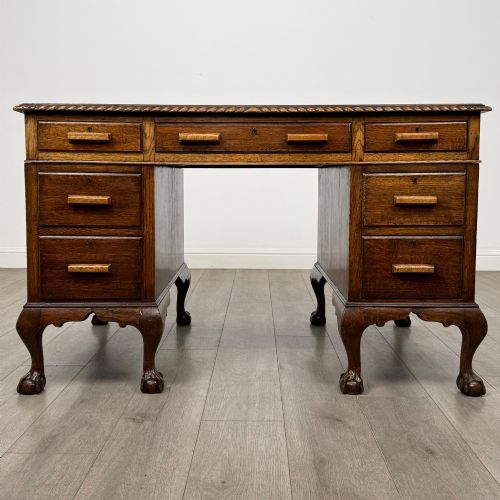
The selections span simple two-drawer writing tables, large partners desks and twin-pedestal configurations built from solid timber. Makers employed styles ranging from plain English country forms to carved Jacobean revival and clean Arts and Crafts designs.
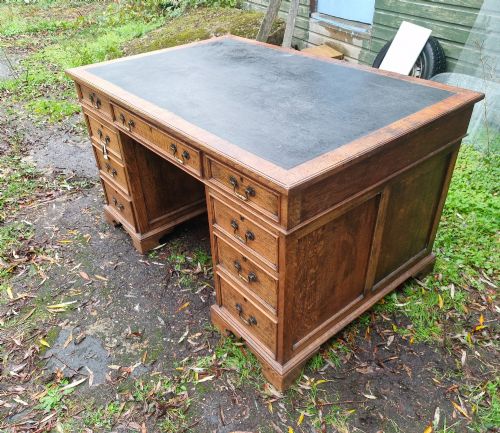
Pedestal formats with banks of drawers sit alongside lighter library tables suitable for central room placement. Most survivors date from the late nineteenth century through to the nineteen-twenties, reflecting domestic and office expansion in those decades.
How They Were Made
Carpenters constructed these tables primarily from solid oak, occasionally combining the timber with burr walnut accents, pine carcasing or ash. Brass hardware, iron fittings and inset leather writing surfaces complete the standard structural vocabulary.
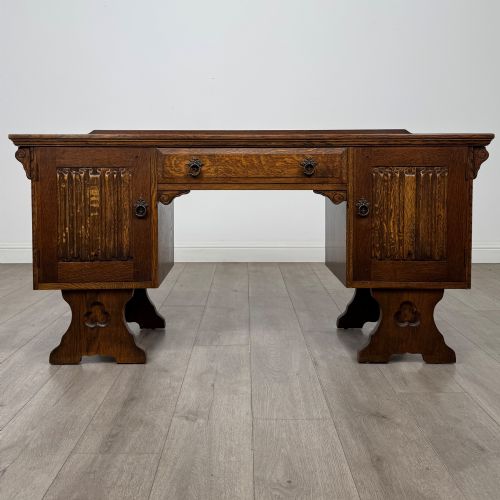
Joinery techniques relied on dovetailed drawer construction and mortise and tenon framing to withstand heavy daily use. Surfaces received carved linenfold details, turned legs or simple panelled sides depending on the prevailing style.
Traditional Oak Study Table Retail Price Guide 2026
Typical asking prices for traditional oak study table among the pieces listed under this phrase on Sellingantiques today, from the lower quarter to the upper quarter. They describe what is for sale here now, not the wider market.
Listings feature oak combined with brass, leather, iron, burr walnut and mahogany across Victorian, Edwardian and 1920s periods.
What Varies in Quality
Quality rests upon the selection of timber figures, such as golden oak or burr walnut matching, and the integrity of the original joints. Heavier partners desks and pieces bearing workshop stamps demonstrate higher initial ambition from cabinetmakers.
The preservation of original inset leather tops, working locks with keys and uncompromised brass handles elevates a table above standard utilitarian examples. Proportion and scale also dictate worth, with broad library proportions commanding particular attention.
Gillow and Co·Merryweather and Son
The Traditional Oak Study Table Glossary
- Partners desk
- A large double-sided desk designed for two people to work opposite one another, featuring matching banks of drawers or cupboards on both faces.
- Pedestal desk
- A heavy freestanding desk comprising a top surface supported by two separate pedestals or banks of small drawers.
- Library table
- A large freestanding table designed for central room placement rather than sitting against a wall, often featuring drawers beneath the top.
- Linenfold
- A style of wood carving that imitates folded vertical folds of linen or parchment, common on panels from revivalist periods.
- Kneehole
- The central recessed space beneath a desk top where the user sits, often flanked by pedestals of drawers.
Traditional Oak Study Table: Frequently Asked Questions
How do I care for the leather top?
Clean the leather surface gently with a damp cloth and apply a neutral paste wax periodically to maintain suppleness. Avoid harsh chemical cleaners that strip the original tone.
Keep the table away from direct heat sources and strong sunlight to prevent the leather from drying out and cracking over time.
Were these desks used in homes or offices?
These tables served both domestic libraries and commercial offices, depending on their size and drawer configuration. Large partners desks typically outfitted professional chambers or estate offices.
Smaller two-drawer writing tables and library models suited domestic studies, drawing rooms and rectories for private correspondence.
How can I tell a Victorian desk from an Edwardian one?
Victorian examples often display heavier proportions, darker finishes, and occasionally elaborate carvings or burr walnut veneers. They date from the mid-nineteenth century up to nineteen hundred.
Edwardian pieces generally exhibit lighter golden oak tones, simpler Arts and Crafts lines, or restrained revivalist motifs. They reflect changing interior tastes at the turn of the twentieth century.
Will a partners desk fit in a standard room?
Partners desks are built on a substantial scale with double-sided drawers, requiring ample floor space to walk around all four sides. Measure your room carefully to ensure adequate clearance for chairs.
Smaller library tables or single-pedestal formats offer a practical alternative if floor space is limited while retaining traditional oak character.