



Regency Oak Library Table
A regency oak library table brings solid architectural presence and rich figuring to a room, offering a generous workspace built for serious study.

Regency Oak Library Table
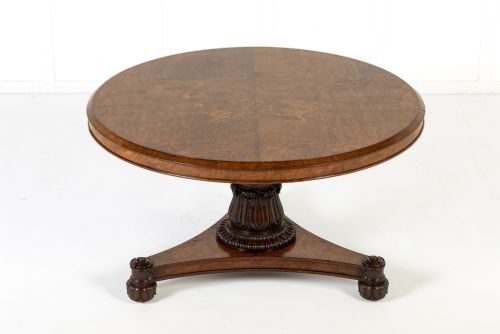
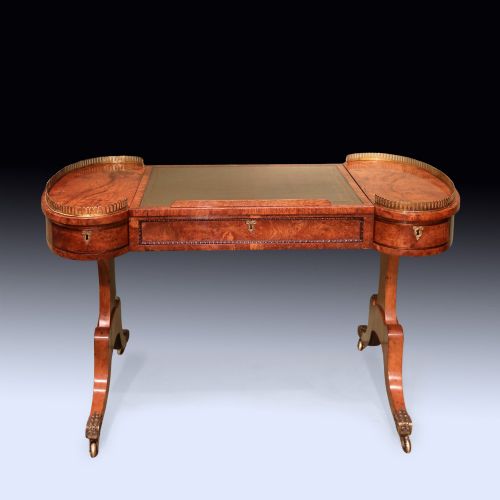
A regency oak library table is a substantial piece of nineteenth-century furniture designed for reading, writing, and holding heavy volumes in a domestic study or grand library. These tables combine utilitarian strength with the refined proportions characteristic of the period, providing a stable platform for daily use. The pieces appearing here span the nineteenth century, including specific items from the Regency, George IV, and William IV eras.
Buyers will most frequently encounter forms ranging from drum tables and partners desks to writing tables and centre tables. These items utilise various oak timbers, including burr oak, pollard oak, and figured oak, often complemented by secondary materials like leather and brass. The construction ranges from compact country house examples to broad-scale pieces intended for larger architectural spaces.
How they were made
Makers built these tables using solid oak foundations, frequently incorporating burr oak or pollard oak veneers to create striking surface patterns across the top. The timber was selected for its distinct grain and durability, forming sturdy end supports or pedestal bases that could bear considerable weight without shifting.
Secondary elements involved precision craftsmanship, such as fitted brass hardware and inset leather writing surfaces that offered a tactile contrast to the polished wood. Structural joining relied on traditional nineteenth-century cabinetmaking methods, ensuring the broad scale and proportions remained stable over decades of use.
Regency Oak Library Table Retail Price Guide 2026
Typical asking prices for regency oak library table among the pieces listed under this phrase on Sellingantiques today, from the lower quarter to the upper quarter. They describe what is for sale here now, not the wider market.
Listings feature pieces spanning the nineteenth century, utilising oak, pollard oak, burr oak, and materials such as Siena marble and giltwood.
What varies in quality
The choice of timber grain fundamentally separates a standard table from an exceptional one, particularly in the dramatic figuring found in pollard oak and burr oak veneers. Tables that exhibit a carefully matched grain pattern across the entire top surface demonstrate a higher level of workshop ambition and material selection.
Proportion and scale also dictate quality, as the best examples maintain visual balance despite their heavy oak construction. The integration of specialised materials like Siena marble or giltwood indicates a commission of higher status, marking a clear distinction from simpler domestic versions.
Williams and Gibton of Dublin
The Regency Oak Library Table Glossary
- Pollard oak
- Oak timber taken from a tree that has been pollarded, producing a dense, highly figured cluster of knots and growth rings. This timber was favoured by Regency cabinetmakers for decorative veneering.
- Burr oak
- Wood harvested from a tree growth where the grain has swirled into intricate patterns. It provides a rich, mottled texture to the surface of writing and library tables.
- Drum table
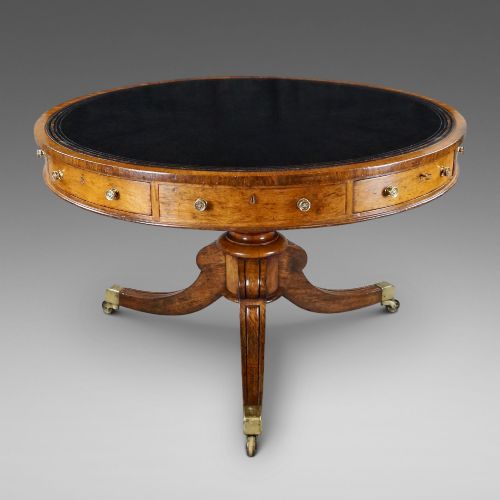
- A circular library table with a deep top containing drawers around the perimeter, usually supported by a central pillar and tripod base. It was designed to stand in the centre of a room.
- Partners desk
- A large desk designed for two people to work opposite one another, featuring drawers and cupboards accessible from both sides. These pieces represent the most substantial scale of nineteenth-century workspace furniture.
- Centre table
- A freestanding table finished on all sides so it can occupy the middle of a room rather than sitting against a wall. Regency examples often incorporate architectural stone or gilded mounts.
Regency Oak Library Table: Frequently Asked Questions
What is a regency oak library table?
A regency oak library table is a nineteenth-century freestanding desk or table designed for studying, reading, and storing books. These pieces showcase the architectural styles of the Regency, George IV, and William IV periods.
They often feature specialised timbers like pollard oak and burr oak, combined with practical surfaces such as inset leather. Their robust construction made them central fixtures in grand homes and scholarly rooms.
How were these tables used?
These tables served as functional workspaces for reading heavy folios, writing correspondence, and organising documents in private libraries. Drum tables and centre tables allowed books and papers to be accessed from multiple positions around the room.
Larger partners desks accommodated two people working simultaneously face-to-face. Their central placement in rooms highlighted their dual role as architectural statements and practical furniture.
How do I live with one?
Living with a regency oak library table requires placing it where its proportions can be appreciated, often in the middle of a room as a centre table. The durable oak timber handles daily use well, though leather writing surfaces benefit from careful maintenance away from direct sunlight.
They anchor a study or living space, pairing naturally with traditional seating and adequate lighting for reading. Their deep drawers provide practical storage for modern stationery or household items.
How do I tell periods apart?
Distinguishing periods involves looking at the shift from restrained Regency elegance to the broader scale and heavier ornamentation of the George IV and William IV eras. Early nineteenth-century pieces often rely on subtle veneers and clean lines, while later variations introduce bolder architectural mounts and dense timbers.
Material combinations also offer clues, as specific uses of pollard oak or giltwood align with mid-nineteenth-century decorative shifts. Examining the underlying construction reveals how cabinetmaking techniques evolved across these decades.