
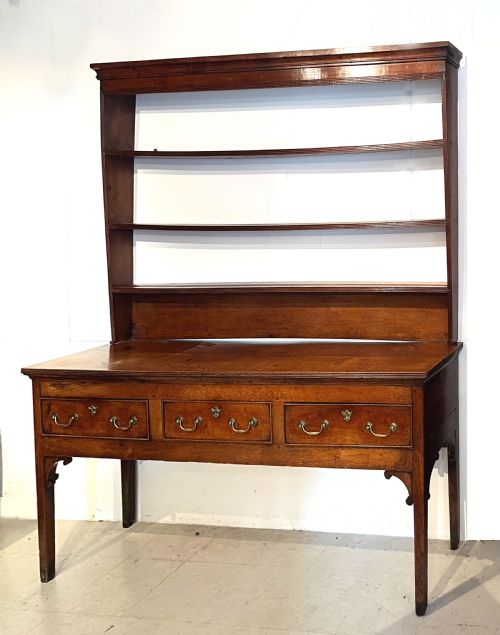


Traditional Oak Plate Display
Traditional oak plate display pieces bring warm country character and practical shelving into a kitchen, offering a sturdy home for ceramics.
Traditional Oak Plate Display
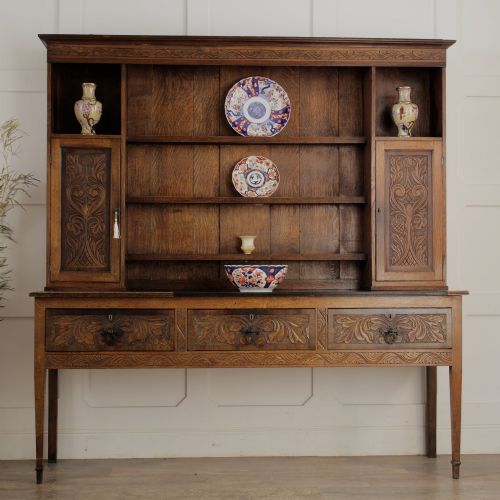
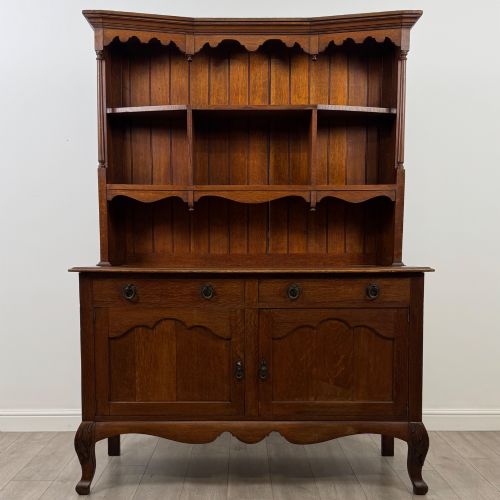
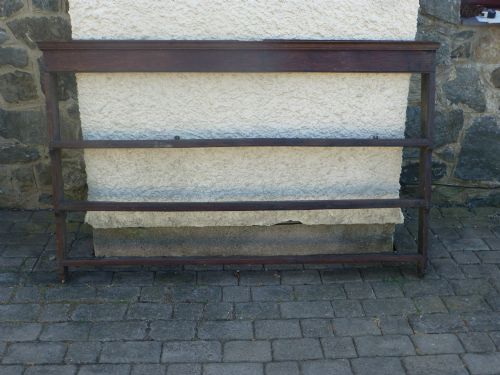
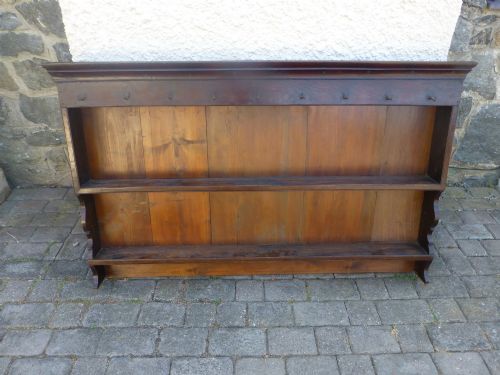
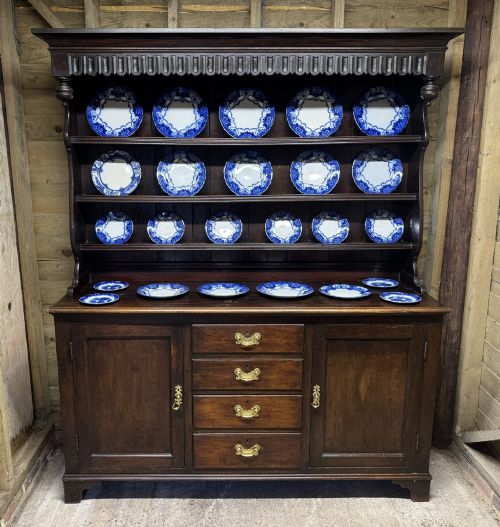
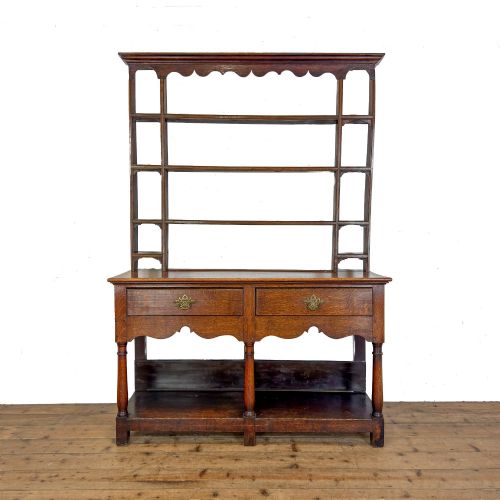
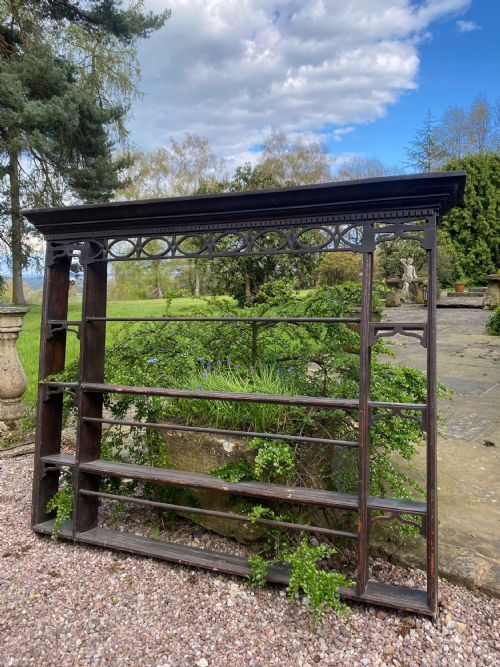
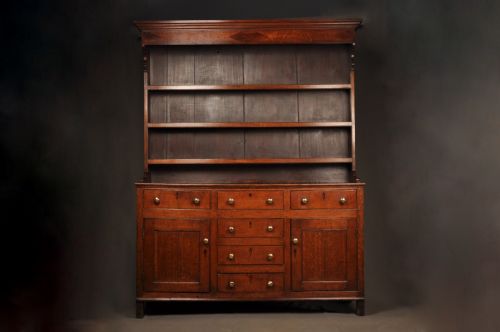
When you search for a traditional oak plate display, you are looking at utilitarian furniture designed to hold plates, platters and kitchenware in plain view. These pieces range from wall-mounted plate racks to large Welsh dressers featuring integrated display shelves above base cabinets or potboards.
The examples gathered here span several distinct periods, running from the eighteenth century through the Georgian and Victorian eras into early twentieth-century revivals like Ipswich oak. You will encounter cottage dressers of modest proportions alongside grander two-part pieces with breakfront drawers.
Most items combine a rack for upright plates with a lower surface or cupboard space for storage. They reflect English and Welsh country vernacular traditions, constructed to serve active rural kitchens for generations.
How they were made
Cabinet makers relied primarily on solid oak, frequently augmented with secondary timbers such as pine and mahogany for drawer linings or internal panels. Metal fixings including brass and iron appear on hinges, hooks and drawer pulls.
Construction techniques followed traditional joinery methods suited to heavy domestic service, utilising pegged joints, panelled doors and sturdy plate rails. Surfaces show the natural grain of the wood, sometimes finished with stained oak treatments or left in a waxed state.
Bone handles occasionally pop up on these drawers, proving that even kitchen cupboards appreciated a touch of ivory-trade luxury.
What varies in quality
Quality in these pieces rests upon the integrity of the timber and the proportion of the design. Early eighteenth-century examples with original plate racks and potboards display greater restraint and balance than later revival pieces.
Finer items exhibit careful selection of figured oak and harmonious proportions between the open shelving above and the enclosed storage below. Alterations to racks or mismatched upper and lower sections lower the integrity of a dresser.
The Traditional Oak Plate Display Glossary
- Welsh dresser
- A traditional kitchen unit combining open upper plate shelves with a lower base of drawers and cupboards. This form originated in rural Wales before becoming popular across British country houses.
- Plate rack
- An open wall-hanging or top-section shelving unit fitted with vertical slats or grooves to display plates upright. These allowed wet ceramics to air dry after washing.
- Potboard
- An open lower shelf beneath a dresser base traditionally used for storing heavy pots and pans. Early eighteenth-century pieces frequently incorporated this open platform.
- Breakfront
- A cabinet design where the central section projects forward from the flanking sections. This configuration adds architectural depth to dresser drawers.
- Georgian country
- A furniture style spanning the eighteenth century characterised by honest vernacular construction and sturdy proportions rather than urban refinement.
Traditional Oak Plate Display: Frequently Asked Questions
What is a traditional oak plate display?
A traditional oak plate display is a piece of kitchen furniture designed to hold plates upright on open shelves, often forming the upper rack of a dresser.
These items were built to keep everyday ceramics accessible and dry in rural homes.
How do I date an oak dresser?
Dating relies on construction methods, timber patination and the style of the mouldings and drawer pulls. Eighteenth-century pieces show hand-tool marks and pegged joints, whereas twentieth-century revivals display machine-cut precision.
Hardware and secondary woods like pine also help narrow down the period of manufacture.
Were plate racks always attached to dressers?
Plate racks existed both as independent wall-hanging shelves and as the upper sections of two-part dressers. Many surviving pieces show signs of how the rack secured to the base.
Smaller standalone wall shelves served smaller kitchens where floor space was limited.
How do I care for antique oak furniture?
Keep antique oak away from direct heat sources and sudden humidity changes to prevent the timber from splitting. Regular application of a traditional beeswax feed maintains the lustre of the wood.
Avoid commercial silicones or heavy polishes that build up on the surface over time.