
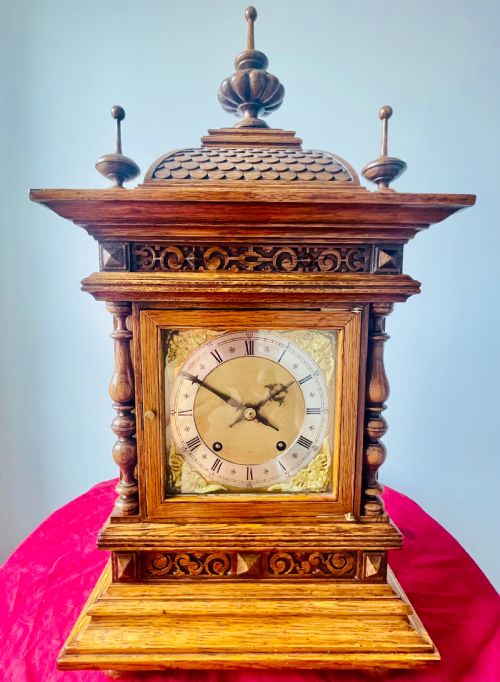
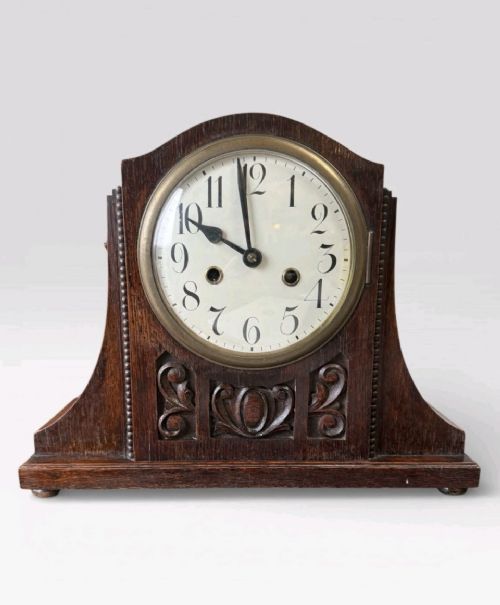


Traditional Oak Mantel Clock
A traditional oak mantel clock anchors a room with dense timber and steady movement, bringing the heavy presence of nineteenth and early twentieth century engineering to your shelf.
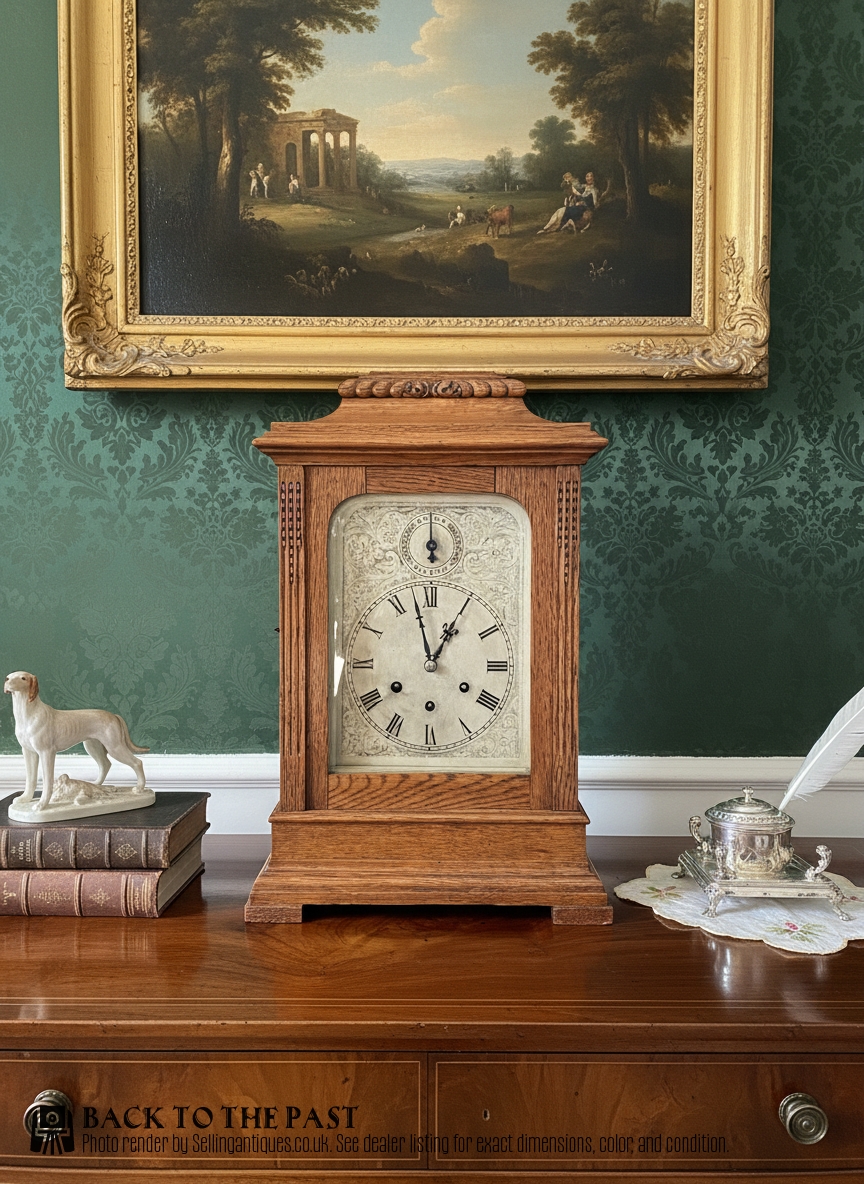
Traditional Oak Mantel Clock
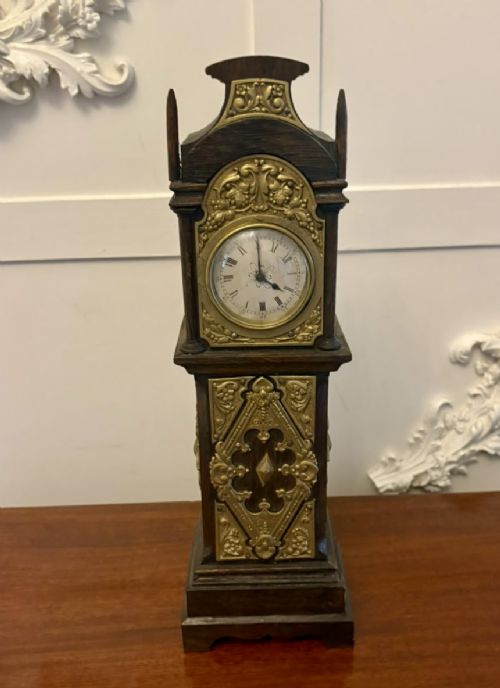
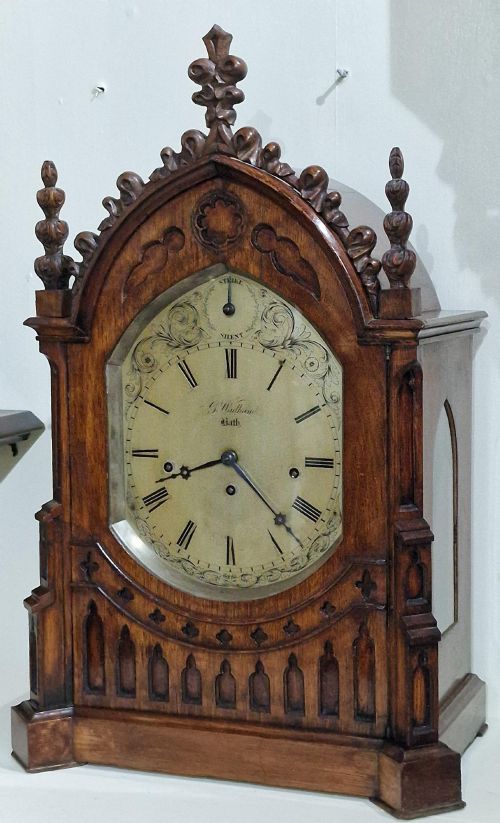
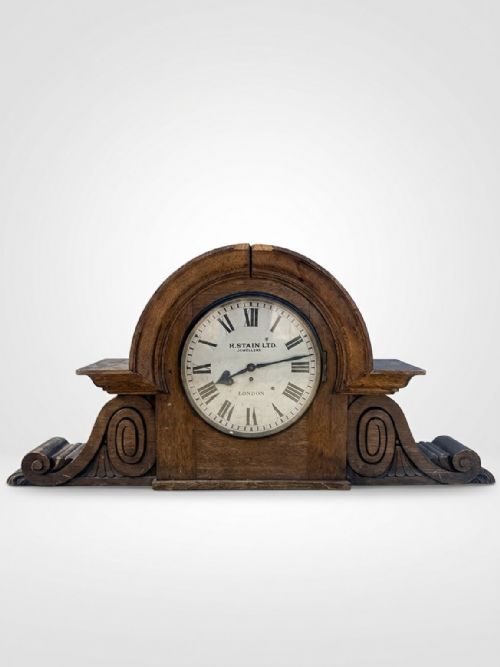
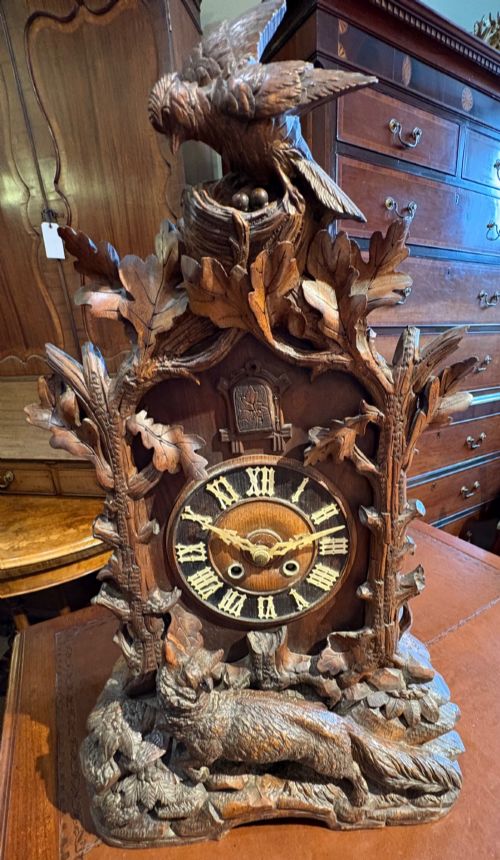
A traditional oak mantel clock is a domestic timekeeper housed in a wooden case designed to sit flat upon a fireplace mantel or shelf. The pieces on this page span the Victorian era, the Edwardian period, and the 1920s, showing a variety of regional British, German, and Black Forest origins.
The forms range from simple timepieces and architectural bracket clocks to imposing musical and quarter-striking variations. Oak is the primary wood, frequently paired with carved details, glass viewing doors, and brass fittings.
Materials and construction
The cases rely on solid oak and carved wood, sometimes combined with walnut or contrasting metal accents. Movements are mechanical, built from brass components, with enamel dials displaying the hours behind protective glass doors.
Makers utilised fusee movements, spring-driven eight-day mechanisms, and multi-train chimes to regulate time and sound the hours. Carved enrichments and architectural mouldings define the exterior aesthetic of the Victorian and Edwardian examples.
Distinguishing quality
Quality rests in the complexity of the movement and the crispness of the cabinetwork. Triple fusee and quarter-striking mechanisms represent higher technical ambition than basic time-only movements.
Cabinet quality shows in the depth of the oak carving, the condition of the enamel dial, and the integration of brass mounts. The weight of the timber and the precision of the joinery separate standard production from superior workshop output.
Winterhalder And Hofmeier·DeLa Salle And Christie·Jas Whitelaw Of Edinburgh·George Wadham
The Traditional Oak Mantel Clock Glossary
- Fusee
- A conical pulley used in mechanical clocks to maintain even power as the mainspring unwinds. This device ensures consistent timekeeping across the duration of the wind.
- Bracket clock
- A portable household clock originally designed to sit on a wall bracket to distribute sound effectively. Many later examples retained the name despite sitting on a mantel or table.
- Quarter-striking
- A mechanism that sounds the quarters of the hour on bells or gongs in addition to striking the full hour. It indicates a more intricate movement than a simple time-and-strike system.
- Enamel dial
- A clock face made by fusing powdered glass to a metal substrate at high heat. This creates a durable, glossy surface that resists fading over decades of use.
- Westminster chime
- A four-note melody played on gongs or bells to mark the quarters of the hour. It originates from the clock tower at the Palace of Westminster.
Traditional Oak Mantel Clock: Frequently Asked Questions
How do I wind a traditional oak mantel clock?
Use the appropriate key on the winding arbors found on the dial face, turning gently until you feel resistance. Do not overwind, as this can strain the mainspring.
Ensure you match the key size correctly to avoid damaging the square drive. Most mechanical movements require attention every eight days.
What is the difference between a timepiece and a striking clock?
A timepiece simply tells the time without any striking or chiming mechanism. It has a single winding arbor and fewer internal gears.
A striking clock includes additional gear trains to sound the hours or quarters. These require multiple winding holes on the dial to power the time, strike, and chime functions independently.
Where should I place a heavy oak mantel clock?
Choose a stable, level surface away from direct heat sources and damp environments. A sturdy mantelpiece or heavy sideboard provides the necessary support for dense timber cases.
Keep the clock out of direct sunlight to protect the oak finish and the enamel dial from gradual fading.
Why does my clock need to be level?
Mechanical clocks rely on a symmetrical escapement to regulate the swing of the pendulum or balance wheel. If the case tilts, the beat becomes uneven and the clock will stop.
Adjust the feet or shift the position slightly until the ticking sound has an even, steady rhythm.
How do I identify an Edwardian oak clock?
Edwardian clocks often feature lighter oak tones, cleaner architectural lines, and less heavy ornamentation than their Victorian predecessors. They frequently reflect simplified Arts and Crafts or Georgian revival tastes.
The interiors typically house reliable German or British spring-driven movements designed for domestic households.