

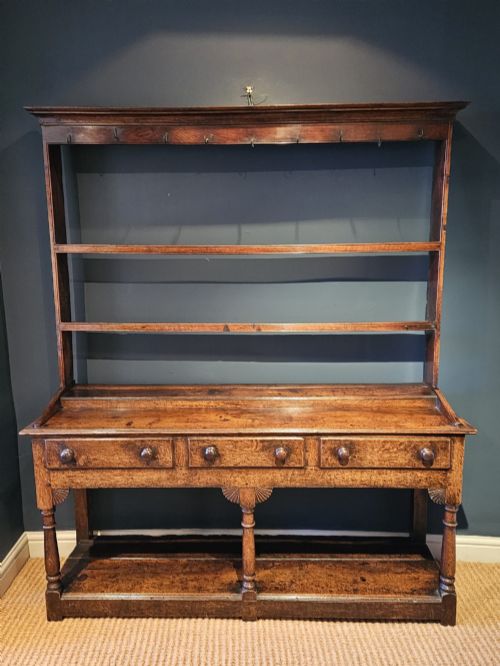
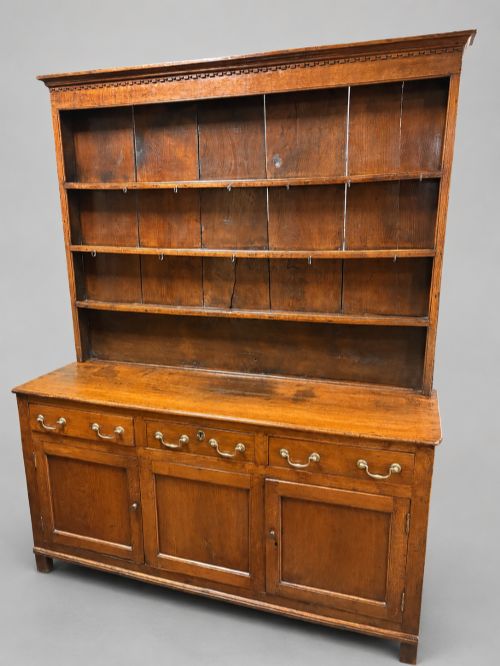
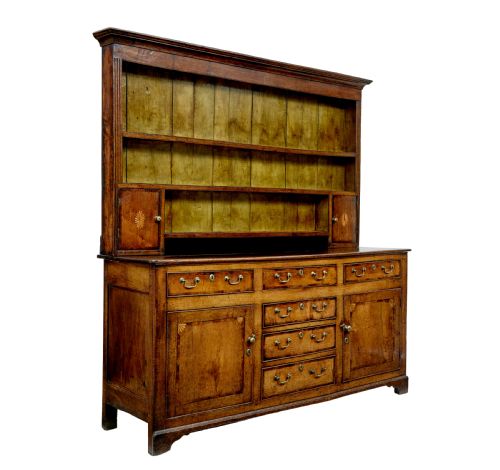
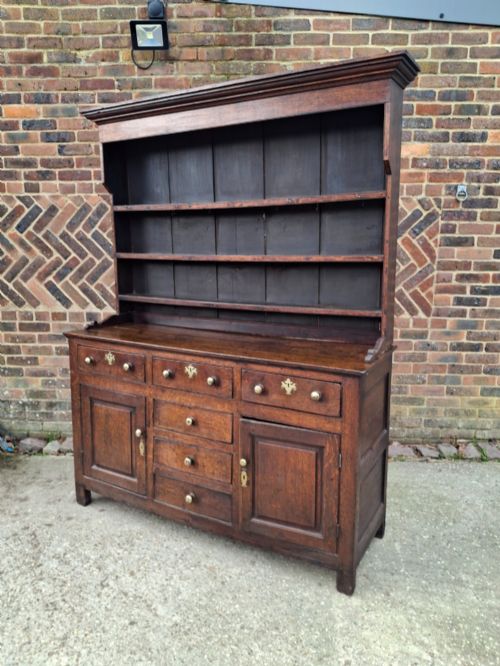

Traditional Oak Dresser Rack
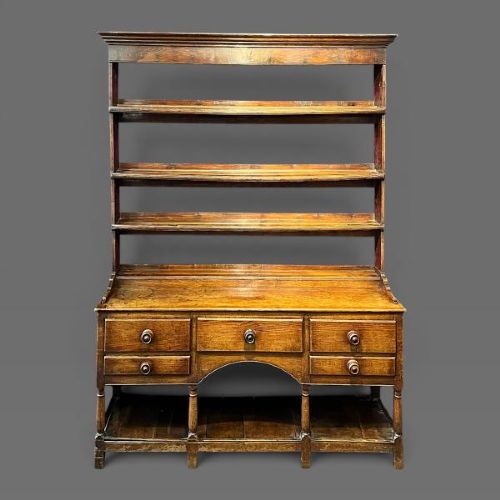
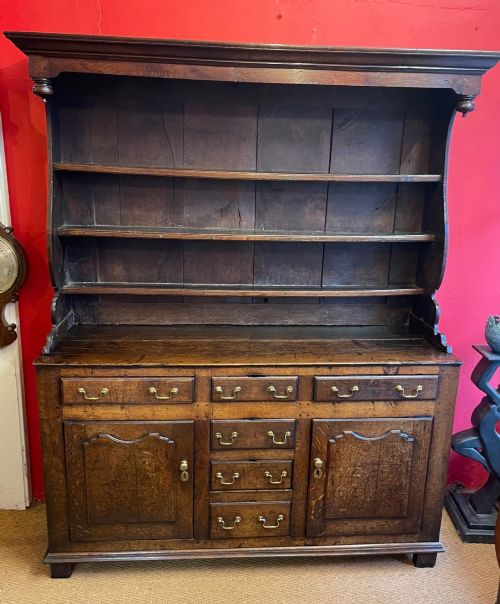
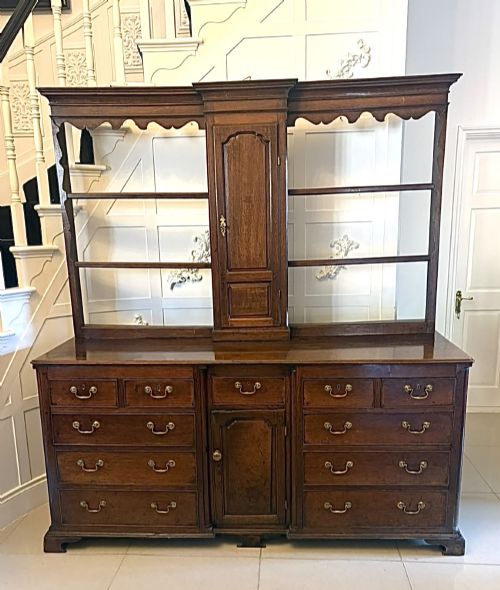
A traditional oak dresser rack brings domestic history into the kitchen, offering open shelving for plates and serving dishes.
Traditional Oak Dresser Rack
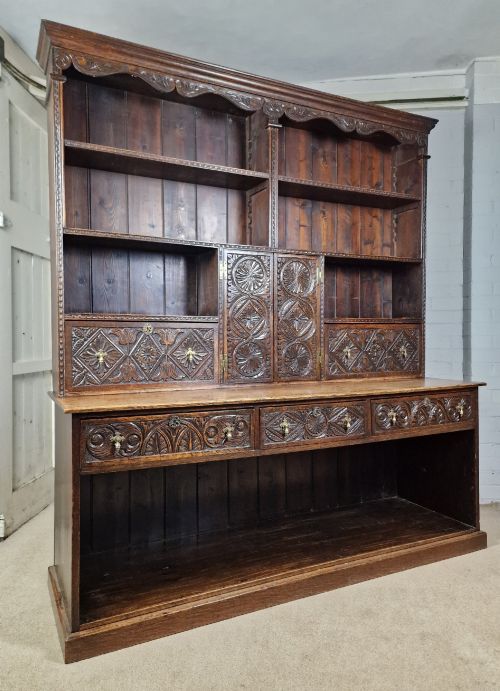
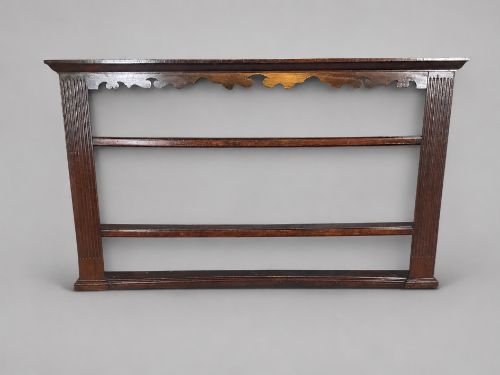
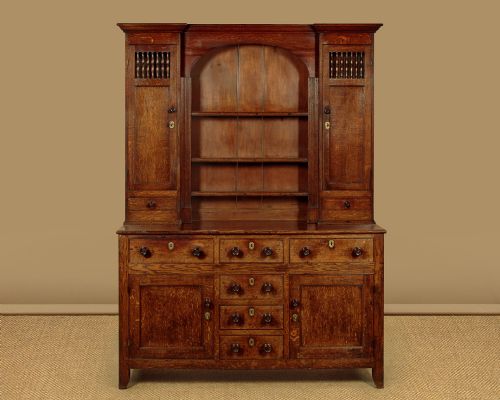
A traditional oak dresser rack forms the upper section of a kitchen storage unit or mounts directly to the wall as an open shelf. These pieces originate across various regional traditions, including Welsh vernacular and English country workshops.
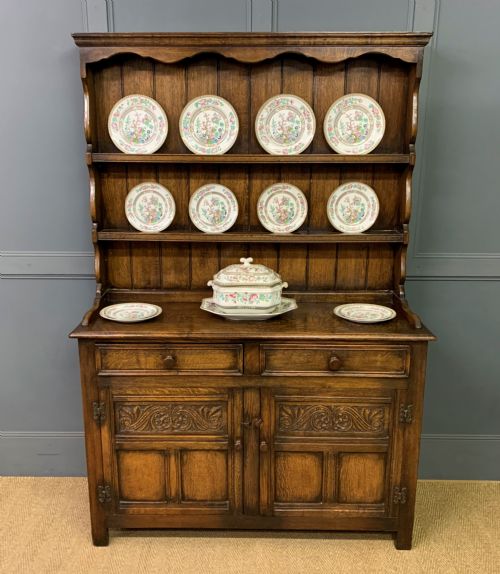
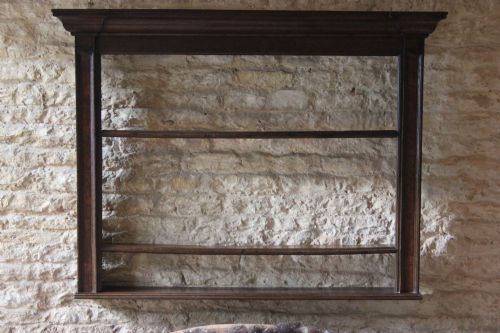
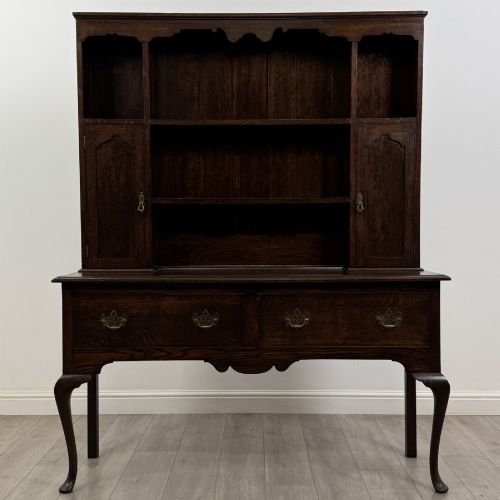
Most examples found here date from the eighteenth and nineteenth centuries, spanning the Georgian and Victorian periods. They range from wall-mounted plate racks to complete dresser combinations featuring open shelves above wooden bases.
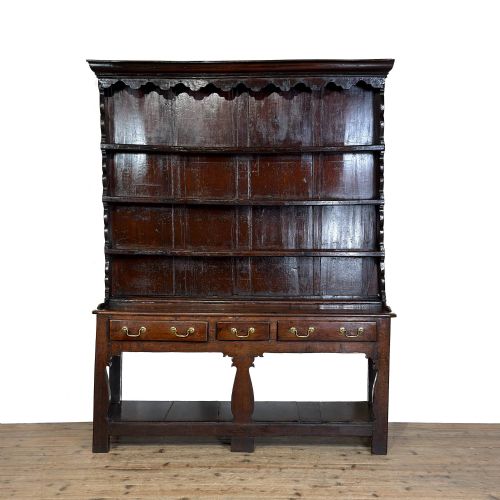
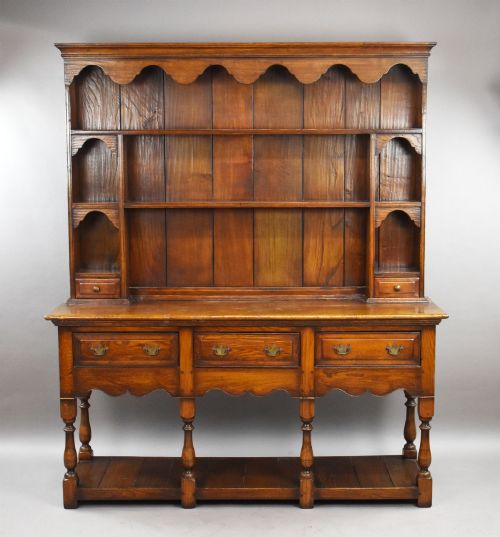
Regional variants such as Snowdonia and West Country forms appear alongside pieces with potboards and breakfront drawers. The primary function remains the display and storage of ceramics, particularly delftware and everyday kitchen pottery.
Materials and construction
Makers built these pieces predominantly using solid oak, often supplemented with secondary timbers like pine, elm, and iron metalwork for structural support and fixings. Brass hardware and hooks frequently appear on older wall-mounted racks for hanging mugs and utensils.
Joinery techniques reflect traditional country craftsmanship, utilising pegged mortise and tenon joints alongside hand-planed boards. Surfaces often display the natural grain of stained or golden oak, shaped by hand tools in regional workshops.
Traditional Oak Dresser Rack Retail Price Guide 2026
Typical asking prices for traditional oak dresser rack among the pieces listed under this phrase on Sellingantiques today, from the lower quarter to the upper quarter. They describe what is for sale here now, not the wider market.
Listings feature oak, pine, elm, and brass across Georgian and Victorian periods, with forms ranging from wall shelves to complete Welsh dressers.
Factors that distinguish examples
The degree of original surface patination and timber selection sets certain pieces apart from utilitarian kitchen furniture. Richly figured oak and untouched patinas resulting from centuries of domestic use indicate superior examples.
Structural integrity and the retention of original plate grooves, cornices, and hanging rails define the calibre of a rack. Pieces retaining their original matching bases or untouched wall-mounting points demonstrate higher historical preservation.
The Traditional Oak Dresser Rack Glossary
- Potboard
- A lower slatted shelf fitted between the legs of a dresser base, traditionally used for storing heavy pots and pans. This feature is common on eighteenth-century country examples.
- Delft rack
- An open wall-mounted shelving unit designed specifically to display tin-glazed earthenware plates upright against a backboard. Grooves along the shelves hold the plates securely in place.
- Welsh dresser
- A large kitchen sideboard paired with an upper plate rack, originating from Welsh rural households. These pieces often feature multiple drawers and open display tiers.
- Vernacular furniture
- Items made by local country joiners using regional styles and readily available materials rather than following metropolitan fashion. Oak remains the predominant timber in these traditional pieces.
- Breakfront
- A piece of furniture featuring a central section that projects forward from the flanking sides. This layout adds architectural depth to larger dresser designs.
Traditional Oak Dresser Rack: Frequently Asked Questions
What is a traditional oak dresser rack?
A traditional oak dresser rack is an open wooden shelving unit designed to hold plates, platters, and kitchenware. These pieces were historically mounted on walls or sat atop kitchen dresser bases.
They serve as both practical storage and display furniture, showcasing ceramics in dining rooms and kitchens.
How do I mount a wall rack safely?
Hanging a heavy oak plate rack requires locating secure wall studs or using heavy-duty fixings suited to the weight of solid wood and ceramics. Professional installation ensures the piece supports the load of heavy plates.
Ensure the structure is anchored firmly to prevent tipping, especially when loaded with heavy earthenware.
How do I date an antique oak rack?
Dating relies on examining the construction methods, tool marks, timber characteristics, and hardware. Eighteenth-century pieces often show hand-planed surfaces and pegged joinery.
Regional styles and the presence of original brass hooks or plate grooves also help narrow down the period of manufacture.
How do I care for antique oak furniture?
Maintain antique oak by dusting with a dry cloth and occasionally applying natural beeswax to nourish the wood. Avoid placing wooden furniture near direct heat sources or damp areas.
Consistent indoor humidity prevents the timber from splitting and preserves the historical patina.