



Traditional Oak Desk Cabinet
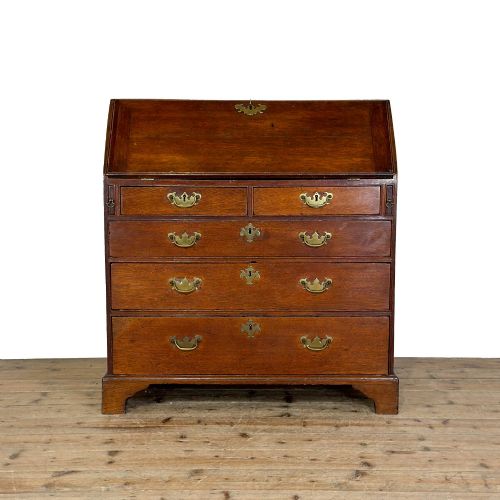
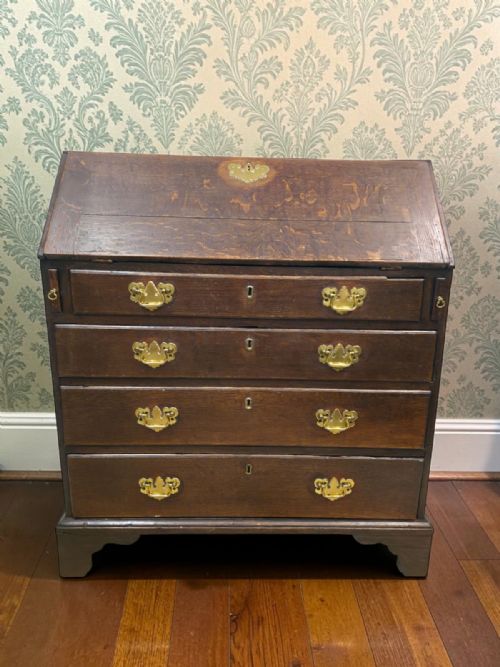
A traditional oak desk cabinet brings together timber, pigeonholes and a fall-front writing surface for daily correspondence.
Traditional Oak Desk Cabinet
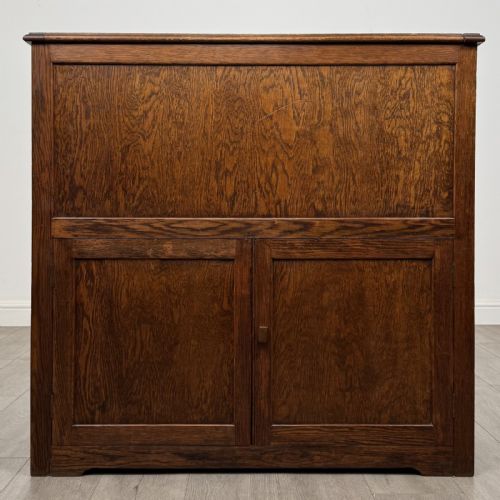
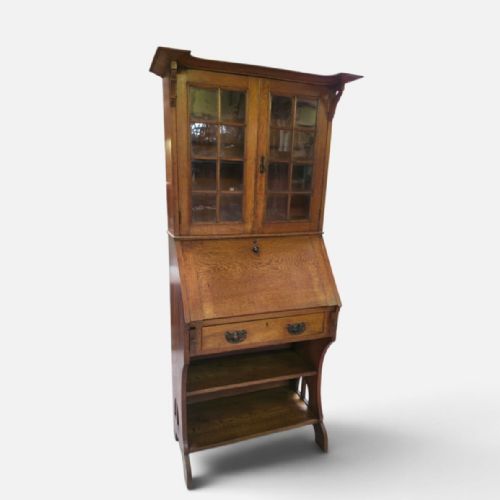
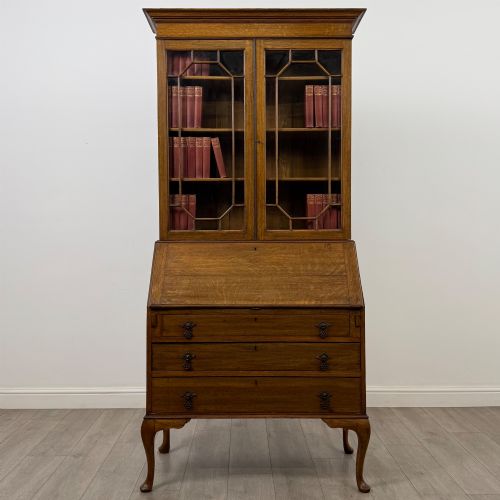
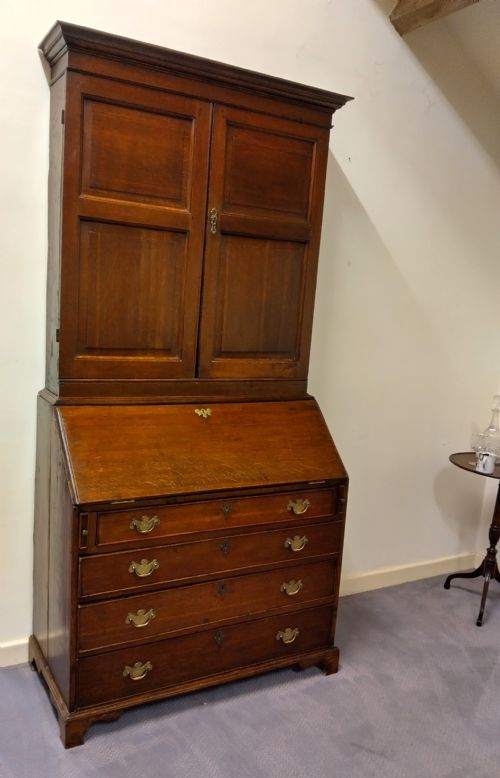
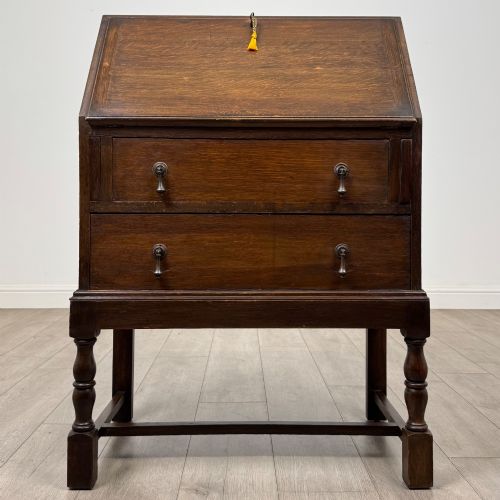
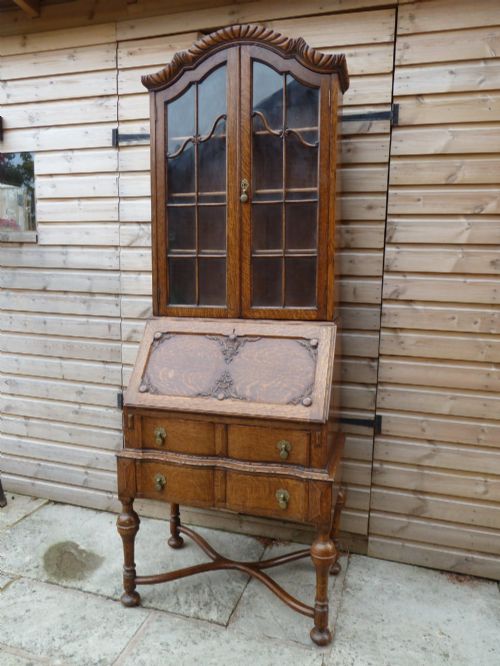
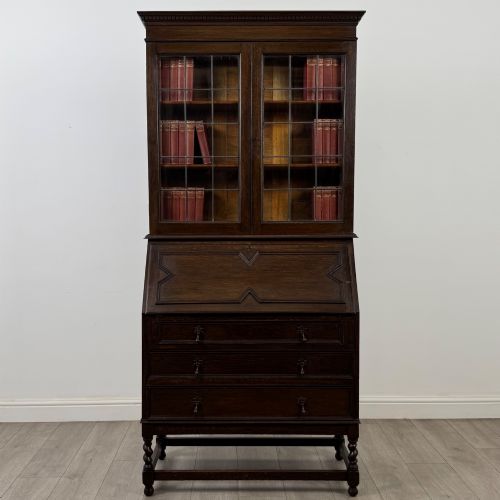
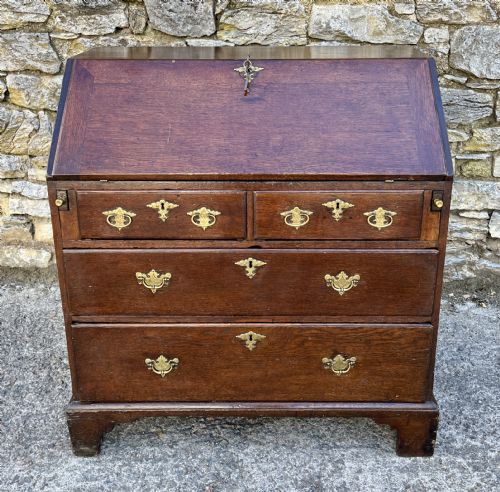
A traditional oak desk cabinet spans centuries of cabinet-making, from vernacular seventeenth-century examples to Edwardian and later revival styles. Buyers encounter fall-front writing bureaux, tall bureau bookcases with glazed doors, and compact stationery cabinets.
The Edwardian era and the nineteen-twenties contribute heavily to the current selection, often drawing on Jacobean and Georgian design vocabularies. These pieces combine practical storage with writing surfaces, pigeon holes and drawers.
Earlier pieces from the eighteenth and seventeenth centuries offer solid timber construction and simpler joinery. Vernacular pieces showcase the honest utility expected from early English oak furniture.
Materials and construction methods
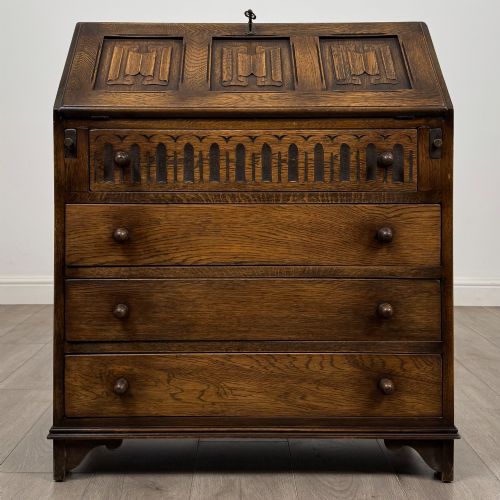
Solid oak and oak veneer form the structural foundation of these cabinets, complemented by wood inlay and carved details like linenfold panels. Brass hardware, glass panes in upper bookcase sections, and green baize writing flaps appear frequently.
Joinery methods range from pegged frames in seventeenth-century pieces to mass-produced dovetails in later Edwardian workshops. Carved decoration, revival mouldings and panelled doors define the surface treatment.
Listings feature oak material combined with brass, glass, and green baize across periods spanning the seventeenth century to nineteen-thirty.
Judging the quality of a traditional oak desk cabinet
Quality rests upon timber selection, the crispness of any hand-carving and the integrity of internal fittings such as pigeon holes and small drawers. Superior examples maintain smooth operation in fall-front mechanisms and drawers.
Later revival pieces lean on machine-cut joinery and applied mouldings, whereas older examples display the subtle irregularities of hand-planed surfaces and traditional timber movement.
The Traditional Oak Desk Cabinet Glossary
- Fall-front
- A hinged writing flap that pulls down to form a horizontal desk surface. It conceals internal compartments when closed.
- Pigeon holes
- Small open compartments fitted inside the desk interior for sorting letters and papers. They are often framed by tiny subsidiary drawers.
- Linenfold
- A style of carved wooden panelling that resembles folded vertical folds of fabric. It is commonly found on Tudor and Jacobean revival pieces.
- Bureau bookcase
- A two-part form comprising a lower writing desk and an upper shelving cabinet with glazed or solid doors. It unifies working and storage functions.
Traditional Oak Desk Cabinet: Frequently Asked Questions
What is a traditional oak desk cabinet?
A traditional oak desk cabinet is a piece of furniture combining a writing surface with enclosed storage, cupboards or bookshelves.
Most examples feature a hinged fall-front writing flap that conceals internal pigeon holes and small drawers.
How do I date a traditional oak desk cabinet?
Dating relies on examining construction techniques, hardware, timber thickness and stylistic revival cues.
Seventeenth and eighteenth-century pieces show hand-finished surfaces and pegged joints, whereas Edwardian and later examples often incorporate machine milling and revival styling.
Are these desks suitable for daily laptop use?
Many traditional oak desk cabinets provide adequate surface space for modern writing tasks and small laptops.
Buyers should check the internal depth of the fall-front flap and the clearance when closed to ensure proper fit for modern devices.
What maintenance does solid oak require?
Solid oak furniture benefits from steady room temperatures and protection from direct sunlight to prevent timber splitting.
Applying occasional natural wax helps nourish the wood grain and preserves the surface sheen without building up heavy chemical residues.