
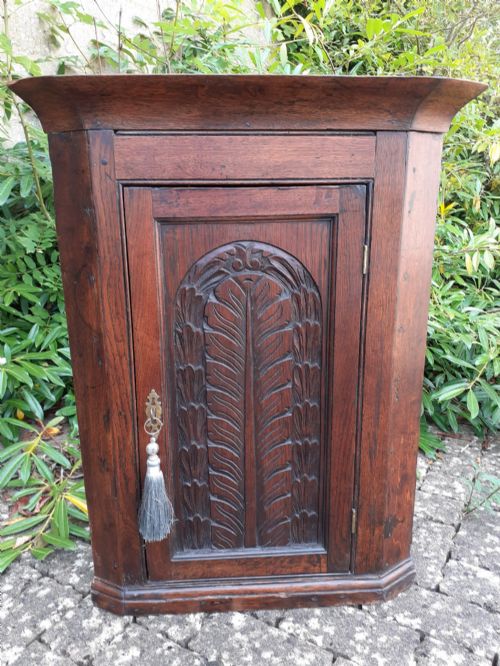
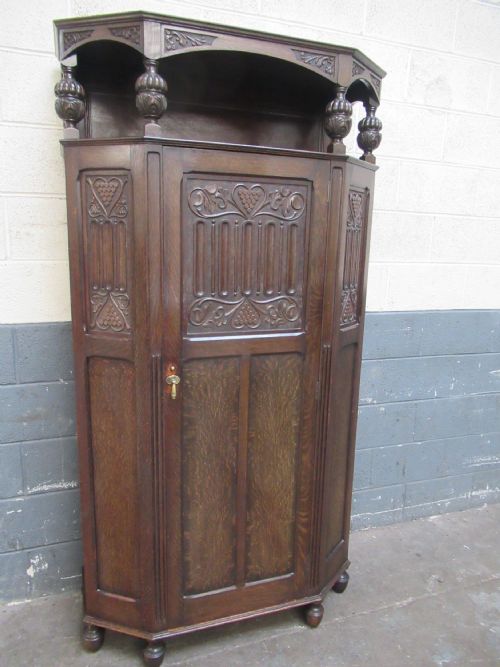
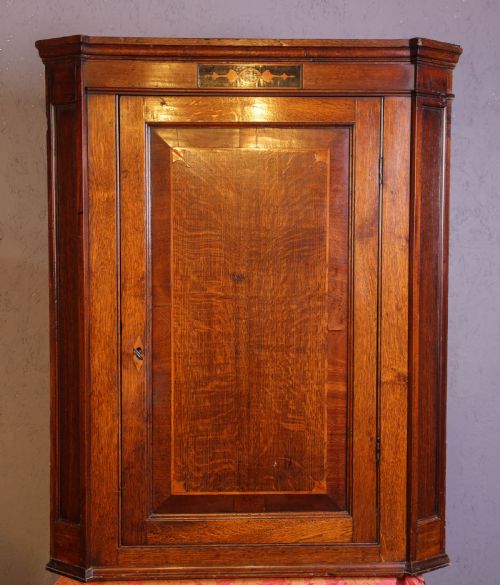


Traditional Oak Corner Cupboard
A traditional oak corner cupboard solves the perennial problem of dead space, offering solid timber storage with genuine period character.
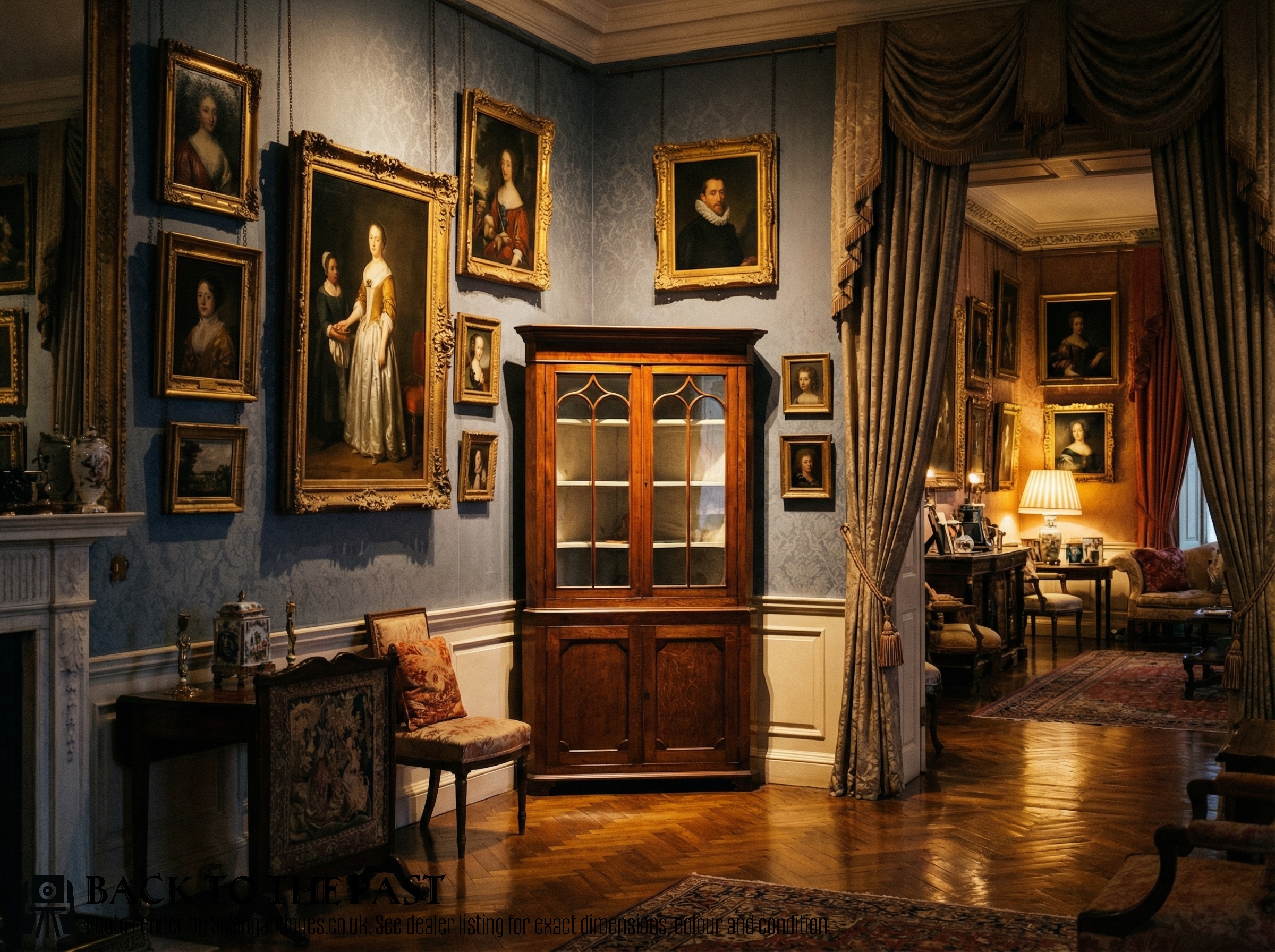
Traditional Oak Corner Cupboard
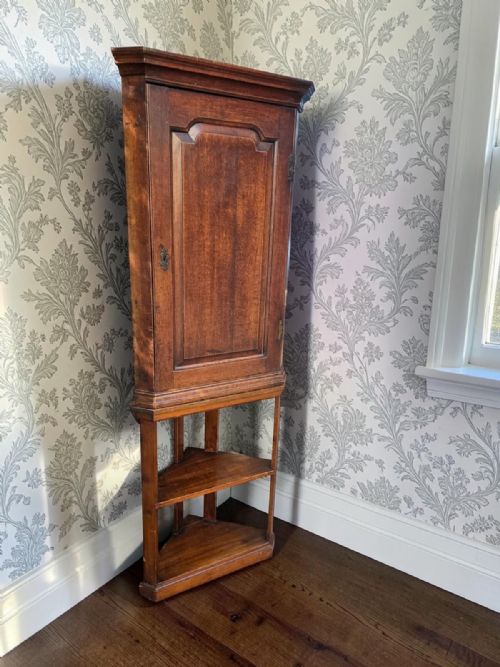
A traditional oak corner cupboard is a fitted or freestanding piece designed to slot neatly into the junction of two walls, making practical use of often neglected room geometry. The versions you meet most frequently on this page belong to the Georgian and Victorian eras, ranging from compact wall-hanging boxes to substantial floor-standing and standing models.
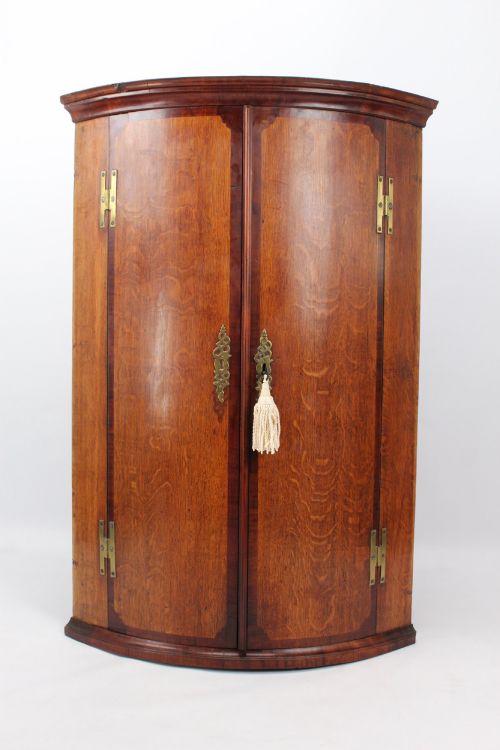
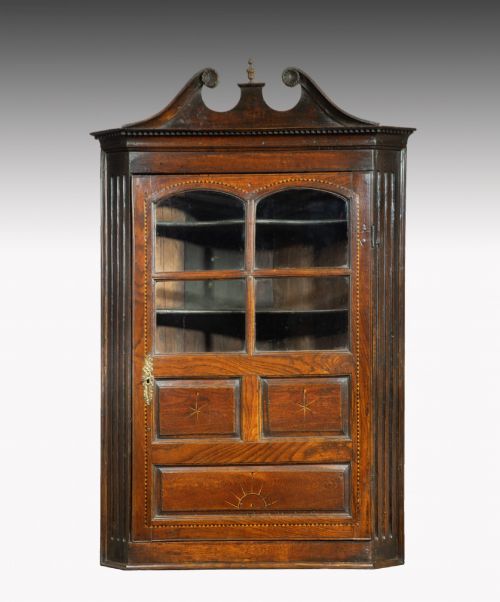
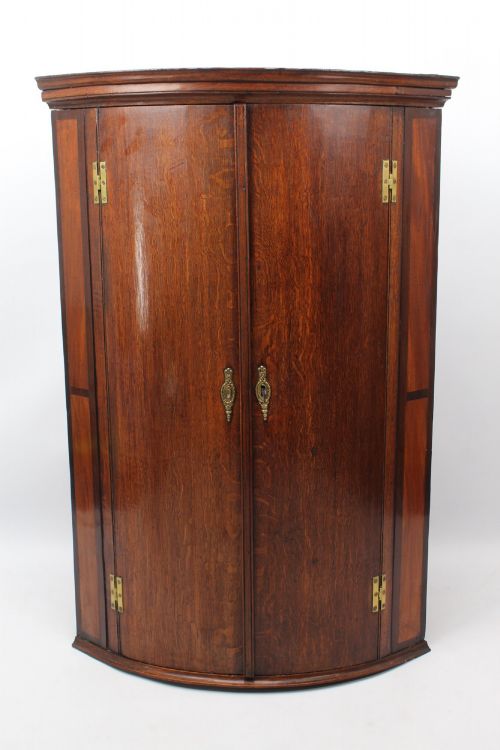
Many examples hail from the 18th century and the Georgian period, often showcasing panelled doors, bow fronts, and occasional contrasting details like mahogany crossbanding or wood inlay. Alongside standard corner cabinets, you will encounter pieces raised on stands, two-tier formats, and regional variations such as Welsh corner cupboards.
While primarily designed to house porcelain, glassware, or provisions, these cupboards bring substantial architectural presence to a room through visible grain and sturdy timber construction. Their evolution spans simple country pieces to more decorative urban iterations influenced by Jacobean revival or French provincial styles.
How they were made
Cabinet makers relied predominantly on solid oak, selected for its durability and prominent medullary rays, often pairing it with secondary timbers like mahogany for crossbanding, veneer, or satinwood stringing. Panels were typically pegged into sturdy frames using traditional mortise and tenon joints to accommodate the natural seasonal movement of the timber.
Hardware played a functional and decorative role, with heavy brass H-hinges, escutcheons, and working locks fitted to secure the heavy doors. Interior storage often featured shaped or butterfly shelves designed to fit the triangular footprint, sometimes supplemented by small internal drawers.
Traditional Oak Corner Cupboard Retail Price Guide 2026
Typical asking prices for traditional oak corner cupboard among the pieces listed under this phrase on Sellingantiques today, from the lower quarter to the upper quarter. They describe what is for sale here now, not the wider market.
Several cupboards hide diminutive internal drawers behind their main doors, perfect for secreting away forgotten love letters or spare tea caddy keys.
What varies in quality
The distinction between ordinary and superior examples rests heavily on the crispness of the timber selection and the restraint of decorative detailing. Pieces featuring well-figured oak panels, precise dovetailing in internal drawers, and subtle contrasting inlays command greater admiration than plain utility boxes.
Proportion and scale also dictate the standing of a piece within its type, particularly where cornices, bow fronts, or integrated stands are involved. The survival of original brass furniture, working locks, and undisturbed interior surfaces further separates standard workshop output from exceptional cabinet work.
The Traditional Oak Corner Cupboard Glossary
- Bow front
- A convex, outwardly curved front facade that softens the sharp angles typical of corner furniture. This treatment adds visual weight and refinement to Georgian examples.
- Crossbanding
- A narrow strip of veneer applied to the borders of a door or panel so that the grain runs perpendicular to the main body. It provides a neat framing effect, often utilising mahogany against an oak background.
- Hinges
- Metal fastenings securing the doors to the frame, frequently taking the form of decorative brass H-form or butterfly designs on period cabinetry.
- Inlay
- The technique of inserting pieces of contrasting timber, such as satinwood, into depressions carved into the oak base. This creates decorative surface patterns without altering the structural plane.
- Panelled
- Construction method where flat or raised wooden panels are set within a surrounding groove-fitted frame. This allows the wood to expand and contract safely with changes in humidity.
Traditional Oak Corner Cupboard: Frequently Asked Questions
How do I hang a wall corner cupboard?
Hanging a wall-mounted cupboard safely requires locating solid studs or masonry behind the plaster, as oak is heavy timber.
Most period pieces feature internal fixing holes or sturdy brackets through the back uprights to support the weight securely.
Were these cupboards used for food?
Many early corner cupboards functioned as corner larders or livery cupboards to store dry goods, spices, and domestic provisions out of reach of pests.
As dining habits shifted through the Georgian period, their role evolved into display cabinets for prized ceramics and glassware.
How do I tell Georgian from Victorian?
Georgian pieces generally exhibit simpler, cleaner architectural lines, hand-cut dovetails, and pegged frame construction characteristic of 18th-century workshops.
Victorian interpretations often show heavier proportions, machine-sawn elements, or revivals of earlier styles like Jacobean carving.
Do floor standing cupboards need securing?
Floor-standing and standing models are generally heavy enough to remain stable under their own weight on level flooring.
However, taller standing examples or those on slender stands benefit from discreet wall anchoring to prevent tipping, particularly in homes with children or pets.