
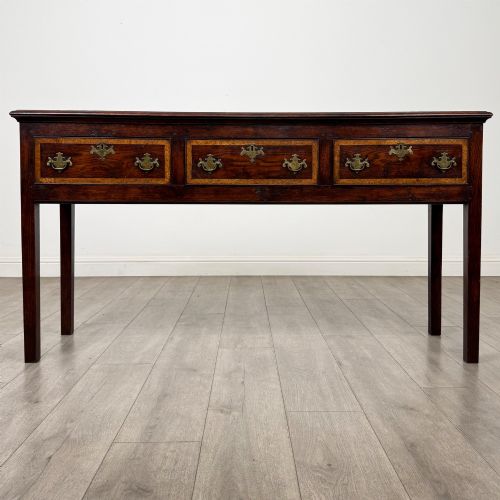
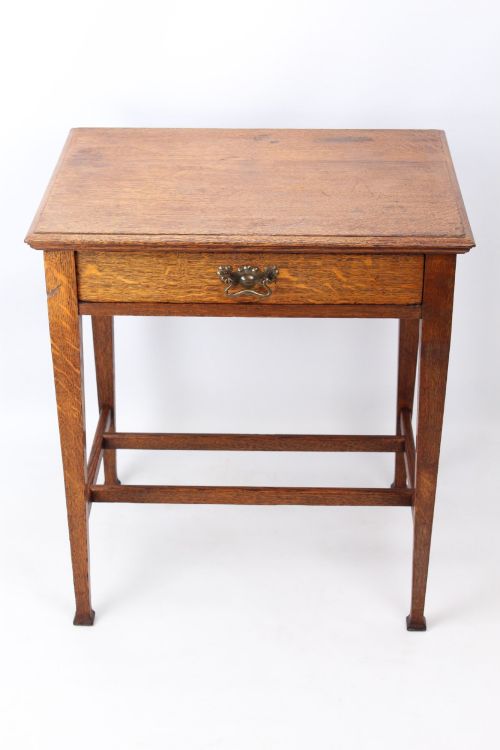
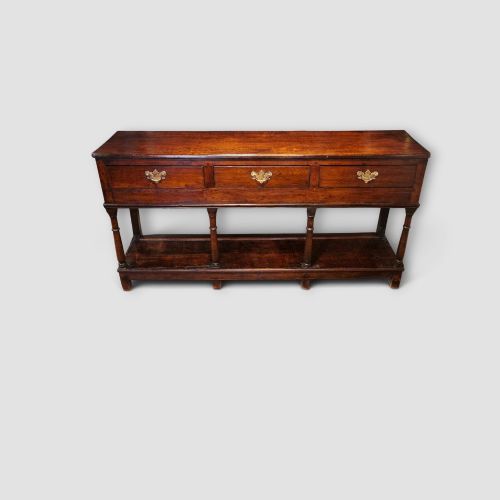
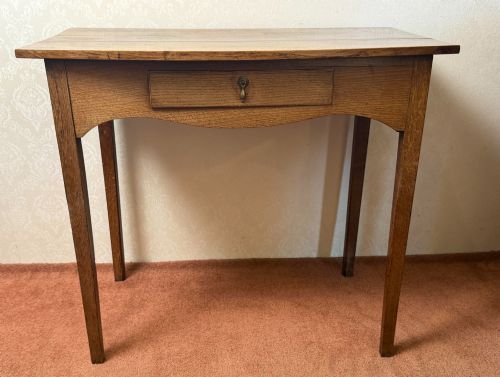
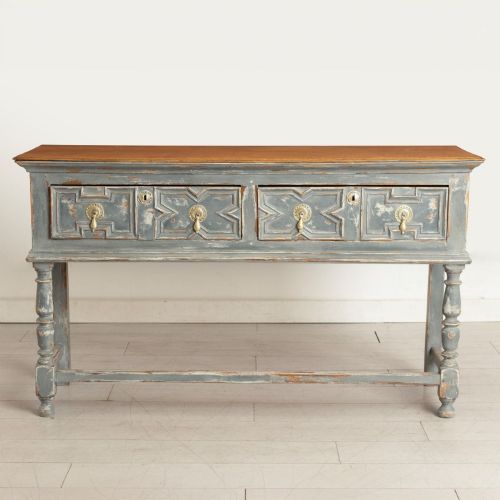
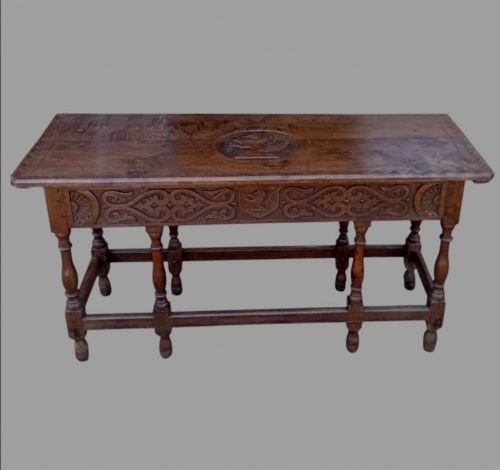
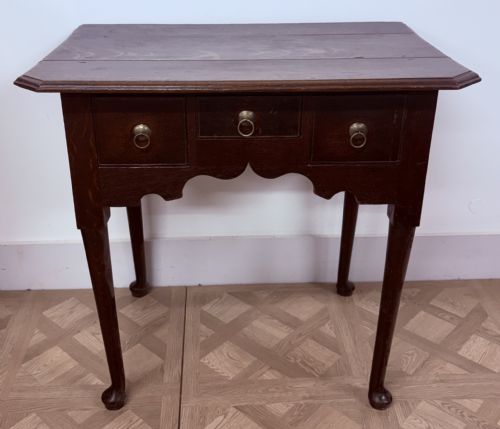
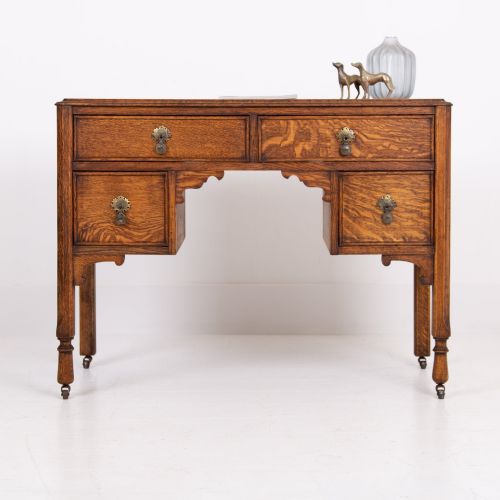
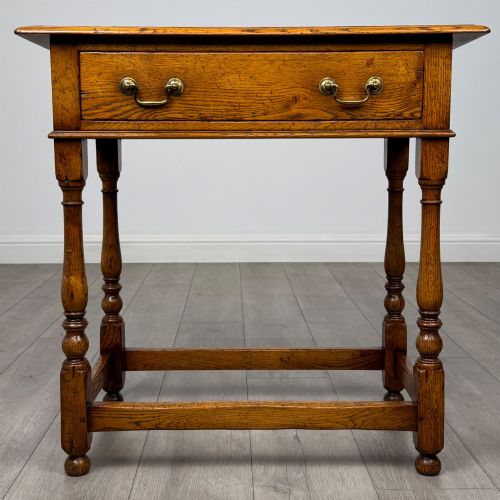
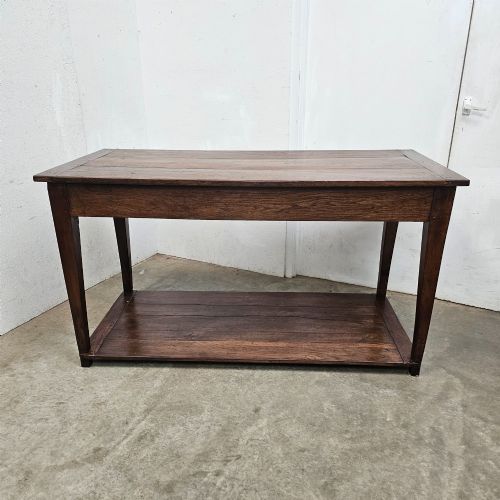
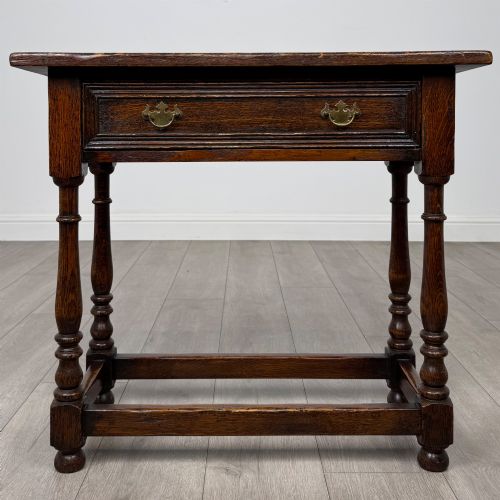
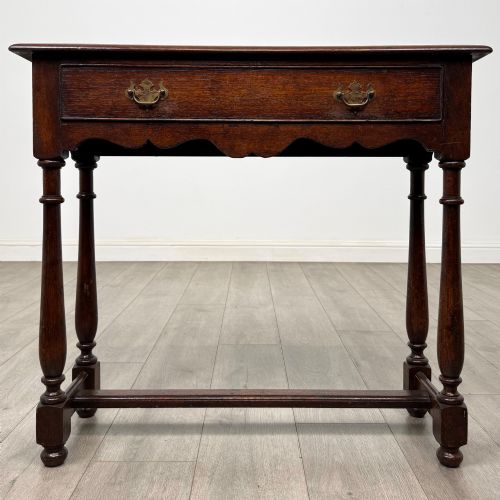
Traditional Oak Console Table
Traditional oak console table designs combine sturdy timber frames with practical proportions, offering enduring utility for hallways and living spaces.
Traditional Oak Console Table
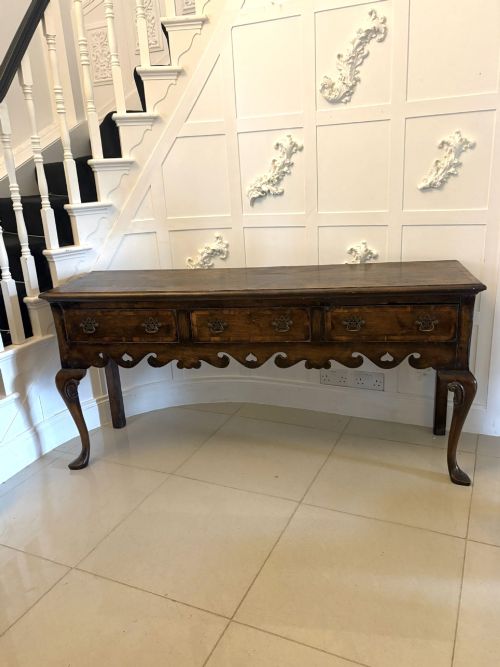
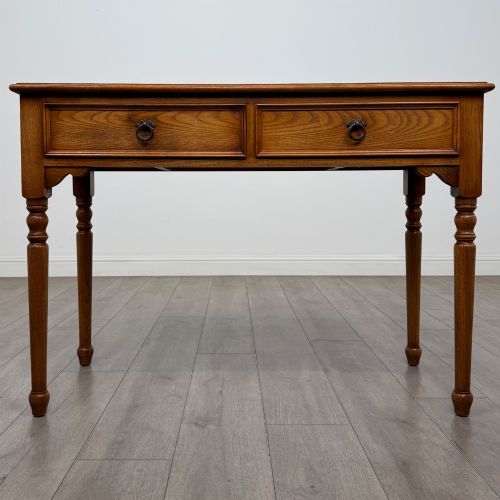
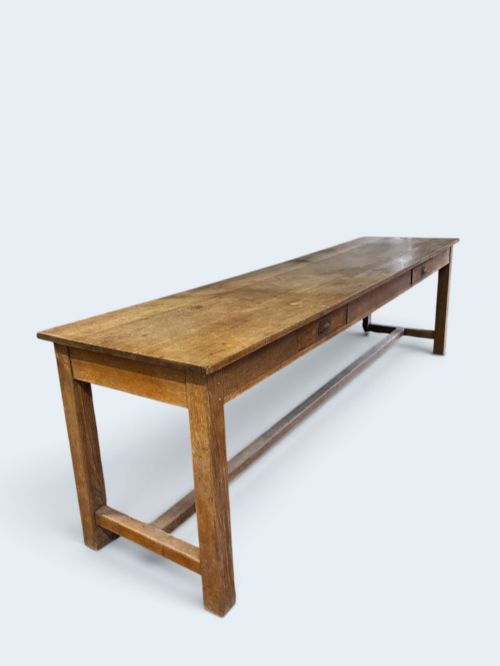
A traditional oak console table typically appears as a narrow side table, lowboy, or dresser base constructed from solid timber. These pieces emerge from periods ranging from the eighteenth century through the Edwardian era and the early twentieth century.
Buyers frequently encounter English country, Georgian, Jacobean revival, and rustic farmhouse styles within this selection. Forms include pieces with fitted drawers, potboards, and carved ornamentation suitable for hallways and reception rooms.
What varies in quality across traditional oak console table examples
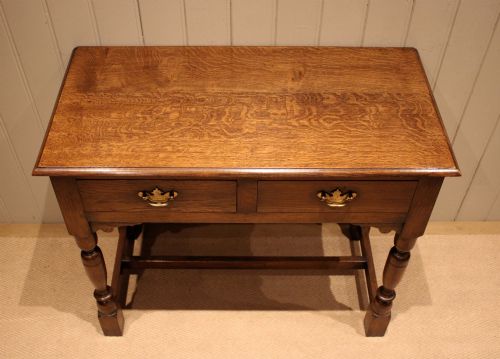
Quality depends on the selection of timber, the crispness of hand-carved details, and the integrity of the original joints. Pieces featuring figural grain and well-proportioned potboards stand apart from simpler utility items.
The degree of original hardware preservation and the subtlety of period alterations influence the overall character of each piece. Finer examples demonstrate superior timber seasoning and balanced proportions.
Listings span the eighteenth, nineteenth, and early twentieth centuries, featuring solid oak alongside brass, iron, and leather.
The Traditional Oak Console Table Glossary
- Potboard
- A lower open shelf fitted beneath a dresser base or console table, traditionally used for displaying pottery.
- Lowboy
- A small oak table with one or more drawers, originating in the eighteenth century and often used as a side table.
- Dresser base
- A sturdy lower cabinet or table section featuring drawers, sometimes adapted to serve as a console.
- Jacobean revival
- A nineteenth and early twentieth century style emulating seventeenth-century motifs, featuring heavy turned legs and geometric carving.
Traditional Oak Console Table: Frequently Asked Questions
Where should I place a traditional oak console table?
These narrow tables suit hallways, entrance passages, and living rooms where floor space is limited. Their shallow depth allows them to sit against walls without obstructing walkways.
They also function effectively behind sofas or beneath mirrors to display lamps and decorative objects.
How do I care for a traditional oak console table?
Maintain the timber by dusting regularly with a dry cloth and avoiding excessive moisture. Occasional application of suitable wax preserves the finish.
Keep tables away from direct heat sources and strong sunlight to prevent timber movement and fading.
Are these tables solid oak?
The pieces utilise solid oak for primary surfaces and structural frames, occasionally paired with secondary timbers like pine for internal drawer components. Timber selection varies according to the regional workshop origin.
Surfaces often display distinct natural grain and honest construction marks from their period of manufacture.
How do I distinguish eighteenth-century pieces from later revivals?
Earlier pieces display hand-cut joinery, pegged joints, and timber patination developed through centuries of domestic use. Revivals from the Edwardian period or the early twentieth century often employ machine assistance and lighter finishes.
Hardware placement and drawer construction methods also provide clues regarding the actual date of manufacture.