


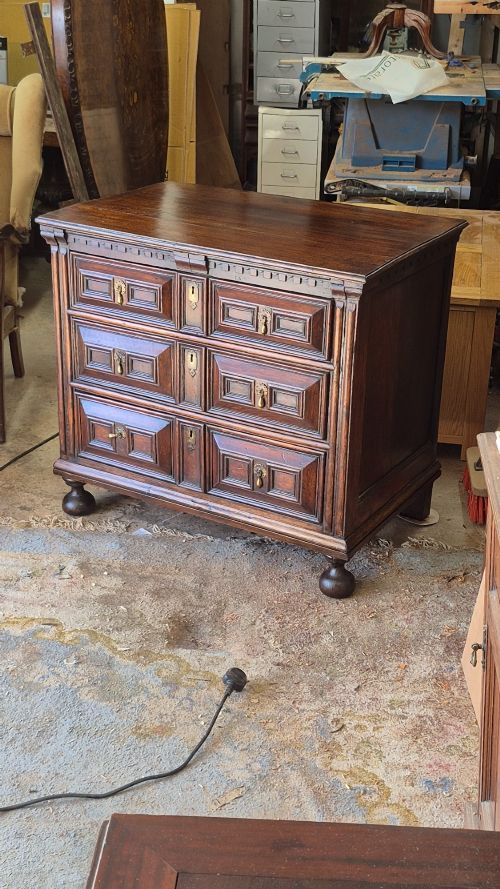

Traditional Oak Commode
A traditional oak commode serves as a sturdy storage chest, prized for its honest timber and enduring utility across centuries.
Traditional Oak Commode
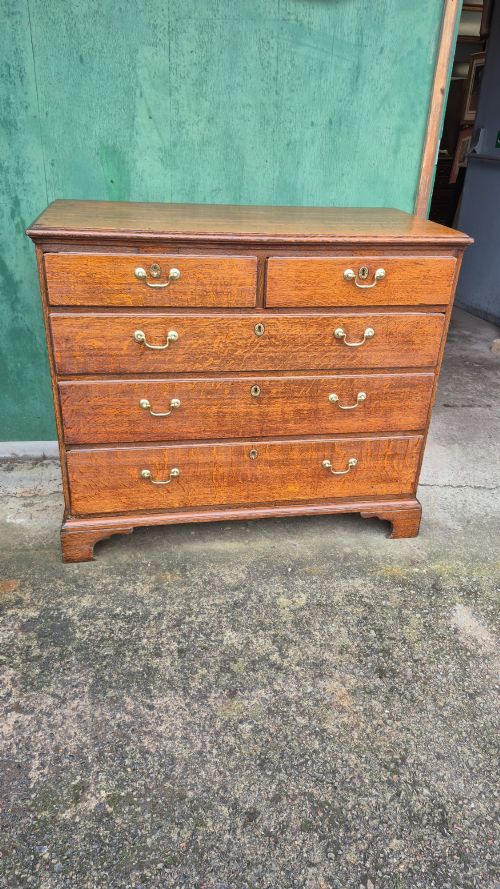
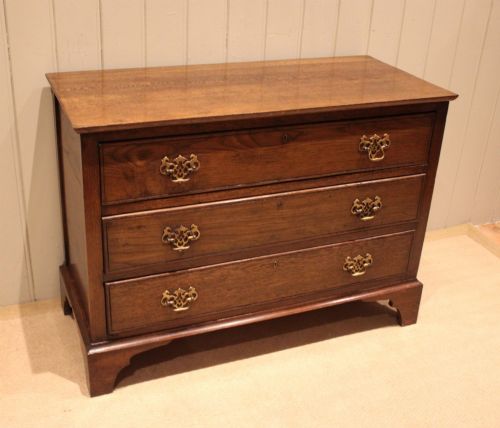
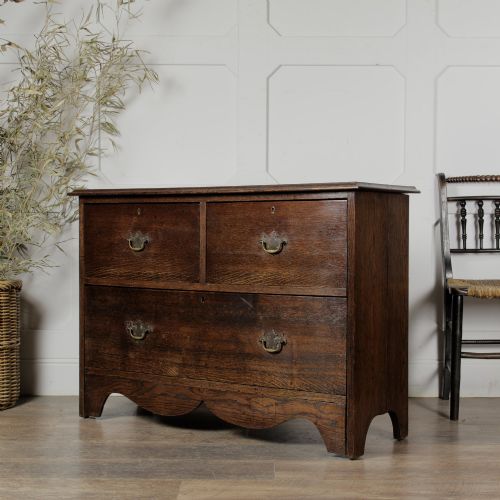
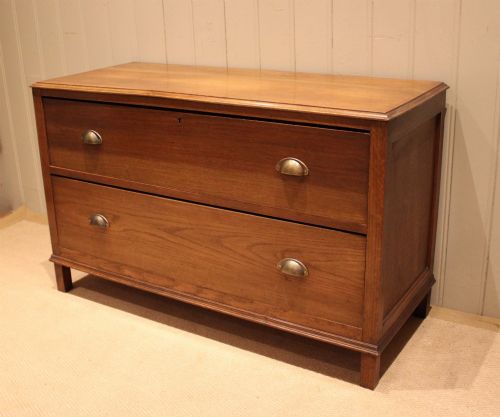
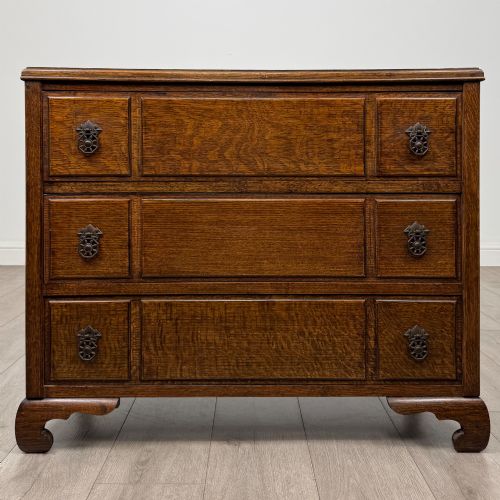
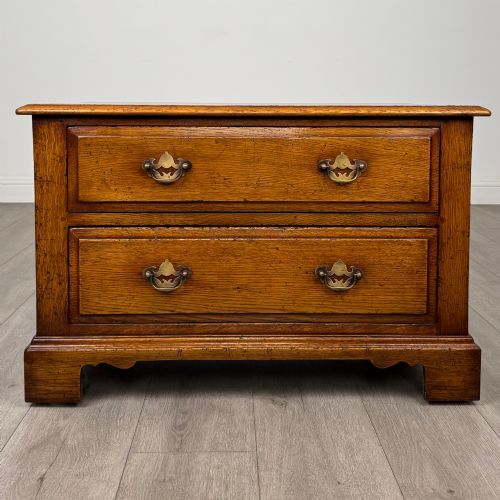
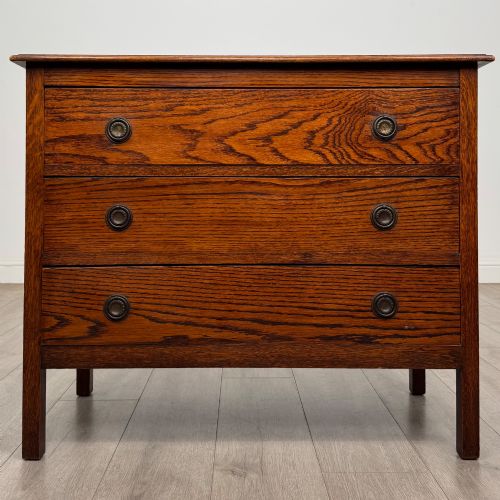
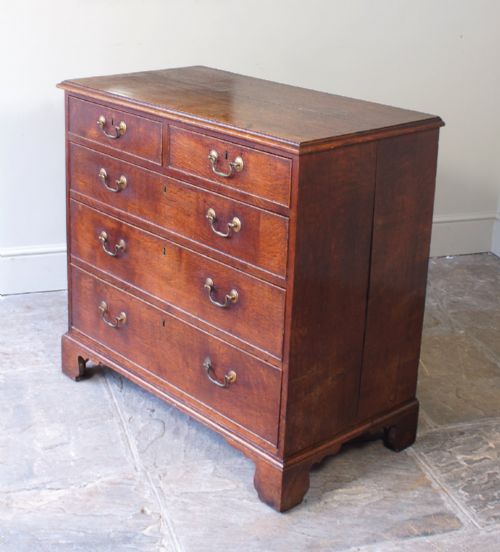
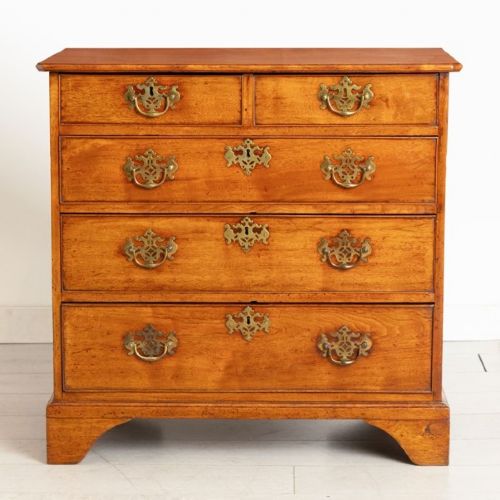
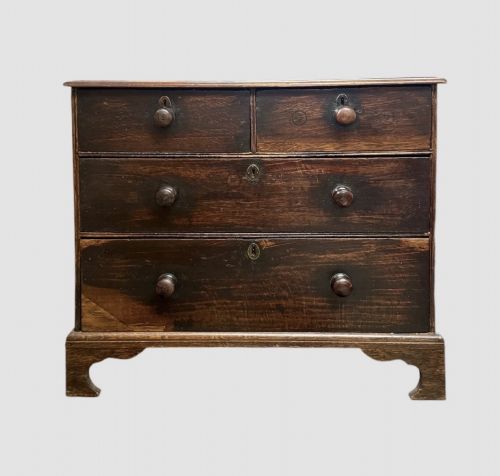
A traditional oak commode typically takes the form of a chest of drawers, appearing in low formats or multi-drawer configurations. These pieces emerge predominantly from the Georgian and 18th-century periods, alongside later Edwardian and 20th-century interpretations.
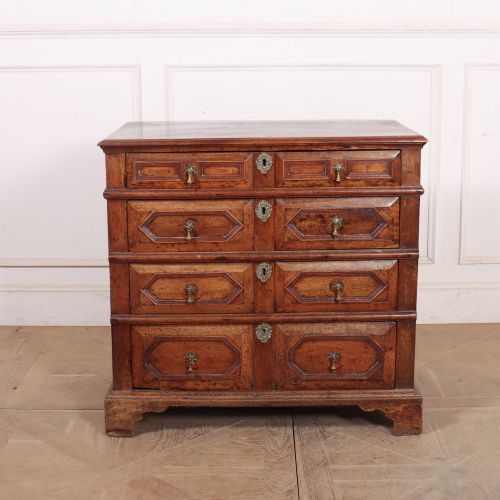
The selections on this page showcase English country craftsmanship, featuring straight fronts, panelled constructions, and occasional bachelors' forms. Buyers frequently encounter solid timber builds designed for practical domestic service.
How they were made
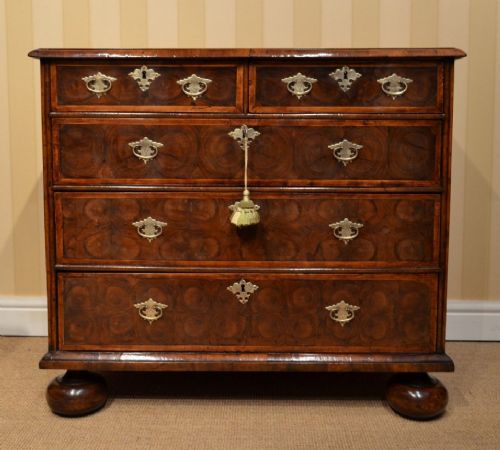
Carpenters utilised solid oak, frequently augmented by secondary timbers such as mahogany or walnut, alongside contrasting cross-banding and oyster veneers. Metal fittings such as brass handles and iron elements secure the drawers and enhance the structural integrity.
Construction methods range from early geometric panelling to later bracket feet and bracketed drawer linings. Surfaces display limed finishes, painted treatments, or polished wood grains that highlight the natural figure of the timber.
Listings span from the 17th century through the Georgian and Victorian eras into the 1920s, predominantly rendered in oak with brass and mahogany additions.
What varies in quality
Quality rests in the selection of the timber and the crispness of the carpentry, separating utilitarian pieces from finer cabinet work. Superior examples display thoughtful grain matching in veneers and well-preserved original handles.
The Traditional Oak Commode Glossary
- Bracket foot
- A simple foot shape resembling a bracket, commonly found supporting the corners of Georgian case furniture. It lifts the body off the floor while maintaining a stable base.
- Bachelor's chest
- A small chest of drawers featuring a fold-over top or a sliding board intended for writing. These compact pieces date predominantly to the 18th century.
- Oyster veneer
- Thin slices of branch wood cut transversely to produce circular or oval patterns resembling oyster shells. Cabinet makers applied these decorative veneers across geometric surfaces.
- Cross-banding
- A border technique where narrow strips of veneer are laid perpendicular to the main grain. This method frames the drawer fronts with contrasting timber directions.
Traditional Oak Commode: Frequently Asked Questions
What is a traditional oak commode?
A traditional oak commode is a practical chest of drawers constructed primarily from oak, featuring multiple storage tiers.
These pieces range from early 17th-century geometric designs to later Georgian and Edwardian iterations used in bedrooms and living spaces.
How do I date an oak commode?
Dating relies on examining construction techniques, hardware styles, and timber treatments visible on the piece.
Earlier examples often feature hand-cut joints and panelled sides, while 18th-century pieces introduce bracket feet and specific brass handle designs.
Are these commodes suitable for daily use?
Solid oak construction provides exceptional durability, making these chests robust enough for contemporary storage needs.
Their deep drawers accommodate clothing and linens while adding historical character to a modern interior.
What styles of oak commodes exist?
The available inventory includes Georgian, Jacobean, Edwardian, and English Country interpretations.
Variations encompass low profiles, bow fronts, bachelors' chests, and pieces accented with walnut inlay or painted finishes.