




Traditional Mountain Lake Painting
A traditional mountain lake painting brings the quiet scale of high water and distant crags straight into a room.
Traditional Mountain Lake Painting
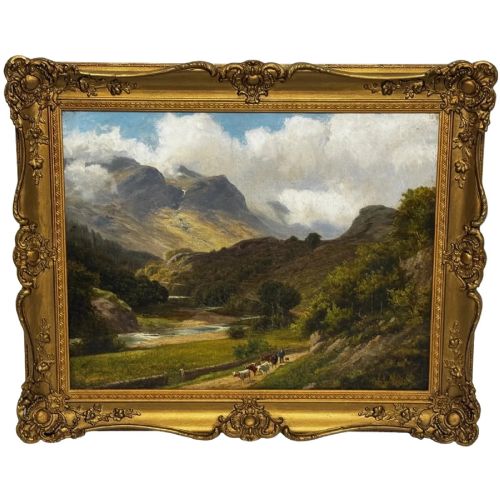
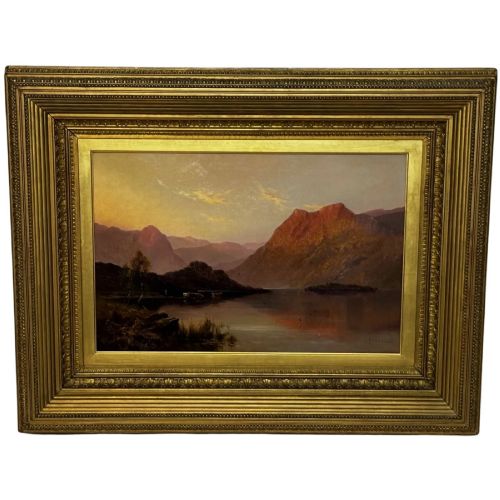
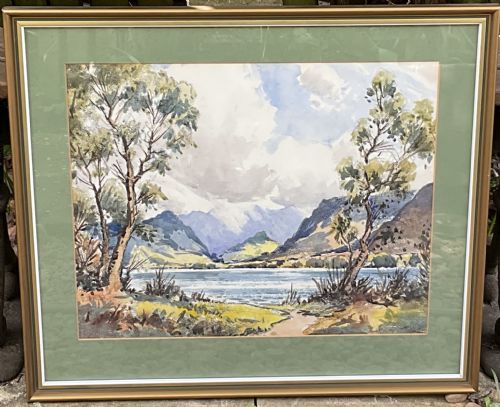
A traditional mountain lake painting captures sweeping vistas of highland waters, rugged peaks, and quiet valleys, often executed during the Victorian and Edwardian eras. These works range in scale from intimate Scottish lochs to grand Alpine scenes featuring snow-capped summits.
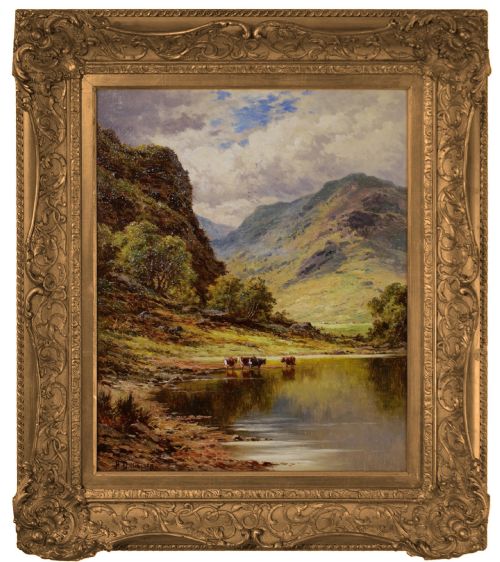
Most examples found here employ oil paint on canvas, housed within ornate wooden frames finished in gesso and gilt. The subjects stretch across British, European, and occasionally colonial landscapes, recording specific locations such as the Lake District or the Snowdon range.
Makers and painters represented include named artists working in traditional, romantic, and Italian school styles through the nineteenth and early twentieth centuries. The compositions frequently balance tranquil foreground water against dramatic, looming mountain ranges.
Factors of quality
The distinction between standard works and finer pieces rests upon the handling of light, atmospheric perspective, and topographical precision by the painter. Superior examples capture shifting weather, such as passing showers over peaks or sunset warmth, with confident brushwork.
The integrity and originality of the gesso and giltwood frame also influence the overall standard of the piece. Frames matching the exact period of the canvas without heavy restoration retain greater integrity.
Geese frequently paddle across the rivers and lakes of these tranquil Victorian scenes, adding a touch of domestic life to vast mountain ranges.
Alfred Fontville de Breanski Jr·Henry H Parker·Frank Hider·Charles Leslie·Giulio Cecchini·John Douglas Perrett·Stephen Enoch Hogley·Alfred de Breanski Snr·Benjamin Williams Leader·William Mellor·Samuel Hart Turpin·Percy Lancaster·Charles Pettitt
The Traditional Mountain Lake Painting Glossary
- Gesso
- A plaster-like mixture applied to wooden frames as a smooth base before gilding. It allows for crisp moulding of decorative details.
- Giltwood
- Wood that has been coated with gold leaf or a metallic finish. It provides a reflective border that frames the dark tones of an oil painting.
- Oil on Canvas
- Pigment suspended in drying oil applied to a woven fabric support. This combination offers durability and rich colour depth.
- Romanticism
- An artistic movement focusing on emotion, individualism, and awe of the natural world. It heavily influences nineteenth-century mountain landscapes.
Traditional Mountain Lake Painting: Frequently Asked Questions
How do I date a mountain lake painting?
Dating relies on the style of the canvas, the method of stretching, and the construction of the accompanying gesso and giltwood frame. Victorian and Edwardian works often carry signatures, exhibition labels, or titles inscribed on the reverse.
Changes in painting technique and pigments also provide clues. Nineteenth-century British landscapes frequently document specific regional tours and sketching spots.
Where should I hang an oil painting?
Choose a wall away from direct sunlight and damp conditions to protect the oil paint and canvas from degradation. Stable indoor temperatures prevent the gesso frames from cracking.
Lighting from a dedicated picture lamp enhances the reflective quality of the gilt frame and brings out the depth of the landscape.
What subjects appear in these landscapes?
These works typically depict Scottish lochs, the Lake District, Alpine ranges, and Italian lakes. Scenes often include still water reflecting mountains, distant peaks, and occasional figures or animals.
Weather effects such as passing summer showers or sunset light over crags are recurring themes in nineteenth-century compositions.