


Traditional Mountain Art
Traditional mountain art brings the scale and weather of peaks into rooms through oil on canvas, watercolour and carved jade.
Traditional Mountain Art
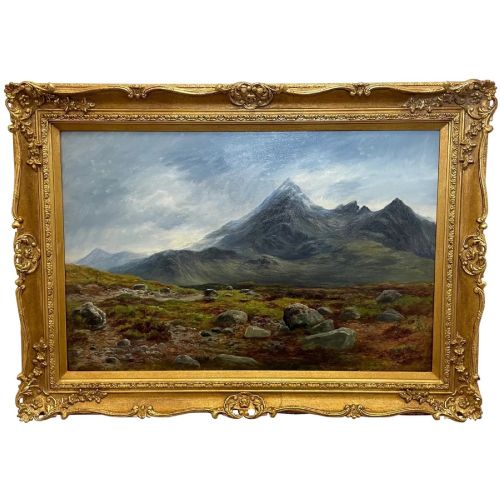
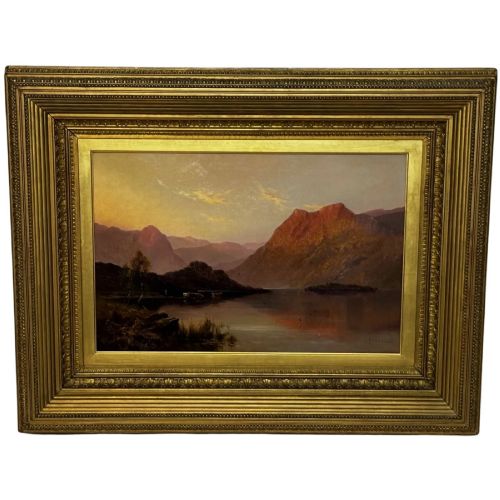
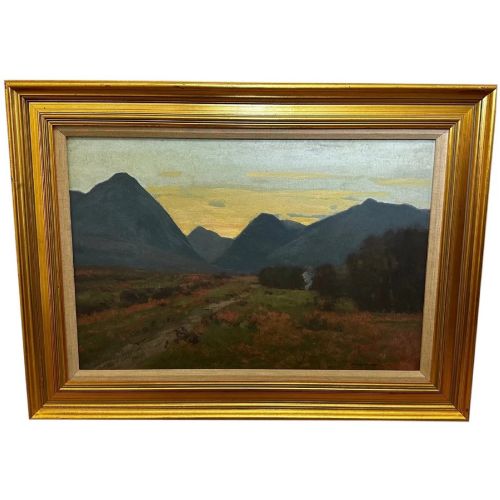
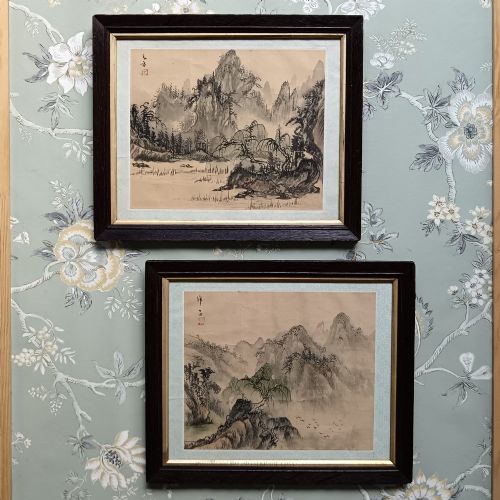
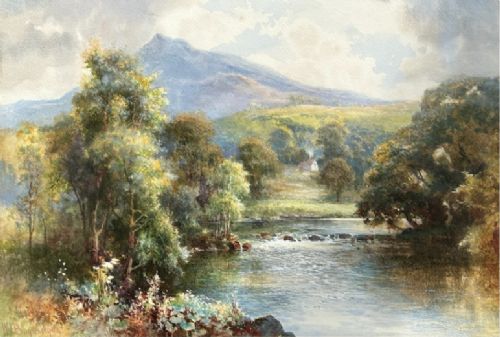
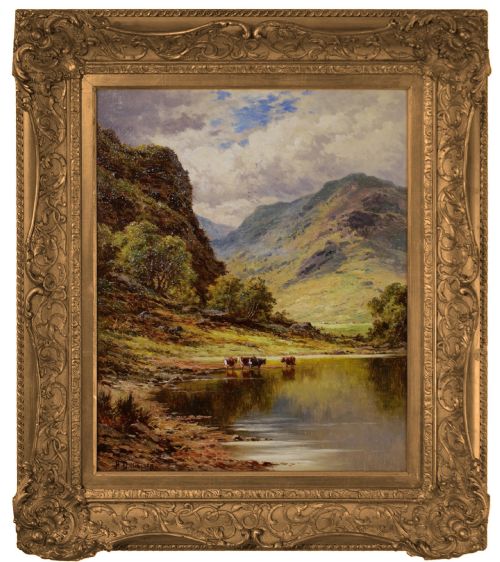
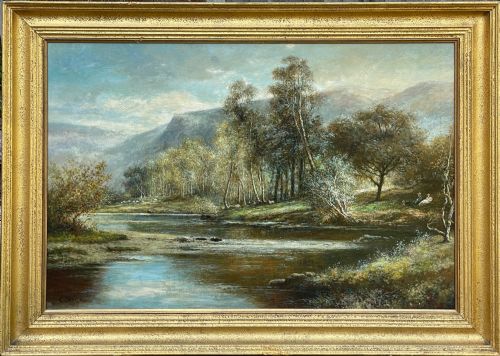
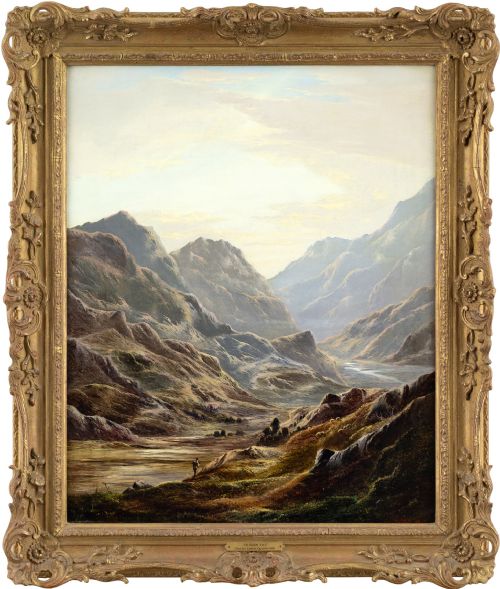
Traditional mountain art encompasses landscape paintings and sculptures depicting dramatic elevations, valleys, and lakes from the nineteenth and twentieth centuries. Buyers seek these works to capture the rugged atmosphere of regions such as the Scottish Highlands, the Welsh peaks, and the Alps. The selection here leans heavily toward British and European oil paintings alongside select Chinese silk paintings and jade carvings.
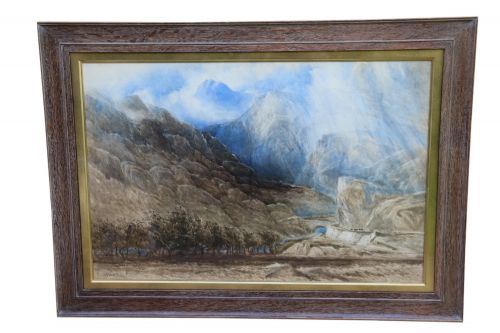
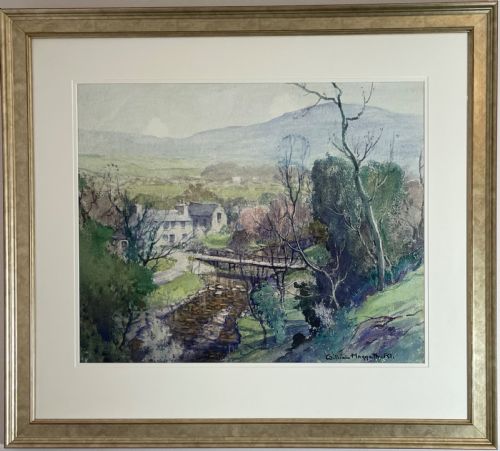
Canvases from the Victorian era and the early twentieth century dominate the offerings, often recording specific geographical locations like Snowdonia, Glen Tilt, and Connemara. Watercolour paintings on paper also appear, offering lighter tonal shifts of mountain mists and rivers. Each piece documents how past artists interpreted wild topography through traditional academic and regional schools.
How they were made
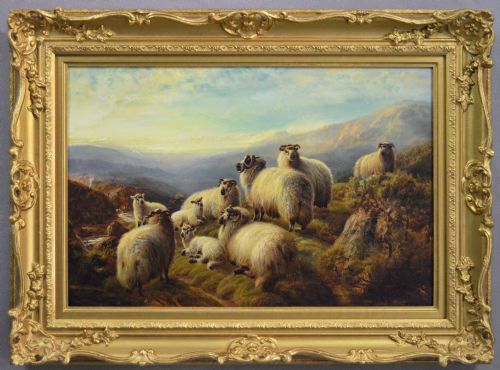
Artists built these oil paintings on stretched canvas or wooden panels, layering oil pigments to achieve deep shadows in mountain crevices and luminous highlights on snow-capped summits. Watercolours on paper utilised washes of pigment to capture the translucent quality of mountain air and shifting cloud formations. Frames formed an integral part of the presentation, frequently utilising carved giltwood and gesso.
Sculptural works in this category required meticulous hand carving, particularly pieces fashioned from jade and mounted on custom hardwood stands. Painters employed brushes of varying fineness to render minute details of highland cattle, distant figures, and craggy rock faces. The physical construction combined sturdy stretcher frames with durable linen supports designed to endure.
Several Victorian sheep manage to appear unimpressed by towering Alpine peaks and Welsh mountain ranges.
What varies in quality
Quality in these landscape works depends upon the artist's command of atmospheric perspective, which separates flat depictions from those conveying true depth and vastness. Superior examples manage light across water and rock with confident brushwork, whereas lesser works rely on formulaic foliage and repetitive cloud patterns. The handling of scale, particularly in how figures or livestock relate to towering peaks, dictates the visual success of the composition.
Materials and framing further distinguish the tier of a piece, with original giltwood frames adding historical integrity to nineteenth-century canvases. The precision of detail in carved jade or the subtlety of ink washes on silk determines the refinement of non-European examples. A strong provenance and a recorded artist signature elevate the standing of a painting within its specific regional school.
William Beattie-Brown·Alfred Fontville de Breanski·George Houston·William Joseph Boyes·Henry H. Parker·Charles Leslie·Robert Watson·Henry Martin Pope·Sidney Richard Percy·Thomas Spinks·Frank Hider·Walter J Watson·William Grant Murray·John Douglas Perrett·Stephen Enoch Hogley·George Turner·YA MING
The Traditional Mountain Art Glossary
- Giltwood
- Wood carved and coated with a thin layer of gold leaf or gold paint. This finish frequently adorns the original frames of nineteenth-century landscape paintings.
- Gesso
- A plaster-like mixture applied to wooden frames as a smooth base before gilding. It allows intricate moulded ornamentation along the borders of artwork.
- Shan Shui
- A style of traditional Chinese art depicting scenery or natural landscapes using brush and ink. These works often focus on mountains and rivers.
- Watercolour
- A painting method in which the paints are made of pigments suspended in a water-based solution. Artists utilise this medium on paper for transparent washes.
- Canvas
- Closely woven fabric used as a surface for oil painting. Stretched tightly across a wooden frame, it provides a stable and resilient ground for heavy pigment.
Traditional Mountain Art: Frequently Asked Questions
How do I hang large landscape art safely?
Heavy oil paintings on canvas require sturdy wall fixings anchored directly into masonry or wall studs to support the weight of the wooden stretcher and gilt frame. Wire or brass D-rings attached to the reverse must match the load.
Position the centre of the canvas at eye level, ensuring the wall space can accommodate the expansive width of mountain scenes without crowding adjacent furnishings.
Where should I display nineteenth-century watercolours?
Paper works require placement away from direct sunlight to prevent the fading of delicate watercolours and the yellowing of the underlying paper sheet. Interior walls with stable ambient light suit these pieces best.
Maintain distance from moisture sources such as unvented kitchens or damp exterior walls to protect both the paper and the original backing materials.
How do I identify a Victorian oil painting?
Victorian canvases often exhibit fine craquelure across the paint surface, alongside nineteenth-century stretchers constructed with wedges at the internal corners. Canvas stamps from nineteenth-century art suppliers frequently appear on the reverse.
Stylistic markers include romanticised depictions of British topography, moody skies, and pastoral figures tending livestock beneath towering peaks.
What maintenance do carved jade mountain sculptures need?
Jade pieces require minimal upkeep, needing only gentle dusting with a soft, dry microfibre cloth to prevent particulate buildup in the intricate crevices of the carving. Avoid chemical cleaners or liquid polishes entirely.
Keep the hardwood stands polished with a neutral wax and ensure the display surface remains stable to prevent accidental tipping of heavy stone sculptures.